
Chef Lupita
Caldo de Camarón con Chepil
A Lenten caldo from Oaxaca's Valles Centrales built on dried shrimp and chile costeño, thickened with a whisper of masa, and finished with chepil leaves that taste like nothing outside that state.
A cooking platform built around craft, culture, and the stories behind what we eat.
Created by
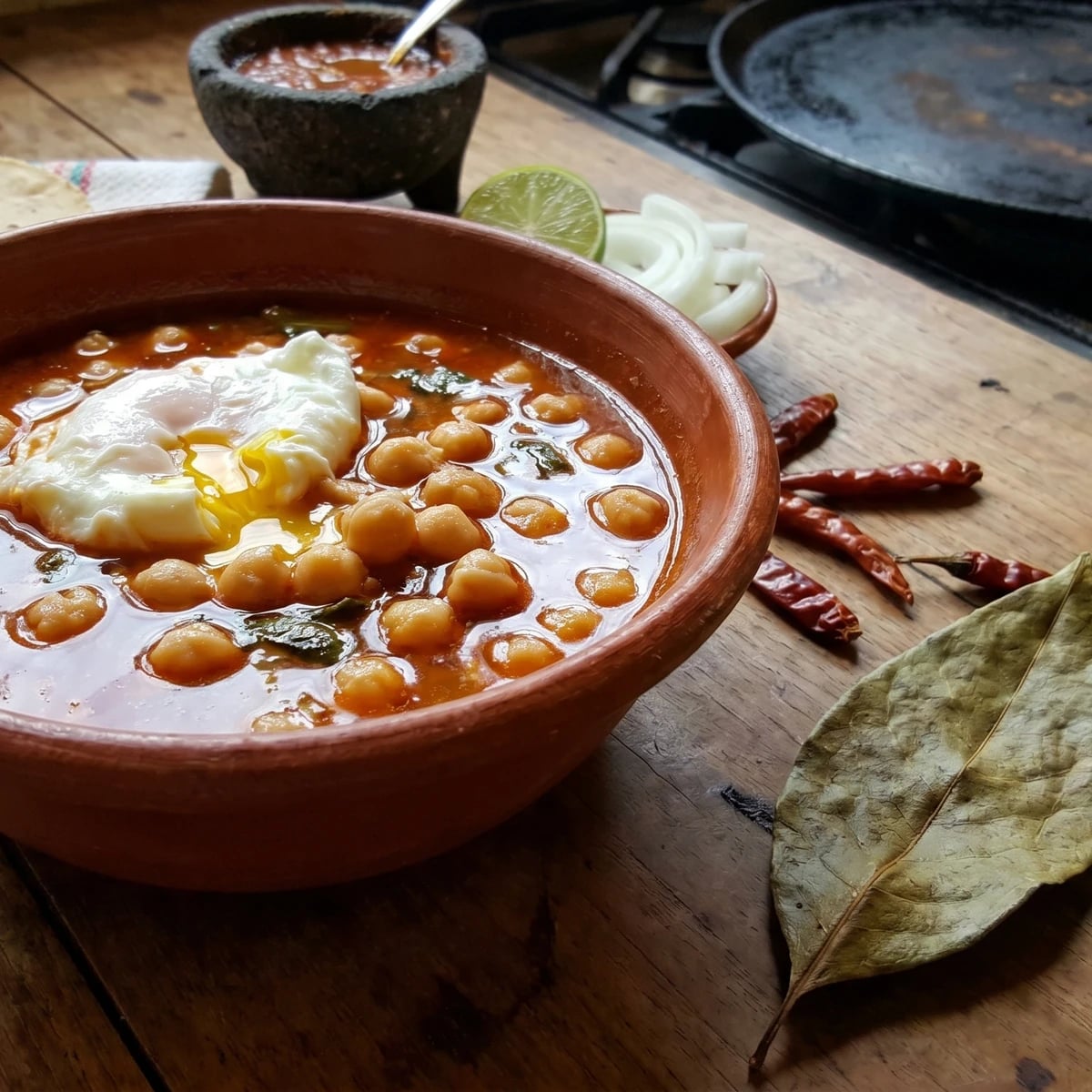
From Oaxaca's Valles Centrales, a chickpea soup built on toasted avocado leaf, roasted tomato, and chile de arbol, with eggs cracked into the simmering broth and poached until just set. A one-pot supper that costs almost nothing and feeds the whole table.
This is an Oaxacan soup. Valles Centrales, specifically, the kind of thing a cook in Tlacolula or Ocotlan makes on a Tuesday night when the kitchen needs to produce dinner from what is already in the house. Dried chickpeas, a few chiles de arbol, tomatoes from the market, an egg per person, and the ingredient that makes it Oaxacan: hoja de aguacate.
The avocado leaf is not a garnish. It is the soul of the pot. Toasted on a dry comal for a few seconds, it releases a warm anise smell that turns a plain bean soup into something with a signature. If you have never smelled a toasted hoja de aguacate, you have not smelled the kitchen in the Valles Centrales. The leaf comes from the native criollo avocado tree, not the Hass. That distinction matters. Hass leaves have almost no aroma. Criollo leaves are fragrant enough to perfume a room. If your leaf doesn't smell like anise when you crush it between your fingers, it is the wrong leaf.
The eggs go in at the end, cracked directly into the simmering broth so the whites set around the yolk and each person gets one in their bowl. My mother didn't make this particular soup, she was Jalisciense, but she had the same instinct: an egg in a pot of beans or broth stretches a meal and makes it complete. The senoras I learned this from in the mercado de Tlacolula del Valle told me the same thing with different words. "Un huevo y ya cenaste." One egg and you've had dinner.
This is a budget dish. Chickpeas cost almost nothing. Chile de arbol costs less. The avocado leaf is free if you have a tree in the yard, and in Oaxaca, many people do. Saber cocinar es saber vivir, and this soup is the proof.
Chickpeas arrived in Mexico with the Spanish in the 16th century and were adopted rapidly into indigenous cooking systems, particularly in Oaxaca's Valles Centrales and Puebla's Mixteca region, where they replaced or supplemented native legumes in broth-based dishes. The avocado leaf (hoja de aguacate), by contrast, is a pre-Columbian ingredient harvested from Persea drymifolia, the native Mexican avocado whose aromatic leaves contain estragole, the same compound responsible for tarragon's anise flavor. The pairing of a Spanish legume with a pre-Columbian herb in a single pot is a textbook example of the mestizo kitchen that defines much of Oaxacan daily cooking, a cuisine UNESCO recognized in 2010 not for its restaurant culture but for its home-kitchen traditions and market systems.
Quantity
1 pound
soaked overnight in water with 1 teaspoon salt
Quantity
8 cups
Quantity
3
from criollo avocado
Quantity
4 to 6
stemmed
Quantity
4
Quantity
1/4 medium, plus more sliced raw for serving
Quantity
3
unpeeled
Quantity
2 tablespoons
Quantity
1 tablespoon, plus more to taste
Quantity
6
Quantity
for serving
Quantity
for serving
warmed
| Ingredient | Quantity |
|---|---|
| dried chickpeassoaked overnight in water with 1 teaspoon salt | 1 pound |
| water | 8 cups |
| dried avocado leaves (hoja de aguacate)from criollo avocado | 3 |
| dried chile de arbolstemmed | 4 to 6 |
| Roma tomatoes | 4 |
| white onion | 1/4 medium, plus more sliced raw for serving |
| garlic clovesunpeeled | 3 |
| pork lard (manteca de cerdo) | 2 tablespoons |
| kosher salt | 1 tablespoon, plus more to taste |
| large eggs | 6 |
| lime wedges (optional) | for serving |
| hand-pressed corn tortillas (optional)warmed | for serving |
The night before, put the dried chickpeas in a large bowl and cover with cold water by three inches. Add a teaspoon of salt. Let them soak for at least ten hours or overnight. They will double in size. Drain and rinse them before cooking. Dried chickpeas from a Mexican market or a bulk bin are what you want. Canned chickpeas will not hold up in a long simmer and they turn to mush. No me vengas con atajos.
Put the drained chickpeas in a heavy pot with eight cups of fresh water. Bring to a simmer over medium heat. Skim any foam that rises in the first ten minutes. Reduce heat to low, cover, and cook for 45 minutes to one hour, until the chickpeas are tender but still hold their shape. They should yield when you press one between your fingers but not collapse. Do not add salt yet. Salt toughens the skins during cooking. You will season later.
While the chickpeas cook, heat a dry comal or cast iron skillet over medium. Lay the avocado leaves flat on the surface and toast for about 10 seconds per side, pressing them gently with a spatula. The moment they turn a shade darker and the kitchen fills with a warm anise smell, they are done. Pull them off immediately. Then toast the chile de arbol on the same comal, rolling them with your fingers for 15 to 20 seconds until they darken slightly and smell sharp. Set aside with the leaves.
On the same hot comal, place the whole Roma tomatoes, the quarter onion, and the unpeeled garlic cloves. Roast them, turning occasionally, until the tomato skins blister and blacken in spots, the onion chars on the cut side, and the garlic softens inside its papery skin, about 10 to 12 minutes total. The tomatoes should be soft all the way through and a little collapsed. Peel the garlic. Transfer everything to a blender with the toasted chiles de arbol and blend until smooth. Do not add water. The tomato releases enough liquid on its own.
In a deep clay cazuela or the same heavy pot you cooked the chickpeas in, melt the lard over medium-high heat. When the lard shimmers, pour in the blended tomato and chile mixture. It will spit and sizzle. Good. That is the lard frying the sugars and acids in the tomato. Stir constantly for five to seven minutes, until the salsa darkens by a shade, thickens, and the fat begins to separate at the edges. La manteca es el sabor. This step concentrates the flavor and removes the raw tomato taste.
Add the cooked chickpeas and their cooking liquid to the fried salsa. Crumble two of the toasted avocado leaves into the pot. Keep the third one whole and drop it in. Stir, add the tablespoon of salt, and bring everything to a gentle simmer. Cook uncovered for 15 minutes so the avocado leaf infuses the broth and the flavors come together. Taste for salt now. The broth should taste full and slightly anise-scented, with a clean chile heat at the back of the throat. Adjust.
Reduce the heat until the broth barely simmers. You want lazy bubbles, not a rolling boil, or the eggs will shred. One at a time, crack each egg into a small cup and slide it gently into the broth, spacing them apart so they do not run into each other. Cover the pot and cook for four to five minutes. The whites should be fully set and the yolks still soft and golden when you break them open at the table. If you want the yolks firmer, give them another minute. Asi se hace y punto.
Ladle the soup into deep bowls, making sure each person gets a share of chickpeas and one whole poached egg resting on top. Fish out and discard the whole avocado leaf if you find it. Set lime wedges and sliced raw white onion on the table alongside warm corn tortillas. The tortilla is for tearing and dipping into the broth between spoonfuls. That is how it is eaten in the Valles Centrales. Recetas probadas y garantizadas.
1 serving (about 510g)
Culinary guides, cultural storytelling, and the editorial depth that makes cooking meaningful.
Discover Culinary Explorer
Chef Lupita
A Lenten caldo from Oaxaca's Valles Centrales built on dried shrimp and chile costeño, thickened with a whisper of masa, and finished with chepil leaves that taste like nothing outside that state.

Chef Lupita
The Valles Centrales milpa soup, built from squash vines, fresh corn, calabacitas, and squash blossoms, with chochoyote dumplings and the perfume of chepil and hierba santa. A rainy-season pot that costs almost nothing and feeds the whole family.

Chef Lupita
Oaxaca's Pacific coast seafood caldo, built on toasted chile costeño and guajillo with charred tomato and garlic, loaded with shrimp, octopus, huachinango, and clams. Fishing-town food that feeds the whole table.

Chef Lupita
Northern Oaxaca's oldest cooking technique: raw fish, shrimp, tomato, chile de agua, and epazote brought to a boil in a gourd bowl by white-hot river stones pulled straight from the fire.