
Chef Margarida
Canja de Galinha
The soup that heals everything, from broken hearts to winter colds. Golden broth, falling-apart chicken, rice that drinks the goodness, and fresh mint because this is how Portuguese grandmothers have always done it.
A cooking platform built around craft, culture, and the stories behind what we eat.
Created by
The soup born from a monk's cunning and a village's reluctant generosity. Every ingredient added makes it better. That's the point. That's the lesson.
Every Portuguese child knows this story. A hungry monk arrives in a village with nothing but a stone in his pocket. He asks for a pot of water, drops in the stone, and begins to cook. The villagers watch, skeptical. "It would be better with an onion," he says. Someone brings one. "A bit of chouriço wouldn't hurt." Another neighbor appears. Piece by piece, the village feeds the pot, and the monk feeds the village.
The story is about cleverness, yes. But it's also about community. About how a meal becomes something greater when everyone contributes. Avó Leonor told me this tale a hundred times, and she always ended the same way: "The stone did nothing, filha. The people made the soup."
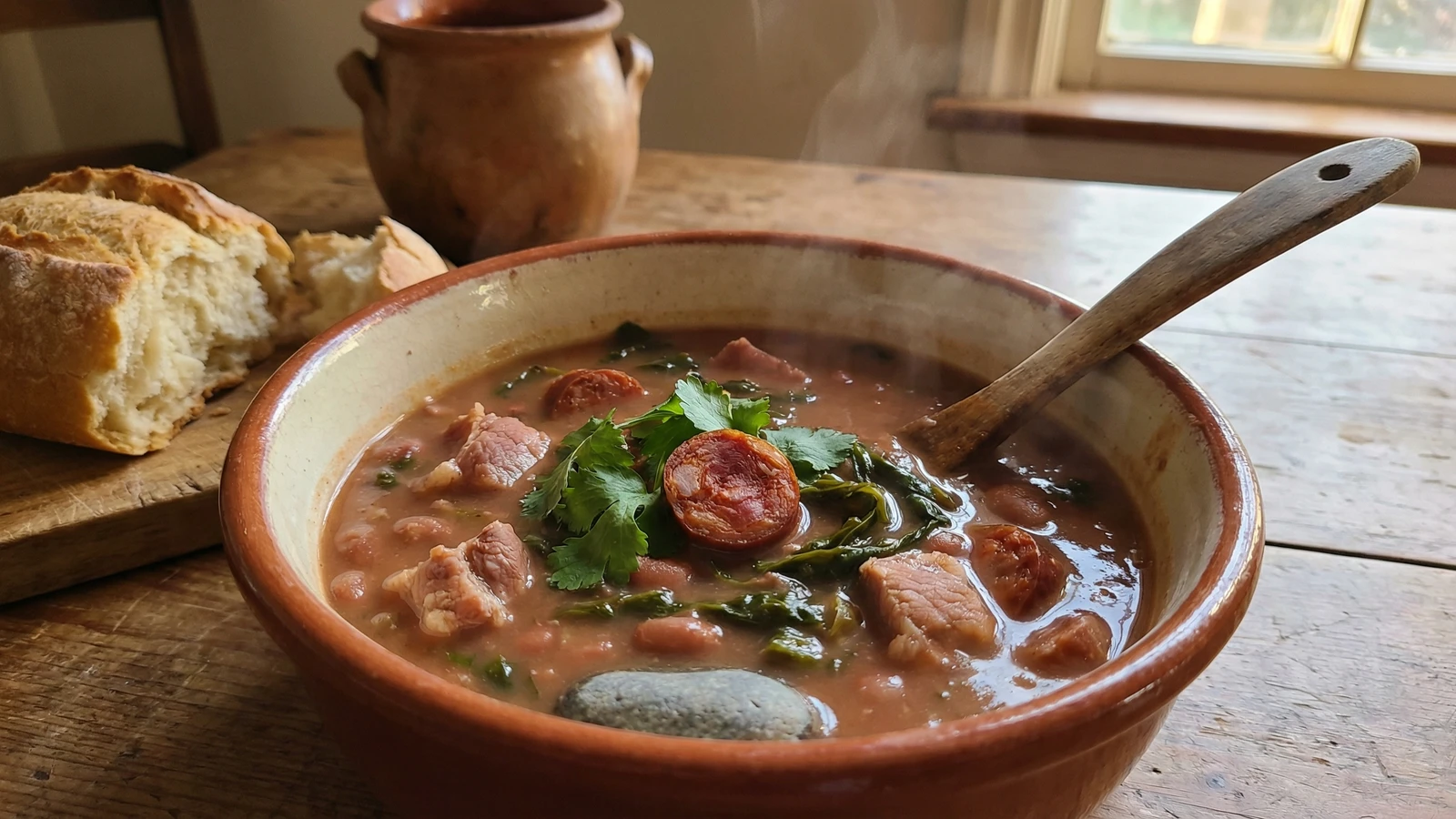
In Almeirim, in the heart of Ribatejo, they take this story seriously. Sopa da Pedra is the town's identity, served in every tasca and restaurant, always with a smooth river stone resting at the bottom of the pot. The stone is a symbol now, a reminder that the best meals come from what we share.
This is not a delicate soup. This is a meal. Red beans cooked until they start to break down, thickening the broth. Pork in three forms: orelha (ear), entremeada (belly), chouriço. Potatoes, carrots, couve. Everything the monk convinced the village to give. At Mesa da Avó, I serve this in winter with the stone visible at the bottom of the bowl. People always smile. As avós sabem. The story feeds us as much as the soup.
Sopa da Pedra is the defining dish of Almeirim in the Ribatejo region, where an annual festival celebrates the soup each September. The folktale of the stone soup exists across Europe, but Portugal claimed it as their own, transforming a story about trickery into one about generosity. The tradition of placing an actual stone in the pot dates back centuries, a theatrical touch that delights diners to this day.
Quantity
300g
soaked overnight
Quantity
200g
cleaned
Quantity
200g
in one piece
Quantity
2 (about 200g total)
Quantity
1 (about 150g)
Quantity
150g
in one piece
Quantity
2
Quantity
1 large
diced
Quantity
4 cloves
minced
Quantity
3 tablespoons
Quantity
400g
peeled and cubed
Quantity
2 medium
sliced
Quantity
200g
ribs removed, sliced thin
Quantity
1 bunch
chopped
Quantity
to taste
Quantity
to taste
freshly ground
Quantity
1
| Ingredient | Quantity |
|---|---|
| dried red kidney beanssoaked overnight | 300g |
| pork ear (orelha)cleaned | 200g |
| pork belly (entremeada)in one piece | 200g |
| chouriço de carne | 2 (about 200g total) |
| morcela (blood sausage) (optional) | 1 (about 150g) |
| presunto or baconin one piece | 150g |
| bay leaves | 2 |
| oniondiced | 1 large |
| garlicminced | 4 cloves |
| extra virgin olive oil (azeite) | 3 tablespoons |
| potatoespeeled and cubed | 400g |
| carrotssliced | 2 medium |
| couve galega or kaleribs removed, sliced thin | 200g |
| fresh cilantro (coentros)chopped | 1 bunch |
| salt | to taste |
| black pepperfreshly ground | to taste |
| clean river stone (optional) | 1 |
Drain the soaked beans and place them in a large heavy pot with 3 liters of fresh cold water. Add the pork ear, pork belly, presunto, and bay leaves. Bring to a boil, skimming any foam that rises. Reduce to a gentle simmer and cook for 1 hour and 30 minutes, until the beans are tender and starting to break down. The broth should become cloudy and slightly thickened from the beans. This is what you want.
While the beans simmer, heat the azeite in a small skillet over medium-low heat. Add the onion and cook slowly until soft and golden, about 12 minutes. Add the garlic and cook for another minute until fragrant. Set aside. This refogado will join the pot later, bringing its sweetness to the broth.
After the beans have cooked for 1 hour and 30 minutes, remove the pork ear, belly, and presunto to a cutting board. Add the potatoes and carrots to the pot. Stir in the refogado. Continue simmering for 20 minutes while you prepare the meats.
Slice the pork ear into strips. Cut the belly into bite-sized pieces. Dice the presunto. Slice the chouriço into thick rounds. If using morcela, slice it carefully; it's delicate. Return the pork ear, belly, and presunto to the pot. Add the chouriço slices. If using morcela, add it now.
Add the sliced couve to the pot and simmer for another 15 minutes, until the greens are tender but still have color. Taste the broth. Now you season. Add salt carefully; the chouriço and presunto have contributed salt already. Add pepper generously. Stir in most of the coentros, reserving some for serving.
If you want to honor tradition, place a clean river stone at the bottom of your serving pot or tureen. Ladle the soup into deep bowls, making sure everyone gets a generous mix of beans, vegetables, and all three porks. Scatter fresh coentros on top. Serve with crusty bread for soaking up every drop. Tell the story while you eat. That's part of the recipe.
1 serving (about 400g)
Culinary guides, cultural storytelling, and the editorial depth that makes cooking meaningful.
Discover Culinary ExplorerChef Margarida
The soup that heals everything, from broken hearts to winter colds. Golden broth, falling-apart chicken, rice that drinks the goodness, and fresh mint because this is how Portuguese grandmothers have always done it.

Chef Margarida
The beef stew every Portuguese mother makes, built on a slow refogado and patient braising until the meat surrenders to your fork. Grab bread. This is comfort defined.

Chef Margarida
The silken shellfish soup of Portuguese celebrations, where shrimp, crab, and clams become velvet, the shells surrender their secrets, and cream brings everything to luxury. This is what we serve when it matters.

Chef Margarida
Autumn's sweetness meets smoky pork in this silky pumpkin soup, crowned with crispy chouriço rounds that shatter at first bite. The kind of cooking that makes you cancel your plans and stay at the table.