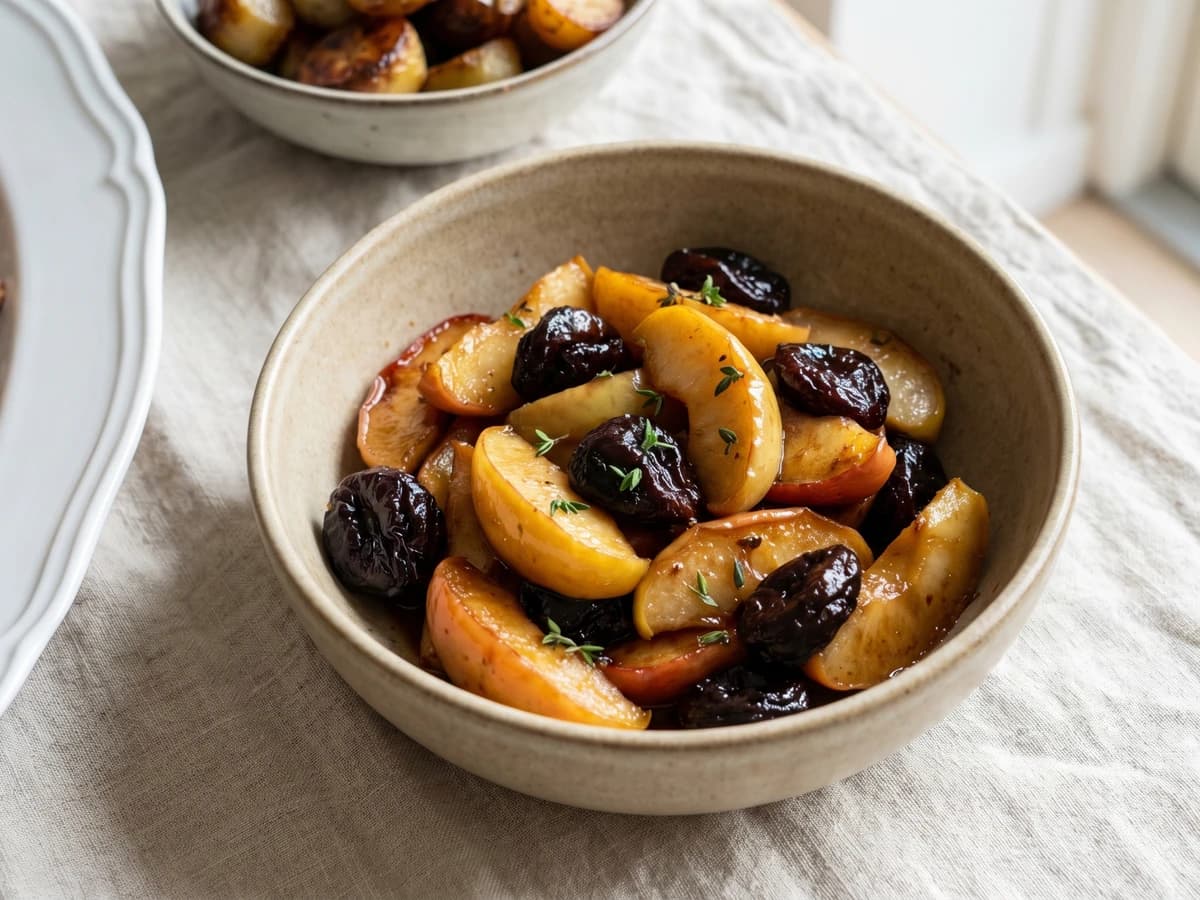
Leeks braised low and slow in browned butter, finished with cream, lemon, and dill. The side dish that belongs next to a piece of spring fish or the first lamb of the year.
Side Dishes
Danish
Weeknight
Dinner Party
Comfort Food
10 min
Active Time
20 min cook•30 min total
Yield4 servings
Spring in Denmark begins in the ground. The first sign isn't sunshine or birdsong. It's the leeks at the market, thinner and sweeter than the heavy winter ones, still carrying a faint smell of cold earth. When these arrive, the kitchen shifts.
Smorstegte porrer is one of the quietest dishes in the Danish repertoire, and one of the most useful. Leeks cut into thick rounds, softened slowly in browned butter with a lid on, then finished with a little cream and a handful of dill. That's all. It sits beside a piece of pan-fried plaice or a roast of young spring lamb and does something no other side dish quite manages: it is rich without being heavy, green without being sharp, and it makes everything next to it taste more like itself.
The only thing I'll ask you to watch carefully is the butter. You're browning it before the leeks go in, and that step is where the flavor of the whole dish is decided. Melted butter tastes clean. Browned butter tastes of hazelnuts and warmth, and that warmth carries through every layer of leek from first bite to last. You'll know when it's right. Your nose will tell you before your eyes do.
Butter-braised vegetables have been part of the Danish kitchen since at least the 18th century, when the country's dairy culture made butter the default cooking fat in nearly every household. Smorstegte porrer, literally "butter-fried leeks," appears in regional recipe collections from Sjaelland and Fyn as a spring accompaniment, particularly during the weeks between Easter and the first asparagus harvest. The technique of browning the butter first, rather than simply melting it, is a detail that separates the dish from similar French preparations and reflects the Danish tradition of treating butter not just as a medium but as a flavoring in its own right.
The technique, the tradition, and the story behind every dish.
white and pale green parts only, sliced into 2cm rounds
unsalted butter
Quantity
50g
double cream
Quantity
100ml
fine sea salt
Quantity
to taste
white pepper
Quantity
to taste
fresh dill
Quantity
small bunch
fronds picked and roughly chopped
lemon juice
Quantity
1 teaspoon
Ingredient
Quantity
leekswhite and pale green parts only, sliced into 2cm rounds
6 medium
unsalted butter
50g
double cream
100ml
fine sea salt
to taste
white pepper
to taste
fresh dillfronds picked and roughly chopped
small bunch
lemon juice
1 teaspoon
Equipment Needed
•Wide heavy-bottomed pan with lid, 28cm
•Sharp knife
Instructions
1
Trim and slice the leeks
Cut away the dark green tops and the root ends. You only want the white and pale green parts, where the leek is tender and sweet. Slice into rounds about two centimetres thick. Drop them into a bowl of cold water and swish them around with your hands. Leeks hide grit between their layers, and nothing ruins this dish faster than a mouthful of sand. Lift them out and dry them thoroughly in a clean towel. Wet leeks spit in hot butter and they steam instead of softening, which changes the whole character of the dish.
Lift the leeks out of the water rather than draining them through a colander. The grit sinks to the bottom; pouring them out washes it right back through.
2
Melt the butter gently
Set a wide, heavy pan over a low to medium heat and add the butter. Let it melt completely, then watch. The butter will foam, and the foam will settle. As it settles, you'll hear a faint crackling and the color at the bottom of the pan will shift from pale gold to the color of hazelnuts. That's the moment. The milk solids are browning, and they carry a nutty sweetness that plain melted butter cannot give you. This is the foundation of the whole dish. Don't walk away from the stove. Browned butter and burnt butter are separated by about thirty seconds.
Use your nose as much as your eyes. When the butter smells of toasted nuts, it's ready. If it smells sharp or acrid, it's gone too far. Start again with fresh butter. It's worth it.
3
Soften the leeks in butter
Add the leek rounds to the browned butter in a single layer, or as close to it as your pan allows. Season with a good pinch of salt and a few grinds of white pepper. White pepper because it blends into the dish without black specks that look wrong against the pale green. Stir once, gently, to coat every piece in butter. Then lower the heat, put the lid on, and let them cook for twelve to fifteen minutes. Stir only twice. What you're doing is braising them in their own moisture and the butter, and every time you lift the lid you release the steam they need. The leeks are done when they're completely soft and almost translucent, with golden edges where they touched the pan.
If you hear aggressive sizzling under the lid, the heat is too high. You want a quiet murmur, almost silence. The leeks should sigh, not spit.
4
Add the cream
Remove the lid and pour in the cream. Let it bubble gently for two to three minutes, stirring once or twice, until it reduces slightly and clings to the leeks in a thin, glossy coat. You're not making a sauce. You're giving the butter something to hold onto, a richness that rounds the whole dish out. The cream should barely be visible as a separate element. If it pools at the bottom, give it another minute.
5
Finish with dill and lemon
Take the pan off the heat. Squeeze in the lemon juice and scatter the chopped dill over the top. Stir once, gently. The lemon isn't there for sourness. It's there to lift everything, the way opening a window lifts a room. Without it the dish can feel flat, one note of richness without an answer. Taste. Adjust the salt if it needs it. Serve immediately from the pan or transfer to a warm dish. These leeks don't wait well. The dill darkens and the cream thickens. Eat them while they're still glossy and green.
Chef Tips
•Choose leeks that are firm and tight, with no yellowing outer leaves. The season decides the quality: spring leeks are sweeter and more delicate than the thick ones you find in winter. Both work, but if you can make this in April or May with the new season's leeks, that's when the dish is truest to itself.
•Use real butter. Danish butter if you can find it, Lurpak or similar. The fat content is higher than most, and in a dish where butter is not just the cooking medium but the main flavoring, that difference is one you'll taste.
•White pepper is traditional here, and it's not just about appearance. White pepper has a sharper, more floral heat than black, and it works with dairy in a way black pepper doesn't. A small thing, but the small things add up.
•If you're serving this alongside fish, plate the leeks first and rest the fish on top. The cream and butter in the leeks become part of the sauce for the fish. That's how it's done, and it's the kind of detail that makes a weeknight plate feel cooked with love.
Advance Preparation
•The leeks can be trimmed, sliced, and washed up to a day ahead. Store them in a sealed container in the fridge, well dried.
•The braising itself takes only twenty minutes. Don't try to make this in advance and reheat. The texture goes soft and the dill loses its color. This is a dish you make just before you sit down.
Frequently Asked Questions
Nutrition Information
1 serving (about 150g)
Calories
255 calories
Total Fat
19 g
Saturated Fat
12 g
Trans Fat
0 g
Unsaturated Fat
7 g
Cholesterol
60 mg
Sodium
325 mg
Total Carbohydrates
20 g
Dietary Fiber
2 g
Sugars
6 g
Protein
3 g
Where cooking meets culture.
Culinary guides, cultural storytelling, and the editorial depth that makes cooking meaningful.