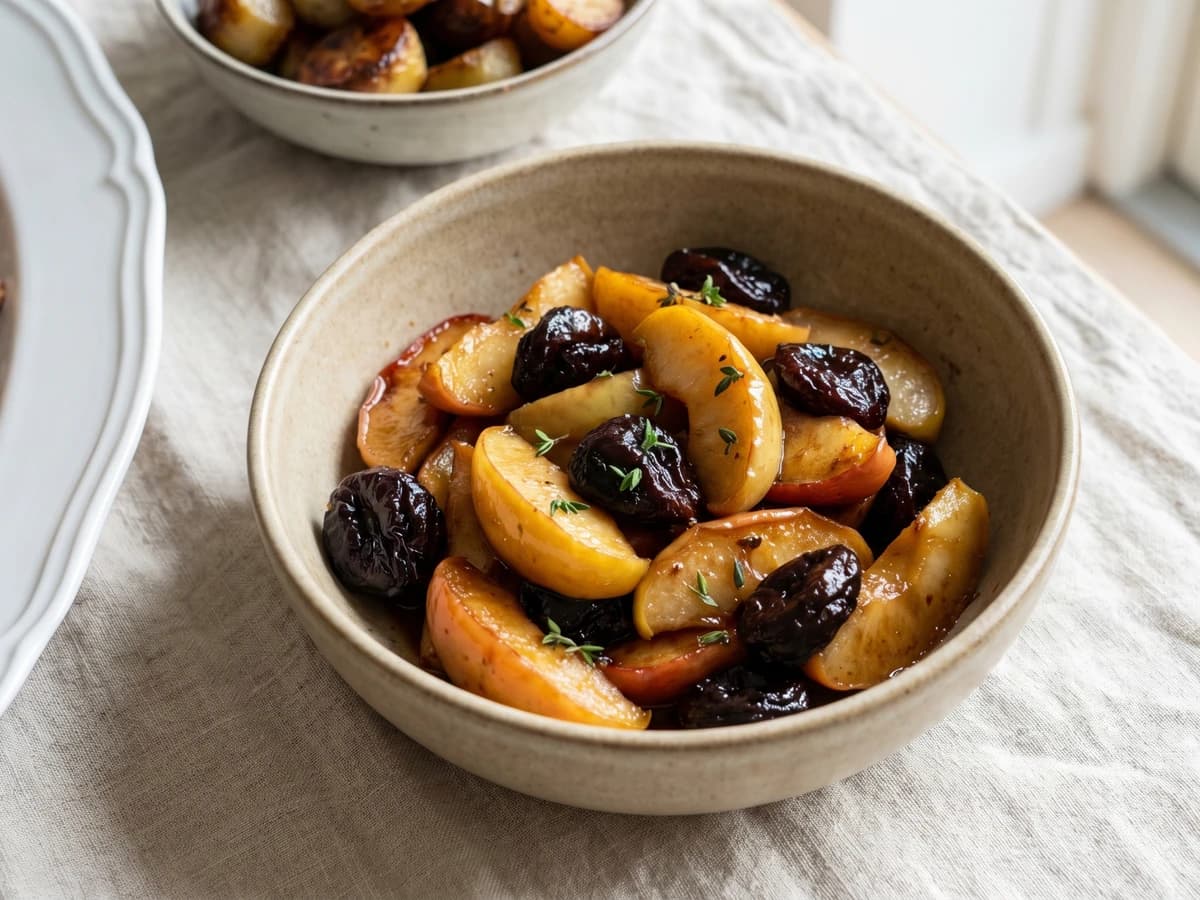
Onions cooked low and slow in butter until they collapse into a jammy, tawny heap. The topping that crowns every Danish hakkebøf and turns a Tuesday night into something worth sitting down for.
Side Dishes
Danish
Weeknight
Comfort Food
Dinner Party
10 min
Active Time
40 min cook•50 min total
Yield4 servings
There is a moment, about twenty-five minutes in, when the kitchen changes. The sharp, eye-stinging bite of raw onion gives way to something warm and sweet and deeply savory. The pan, which started heaped and overflowing, has gone quiet. The onions have surrendered their water and begun to color. This is the moment you realize that bløde løg is not a side dish. It's a transformation.
In Denmark, bløde løg sit on top of hakkebøf the way a roof sits on a house. You don't question whether they belong there. A hakkebøf without its soft onions is unfinished, like serving rugbrød without butter or pouring coffee without offering cake. The combination is so deeply embedded in the Danish weeknight kitchen that most cooks don't think of the onions as a separate recipe at all. They're simply part of what hakkebøf means.
But the onions deserve to be understood on their own terms, because the technique is the kind that rewards attention. There's nothing complicated here: onions, butter, time, and heat low enough that nothing burns. What I want you to watch for is the color. It builds slowly, pale gold to amber to deep mahogany, and each shade carries a different depth of sweetness. Don't rush it. The joy of waiting is real here. By the end, you'll have a glossy, jammy tangle of onions that tastes like three times the butter you actually used, and you'll never want a hakkebøf without them again.
Bløde løg appear in Danish household cookbooks from the mid-1800s onward, always paired with ground beef preparations that would become the modern hakkebøf. The technique reflects a broader northern European tradition of slow-cooked alliums as a sauce or topping, but the Danish version is distinct in its simplicity: butter, onion, and patience, without the vinegar or stock that French or German traditions might add. In the years after the Second World War, when beef became more widely affordable in Denmark, hakkebøf med bløde løg became the defining Tuesday or Wednesday supper, a dish so ordinary that cookbooks stopped printing the recipe and assumed every household already knew it.
The technique, the tradition, and the story behind every dish.
yellow onionshalved and sliced into thin half-moons
4 large
unsalted butter
50g
neutral oil
1 tablespoon
caster sugar
1 teaspoon
fine sea salt
to taste
black pepper
freshly ground, to taste
water (optional)
1 tablespoon
Equipment Needed
•Wide heavy-bottomed frying pan or skillet, at least 28cm
•Wooden spoon or heatproof spatula
Instructions
1
Slice the onions evenly
Halve each onion through the root, peel away the skin, and slice into thin half-moons, about the thickness of a coin. Evenness matters here. Thin slices cook down to silk. Thick slices stay firm while the thin ones burn. Take your time with this. The knife work is the only real labor in this dish, and everything that follows depends on it.
Leave the root end intact while you slice. It holds the layers together and gives you control. Cut it away at the end.
2
Start in butter and oil
Set a wide, heavy pan over medium heat. Add the butter and oil together. The oil stops the butter from burning during the long cook ahead. When the butter has melted and begun to foam, add all the onions at once. It will look like far too many. It isn't. Onions lose most of their volume as the water cooks out, and that mountain will collapse into a soft, golden heap within twenty minutes. Stir to coat every strand in the fat. Add a good pinch of salt now. The salt draws moisture out of the onions, which helps them soften before they color.
Use the widest pan you have. The onions need surface contact with the base, not with each other. A crowded pan steams; a wide pan caramelizes.
3
Cook low and slow
Turn the heat down to medium-low. This is where patience becomes the technique. Stir the onions every few minutes, scraping the bottom of the pan as you go. For the first ten minutes, they'll soften and turn translucent, releasing steam. After fifteen minutes, they'll begin to shrink. After twenty, the edges will start to take on a pale gold. Don't rush this by turning the heat up. High heat gives you charred spots and raw centers. Low heat gives you the even, deep sweetness that makes bløde løg what they are.
If the onions stick or the pan looks dry at any point, add a tablespoon of water and scrape the fond from the bottom. That dark residue is concentrated flavor. Dissolving it back into the onions is how the color deepens.
4
Add the sugar
When the onions have been cooking for about twenty-five minutes and turned a soft amber, sprinkle the caster sugar over them and stir it through. The sugar isn't sweetness for its own sake. It accelerates the final stage of caramelization, helping the onions cross from golden to deep mahogany in the last ten to fifteen minutes. Continue stirring every couple of minutes. The onions are wetter now with released juices, and that liquid needs to reduce until the strands are glossy and jammy, slumping against each other with no resistance.
5
Finish and season
When the onions are a deep tawny brown, soft enough to spread with the back of a spoon, and smell intensely sweet and nutty, they're done. The whole pan will have reduced to roughly a quarter of the volume you started with. That's right. Season with salt and a few grinds of black pepper. Taste. The onions should be sweet, savory, and just barely sharp underneath. If they taste flat, they need a little more salt. If they taste only sweet, a grind of pepper brings them back. You'll know when it's right.
Chef Tips
•Use yellow onions, the large common ones. Red onions are too sweet and lose their color. White onions lack the depth. Yellow onions have the right balance of sugar and sulfur that caramelization needs.
•The pan matters. A heavy-bottomed pan, cast iron or thick stainless steel, holds heat evenly and prevents hot spots that scorch the onions while the rest stays pale. A thin pan will fight you the whole time.
•Make more than you need. Bløde løg keep beautifully in a jar in the fridge for five days. Warm a spoonful on top of a fried egg, stir them through gravy, spread them on rugbrød with a slice of leverpostej. Once you have them, you'll find places for them everywhere.
•If you're serving these on hakkebøf, start the onions before you shape the patties. The onions need forty minutes; the beef needs eight. Time the finish so they come together on the plate.
Advance Preparation
•Bløde løg can be made up to five days ahead and stored in a sealed jar in the fridge. Reheat gently in a pan with a small knob of butter. They improve overnight as the flavors settle.
•They also freeze well for up to two months. Freeze in portions so you can pull out what you need for a single meal.
Frequently Asked Questions
Nutrition Information
1 serving (about 75g)
Calories
185 calories
Total Fat
14 g
Saturated Fat
7 g
Trans Fat
0 g
Unsaturated Fat
6 g
Cholesterol
27 mg
Sodium
350 mg
Total Carbohydrates
15 g
Dietary Fiber
3 g
Sugars
7 g
Protein
2 g
Where cooking meets culture.
Culinary guides, cultural storytelling, and the editorial depth that makes cooking meaningful.