Culinary Explorer

A cooking platform built around craft, culture, and the stories behind what we eat.
Discover Culinary Explorer
Smoked Mackerel Pâté with Horseradish

Smoked Mackerel Pâté with Horseradish

Created by Chef Thomas

Hot-smoked mackerel mashed with cream cheese, horseradish, and lemon into a rough pâté that takes five minutes and asks for nothing but good toast and someone to share it with.

Appetizers & Snacks
British
Quick Meal
Weeknight
5 min
Active Time
0 min cook5 min total
Yield4 servings

The mackerel at the fishmonger's on Saturday had that deep, burnished gold that good hot-smoked fish gets, the kind that flakes apart under your thumb and fills the kitchen with woodsmoke the moment you open the paper. I bought two fillets without a plan, which is often how the best things start.

This is barely a recipe. It's five minutes with a fork and a bowl, and it gives back more than it asks for. The cream cheese rounds out the smoke, the horseradish lifts it with a slow, clear heat, and the lemon keeps everything honest. What you end up with is a pâté that tastes like you spent an hour on it, though you didn't, and wouldn't need to. We're only making dinner.

I keep coming back to this on evenings when the fridge is thin and the appetite is there but the energy isn't. A pot of this, some toast done properly, a few cornichons if you've got them. I wrote it down in the notebook years ago: mackerel, horseradish, Tuesday, rain. It hasn't changed since. A recipe is a conversation, not a contract, but some conversations don't need revising.

The technique, the tradition, and the story behind every dish.

Discover Culinary Explorer

Ingredients

hot-smoked mackerel fillets

Quantity

250g

skin removed

full-fat cream cheese

Quantity

150g

hot horseradish sauce

Quantity

1-2 tablespoons

lemon

Quantity

half

juiced

black pepper

Quantity

to taste

freshly ground

chives (optional)

Quantity

small bunch

finely snipped

good toast or crackers

Quantity

to serve

Equipment Needed

  • Mixing bowl
  • Fork or food processor

Instructions

  1. 1

    Break up the mackerel

    Peel the skin from the mackerel fillets and break the flesh into rough chunks in a bowl. Run your fingers through it as you go, feeling for any small bones. There won't be many, but find them now rather than later. The fish should smell deeply smoky and saline, like a harbour on a cold morning. If it doesn't smell of much, it won't taste of much, and you've bought the wrong mackerel.

    Hot-smoked is what you want, not cold-smoked. Hot-smoked mackerel is cooked through and flakes apart easily. Cold-smoked is silky and translucent, a different thing entirely.
  2. 2

    Blend with cream cheese

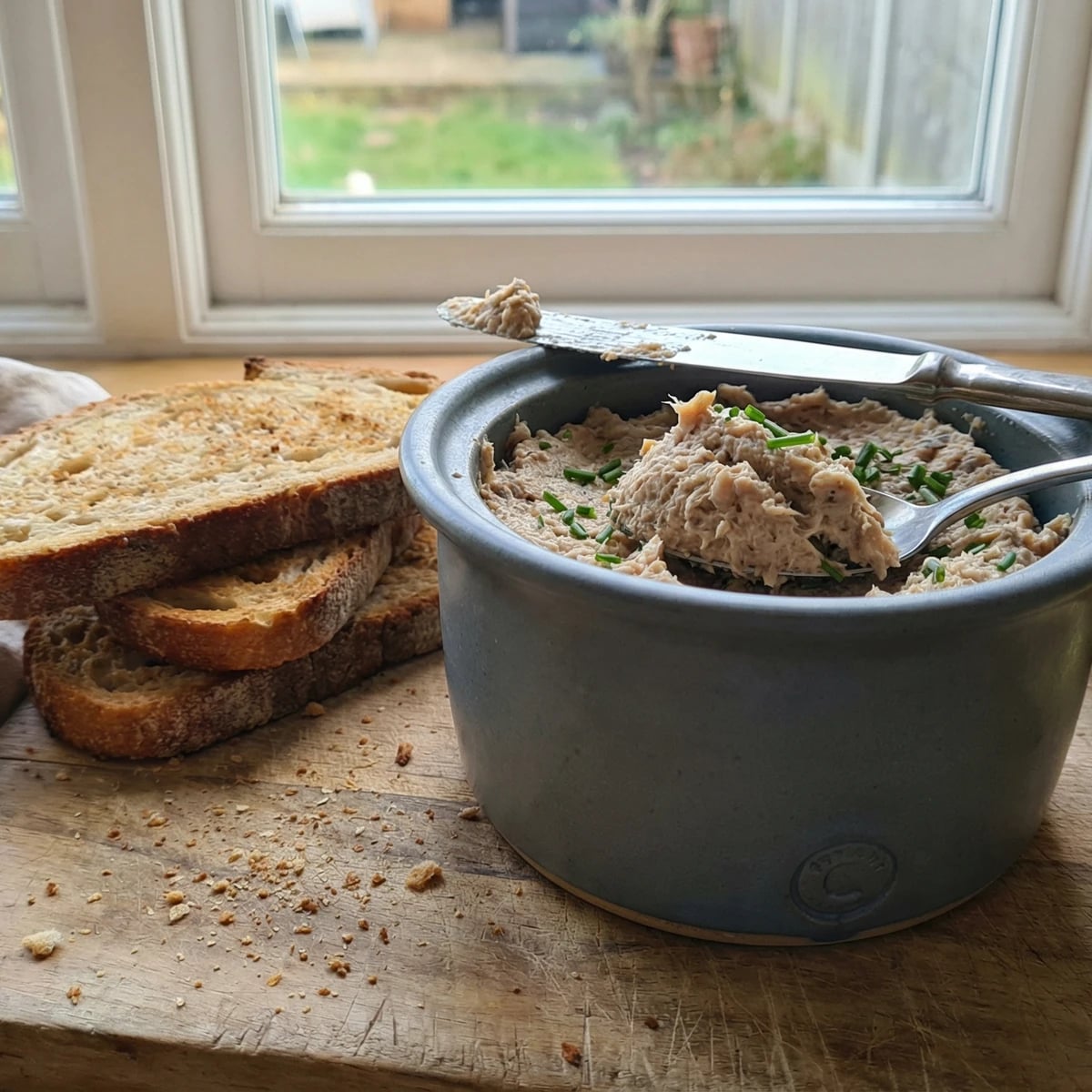
    Add the cream cheese, a tablespoon of horseradish, and the lemon juice. Mash it together with a fork, working it until the pâté comes together but still has texture. You're not making baby food. Some flakes of fish should remain visible, catching against the smooth cream cheese. This is the difference between a pâté with character and one without. If you prefer it smoother, a few pulses in a food processor will get you there, but stop before it turns into paste.

  3. 3

    Season and taste

    Grind in some black pepper. Taste it. The smoke from the mackerel should come first, then the sharp heat of the horseradish rising behind it, then the lemon pulling everything bright. If the horseradish is too quiet, add more. You want it to announce itself, a slow warmth at the back of the throat that makes you reach for the next piece of toast. Season and taste. Then taste again. You probably won't need salt. The mackerel brings its own.

  4. 4

    Serve on good toast

    Scrape the pâté into a bowl or pot, scatter the chives over the top, and serve with toast that has been properly made: thick slices of decent bread, toasted until firm and golden, not pale supermarket stuff warmed through and forgotten. The toast needs to hold the weight of the pâté without bending. A few lemon wedges on the side, for those who want more sharpness. That's dinner, or the start of one.

Chef Tips

  • Buy your mackerel from a fishmonger or a good deli counter where you can smell it and press it. You want fillets that are moist and oily, not dried out at the edges. Supermarket packets are fine at a push, but check the date and squeeze the pack. If it feels stiff, it's been there too long.
  • Horseradish varies wildly. Some jars are timid. Some will take the roof off your mouth. Start with a tablespoon, taste, and build from there. You want the heat to arrive after the smoke, not fight with it. If you can get fresh horseradish root and grate it yourself, do. The difference is like the difference between fresh and dried ginger: the same ingredient, but not the same thing.
  • This keeps well in the fridge for two or three days, covered, and actually improves overnight as the flavours settle and the horseradish softens into the cream cheese. Make it on a Sunday evening and you've got three days of lunches sorted.
  • If you want to stretch it into something more, spread it on toast and top with quick-pickled red onion, thin cucumber slices, or a handful of watercress. A few capers wouldn't go amiss either. But it needs nothing. It's complete as it is.

Advance Preparation

  • The pâté can be made up to three days ahead and stored in the fridge, covered tightly. The flavours improve after a night in the cold.
  • Not suitable for freezing. The cream cheese changes texture when thawed and the result isn't worth eating.

Frequently Asked Questions

Nutrition Information

1 serving (about 115g)

Calories
325 calories
Total Fat
28 g
Saturated Fat
11 g
Trans Fat
0 g
Unsaturated Fat
17 g
Cholesterol
90 mg
Sodium
520 mg
Total Carbohydrates
2 g
Dietary Fiber
0 g
Sugars
2 g
Protein
15 g

Note: Chef personas and recipes are created with AI assistance. Cook with care: follow safe food-handling practices, check doneness with a thermometer when needed, and adapt for allergies and your kitchen.

Where cooking meets culture.

Culinary guides, cultural storytelling, and the editorial depth that makes cooking meaningful.

Discover Culinary Explorer

More from British Snacks & Small Things

Browse the full collection