Chef Freja
Aebleflaesk
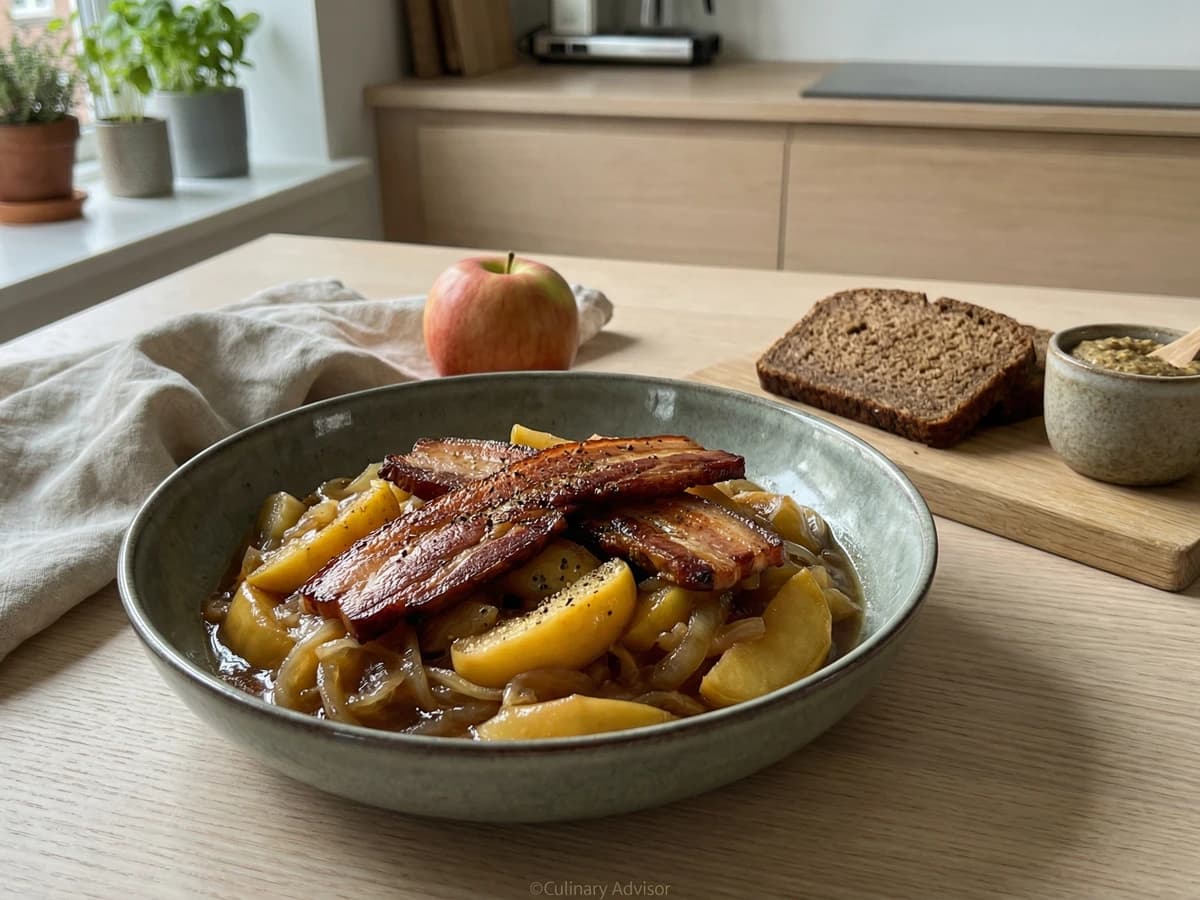
The Fyn autumn supper where thick pork belly renders slowly into its own fat, then meets apples and onions that cook down into a deep amber tangle. Sweet, salt, and the oldest pairing in the Danish larder.
A cooking platform built around craft, culture, and the stories behind what we eat.
Created by Chef Freja
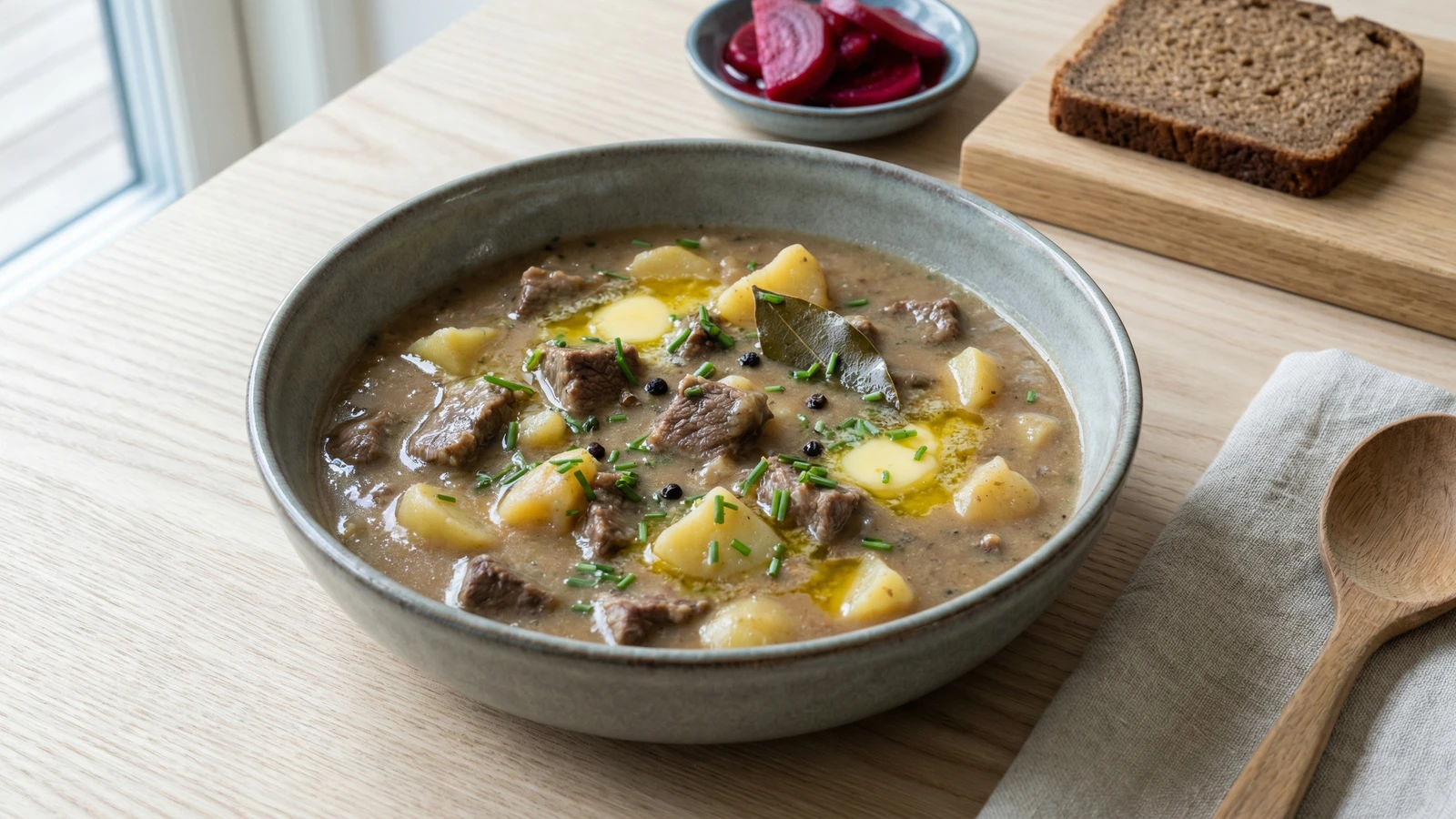
A sailor's stew from the 1700s, beef and potatoes simmered with onions and allspice until the pot thickens itself. Served with pickled beets, chives, and dark rugbrod for a winter evening that feels chosen.
February in Copenhagen is the month that tests you. The days are longer than December but the cold has settled in properly, the kind that gets into your shoulders and stays there. This is when skipperlabskovs comes out of the cupboard.
Skipperlabskovs means the skipper's lapskaus, a sailor's stew carried into Danish homes from the ships that worked the North Sea and the Baltic. It's beef, potatoes, onions, bay, and allspice cooked together until the potatoes break down and start to thicken the pot into something halfway between stew and mash. You serve it with pickled beets, chives scattered on top, a piece of butter melting in the middle, and dark rugbrod alongside. That's the complete picture, and every element matters.
What matters most is the patience. You cannot rush this, and you shouldn't try. The beef needs an hour alone in the broth before the potatoes ever see the pot, and the potatoes need another forty-five minutes to give up their starch. I'll tell you when to stir and when to leave things alone, but the season decides the rest. Cooked with love, this is the bowl that makes a cold Tuesday feel hyggelig, which is the Danish word for the particular warmth that comes from being somewhere you want to be.
Skipperlabskovs traces its name to the English sailor's dish lobscouse, which spread through the ports of northern Europe in the 1700s and gave Liverpool its nickname, Scouse. Danish sailors brought the stew home from their ships, where it was valued for using salted beef and long-keeping root vegetables that could survive weeks at sea. The domestic version, simmered with fresh beef and finished with a knob of butter, appears in Danish household cookbooks by the mid-1800s, and by the twentieth century it had become a fixture of both the Royal Danish Navy's galley and the Copenhagen lunch restaurants that served it at noon with a glass of cold beer.
Quantity
1kg
cut into 3cm cubes
Quantity
50g, plus extra to finish
Quantity
3 large
peeled and sliced
Quantity
1.5kg
peeled and cut into 3cm chunks
Quantity
2
Quantity
10
Quantity
5
Quantity
800ml
Quantity
to taste
Quantity
small bunch
snipped
Quantity
to serve
Quantity
thick slices, to serve
| Ingredient | Quantity |
|---|---|
| stewing beef, chuck or brisketcut into 3cm cubes | 1kg |
| unsalted butter | 50g, plus extra to finish |
| onionspeeled and sliced | 3 large |
| floury potatoespeeled and cut into 3cm chunks | 1.5kg |
| bay leaves | 2 |
| whole black peppercorns | 10 |
| whole allspice berries | 5 |
| beef stock | 800ml |
| fine sea salt | to taste |
| chivessnipped | small bunch |
| pickled beetroot (rodbeder) | to serve |
| dark rugbrod | thick slices, to serve |
Melt the butter in a heavy pot over a gentle heat. Add the sliced onions and a good pinch of salt. Stir them through the butter, put the lid on, and let them sweat for ten minutes until they're soft and translucent. You don't want any color on them. Skipperlabskovs is a pale stew, not a dark one, and browned onions would pull the whole dish toward caramel when what you want is clean, deep savor.
Tip the cubed beef into the pot with the onions. Add the bay leaves, peppercorns, and allspice berries. Pour over enough stock to cover the meat by about two centimetres. Bring it to a gentle simmer and skim any grey foam that rises to the surface. That foam is protein coming out of the meat, and if you leave it, the broth goes cloudy and tastes dull. Skim it off and the broth stays clean.
Turn the heat down to its lowest simmer, cover the pot, and leave it alone for an hour. The beef should be starting to soften but not yet falling apart. This is the patience the dish asks for. You cannot rush it, and you shouldn't try. The beef needs time to release its collagen into the broth, and the broth needs time to take it in.
Add the potato chunks to the pot and stir them gently through the broth. The liquid should just cover them. If it doesn't, add a little more stock or water. Put the lid back on and cook for another forty-five minutes. The potatoes need time to give up their starch to the broth, and that starch is what thickens the whole pot. This is why floury potatoes matter here. Waxy ones hold their shape and give you nothing.
Lift the lid. The potatoes on top will still have their shape. The ones at the bottom will have started to collapse. Take a wooden spoon and press about a third of the potatoes against the side of the pot, crushing them into the broth. Don't mash everything. You want a mix of whole pieces and broken ones: the broken ones thicken the sauce, the whole ones give you something to bite into. Stir gently to mix it through. Taste for salt. The broth should be glossy, thick enough to coat the back of a spoon, pale and rich.
Ladle the stew into deep bowls. Drop a small piece of butter on top of each one and let it melt into the broth in golden pools. Don't stir it in. Scatter snipped chives across the top. Serve immediately with bright pickled beets on the side and thick slices of dark rugbrod to catch what's left in the bowl. The cold sharpness of the beets against the warm, rich stew is the whole point of the dish, and you'll understand it the moment you take the first bite. Tak for mad.
1 serving (about 800g)
Culinary guides, cultural storytelling, and the editorial depth that makes cooking meaningful.
Discover Culinary ExplorerChef Freja
The Fyn autumn supper where thick pork belly renders slowly into its own fat, then meets apples and onions that cook down into a deep amber tangle. Sweet, salt, and the oldest pairing in the Danish larder.

Chef Freja
Warm Danish apple soup for the first cool evenings of autumn. Tart apples simmered with cinnamon and lemon peel, thickened to a soft gloss, and served with cold cream and buttery toasted oats.

Chef Freja
Danish white asparagus velouté with tiny veal meatballs, flour dumplings, and bright green tips scattered on the surface. The Easter soup of Copenhagen, built from five small pans of spring.
Chef Freja
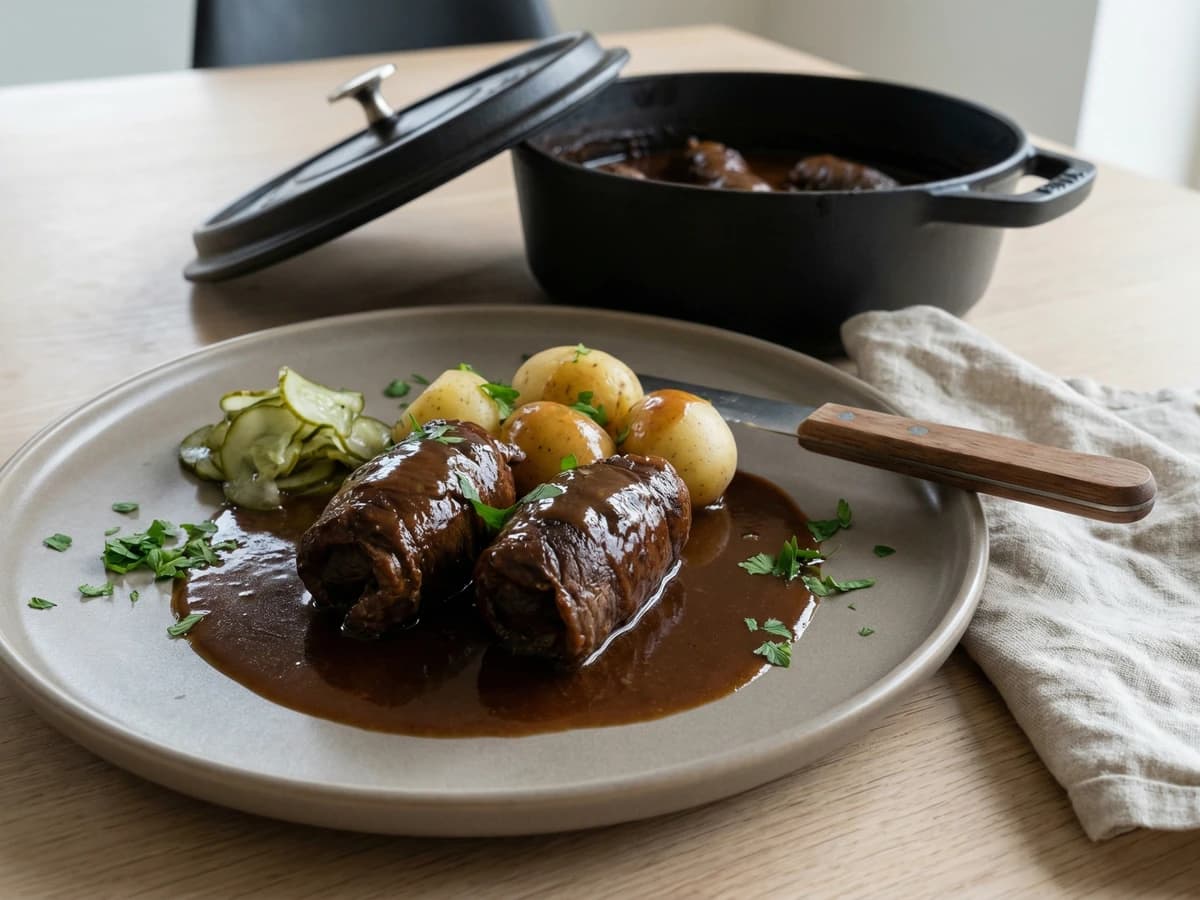
Thin beef slices rolled around bacon and onion, tied with string, and braised slowly in a dark glossy gravy finished with cream and redcurrant jelly. Danish Sunday dinner at its most comforting.