Chef Freja
Aebleflaesk
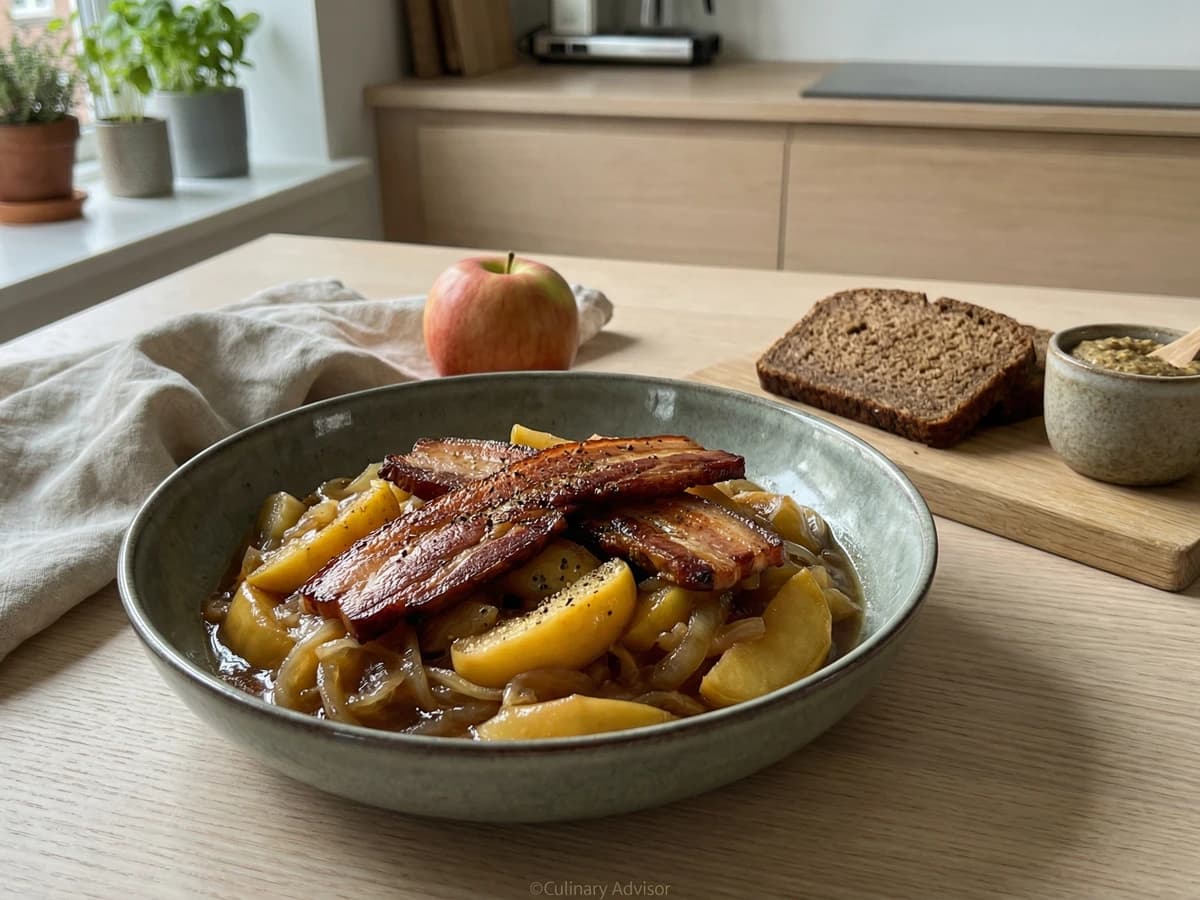
The Fyn autumn supper where thick pork belly renders slowly into its own fat, then meets apples and onions that cook down into a deep amber tangle. Sweet, salt, and the oldest pairing in the Danish larder.
A cooking platform built around craft, culture, and the stories behind what we eat.

Created by Chef Freja
Denmark's own version of goulash, beef braised slowly with sweet paprika, soft onions, and a bottle of dark beer until the sauce turns thick and brick-red. Root vegetables and rugbrod alongside.
By mid-November the light in Copenhagen gives up around four in the afternoon. The wind turns, the harbor goes grey, and the kind of cooking you want changes with it. You stop thinking about quick meals and start thinking about the pots that sit on the back of the stove for hours, quietly turning tough meat into something you can eat with a spoon. Dansk gullasch belongs to exactly that moment.
Danish goulash is not Hungarian goulash, and it is important to know the difference before you start. It traveled here in the 19th century and something happened to it along the way. The heat softened. The dark beer crept in. The roots of the Danish kitchen, carrots and parsnips and onions cooked slowly in butter, took over the base. What you end up with is a braise that tastes unmistakably Danish: warming, faintly sweet, deeply savory, the paprika present but never loud. It is weekday dinner and Sunday comfort in the same pot, the kind of thing you make a big batch of on a cold afternoon and eat for three days running, each bowl better than the last.
There are two moments where the dish is made or lost, and I want you to watch for both. The first is the browning of the beef. Take your time and do not crowd the pan. Every brown spot on every cube is flavor you will taste in the final sauce. The second is the onions. Fifteen minutes of slow cooking in butter, gentle enough that they melt rather than fry. Rush either step and the gullasch will be fine. Give them both the time they want and the gullasch will be one of the best things to come out of your kitchen this winter. You'll know when it's right. The whole house will tell you.
Goulash reached Denmark in the second half of the 19th century, arriving through Austro-Hungarian cookbooks and the urban middle-class kitchens of Copenhagen, where continental dishes were being adopted and rewritten to suit Danish taste. By the 1920s it had settled into the repertoire of the madmor, the Danish home cook, with two distinctive local turns: the addition of dark Danish beer in place of red wine, and the inclusion of root vegetables toward the end of the braise. The version that became standard in Danish households was codified in Frk. Jensens Kogebog, the bestselling Danish cookbook of the early 20th century, and it is her milder, sweeter, beer-darkened gullasch that most Danes still recognize as their own.
Quantity
1.2kg
cut into 4cm cubes
Quantity
3 tablespoons
Quantity
to taste
Quantity
freshly ground, to taste
Quantity
2 tablespoons
Quantity
40g
Quantity
3 large
halved and sliced
Quantity
4 cloves
finely chopped
Quantity
3 tablespoons
Quantity
1 teaspoon
Quantity
1 teaspoon
lightly crushed
Quantity
2 tablespoons
Quantity
330ml
porter or brown ale
Quantity
500ml
Quantity
2
Quantity
2 medium
peeled, cut into thick rounds
Quantity
2 medium
peeled, cut into thick rounds
Quantity
1 tablespoon
Quantity
2 teaspoons
Quantity
small bunch
snipped
Quantity
to serve
Quantity
thick slices, to serve
| Ingredient | Quantity |
|---|---|
| beef chuckcut into 4cm cubes | 1.2kg |
| plain flour | 3 tablespoons |
| fine sea salt | to taste |
| black pepper | freshly ground, to taste |
| neutral oil | 2 tablespoons |
| unsalted butter | 40g |
| yellow onionshalved and sliced | 3 large |
| garlicfinely chopped | 4 cloves |
| sweet Hungarian paprika | 3 tablespoons |
| smoked paprika | 1 teaspoon |
| caraway seedslightly crushed | 1 teaspoon |
| tomato paste | 2 tablespoons |
| dark Danish beerporter or brown ale | 330ml |
| beef stock | 500ml |
| bay leaves | 2 |
| carrotspeeled, cut into thick rounds | 2 medium |
| parsnipspeeled, cut into thick rounds | 2 medium |
| red wine vinegar | 1 tablespoon |
| caster sugar | 2 teaspoons |
| chives (optional)snipped | small bunch |
| creme fraiche (optional) | to serve |
| dark rugbrod | thick slices, to serve |
Pat the beef cubes completely dry with kitchen paper. This matters more than it sounds. Wet meat steams instead of browning, and browning is where half the flavor of this dish lives. Season generously with salt and pepper, then toss the cubes in the flour until each one is lightly dusted. Shake off anything loose.
Heat the oil in a heavy Dutch oven over medium-high heat until it shimmers. Add the beef in a single layer, leaving space between the cubes. Do not crowd the pan. Crowded meat releases water and boils in its own juices. You want a deep mahogany crust on every side, and that takes three or four minutes per side. Work in three batches if you need to, transferring the browned meat to a plate as you go. This step takes time. It is the foundation of everything that follows.
Lower the heat to medium. Add the butter to the same pot, letting it melt into the dark fond the beef has left behind. Add the sliced onions and a good pinch of salt. Cook them gently, stirring now and then, for fifteen minutes. They should turn soft, glossy, and pale gold, never dark brown. The salt pulls the water out of them and they start to melt rather than fry. This is where the sweetness of the sauce comes from, and you cannot rush it.
Add the garlic, both paprikas, caraway seeds, and tomato paste to the softened onions. Stir everything together and cook for two minutes. The paprika needs the fat to release its color and flavor, and you will see the onions turn deep red almost immediately. Keep stirring. Paprika burns quickly and burnt paprika tastes bitter for the rest of the dish. Two minutes is enough.
Pour in the dark beer and scrape the bottom of the pot with a wooden spoon. Every brown speck lifts off and dissolves into the liquid. Let the beer bubble hard for a minute to cook off some of the sharp edge. Dark Danish beer gives this dish its backbone. A porter brings toasted bitter notes, a brown ale brings caramel. Either works. Lager does not. You need the darkness.
Return the browned beef and any resting juices to the pot. Pour in the beef stock and add the bay leaves. The liquid should come about two-thirds of the way up the meat. If you need a splash more stock or water, add it. Bring the pot to a gentle simmer, cover with the lid slightly ajar, and lower the heat until the surface barely trembles. A rolling boil tightens the meat and gives you chewy beef. A low simmer relaxes it.
Cook for an hour and a half, stirring once or twice. The beef should be on its way to tender but still holding its shape. Now add the carrots and parsnips, tucking them down into the sauce. Replace the lid and continue cooking for another thirty to forty-five minutes, until the beef pulls apart easily under a fork and the roots are soft all the way through. You'll know when it's right: the sauce will have darkened to a deep brick-red and coated the back of a spoon.
Take the pot off the heat. Stir in the red wine vinegar and the sugar. This is the final adjustment, the move that lifts the whole dish. The vinegar cuts through the richness and the sugar rounds out the paprika. Taste. The sauce should be deep, warming, faintly sweet, and just sharp enough to keep you going back for another spoonful. Add more salt if it needs it. Fish out the bay leaves.
Ladle the gullasch into deep bowls. Add a spoonful of creme fraiche on top and let it melt into the sauce in a pale swirl. Scatter the chives. Serve with thick slices of dark rugbrod for mopping and a glass of the same beer you cooked with if you have one left. Tak for mad.
1 serving (about 385g)
Culinary guides, cultural storytelling, and the editorial depth that makes cooking meaningful.
Discover Culinary ExplorerChef Freja
The Fyn autumn supper where thick pork belly renders slowly into its own fat, then meets apples and onions that cook down into a deep amber tangle. Sweet, salt, and the oldest pairing in the Danish larder.

Chef Freja
Warm Danish apple soup for the first cool evenings of autumn. Tart apples simmered with cinnamon and lemon peel, thickened to a soft gloss, and served with cold cream and buttery toasted oats.

Chef Freja
Danish white asparagus velouté with tiny veal meatballs, flour dumplings, and bright green tips scattered on the surface. The Easter soup of Copenhagen, built from five small pans of spring.
Chef Freja
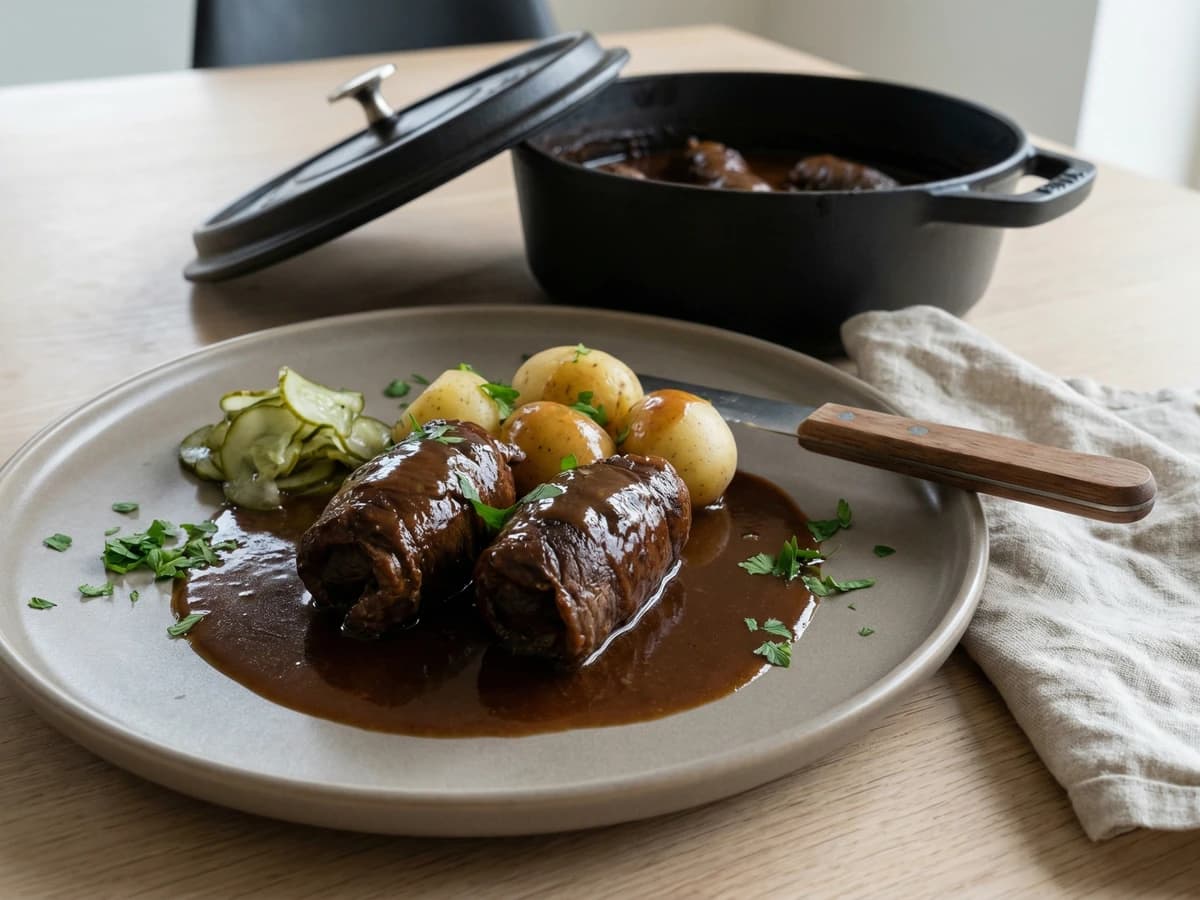
Thin beef slices rolled around bacon and onion, tied with string, and braised slowly in a dark glossy gravy finished with cream and redcurrant jelly. Danish Sunday dinner at its most comforting.