
Chef Takumi
Bamboo Shoot and Wakame Salad (若竹和え, Wakatake-ae)
Two spring things meet here: pale bamboo shoot, green wakame, and a vinegar-miso dressing thin enough to let both speak. The work is sourcing, then restraint.
A cooking platform built around craft, culture, and the stories behind what we eat.
Created by
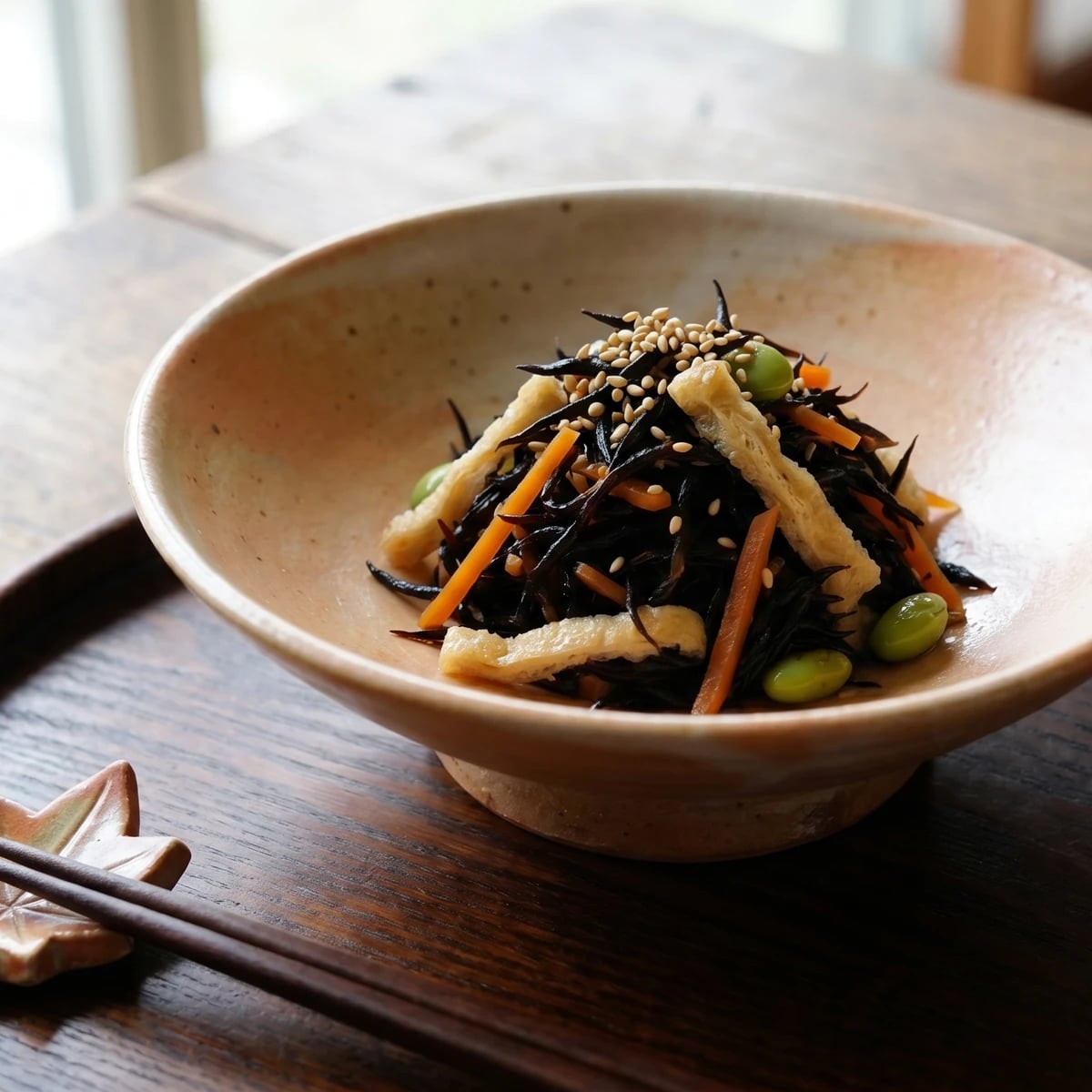
Hijiki no nimono is the quiet bento side that rewards patience: soak well, simmer gently, then let the seaweed drink its seasoning as it cools.
Hijiki looks more severe than it is. Dry, black, wiry, and not eager to charm you from the packet. Give it water and it opens like a small sea forest. Then it becomes one of the plainest, most useful dishes in the Japanese kitchen.
The one detail that decides it is the soaking water. Soak the hijiki until it is fully tender, rinse it well, and throw that dark water away. You're not wasting flavor. You're washing off harshness and grit, and with hijiki that matters more than sentiment. After that, the dish is only nimono, a gentle simmer in dashi, soy, sugar, and mirin.
This is not a salad in the Western sense, though it often sits cold or at room temperature beside rice. It belongs to the family of small okazu, side dishes that steady a meal without demanding attention. Carrot gives sweetness and color, aburaage gives a little richness, and edamame or soybeans make it feel complete. Make it today for tomorrow. Like many simmered dishes, it improves once the pot has gone quiet and the seasoning has had time to enter.
Hijiki has long been harvested from rocky shorelines around Japan, especially in coastal areas such as Ise-Shima, the Bōsō Peninsula, and parts of the Inland Sea. The seaweed is traditionally boiled or steamed, then dried, which turns it from brown-green to the black strands sold for home cooking. Hijiki no nimono became a standard household and bento dish because dried hijiki stores well, rehydrates quickly, and carries soy-dashi seasoning cleanly.
Quantity
25g
Quantity
1 tablespoon
Quantity
1 small
cut into fine matchsticks
Quantity
1 sheet
rinsed with hot water and cut into thin strips
Quantity
1/2 cup
cooked
Quantity
1 1/2 cups
Quantity
2 tablespoons
Quantity
1 tablespoon
Quantity
1 tablespoon
Quantity
1 teaspoon
Quantity
1 teaspoon
| Ingredient | Quantity |
|---|---|
| dried hijiki seaweed | 25g |
| neutral oil | 1 tablespoon |
| carrotcut into fine matchsticks | 1 small |
| aburaagerinsed with hot water and cut into thin strips | 1 sheet |
| shelled edamamecooked | 1/2 cup |
| dashi | 1 1/2 cups |
| soy sauce | 2 tablespoons |
| mirin | 1 tablespoon |
| sugar | 1 tablespoon |
| sake | 1 teaspoon |
| toasted sesame seeds (optional) | 1 teaspoon |
Put the dried hijiki in a large bowl and cover it with plenty of cool water. Leave it for 20 minutes, until the strands swell and feel flexible rather than wiry. Drain, rinse several times, and discard the soaking water. That dark water carries grit and harshness, and the dish tastes cleaner without it.
Pour hot water over the aburaage, then press it gently between paper towels and slice it into thin strips. This removes surface oil from frying. Leave it on, and the simmering broth turns heavy before the seaweed has a chance to drink it.
Warm the oil in a medium pot over medium heat. Add the carrot and drained hijiki and cook for 2 minutes, stirring gently, until the hijiki looks glossy and the carrot begins to soften at the edges. This little fry wakes the seaweed and helps it take seasoning without turning limp.
Add the aburaage, dashi, soy sauce, mirin, sugar, and sake. Bring the pot just to a simmer. The broth should taste a little stronger than you want the finished dish, because the hijiki and aburaage will take it in and soften it.
Set a wooden drop-lid, otoshibuta, directly on the surface, or use a circle of parchment with a small hole in the center. Simmer gently for 15 to 18 minutes, until only a few spoonfuls of liquid remain. The drop-lid keeps the seasoning moving over the strands without stirring them hard.
Fold in the edamame and cook 1 minute, just long enough to warm it through and keep its green color. Take the pot off the heat and let the hijiki cool in the remaining broth. Serve at room temperature, scattered with sesame if you like. It tastes better after several hours, and better still the next day.
1 serving (about 140g)
Culinary guides, cultural storytelling, and the editorial depth that makes cooking meaningful.
Discover Culinary Explorer
Chef Takumi
Two spring things meet here: pale bamboo shoot, green wakame, and a vinegar-miso dressing thin enough to let both speak. The work is sourcing, then restraint.

Chef Takumi
Tender spring bamboo meets kinome ground fresh with white miso, vinegar, and dashi. The dressing is green, fragrant, and brief by nature, so make it when the leaves are young.

Chef Takumi
Komatsuna no ohitashi is the home cook's reliable green: a quick blanch, a careful press, and a short rest in dashi until the stems taste clean and seasoned through.

Chef Takumi
Fuki is spring's bitter green stem, softened by salt, boiling water, and a calm soak in dashi. Peel it cleanly, steep it patiently, and the season announces itself without shouting.