
Chef Dean
Apple Cinnamon Pancakes
Tender buttermilk pancakes folded with butter-glazed apple pieces and warm cinnamon, stacked high and drowning in maple syrup. This is Sunday morning the way it ought to be.
A cooking platform built around craft, culture, and the stories behind what we eat.
Created by
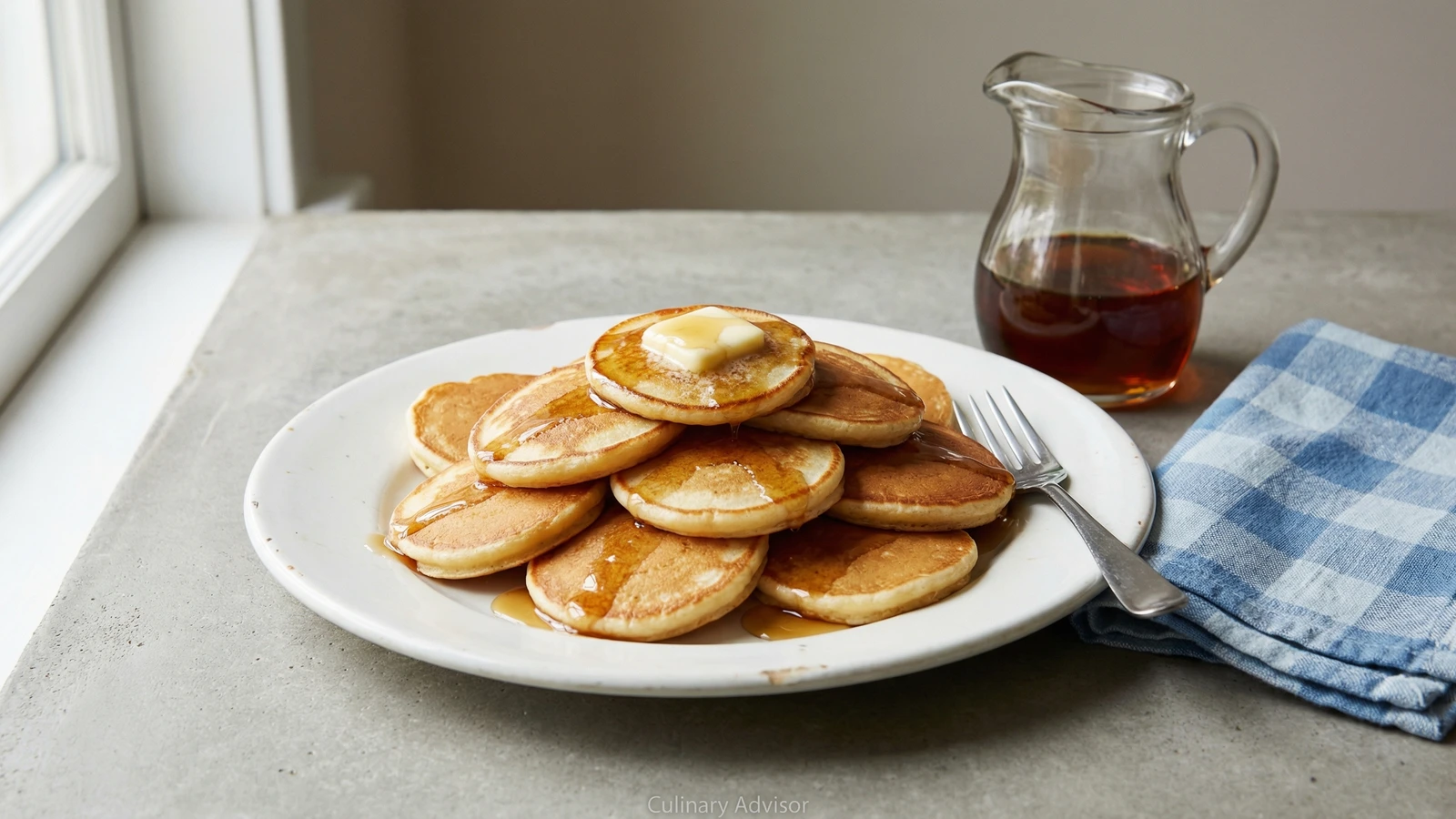
Tiny golden coins of tender pancake, each one a perfect two-bite treasure that turns ordinary mornings into the kind of breakfast children remember forty years later.
The silver dollar pancake exists because some grandmother, somewhere, understood child psychology better than any expert. A stack of regular pancakes can intimidate a small person. But a plate scattered with tiny golden coins? That's an invitation to play.
I've watched children who claim to hate breakfast devour a dozen of these without complaint. The size makes them approachable. Each one is a complete unit, a self-contained achievement. You can count them, arrange them, dunk them one at a time. For kids still learning the world, this matters more than we remember.
The batter is identical to any good buttermilk pancake. The buttermilk provides tang and tenderness through its acidity, which also activates the baking soda for extra lift. What changes is the pour: small spoonfuls instead of quarter-cup scoops. The smaller diameter means faster cooking, more edge per bite, and a higher ratio of golden crust to fluffy interior. Adults discover they prefer them too.
Make these on a Saturday morning when time stretches out like it did when you were young. Let the kids help drop the batter. Give them the job of counting the bubbles. This is how we pass down breakfast.
Quantity
1 1/2 cups (190g)
Quantity
2 tablespoons
Quantity
1 1/2 teaspoons
Quantity
1/2 teaspoon
Quantity
1/2 teaspoon
Quantity
1 1/4 cups
at room temperature
Quantity
1
at room temperature
Quantity
3 tablespoons
melted and cooled slightly
Quantity
1 teaspoon
Quantity
as needed
Quantity
for serving
Quantity
for serving
| Ingredient | Quantity |
|---|---|
| all-purpose flour | 1 1/2 cups (190g) |
| granulated sugar | 2 tablespoons |
| baking powder | 1 1/2 teaspoons |
| baking soda | 1/2 teaspoon |
| fine sea salt | 1/2 teaspoon |
| buttermilkat room temperature | 1 1/4 cups |
| large eggat room temperature | 1 |
| unsalted buttermelted and cooled slightly | 3 tablespoons |
| pure vanilla extract | 1 teaspoon |
| butter for the griddle | as needed |
| warm maple syrup | for serving |
| butter pats (optional) | for serving |
In a large mixing bowl, whisk together the flour, sugar, baking powder, baking soda, and salt until thoroughly combined. Make a well in the center. This takes thirty seconds and ensures your leavening is evenly distributed throughout. Clumps of baking powder mean uneven rise.
In a separate bowl or large measuring cup, whisk together the buttermilk, egg, melted butter, and vanilla until the egg is fully incorporated and the mixture looks uniform. The butter may form small clumps when it hits the cold buttermilk. This is fine. They'll disappear when mixed into the flour.
Pour the wet ingredients into the well of dry ingredients. Stir with a fork or whisk using gentle circular motions, pulling flour from the edges into the center. Stop the moment the flour disappears. The batter should look rough and lumpy, like cottage cheese stirred into paste. This is correct. Those lumps are your insurance against tough pancakes.
Let the batter sit for five minutes while you heat your griddle. During this rest, the flour hydrates fully and the baking powder begins its work. You'll see small bubbles forming on the surface. The batter will thicken slightly. Do not stir it again.
Heat a cast iron griddle or large nonstick skillet over medium heat for at least three minutes. Rub a thin film of butter across the surface using a folded paper towel. Test the temperature by dropping a tiny splash of batter onto the griddle. It should sizzle immediately and begin to set around the edges within seconds. If it sits there silently, your pan is too cold. If it browns instantly, reduce your heat.
Using a tablespoon measure or small ladle, drop batter onto the griddle in rounds about two inches across. Work quickly and leave an inch between each pancake. You should fit eight to ten on a large griddle. The batter will spread slightly, so pour less than you think you need. Perfect circles come with practice. Imperfect circles taste exactly the same.
Cook until bubbles rise to the surface and begin to pop, leaving small craters that don't fill back in. The edges will look set and slightly dry, the undersides golden brown. This takes about ninety seconds. Resist the urge to peek constantly. Lifting the pancake breaks the seal with the griddle and interrupts the crust formation.
Slide a thin spatula under each pancake and flip with a quick, confident motion. Cook the second side for sixty to ninety seconds until golden. The second side never browns as evenly as the first. This is universal pancake law. Press gently on the center. When it springs back, the pancake is done.
Transfer finished pancakes to a wire rack set inside a sheet pan in a 200°F oven. Never stack them directly or they'll steam and turn soggy. Wipe the griddle clean, add fresh butter, and continue with the remaining batter. The whole batch takes about fifteen minutes once you find your rhythm.
Pile the pancakes onto a warm platter or individual plates. A stack of eight to ten silver dollars makes a proper serving. Add a pat of butter to the top of each stack and pass warm maple syrup at the table. These are best eaten within moments of leaving the griddle, while the edges still crackle slightly against your fork.
1 serving (about 100g, 6 small pancakes)
Culinary guides, cultural storytelling, and the editorial depth that makes cooking meaningful.
Discover Culinary ExplorerChef Dean
Tender buttermilk pancakes folded with butter-glazed apple pieces and warm cinnamon, stacked high and drowning in maple syrup. This is Sunday morning the way it ought to be.

Chef Dean
Individual breakfast packages of farm eggs nestled in smoky ham, blanketed with melted sharp cheddar, ready for Sunday morning or make-ahead weekday fuel that tastes like someone who loves you made it.

Chef Ally
Oats softened overnight in yogurt and orchard cider, then crowned with whatever fruit the morning and the season bring to your table. A breakfast that asks almost nothing of you and gives back everything.

Chef Dean
Golden, shatteringly crisp potatoes mingled with sweet roasted peppers and caramelized onions, crowned with eggs whose yolks run like liquid sunshine when you break them open.