Culinary Explorer

A cooking platform built around craft, culture, and the stories behind what we eat.
Discover Culinary Explorer
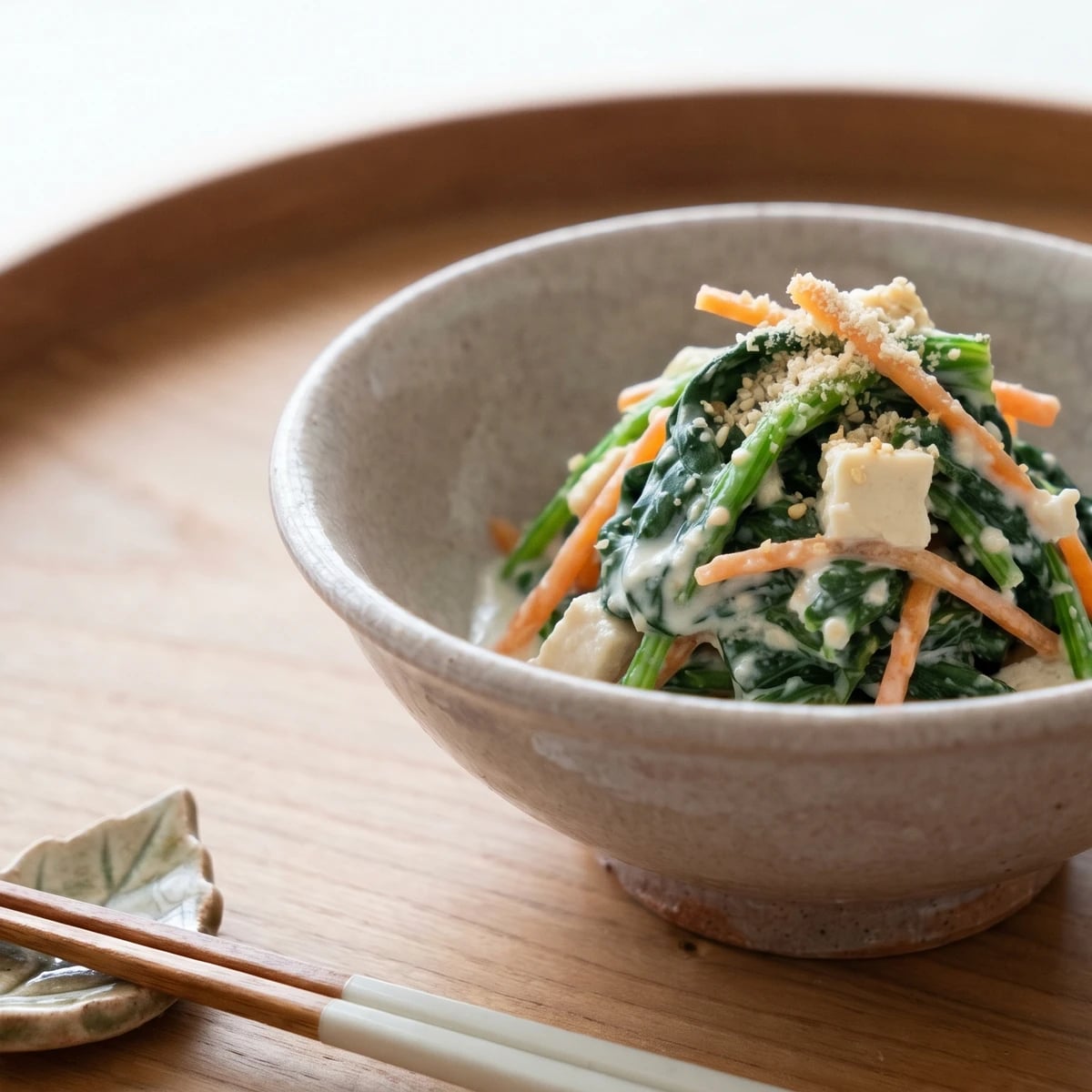
Shira-ae (白和え, tofu-dressed greens)

Shira-ae (白和え, tofu-dressed greens)

Created by

Shira-ae looks gentle, but it has one firm demand: press the tofu well. Do that, and the dressing turns creamy, nutty, and clean around whatever greens are in season.

Salads
Japanese
Dinner Party
Make Ahead
Comfort Food
35 min
Active Time
8 min cook43 min total
Yield4 servings

Shira-ae is the creamy side of washoku, with no cream and no apology needed. The dressing is tofu, pressed until it stops weeping, then worked smooth with white sesame, miso, and a little sugar. It looks like a small thing. It teaches a large one.

The detail that decides it is dryness. If the tofu keeps too much water, the dressing turns loose and chalky, and the greens slide around in it like strangers at a party. Press it until it feels firm under your fingers, then mash it smooth. The sesame gives body, the miso gives salt and depth, and the sugar rounds the edge without making the dish sweet.

Use what is at its prime, shun, and keep it honest: spinach in winter, chrysanthemum greens when their fragrance is clear, carrot for color, konnyaku for quiet chew. Each ingredient is blanched, cooled, and squeezed dry before it meets the tofu. Nothing hidden. The dressing should cling, not drown.

On the Japanese table this sits as a small dressed dish, often beside rice, soup, and something grilled or simmered. It is make-ahead food, but not careless food. Fold it together shortly before serving, mound it lightly, and leave it room.

Shira-ae belongs to the broader family of aemono, dressed dishes that became common in Japanese cookery by the Edo period, when sesame, miso, vinegar, and tofu dressings were used to season seasonal vegetables without heavy sauces. The name means white dressing, a plain description of the pale tofu base that distinguishes it from sesame-only goma-ae. It also has a strong place in Buddhist temple cooking, where tofu and sesame provide richness within a meatless table.

The technique, the tradition, and the story behind every dish.

Discover Culinary Explorer

Ingredients

firm tofu

Quantity

300g

pressed dry

spinach, komatsuna, or shungiku

Quantity

200g

washed well

carrot

Quantity

1 small (about 80g)

cut into fine matchsticks

konnyaku (optional)

Quantity

50g

cut into thin short strips

white sesame seeds

Quantity

2 tablespoons

white miso

Quantity

1 tablespoon

sugar

Quantity

2 teaspoons

soy sauce

Quantity

1 teaspoon

mirin

Quantity

1/2 teaspoon

sea salt

Quantity

1 pinch

usukuchi soy sauce (optional)

Quantity

1 teaspoon

for seasoning the vegetables

Equipment Needed

  • Suribachi and surikogi, or a mortar and pestle
  • Clean cloth or paper towels for pressing tofu
  • Small weight, such as a plate with a can on top
  • Medium pot for blanching

Instructions

  1. 1

    Press the tofu

    Wrap the tofu in a clean cloth or paper towels, set it on a plate, and place a light weight on top for 25 to 30 minutes. You want it firm and damp, not crushed flat. Pressing removes the water that would loosen the dressing and dull the sesame, so don't rush this part.

    If the tofu still feels wet enough to drip when you lift it, give it another ten minutes. Shira-ae succeeds before the mixing bowl.
  2. 2

    Blanch the vegetables

    Bring a pot of salted water to a boil. Blanch the carrot until just tender, about 1 minute, then lift it out. Blanch the greens until the stems bend and the leaves turn bright, 30 to 60 seconds depending on the green. Cool them quickly in cold water so the color stays clear and the cooking stops.

    Blanch each vegetable separately. They cook at different speeds, and the dish tastes cleaner when each one keeps its own texture.
  3. 3

    Squeeze and season

    Squeeze the greens firmly in your hands, then cut them into 1 1/2-inch lengths. Squeeze once more after cutting, because water hides between the stems. If using konnyaku, blanch it for 1 minute to remove its raw smell, then drain well. Toss the vegetables lightly with the optional usukuchi soy sauce and squeeze again after a minute. This small seasoning, called shitaji, gives the vegetables taste before the tofu dressing touches them.

    Dry vegetables matter as much as dry tofu. Wet greens make a beautiful dressing collapse into soup, which is not a crime, only a pity.
  4. 4

    Grind the sesame

    Toast the white sesame seeds in a dry pan over medium-low heat until they smell nutty and a few seeds begin to color, then grind them in a suribachi, a ridged Japanese mortar. Stop when most seeds are broken and the mixture looks sandy and a little oily. Grinding releases the sesame oil, which gives the dressing its body.

    No suribachi? Use a small mortar, spice grinder, or crush the seeds in a sealed bag with a rolling pin. Leave a little texture. Smooth paste is not the goal here.
  5. 5

    Make the dressing

    Add the pressed tofu to the ground sesame and mash until mostly smooth. Work in the white miso, sugar, soy sauce, mirin, and salt. Taste it. The dressing should be softly savory, faintly sweet, and a little stronger than you expect, because the vegetables will calm it down.

    Use white miso for its mild sweetness and pale color. A darker miso changes both the flavor and the quiet white appearance that gives the dish its name.
  6. 6

    Fold and serve

    Fold the vegetables and konnyaku into the tofu dressing with a light hand. Don't beat them in. The dressing should cling to each piece while small flashes of green and orange still show through. Mound the shira-ae in a small bowl, off-center, and serve cool or at room temperature.

Chef Tips

  • Choose firm tofu, not silken tofu. Silken tofu has its grace, but here it carries too much water and turns the dressing loose.
  • Use greens with character. Spinach is gentle, komatsuna is clean and green, and shungiku brings a faint bitterness that makes the tofu taste sweeter.
  • Dress the vegetables close to serving time if you want the cleanest look. The tofu dressing can wait in the refrigerator, and the blanched vegetables can wait separately.
  • For a meatless table, this dish needs no apology. Tofu, sesame, and seasonal vegetables are already the honmono path.

Advance Preparation

  • Press the tofu up to 8 hours ahead and keep it covered in the refrigerator.
  • Blanch, squeeze, and cut the vegetables up to 1 day ahead. Store them separately from the dressing so they don't water it down.
  • The tofu-sesame dressing can be made 1 day ahead. Stir it before using, then fold in the vegetables shortly before serving.

Frequently Asked Questions

Nutrition Information

1 serving (about 125g)

Calories
125 calories
Total Fat
6 g
Saturated Fat
1 g
Trans Fat
0 g
Unsaturated Fat
5 g
Cholesterol
0 mg
Sodium
450 mg
Total Carbohydrates
11 g
Dietary Fiber
3 g
Sugars
5 g
Protein
10 g

Note: Chef personas and recipes are created with AI assistance. Cook with care: follow safe food-handling practices, check doneness with a thermometer when needed, and adapt for allergies and your kitchen.

Where cooking meets culture.

Culinary guides, cultural storytelling, and the editorial depth that makes cooking meaningful.

Discover Culinary Explorer

More from Sunomono & Aemono: Vinegared and Dressed Sides

Browse the full collection