Culinary Explorer

A cooking platform built around craft, culture, and the stories behind what we eat.
Discover Culinary Explorer
Sausage and Egg Breakfast Casserole

Sausage and Egg Breakfast Casserole

Created by

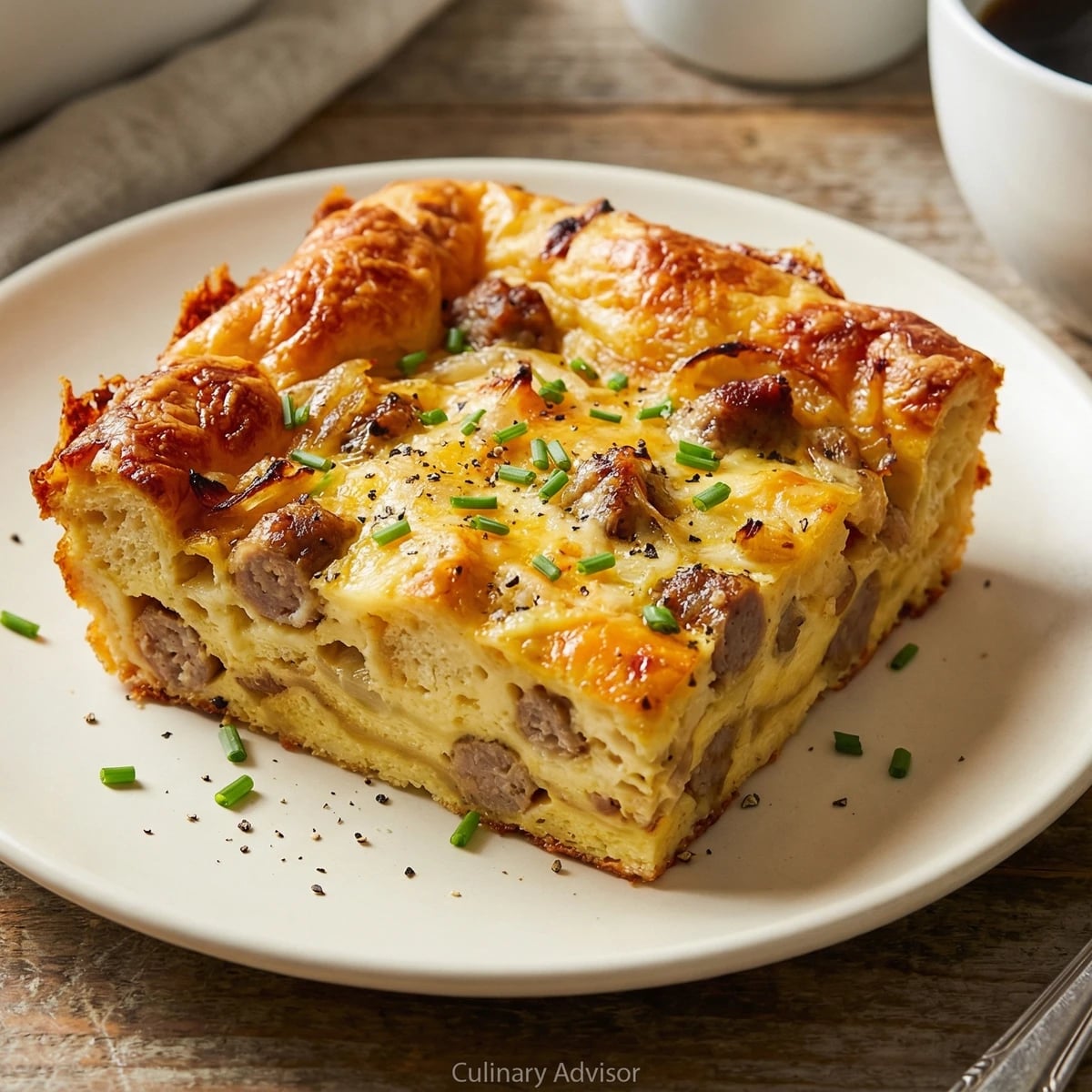
A golden, bubbling casserole of sage-kissed sausage, tender bread cubes, and sharp cheddar bound together in silky custard. Assembled the night before, baked fresh for grateful holiday tables.

Breakfast & Brunch
American
Holiday
Make Ahead
Thanksgiving
25 min
Active Time
55 min cook1 hr 20 min total
Yield8-10 servings

This casserole has been saving holiday mornings for generations. While the turkey crowd is panicking about brine times and the ham people are calculating glaze ratios, the wise cook is sliding this dish into the oven and pouring a second cup of coffee. It asks almost nothing of you on the day that matters.

The technique belongs to a tradition older than the name suggests. French cooks call this method a strata, though that term always struck me as unnecessarily fancy for something born of frugality. Farm wives from Pennsylvania to Indiana have been layering stale bread with eggs and whatever protein the larder offered since before anyone thought to write it down. The dish represents practical genius: substantial, portable, and infinitely variable.

What makes this version work is the overnight rest. The bread drinks in the seasoned custard, swelling and softening until the boundaries between ingredients blur. By morning, you have something that bakes into a single unified creation rather than a jumble of separate components. The sausage renders fat into the surrounding custard. The cheese melts into golden, bubbly rivulets. The top puffs dramatically in the oven's heat.

I've served this to crowds of twenty and tables of four. It scales gracefully, holds well in a warm oven, and reheats without complaint. This is the kind of honest, unfussy cooking that American home cooks have always excelled at when left alone by food magazines telling them what they should be making instead.

The technique, the tradition, and the story behind every dish.

Discover Culinary Explorer

Ingredients

bulk breakfast sausage

Quantity

1 pound

sage-seasoned preferred

unsalted butter

Quantity

1 tablespoon, plus more for the dish

yellow onion

Quantity

1 medium

diced

day-old crusty bread

Quantity

1 pound (about 10 cups)

cut into 1-inch cubes

sharp cheddar cheese

Quantity

3 cups (12 ounces)

shredded

large eggs

Quantity

10

whole milk

Quantity

3 cups

kosher salt

Quantity

1 teaspoon

black pepper

Quantity

1/2 teaspoon

freshly ground

dry mustard powder

Quantity

1/2 teaspoon

cayenne pepper

Quantity

1/4 teaspoon

fresh chives

Quantity

2 tablespoons

minced

Equipment Needed

  • 9x13-inch baking dish
  • Large skillet (12-inch preferred)
  • Large mixing bowl
  • Whisk

Instructions

  1. 1

    Brown the sausage

    Set a large skillet over medium-high heat. Add the sausage, breaking it into small crumbles with a wooden spoon as it cooks. You want pieces no larger than a nickel. Cook until deeply browned and rendered, about eight to ten minutes. The fond building on the bottom of your pan is flavor. Don't scrub it away. Transfer sausage to a paper towel-lined plate, leaving the fat in the skillet.

    Sage-seasoned sausage is traditional, but Italian sweet or hot sausage works beautifully if you want a different character.
  2. 2

    Soften the onions

    Reduce heat to medium. Add the butter to the sausage drippings and let it foam. Add the diced onion and cook, stirring occasionally, until soft and translucent with golden edges, about five minutes. The onion will pick up the browned bits from the sausage. This is good. Scrape everything from the pan and add to the sausage.

  3. 3

    Prepare the baking dish

    Butter a 9x13-inch baking dish generously. Your grandmother used butter and so should you. Margarine slides off the sides and leaves you with stuck-on egg. Spread half the bread cubes across the bottom in an even layer.

  4. 4

    Build the layers

    Scatter half the sausage mixture over the bread, then half the shredded cheese. Repeat with remaining bread, sausage, and cheese. The layering matters. It ensures every forkful contains all the elements that make this dish worth eating.

  5. 5

    Whisk the custard

    Crack the eggs into a large bowl. Add the milk, salt, pepper, mustard powder, and cayenne. Whisk vigorously until the mixture is completely uniform with no streaks of white. The mustard won't taste like mustard in the finished dish. It amplifies the cheese and adds a warmth you can't quite identify.

    The eggs must be at room temperature if you're baking immediately. Cold eggs straight from the refrigerator will extend your baking time significantly.
  6. 6

    Soak the casserole

    Pour the custard slowly and evenly over the layered casserole. Use a spatula to gently press the bread cubes down, ensuring every piece gets submerged. The bread needs to drink in the custard. Cover tightly with plastic wrap and refrigerate overnight, or at least four hours. This rest is not optional. It transforms a collection of ingredients into a unified dish.

  7. 7

    Bring to room temperature

    Remove the casserole from the refrigerator and let it sit on the counter while the oven preheats to 350°F, about thirty minutes. A cold dish in a hot oven bakes unevenly, with overcooked edges and a raw center. Patience now prevents disappointment later.

  8. 8

    Bake covered

    Cover the dish tightly with aluminum foil and bake for thirty-five minutes. The foil traps steam and allows the custard to set gently without the top browning too quickly. You'll smell sausage and toasted cheese filling the kitchen before you're halfway through.

  9. 9

    Uncover and finish

    Remove the foil and continue baking until the top is puffed and golden brown, the edges pulling slightly from the sides of the dish, and a knife inserted in the center comes out clean. This takes another fifteen to twenty minutes. The casserole will dome magnificently, then settle as it cools.

  10. 10

    Rest and serve

    Let the casserole rest for ten minutes before cutting. This allows the custard to set fully and makes serving easier. Cut into generous squares, scatter fresh chives over each portion, and serve on warmed plates. This is the kind of food that makes people linger at the table.

Chef Tips

  • Day-old bread is essential, not a suggestion. Fresh bread turns to mush. If your bread is too soft, cube it and let it sit uncovered overnight, or toast the cubes lightly in a 300°F oven for ten minutes.
  • Sharp cheddar provides backbone, but a handful of Gruyère or smoked Gouda mixed in adds complexity. The finished dish won't announce these additions, but people will ask what makes it taste so good.
  • For a lighter casserole, substitute half the whole milk with half-and-half. For a richer version that borders on indecent, use all half-and-half. Both approaches have their merits.
  • Add vegetables if you like. Sautéed mushrooms, roasted red peppers, or blanched broccoli florets all belong. Fold them in with the sausage layer.

Advance Preparation

  • The casserole must be assembled at least 4 hours ahead, preferably overnight. This step cannot be skipped.
  • Once assembled, the unbaked casserole keeps refrigerated for up to 24 hours.
  • Leftovers reheat beautifully. Cover with foil and warm in a 325°F oven for fifteen minutes, or microwave individual portions.
  • The sausage and onions can be browned up to two days ahead and refrigerated. Bring to room temperature before assembling.

Frequently Asked Questions

Nutrition Information

1 serving (about 235g)

Calories
595 calories
Total Fat
28 g
Saturated Fat
13 g
Trans Fat
0 g
Unsaturated Fat
11 g
Cholesterol
150 mg
Sodium
685 mg
Total Carbohydrates
30 g
Dietary Fiber
1 g
Sugars
2 g
Protein
28 g

Note: Chef personas and recipes are created with AI assistance. Cook with care: follow safe food-handling practices, check doneness with a thermometer when needed, and adapt for allergies and your kitchen.

Where cooking meets culture.

Culinary guides, cultural storytelling, and the editorial depth that makes cooking meaningful.

Discover Culinary Explorer

More from Breakfast at Grandma's

Browse the full collection