
Chef Juliana
Bauru Clássico (Ponto Chic)
You don't need a lanchonete password. Hollow the pão francês, soften four cheeses in hot water, tuck in real rosbife, tomato, and picles, and São Paulo dinner lands in your hand.
A cooking platform built around craft, culture, and the stories behind what we eat.
Created by
You don't need a market counter to make this. You need thin slices, hot bread, a good pile, and the discipline to warm the mortadela without turning it greasy.
You may be looking at 300 grams of mortadela and thinking, isso não é pra mim. Too much, too famous, too São Paulo, too easy to ruin. Good. That's exactly the kind of kitchen fear a gente can take apart with a pan, a knife, and a little attention.
This isn't the everyday pê-efe, rice and beans and meat or egg and something green. It's the other honest Brazilian meal: the sandwich that resolves dinner when the day has already chewed your patience. Still comida de verdade, if you treat it like food and not like a packaged trick. Good bread. Real mortadela. A hot pan. No packet pretending to be flavor.
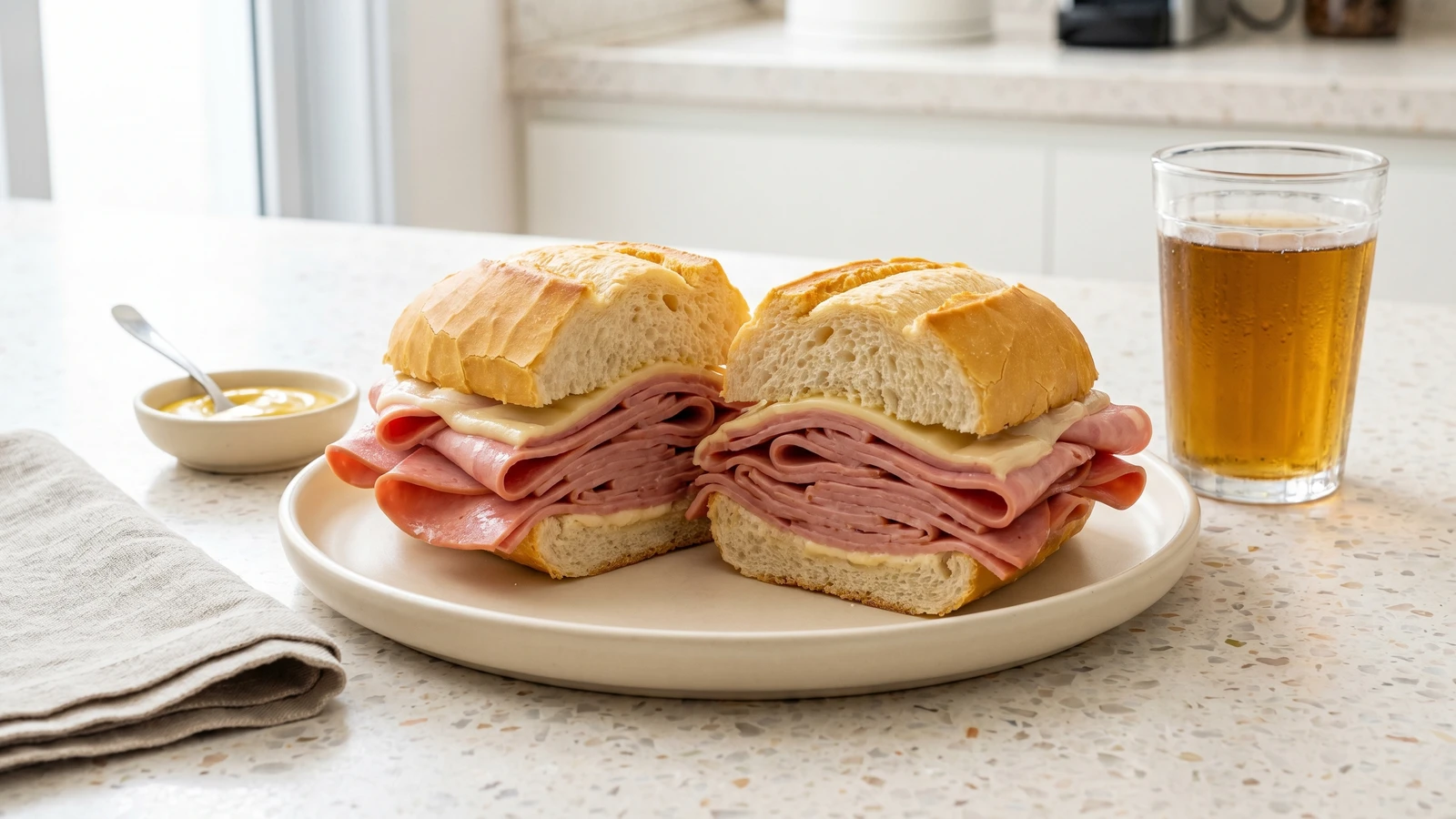
The method is simple, but it has a point. Slice the bread so it opens like a book, because the filling needs a place to sit without escaping down your shirt. Warm the mortadela in loose folds, not a smashed brick, because folds catch heat and keep the slices tender. Melt the provolone only if you want it, because the classic can stand without cheese and doesn't need help showing off.
Anota aí: this is not hard. It's assembly with judgment. Cozinhar não é dom, é um aprendizado, and sometimes the lesson is knowing when to stop fussing and let pão francês and mortadela do their job.
The Mercado Municipal de São Paulo opened in 1933 and became one of the city's loudest food landmarks, with counters serving workers, shoppers, and tourists under the same roof. The mortadela sandwich associated with Bar do Mané became famous for its exaggerated pile, about 300 grams of thin-sliced mortadela on pão francês, a São Paulo answer to the question of how much sandwich a person can reasonably call lunch. The size is part of the story, but the technique is what keeps it from becoming just a cold stack of meat.
Quantity
2
fresh and crusty
Quantity
600 grams
very thinly sliced
Quantity
4 slices
Quantity
1 tablespoon
Quantity
1 tablespoon
Quantity
1 small handful
| Ingredient | Quantity |
|---|---|
| pão francês rollsfresh and crusty | 2 |
| mortadelavery thinly sliced | 600 grams |
| provolone cheese (optional) | 4 slices |
| butter or olive oil | 1 tablespoon |
| yellow mustard (optional) | 1 tablespoon |
| arugula or thinly sliced lettuce (optional) | 1 small handful |
Cut each pão francês lengthwise, leaving one side attached so it opens like a book. Pull out only a little of the soft middle if the roll is very thick. You want a cradle, not a hollow cave, because the bread has to hold the mortadela without turning into crumbs in your hands.
Warm a large skillet over medium heat and add the butter or olive oil. Place the bread cut side down and toast until the inside turns lightly golden and smells nutty, about 2 minutes. This keeps the bread from going soggy when the warm mortadela hits it.
Add the mortadela to the skillet in loose folds, working in two batches if needed. Warm it for 2 to 3 minutes, turning with tongs, until the edges curl a little and the slices look glossy. Don't press it flat. A smashed pile gets greasy and heavy; loose folds keep air and tenderness in the sandwich.
If using provolone, lay 2 slices over each warm pile of mortadela, lower the heat, and cover the skillet for 30 to 60 seconds. Stop when the cheese softens and droops into the folds. Let it melt, not drown everything. The cheese should hold the pile together, not erase the mortadela.
Spread a little mustard on the toasted bread if you like it sharp. Lift each warm pile into a roll, tucking the slices high and loose. Add arugula or lettuce only if you want a fresh bite. Close the bread gently and press just enough so the sandwich holds. Too much pressure and you'll squeeze out the good stuff.
Cut each sandwich in half with a sharp knife and serve right away, while the bread is crisp inside and the mortadela still has its glossy warmth. This is not a sandwich for waiting around. Make it, sit down, eat.
1 serving (about 410g)
Culinary guides, cultural storytelling, and the editorial depth that makes cooking meaningful.
Discover Culinary ExplorerChef Juliana
You don't need a lanchonete password. Hollow the pão francês, soften four cheeses in hot water, tuck in real rosbife, tomato, and picles, and São Paulo dinner lands in your hand.

Chef Juliana
You don't need a lanchonete counter to make this. Pão sírio, roast beef, cheese, egg, salad, and a hot pan solve dinner without powder, drama, or fear.

Chef Juliana
You think this is just a hot dog. It's not. It's the birthday table, the game-day tray, and a very São Paulo lesson in sauce, crunch, and no fear.

Chef Juliana
You don't need a tower of toppings. A hot pan, a thin patty, soft bread, and real tomato sauce give you the São Paulo counter burger that solves dinner fast.