Chef Dean
Vegetable Pakoras
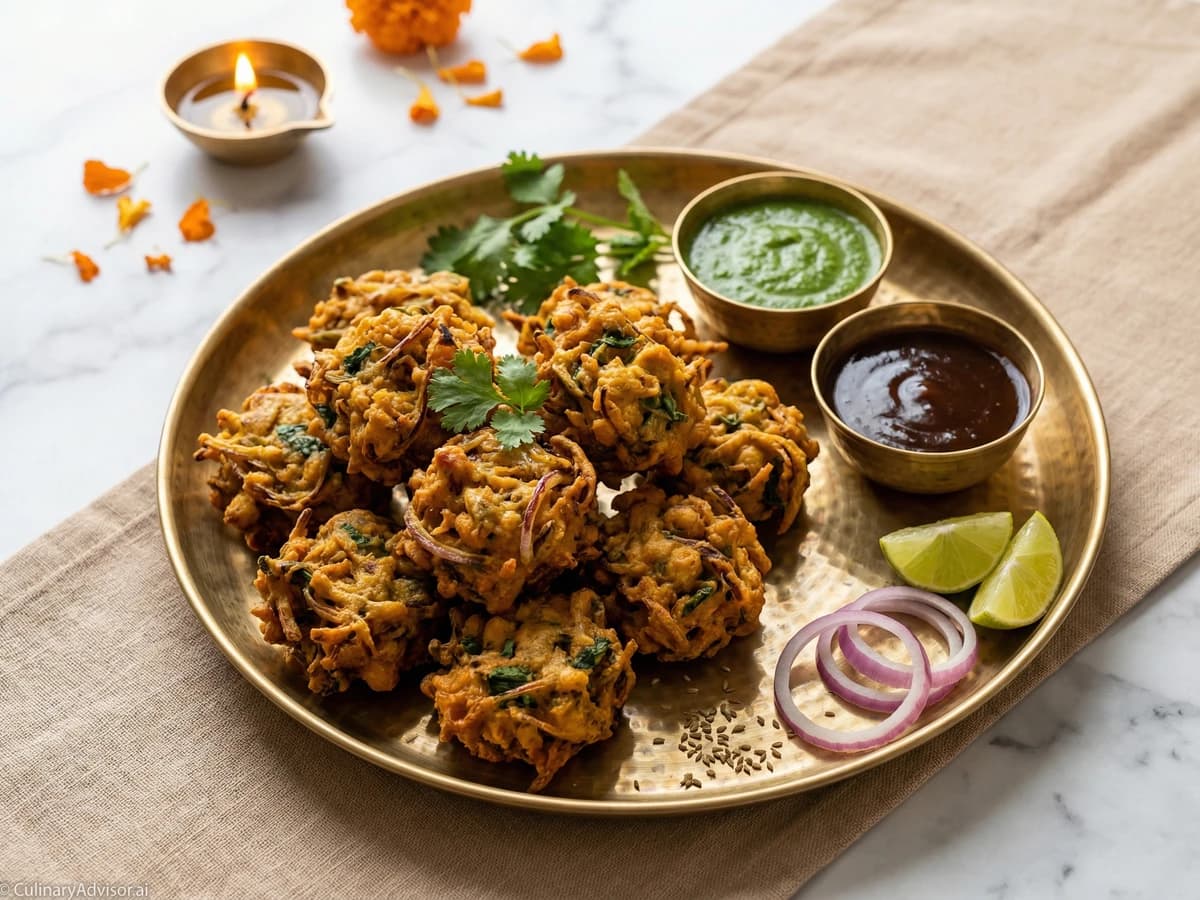
Golden, shatteringly crisp fritters bursting with onion, spinach, and warm spices, wrapped in a seasoned chickpea batter that fries to an honest crunch. This is celebration food meant for sharing.
A cooking platform built around craft, culture, and the stories behind what we eat.
Created by
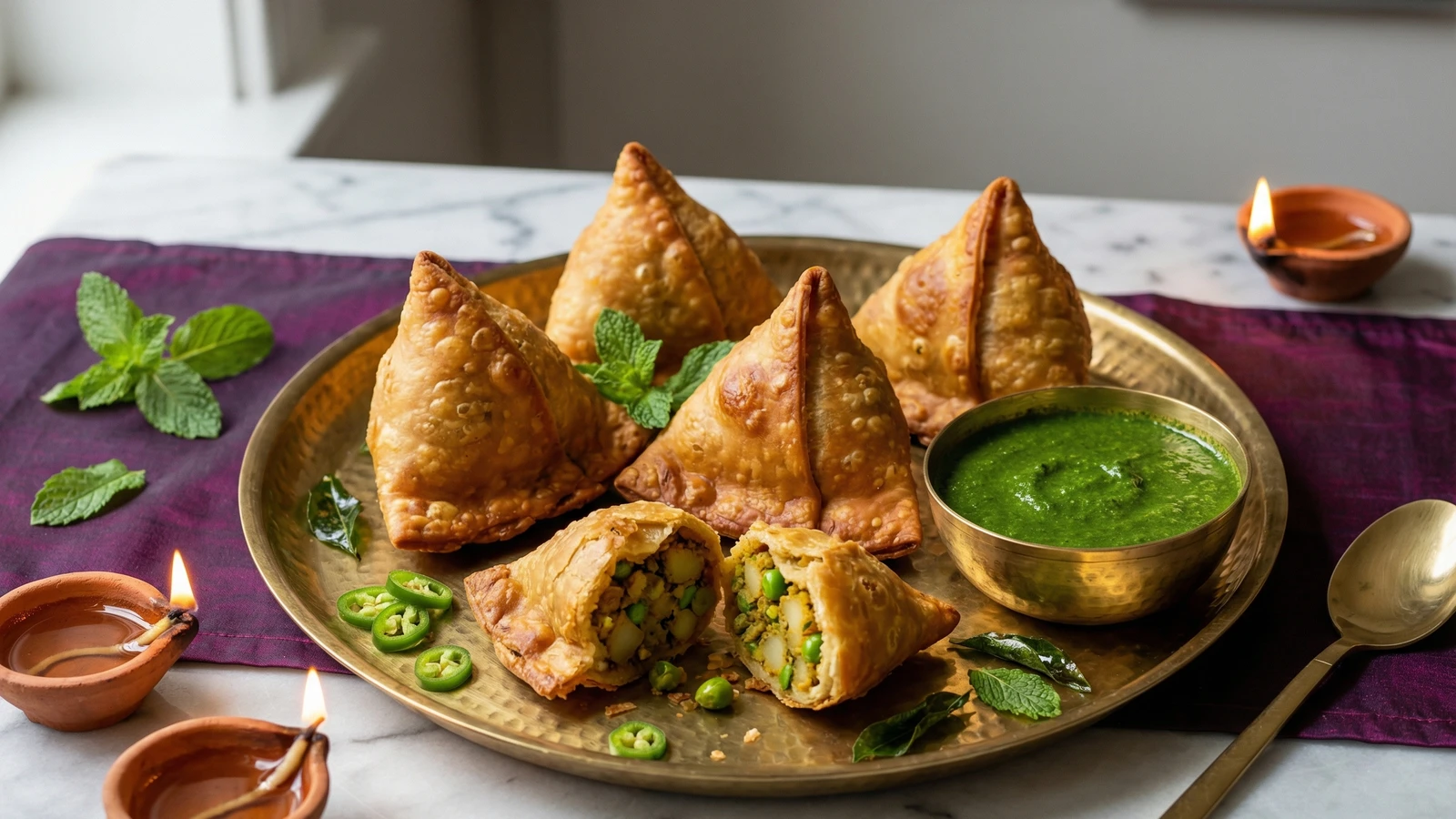
Shatteringly crisp pastry wrapped around warmly spiced potatoes and sweet peas, served alongside a bright, herbaceous mint chutney that cuts through the richness with electric green freshness.
Every great cuisine has its perfect fried dumpling, and India gave the world the samosa. These golden triangles have traveled from the Middle East through Central Asia to become inseparable from Indian celebration. During Diwali, the Festival of Lights, platters of samosas appear on every table. They're food meant for sharing, for abundance, for the pleasure of feeding people you love.
The technique is simpler than it appears. You're making a sturdy dough enriched with oil, rolling it thin, and wrapping it around a filling that rewards patience. The potatoes must be dry. The spices must be bloomed in hot fat. The edges must be sealed with conviction. Get these things right and you'll produce samosas that shatter when bitten, releasing fragrant steam and the earthy comfort of cumin and coriander.
I've taught this recipe to cooks who swore they couldn't fry anything. Within an hour, they were turning out samosas that rivaled any restaurant. The secret is temperature control and a refusal to rush. Your oil must hold steady at 325 degrees. Your samosas must swim, not crowd. Work in batches. Accept that this takes time. The results justify every minute.
The mint chutney comes together in seconds and provides the essential counterpoint. Bright where the samosas are rich. Cool where they're warm. Sharp where they're mellow. Together, they're one of the great combinations in world cuisine.
Quantity
2 cups
Quantity
1/2 teaspoon
Quantity
3/4 teaspoon
Quantity
1/4 cup, plus 4 cups for frying
Quantity
1/2 cup
Quantity
1 1/2 pounds
Quantity
1 cup
thawed
Quantity
3 tablespoons
Quantity
1 teaspoon
Quantity
1 teaspoon
lightly crushed
Quantity
1 medium
finely diced
Quantity
2 tablespoons
minced
Quantity
2
seeded and minced
Quantity
1/2 teaspoon
Quantity
1 teaspoon
Quantity
1/2 teaspoon
Quantity
1/2 teaspoon
Quantity
3 tablespoons
chopped
Quantity
2 cups, packed
Quantity
1 cup
Quantity
1
roughly chopped
Quantity
2 tablespoons
Quantity
1/2 teaspoon
Quantity
1/4 teaspoon
Quantity
3 tablespoons
| Ingredient | Quantity |
|---|---|
| all-purpose flour | 2 cups |
| ajwain seeds (carom seeds) | 1/2 teaspoon |
| fine sea salt | 3/4 teaspoon |
| vegetable oil | 1/4 cup, plus 4 cups for frying |
| cold water | 1/2 cup |
| Yukon Gold potatoes | 1 1/2 pounds |
| frozen peasthawed | 1 cup |
| vegetable oil for filling | 3 tablespoons |
| cumin seeds | 1 teaspoon |
| coriander seedslightly crushed | 1 teaspoon |
| yellow onionfinely diced | 1 medium |
| fresh gingerminced | 2 tablespoons |
| serrano chilies for fillingseeded and minced | 2 |
| ground turmeric | 1/2 teaspoon |
| garam masala | 1 teaspoon |
| amchur (dried mango powder) | 1/2 teaspoon |
| kosher salt | 1/2 teaspoon |
| fresh cilantrochopped | 3 tablespoons |
| fresh mint leaves | 2 cups, packed |
| fresh cilantro leaves and tender stems | 1 cup |
| serrano chili for chutneyroughly chopped | 1 |
| fresh lemon juice | 2 tablespoons |
| sugar | 1/2 teaspoon |
| fine sea salt for chutney | 1/4 teaspoon |
| cold water for chutney | 3 tablespoons |
Whisk the flour, ajwain seeds, and salt together in a large bowl. The ajwain has a thyme-like fragrance that will perfume your kitchen. Add the oil and work it into the flour with your fingertips until the mixture resembles coarse sand with some pebble-sized bits. Drizzle in the cold water and stir with a fork until shaggy clumps form. Turn out onto a clean surface and knead for 3 minutes until smooth and pliable. The dough should feel like modeling clay: firm but not stiff. Wrap tightly in plastic and rest at room temperature for 30 minutes. This rest relaxes the gluten and makes rolling effortless.
Place whole, unpeeled potatoes in a pot and cover with cold water by two inches. Add a generous pinch of salt. Bring to a boil, then reduce to a steady simmer. Cook until a knife slides through the center without resistance, about 25 minutes depending on size. Drain immediately and let steam dry for 5 minutes. Peel while still warm (the skins slip off easily) and break into rough, irregular chunks with a fork. You want texture, not mashed potatoes. Spread on a sheet pan to cool completely. Wet potatoes make soggy samosas.
Heat the oil in a wide skillet over medium flame. Add the cumin and crushed coriander seeds. They'll sizzle and pop, releasing a warm, earthy fragrance within 30 seconds. Add the onion and cook, stirring occasionally, until edges turn golden and the center turns translucent, about 6 minutes. Add the ginger and serranos. Stir for 1 minute until the raw ginger smell mellows into something sweeter. Add the turmeric, garam masala, amchur, and salt. Toast the spices for 30 seconds until they coat everything in a golden film.
Add the cooled potatoes and peas to the skillet. Fold everything together gently, breaking up any large potato chunks while leaving plenty of texture. The spices should stain every surface golden. Taste for salt and adjust. Stir in the fresh cilantro. Transfer to a bowl and spread flat to cool to room temperature. The filling must be completely cool before wrapping, or condensation will make your pastry soggy from within.
Divide the rested dough into 12 equal pieces. Roll each into a smooth ball, then flatten into a disc. Using a rolling pin, roll each disc into an oval roughly 7 inches long and 4 inches wide, keeping the thickness uniform throughout. Cut each oval in half crosswise to create two semicircles. You now have 24 wrappers.
Working with one semicircle at a time, dip your finger in water and moisten the straight edge. Bring the two corners of the straight edge together, overlapping them by half an inch to form a cone. Press firmly to seal, creating a pocket with a pointed bottom. Hold the cone in your palm and fill with 2 generous tablespoons of filling, packing gently but leaving half an inch at the top. Moisten the inner rim of the opening with water, then pinch the edges together, pleating as you go to create a secure seal. The finished samosa should be a plump triangle with no gaps or thin spots. Set on a parchment-lined sheet pan and repeat.
Combine the mint, cilantro, serrano, lemon juice, sugar, salt, and cold water in a blender. Process until completely smooth, stopping to scrape down the sides as needed. The color should be a vivid, almost startling green. Taste and adjust: more lemon for brightness, more salt to amplify the herbs, more chili if you want heat that lingers. Transfer to a serving bowl, cover, and refrigerate until serving.
Pour oil to a depth of 3 inches in a heavy-bottomed pot or Dutch oven. Attach a deep-fry thermometer and heat to 325 degrees over medium flame. This temperature is critical. Too hot and the exterior burns before the dough cooks through; too cool and the samosas absorb oil and turn greasy. Working in batches of 4 or 5, carefully lower samosas into the oil. They'll sink, then float within seconds. Fry for 8 to 10 minutes, turning occasionally with a spider or slotted spoon, until deeply golden brown all over with darker spots where the dough puffed. The color of a well-worn penny is what you're after.
Transfer fried samosas to a wire rack set over a sheet pan. Never drain fried food on paper towels; they trap steam against the underside and make crusts soggy. Let rest for 3 minutes. The interior needs time to finish cooking from residual heat. Arrange on a warm platter and serve immediately with the mint chutney alongside. In my experience, they disappear before they cool.
1 samosa (about 48g)
Culinary guides, cultural storytelling, and the editorial depth that makes cooking meaningful.
Discover Culinary ExplorerChef Dean
Golden, shatteringly crisp fritters bursting with onion, spinach, and warm spices, wrapped in a seasoned chickpea batter that fries to an honest crunch. This is celebration food meant for sharing.

Chef Juliette
Tiny éperlans, lightly floured and fried until their tails stand crisp, arrive in a generous heap on a napkin with fried parsley and grooved lemon, a weeknight lesson in heat and restraint.

Chef Juliette
Brandade de Morue turns salt cod, warm olive oil, and milk into a pale, silky emulsion: keep everything warm and add the oil slowly, then crown the generous dome with butter-fried bread.

Chef Juliette
Salt cod worked warm with cream, one patient spoonful at a time, until the rough flakes become a glossy Nîmes paste, domed generously and ringed with butter-fried croutons for the table.