Chef Jeong-sun
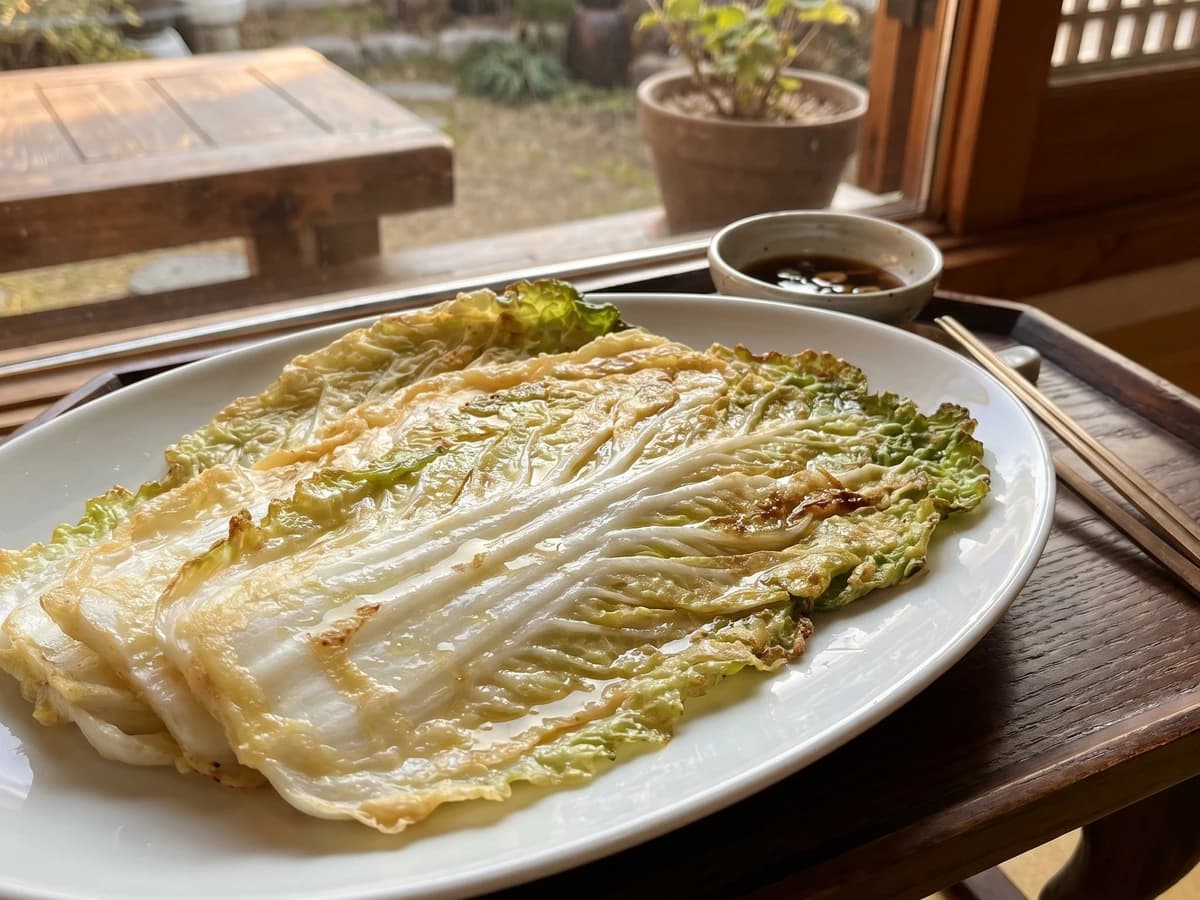
Baechu-jeon (배추전, Napa Cabbage Pancake)
A Gyeongsang home pancake made from one whole napa cabbage leaf at a time, flattened at the rib, brushed in thin salted batter, and fried until sweet, tender, and quietly crisp at the edges.
A cooking platform built around craft, culture, and the stories behind what we eat.

Created by
Sweet shrimp butterflied flat, dusted with flour, dipped in yellow egg, and pan-fried quickly for the holiday jeon platter where the first warm piece always disappears.
Saeu-jeon is small work, which is why people rush it. They peel, dip, fry, and wonder why the shrimp curls into a tight little fist. My teacher Master Seong-nyeo would tap the board once and make us open the shrimp again. Butterfly it properly. Score the inside curve. Press it flat. Only then may the egg behave.
This is holiday food, but not grand food. It sits on the jeon platter beside zucchini, fish, tofu, and meat patties, carried to a family table at Chuseok, Seollal, a birthday, or a potluck where someone knows enough to bring something useful. The tail stays on for the hand and for the eye. The shrimp itself should still taste sweet and clean, with a thin yellow coat around it, not a thick blanket of batter.
Tonight it asks for a dry towel, a patient knife, and a medium flame. Those are the three measurements people forget. I give you the salt, the flour, the oil, but write down the heat of your own stove too. Memory is a borrowed bowl. When the shrimp lies flat and the egg turns pink-gold at the edges, that one does it properly too.
Jeon, foods lightly coated in flour and egg and pan-fried, have long belonged to Korean holiday, banquet, and ancestral rite tables, where several varieties are arranged together rather than served as one large dish. Shrimp became more common in home jeon platters as seafood distribution and refrigeration improved in the twentieth century, especially in coastal markets and city households. Saeu-jeon carries the same technique as older fish and vegetable jeon: thin coating, moderate heat, and a shape cut for quick cooking.
Quantity
450g, 16 to 20 count
peeled with tails left on, deveined
Quantity
1/2 teaspoon
Quantity
1/8 teaspoon
Quantity
1 tablespoon
Quantity
1/2 cup
Quantity
2
Quantity
1
Quantity
1 tablespoon
finely chopped
Quantity
1 teaspoon
for the egg mixture
Quantity
3 tablespoons, more as needed
for pan-frying
Quantity
1 small
thinly sliced
Quantity
1 tablespoon
for dipping sauce
Quantity
1 tablespoon
for dipping sauce
Quantity
1 teaspoon
for dipping sauce
Quantity
1/4 teaspoon
for dipping sauce
| Ingredient | Quantity |
|---|---|
| large shrimppeeled with tails left on, deveined | 450g, 16 to 20 count |
| kosher salt | 1/2 teaspoon |
| freshly ground black pepper | 1/8 teaspoon |
| cheongju or mirin (optional) | 1 tablespoon |
| all-purpose flour | 1/2 cup |
| large eggs | 2 |
| egg yolk | 1 |
| scallion, green part onlyfinely chopped | 1 tablespoon |
| neutral oilfor the egg mixture | 1 teaspoon |
| neutral oilfor pan-frying | 3 tablespoons, more as needed |
| red chili (optional)thinly sliced | 1 small |
| soy saucefor dipping sauce | 1 tablespoon |
| rice vinegarfor dipping sauce | 1 tablespoon |
| waterfor dipping sauce | 1 teaspoon |
| toasted sesame seedsfor dipping sauce | 1/4 teaspoon |
Peel the shrimp but leave the tails attached. Run a small knife along the back of each shrimp to remove the vein, then cut a little deeper so the shrimp opens like a book without separating. Press it flat with your fingers. This is the shape the dish lives or dies by: flat shrimp cooks evenly, curls less, and gives the egg a proper surface to cling to.
Make 3 shallow crosswise cuts on the inside curve of each butterflied shrimp, just enough to relax the muscle. Pat very dry with paper towels. Sprinkle the shrimp with the salt, pepper, and cheongju if using, then let them stand 10 minutes. The salt is measured lightly because shrimp already carries sweetness and sea; you are seasoning it, not hiding it.
Put the flour in a shallow dish. Beat the eggs, extra yolk, chopped scallion, and 1 teaspoon oil in another shallow dish until no streaks remain. The extra yolk gives a deeper yellow coat without making the batter thick. Keep both dishes near the stove, because coated shrimp should not sit around getting pasty.
Dust each shrimp in flour on both sides, then tap off every loose bit. You want a thin dry film, not a white jacket. Too much flour turns the egg coat heavy and makes the pan oil dirty; just enough flour lets the egg hold.
Dip the floured shrimp into the egg mixture, letting the excess drip back into the bowl. Lay each piece flat on a tray as you work. If you are using red chili, press one thin slice onto the cut side of a few shrimp after dipping. It is there for color on a holiday platter, not for heat.
Heat 2 tablespoons oil in a wide nonstick or well-seasoned skillet over medium heat. When the oil thins and shimmers, lay in the shrimp cut side down, leaving space between pieces. Cook 90 seconds to 2 minutes, until the underside is pale gold and the shrimp is turning pink at the edges. Turn once and cook 60 to 90 seconds more. High heat browns the egg before the shrimp cooks; medium heat gives you sweet shrimp and a clean yellow coat.
Move the shrimp to a rack or paper towel-lined tray, tail ends all facing one direction so they keep their shape. Add the remaining oil only as needed for the next batch. Stir together the soy sauce, rice vinegar, water, and sesame seeds for a sharp dipping sauce. Serve the saeu-jeon warm or at room temperature, but do not cover it tightly while it rests, or the egg coat softens.
1 serving (about 155g)
Culinary guides, cultural storytelling, and the editorial depth that makes cooking meaningful.
Discover Culinary ExplorerChef Jeong-sun
A Gyeongsang home pancake made from one whole napa cabbage leaf at a time, flattened at the rib, brushed in thin salted batter, and fried until sweet, tender, and quietly crisp at the edges.

Chef Jeong-sun
A holiday jeon of fresh shiitake or oyster mushrooms, salted lightly, dusted thinly, and carried through egg in a quiet pan until the mushroom stays earthy and the coating stays tender.

Chef Jeong-sun
Soaked mung beans ground coarse, folded with pork, bracken, sprouts, and kimchi, then fried thick until the edges crisp and the center stays tender enough for a shared table.

Chef Jeong-sun
A summer garlic chive pancake fried thin, crisp at the edges and chewy in the center, with just enough batter to hold the green pile together and a sharp soy-vinegar dip.