Chef Jeong-sun
Baechu-jeon (배추전, Napa Cabbage Pancake)
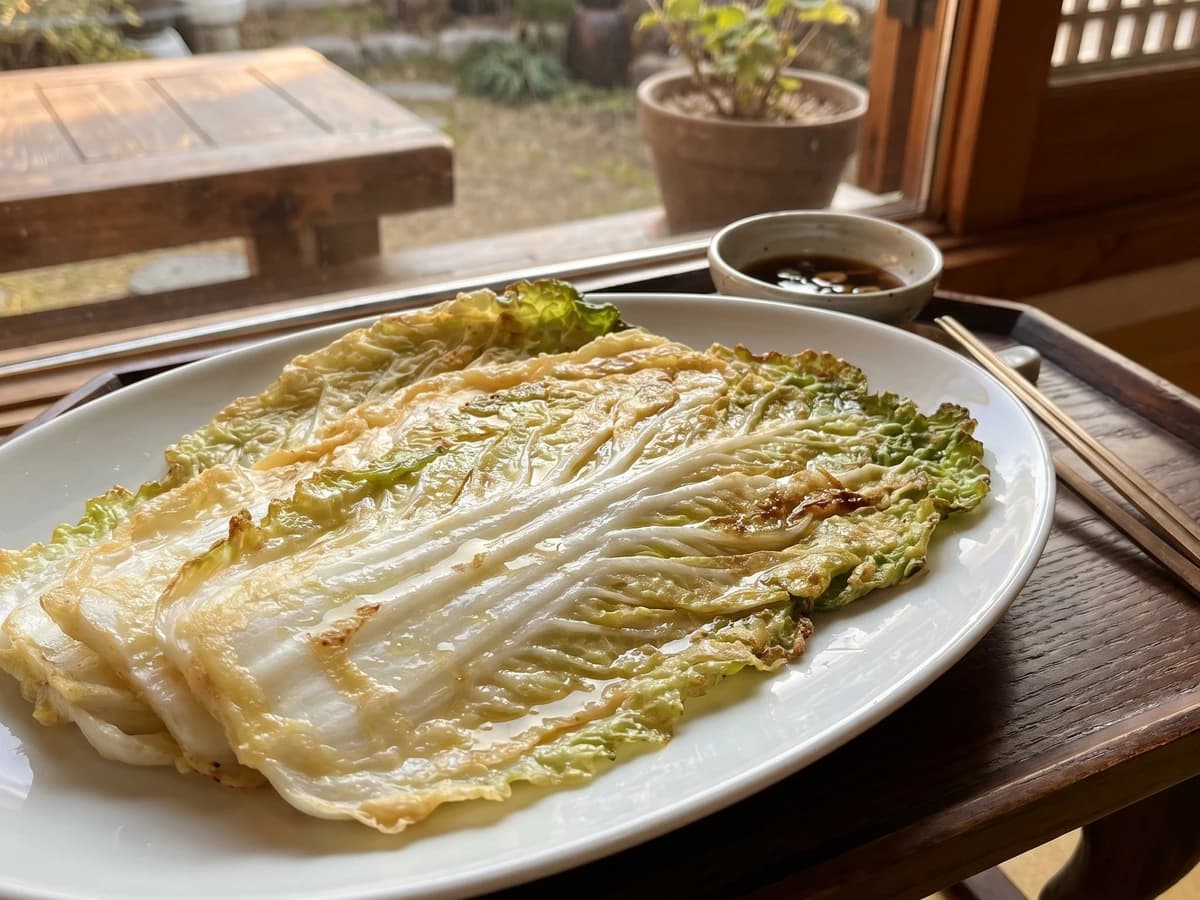
A Gyeongsang home pancake made from one whole napa cabbage leaf at a time, flattened at the rib, brushed in thin salted batter, and fried until sweet, tender, and quietly crisp at the edges.
A cooking platform built around craft, culture, and the stories behind what we eat.

Created by
Soaked mung beans ground coarse, folded with pork, bracken, sprouts, and kimchi, then fried thick until the edges crisp and the center stays tender enough for a shared table.
Bindaetteok is not a flour pancake with mung bean added for politeness. The bean is the body. Soak nokdu (mung beans) until they give under your thumbnail, grind them coarse, and fry the batter in enough oil that the edge crisps before the center dries. This dish lives or dies there, between the blender and the pan.
Master Seong-nyeo once made me fry two batches side by side, one ground smooth and one left with small grains. She said nothing until I tasted them. The smooth one ate heavy; the coarse one had a tender middle and a browned, nubbly edge. That was the lesson. 손맛 is real; I measure it anyway: 400 grams peeled mung beans, 50 grams rice, 180 milliliters water, and fillings squeezed dry before they touch the batter.
This is both market food and holiday food. At Gwangjang Market it lands on a metal counter with soy-vinegar sauce and a bowl of makgeolli; at home it sits on a jeon platter for Chuseok, or feeds people on a rainy evening when the table needs something generous. Tonight it asks you for soaking time, careful squeezing, and patient frying. Use the blender, that corner is safe. Don't skip the soaking, don't drown it in flour, and don't make it thin because you are impatient.
A 1634 royal-court provisions ledger records a mung-bean pancake called binjatteok (빈자떡), and Jang Gye-hyang's Eumsik-dimibang, compiled around 1670, gives another written version of that older name. That paper trail is evidence, not a crown for the dish; today's bindaetteok belongs to home jeon platters and market stalls as much as to old records. Seoul's Gwangjang Market made the thick, oil-fried form nationally recognizable in the twentieth century, with ground mung beans, pork, gosari (bracken), mung bean sprouts, and kimchi cooked to order.
Quantity
2 cups (400g)
rinsed
Quantity
1/4 cup (50g)
rinsed
Quantity
3/4 cup (180ml), plus 2 tablespoons if needed
for grinding
Quantity
1 teaspoon
Quantity
150g
finely chopped no larger than 1/4 inch
Quantity
1 tablespoon
Quantity
1 teaspoon
Quantity
1 clove
minced
Quantity
1/4 teaspoon
Quantity
1 cup (about 160g after squeezing)
squeezed dry and chopped
Quantity
120g
blanched, squeezed dry, and chopped into 1-inch lengths
Quantity
100g
rinsed, squeezed dry, and cut into 1-inch lengths
Quantity
1 teaspoon
Quantity
1 teaspoon
Quantity
4
cut into 2-inch lengths
Quantity
1
thinly sliced
Quantity
3/4 cup
for shallow-frying
Quantity
3 tablespoons
Quantity
1 tablespoon
Quantity
1 tablespoon
Quantity
1 teaspoon
finely sliced
Quantity
1/2 teaspoon
Quantity
1/2 teaspoon
Quantity
1/4 teaspoon
| Ingredient | Quantity |
|---|---|
| peeled split mung beans (nokdu)rinsed | 2 cups (400g) |
| short-grain ricerinsed | 1/4 cup (50g) |
| cold waterfor grinding | 3/4 cup (180ml), plus 2 tablespoons if needed |
| fine sea salt | 1 teaspoon |
| pork belly or pork shoulderfinely chopped no larger than 1/4 inch | 150g |
| soy sauce for pork | 1 tablespoon |
| toasted sesame oil for pork | 1 teaspoon |
| garlic for porkminced | 1 clove |
| freshly ground black pepper | 1/4 teaspoon |
| well-fermented napa cabbage kimchisqueezed dry and chopped | 1 cup (about 160g after squeezing) |
| mung bean sprouts (sukju)blanched, squeezed dry, and chopped into 1-inch lengths | 120g |
| cooked gosari (bracken fern)rinsed, squeezed dry, and cut into 1-inch lengths | 100g |
| soy sauce for gosari | 1 teaspoon |
| toasted sesame oil for gosari | 1 teaspoon |
| scallionscut into 2-inch lengths | 4 |
| Korean green chili (optional)thinly sliced | 1 |
| neutral oilfor shallow-frying | 3/4 cup |
| soy sauce for dipping sauce | 3 tablespoons |
| rice vinegar | 1 tablespoon |
| water for dipping sauce | 1 tablespoon |
| scallion for dipping saucefinely sliced | 1 teaspoon |
| toasted sesame seeds | 1/2 teaspoon |
| gochugaru (Korean chili flakes) (optional) | 1/2 teaspoon |
| sugar | 1/4 teaspoon |
Put the mung beans and rice in a large bowl, cover with at least 3 inches of cold water, and soak 6 to 8 hours. Drain in a sieve for 10 minutes. The beans should split easily when pressed between your fingers; hard centers make a sandy batter, while extra soaking water makes pancakes heavy with oil.
Mix the chopped pork with 1 tablespoon soy sauce, 1 teaspoon sesame oil, the minced garlic, and black pepper. Keep it cold while you prepare the vegetables. Chop the pork small, no larger than 1/4 inch, so it cooks through before the pancake darkens too far.
Blanch the mung bean sprouts for 1 minute, drain, cool just enough to handle, squeeze them dry, and chop them into 1-inch lengths. Squeeze the kimchi firmly and chop it. Toss the gosari in its own bowl with 1 teaspoon soy sauce and 1 teaspoon sesame oil. Wet fillings split the batter in the pan; unseasoned gosari tastes flat even inside a good pancake.
Blend the drained mung beans and rice with 3/4 cup cold water, pulsing and scraping the sides as needed. Stop when the batter is thick and coarse, with tiny grains still visible, not a smooth paste. Stir in the salt. If the blender refuses to move, add water 1 tablespoon at a time, but stop at 2 tablespoons. The little grains brown into the good edge.
Fold the seasoned pork, kimchi, sprouts, gosari, scallions, and green chili into the mung bean batter. It should mound on a spoon and fall slowly. If it runs like crepe batter, let it stand 10 minutes and pour off any water that rises. Do not rescue it with flour unless you want a different pancake.
Stir together 3 tablespoons soy sauce, vinegar, water, sliced scallion, sesame seeds, gochugaru if using, and sugar. The sugar is only 1/4 teaspoon because it rounds the vinegar; this sauce should stay sharp enough to cut the richness of the fried mung beans.
Pour oil into a heavy skillet to a depth of about 1/4 inch and heat over medium-high heat to 340 to 350 F. If you do not use a thermometer, drop in a pea-size bit of batter; it should sizzle at once and brown at the edges in about 20 seconds. Too cool and the pancake drinks oil. Too hot and the outside browns before the pork is done.
Scoop in 1/2 cup batter for each pancake and spread it to about 4 1/2 inches wide and 1/2 inch thick. Fry 4 to 5 minutes, until the rim is deep golden and the top has lost its wet shine around the edges. Flip once, press gently with the spatula, and fry 3 to 4 minutes more. Work in batches and add oil as needed. If you check with a thermometer, the pork in the center should reach at least 160 F (71 C).
Move the pancakes to a wire rack for 2 minutes, then cut into halves or quarters. Serve with the soy-vinegar sauce while the edges are still crisp and the center is tender. Do not cover them on a plate, or the edges soften. A bowl of makgeolli beside them is not required, but it understands the dish.
1 serving (about 340g)
Culinary guides, cultural storytelling, and the editorial depth that makes cooking meaningful.
Discover Culinary ExplorerChef Jeong-sun
A Gyeongsang home pancake made from one whole napa cabbage leaf at a time, flattened at the rib, brushed in thin salted batter, and fried until sweet, tender, and quietly crisp at the edges.

Chef Jeong-sun
A holiday jeon of fresh shiitake or oyster mushrooms, salted lightly, dusted thinly, and carried through egg in a quiet pan until the mushroom stays earthy and the coating stays tender.

Chef Jeong-sun
A summer garlic chive pancake fried thin, crisp at the edges and chewy in the center, with just enough batter to hold the green pile together and a sharp soy-vinegar dip.

Chef Jeong-sun
Cheap chicken skin treated properly: scraped, salted, dried until firm, dusted with potato starch, and fried twice until each piece lies flat and crisp enough for a late-night anju plate.