
Chef Thomas
A Proper Chicken Broth
Sunday's roast chicken, simmered slowly on Monday with carrots, celery, leeks, and thyme into a bowl of clear, golden broth that smells like the kitchen is paying attention.
A cooking platform built around craft, culture, and the stories behind what we eat.

Created by Chef Thomas
A pot of root vegetables simmered in cider and thyme with suet dumplings steamed on top, the kind of dinner that fogs the kitchen window and makes you glad you stayed in.
The kitchen window has steamed up again. It does this every time something slow is on the hob, and tonight it's a pot of roots that have been quietly giving themselves over to thyme and cider for the best part of an hour. Outside it's the sort of dark, damp November evening that makes you want to lock the door and stay put. Inside, it smells like exactly the right decision.
This is not a recipe that tries to be more than it is. Carrots, parsnips, swede, turnips: the unglamorous end of the vegetable stall, the ones nobody photographs. But simmered slowly in good stock with a splash of dry cider and a few sprigs of thyme, they become something worth sitting down for. Sweet and earthy and savoury all at once, with a broth that thickens as it cooks into something that coats the back of a spoon.
The dumplings are the thing, though. Suet dumplings, herbed and dropped onto the surface of the stew to steam with the lid on. They puff up into something impossibly light on top while their undersides turn damp and savoury from the broth. I've tried making this without them and it felt incomplete, like a sentence that stops before the full stop.
I wrote it down in the notebook last winter: roots, dumplings, Tuesday, rain. The kitchen smelled of thyme and the windows were blind with condensation. There are few better feelings than putting a warm plate in front of someone on an evening like that.
Quantity
2 medium
peeled and cut into chunky rounds
Quantity
2 medium
peeled and cut into thick half-moons
Quantity
half a medium one
peeled and cut into rough 3cm pieces
Quantity
2 small
peeled and quartered
Quantity
2 medium
halved and sliced
Quantity
3 cloves
sliced
Quantity
30g
Quantity
1 tablespoon
Quantity
1 tablespoon
Quantity
200ml
Quantity
750ml
Quantity
a few sprigs
Quantity
2
Quantity
1 teaspoon
Quantity
to taste
Quantity
to taste
Quantity
175g
Quantity
85g
beef or vegetable
Quantity
small handful
finely chopped
Quantity
1 tablespoon
Quantity
pinch
Quantity
90-100ml
| Ingredient | Quantity |
|---|---|
| carrotspeeled and cut into chunky rounds | 2 medium |
| parsnipspeeled and cut into thick half-moons | 2 medium |
| swedepeeled and cut into rough 3cm pieces | half a medium one |
| turnipspeeled and quartered | 2 small |
| onionshalved and sliced | 2 medium |
| garlicsliced | 3 cloves |
| unsalted butter | 30g |
| olive oil | 1 tablespoon |
| plain flour | 1 tablespoon |
| dry cider or white wine | 200ml |
| vegetable stock | 750ml |
| thyme | a few sprigs |
| bay leaves | 2 |
| Dijon mustard | 1 teaspoon |
| fine sea salt | to taste |
| black pepper | to taste |
| self-raising flour | 175g |
| suetbeef or vegetable | 85g |
| flat-leaf parsleyfinely chopped | small handful |
| fresh thyme leaves | 1 tablespoon |
| fine sea salt (for dumplings) | pinch |
| cold water (for dumplings) | 90-100ml |
Melt the butter with the oil in a heavy casserole pot over a medium heat. Add the onions and a good pinch of salt. Let them cook gently, stirring now and then, until they've softened and gone glassy, ten minutes or so. You're not trying to colour them, just coax out the sweetness. Add the garlic for the last minute or two, until you can smell it warming in the pan.
Tumble in all the root vegetables. Stir them through the softened onions and let them sit in the heat for a few minutes, just long enough to take on a little colour at the edges. Don't fuss over it. Scatter in the flour and stir until it disappears into the vegetables, coating everything in a thin, starchy film. This is what will give the broth body later.
Pour in the cider or wine. It will hiss and bubble and smell suddenly, sharply good. Let it reduce by about half, scraping up anything caught on the bottom of the pan. Add the stock, the thyme sprigs, the bay leaves, and the mustard. Stir it through. Bring everything to a gentle simmer, put the lid on slightly ajar, and let it cook for thirty to thirty-five minutes until the vegetables are tender but not falling apart. A knife should slip through a piece of swede without resistance.
While the stew simmers, make the dumplings. Tip the self-raising flour into a bowl with the suet, the chopped parsley, the thyme leaves, and a pinch of salt. Mix it with your fingers until combined. Add the cold water gradually, stirring with a fork, then bring it together gently with your hands. You want a soft, slightly sticky dough, not a dry one. Don't knead it. Handle it as little as possible. Tear or roll it into eight rough balls. They don't need to be neat. Imperfect dumplings taste the same as perfect ones.
Taste the broth and season it properly. More salt than you think. When you're happy with it, fish out the thyme stalks if you can find them and nestle the dumplings on top of the stew, leaving a little space between each one. They'll swell as they cook. Put the lid on firmly and let them steam for twenty to twenty-five minutes without lifting the lid. This matters. Every time you look, you lose steam, and steam is what makes them light. When you do finally lift the lid, they should have puffed up and gone pale and pillowy on top, with damp, savoury undersides where they've soaked up the broth.
Bring the whole pot to the table. Ladle the stew into warm bowls, two dumplings per person, making sure everyone gets a generous share of the broth and all the different roots. A scattering of chopped parsley over the top if you have some left, but it doesn't need it. Serve with nothing except perhaps a green salad afterwards, if you feel the meal needs balancing. It probably doesn't.
1 serving (about 650g)
Culinary guides, cultural storytelling, and the editorial depth that makes cooking meaningful.
Discover Culinary ExplorerChef Thomas
Sunday's roast chicken, simmered slowly on Monday with carrots, celery, leeks, and thyme into a bowl of clear, golden broth that smells like the kitchen is paying attention.
Chef Thomas
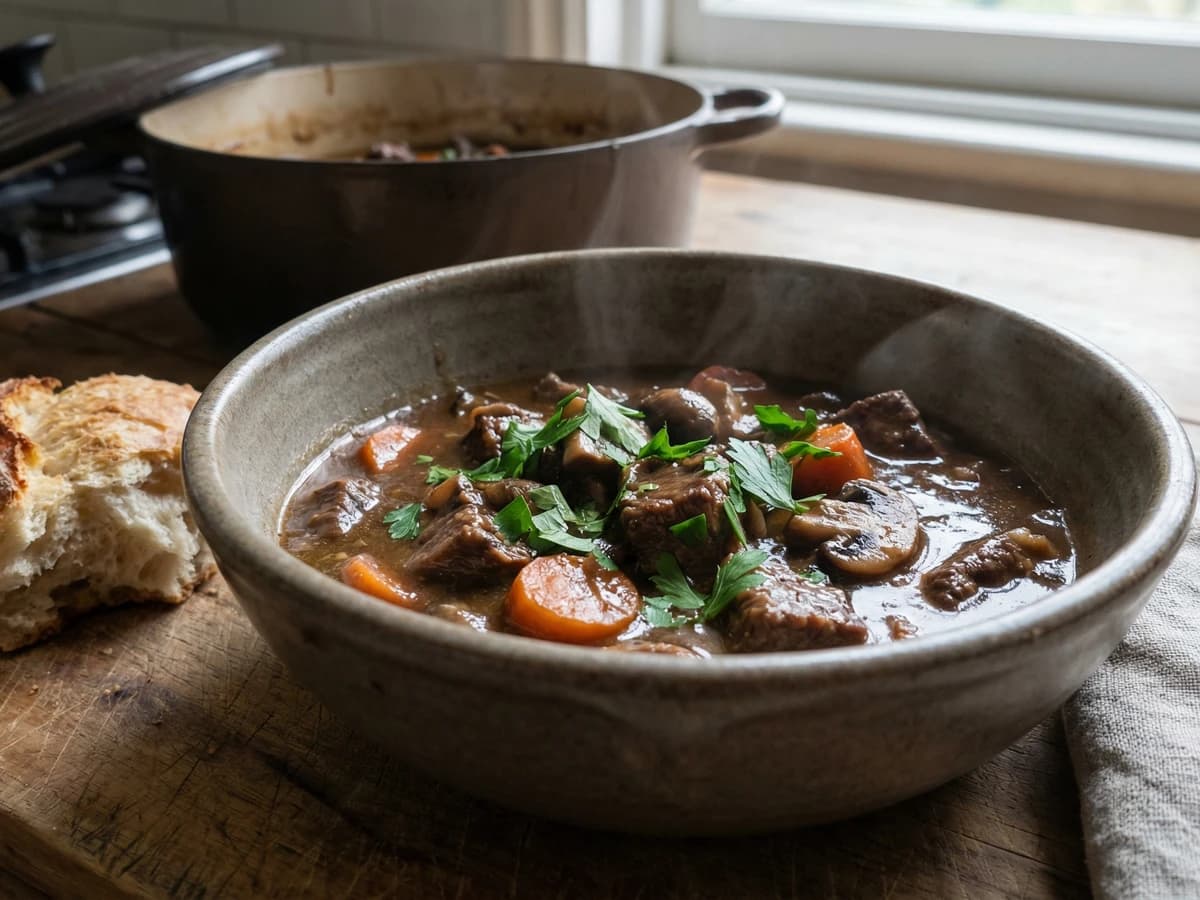
Braising steak surrendered to dark ale and slow time, with onions and mushrooms, until the gravy turns thick and malty and the kitchen smells like the kind of evening you want to stay in for.

Chef Thomas
Beef shin and pearl barley simmered low and slow with root vegetables until the meat gives way and the broth thickens into something between a soup and a stew, the kind of bowl that steadies you on a cold night.
Chef Thomas
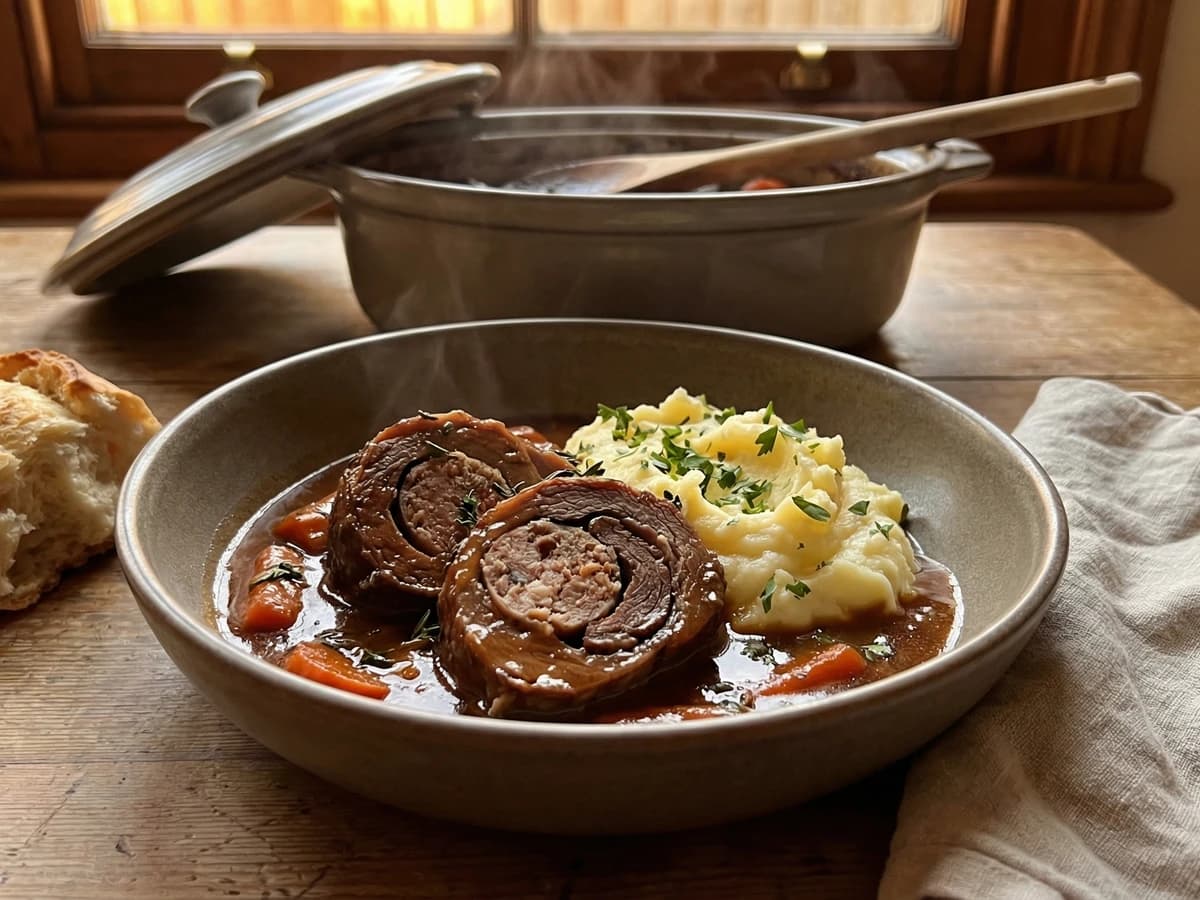
Thin slices of beef rolled around a stuffing of sausage meat and herbs, browned in butter, and braised for two patient hours until the meat yields and the gravy turns dark and rich and worth mopping up with bread.