
Chef Thomas
A Proper Chicken Broth
Sunday's roast chicken, simmered slowly on Monday with carrots, celery, leeks, and thyme into a bowl of clear, golden broth that smells like the kitchen is paying attention.
A cooking platform built around craft, culture, and the stories behind what we eat.
Created by Chef Thomas
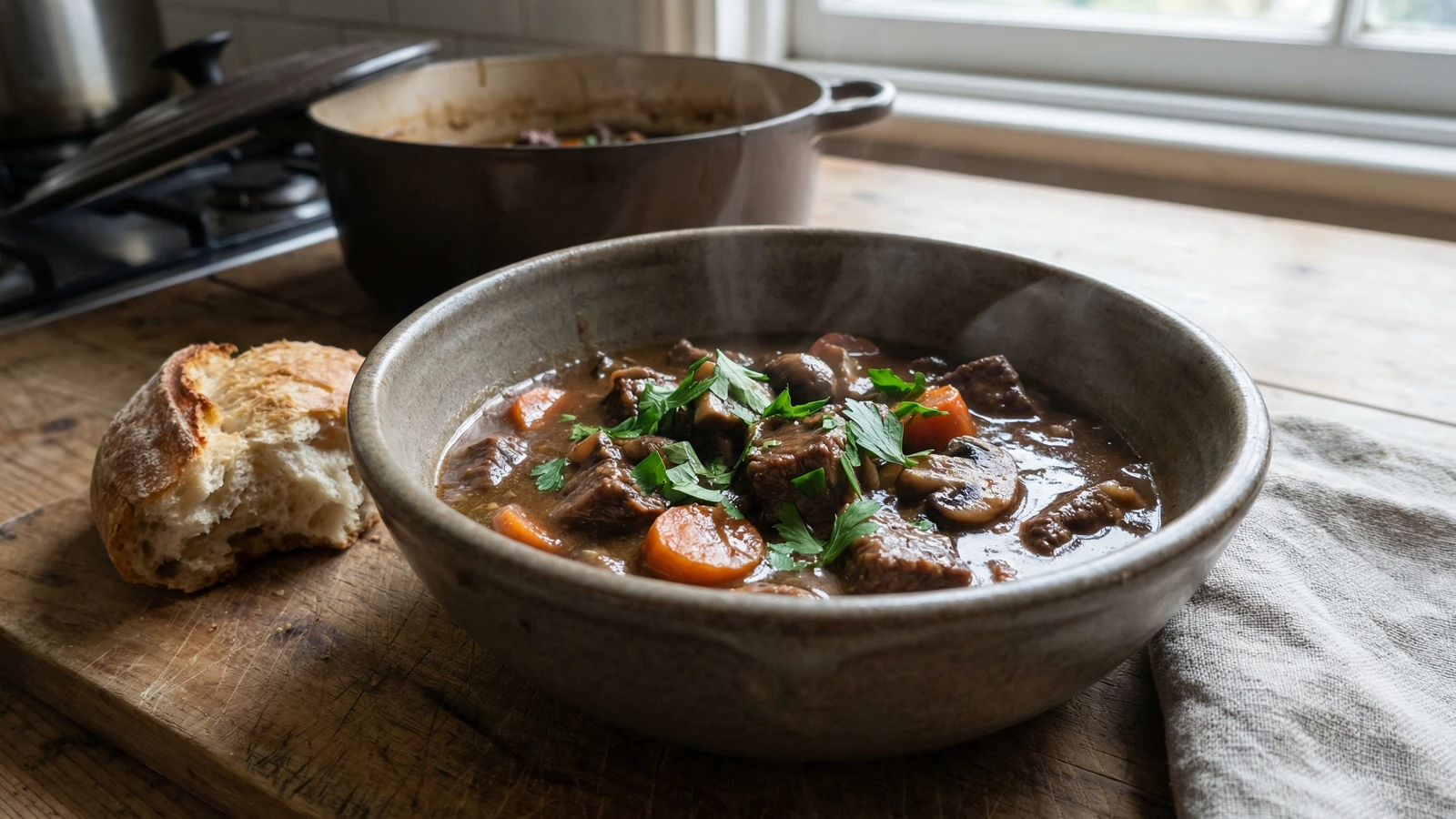
Braising steak surrendered to dark ale and slow time, with onions and mushrooms, until the gravy turns thick and malty and the kitchen smells like the kind of evening you want to stay in for.
The first cold week of the year arrived and I knew what I was making before I'd even looked in the fridge. Some meals belong to certain evenings the way certain songs belong to certain drives. This is a dark-sky, drawn-curtains, nowhere-to-be sort of supper.
I bought the beef on Saturday. Chuck steak, deeply marbled, from the butcher who doesn't rush you. A bottle of porter from the shop on the corner. Onions, mushrooms, carrots, the usual suspects. Nothing remarkable on its own. But put them in a heavy pot with enough time and patience and they become something more than the sum of their parts. The ale does the quiet work: it gives the gravy a malty depth, almost sweet, with a bitterness that hums underneath like a bass note.
You brown the beef properly. You soften the onions slowly. You pour in the ale and let the whole thing tick away in a low oven for a couple of hours while you do something else. Read the paper. Walk the dog. Sit in a chair and do nothing at all. When you come back, the kitchen smells like a pub that's also somehow your grandmother's house, and the gravy has gone dark and thick and impossibly good.
I wrote it down in the notebook: beef, ale, Tuesday, rain. It's better the next day. It's always better the next day. A recipe is a conversation, not a contract, so adjust to what you've got. More mushrooms if you like them, a parsnip instead of a carrot, a different ale. Your kitchen, your rules.
Quantity
800g
cut into generous chunks
Quantity
2 tablespoons
Quantity
2 large
halved and sliced
Quantity
3 cloves
crushed
Quantity
250g
halved or quartered depending on size
Quantity
2 tablespoons
Quantity
500ml
Quantity
250ml
Quantity
2 tablespoons
Quantity
2
Quantity
a few sprigs
Quantity
1 tablespoon
Quantity
2 large
peeled and cut into thick rounds
Quantity
to taste
Quantity
to taste
Quantity
a handful
roughly chopped
| Ingredient | Quantity |
|---|---|
| braising steak (chuck or shin)cut into generous chunks | 800g |
| beef dripping or olive oil | 2 tablespoons |
| onionshalved and sliced | 2 large |
| garliccrushed | 3 cloves |
| chestnut mushroomshalved or quartered depending on size | 250g |
| plain flour | 2 tablespoons |
| dark ale | 500ml |
| good beef stock | 250ml |
| tomato purée | 2 tablespoons |
| bay leaves | 2 |
| thyme | a few sprigs |
| Worcestershire sauce | 1 tablespoon |
| carrotspeeled and cut into thick rounds | 2 large |
| fine sea salt | to taste |
| black pepper | to taste |
| flat-leaf parsley (optional)roughly chopped | a handful |
Pat the beef dry with kitchen paper. This matters. Wet meat steams instead of browning, and the brown crust is where half the flavour lives. Season the chunks generously with salt and pepper. Get a heavy casserole pot properly hot with a tablespoon of dripping or oil, then brown the beef in batches. Don't crowd the pan. Each piece needs contact with the hot surface, and you want a deep, dark crust on at least two sides. It should sizzle the moment it hits the pan. If it doesn't, the pan isn't ready. Set the browned beef aside on a plate.
Turn the heat down. Add a little more dripping if the pan looks dry, then put the sliced onions in with a pinch of salt. Let them cook gently for eight to ten minutes, stirring now and then, scraping up the dark, sticky bits the beef left behind. Those bits are gold. The onions should go soft and sweet, starting to turn amber at the edges. Add the garlic and stir it through for a minute, just until the kitchen smells warm and savoury.
Add the mushrooms and let them cook for a few minutes until they've given up their moisture and started to colour. Scatter the flour over the vegetables and stir it in. Let it cook for a minute or two so it loses its raw, pasty taste. Stir in the tomato purée. It deepens the colour and gives the gravy a quiet backbone that you won't identify on the plate but you'd miss if it weren't there.
Pour in the ale. It will hiss and bubble and the kitchen will smell like a good pub on a wet afternoon. Stir well, loosening anything stuck to the bottom, then add the stock, Worcestershire sauce, bay leaves, and thyme. Return the beef and any juices from the plate. The liquid should come most of the way up the meat but doesn't need to cover it entirely. Bring it to a gentle simmer.
Put the lid on, slightly ajar so steam can escape, and either keep it on the hob at the barest simmer or transfer to an oven at 160C/140C fan. The oven is more forgiving and more even. Add the carrots after the first hour so they don't dissolve. Then leave it alone. Two to two and a half hours total. You'll know it's ready when the beef yields to a fork without resistance and the gravy has thickened into something dark and glossy that coats the back of a spoon.
Fish out the bay leaves and thyme stalks. Season and taste. Then taste again. It will probably want more salt than you think, and a few good grinds of black pepper. Ladle it into warm bowls, scatter a little parsley over the top if you have some, and put it on the table with whatever you've got: mashed potatoes, crusty bread, a pile of something green. There are few better feelings than putting a warm plate in front of someone on a cold evening.
1 serving (about 420g)
Culinary guides, cultural storytelling, and the editorial depth that makes cooking meaningful.
Discover Culinary ExplorerChef Thomas
Sunday's roast chicken, simmered slowly on Monday with carrots, celery, leeks, and thyme into a bowl of clear, golden broth that smells like the kitchen is paying attention.

Chef Thomas
Beef shin and pearl barley simmered low and slow with root vegetables until the meat gives way and the broth thickens into something between a soup and a stew, the kind of bowl that steadies you on a cold night.
Chef Thomas
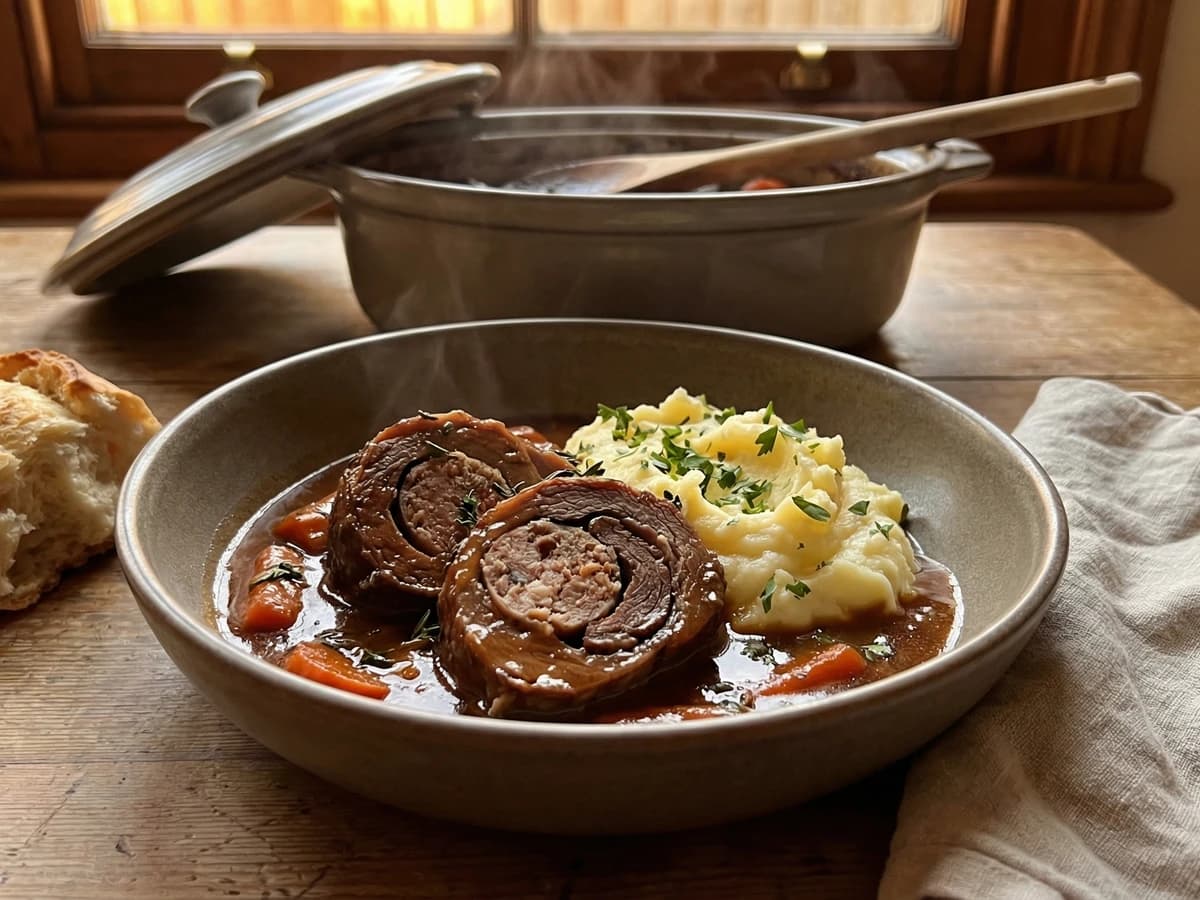
Thin slices of beef rolled around a stuffing of sausage meat and herbs, browned in butter, and braised for two patient hours until the meat yields and the gravy turns dark and rich and worth mopping up with bread.
Chef Thomas
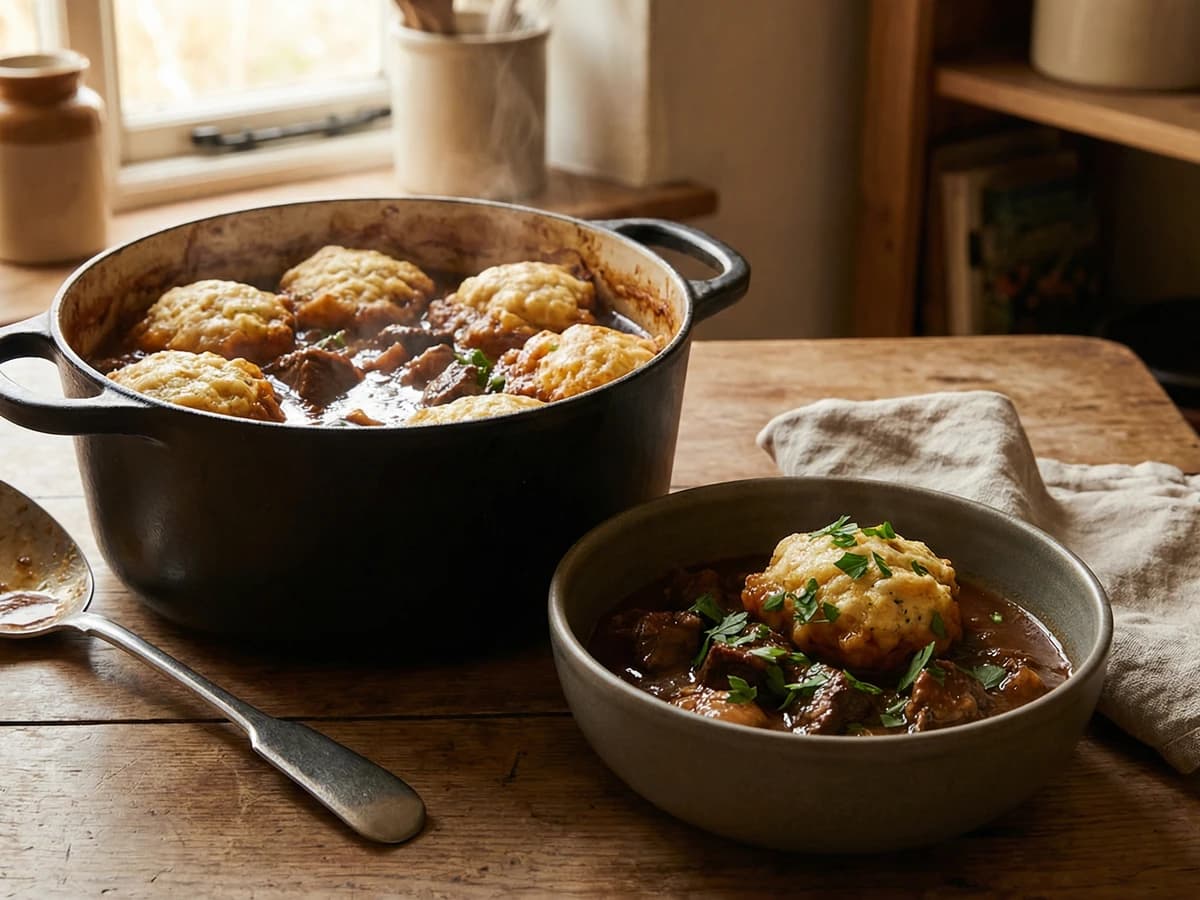
Chuck beef braised until it gives way, root vegetables gone soft and sweet in a dark, glossy gravy, with suet dumplings steamed on top until they puff into something pillowy and golden. The kind of pot you carry to the table with both hands.