Culinary Explorer

A cooking platform built around craft, culture, and the stories behind what we eat.
Discover Culinary Explorer
Roget Laks med Aeggestand

Roget Laks med Aeggestand

Created by Chef Freja

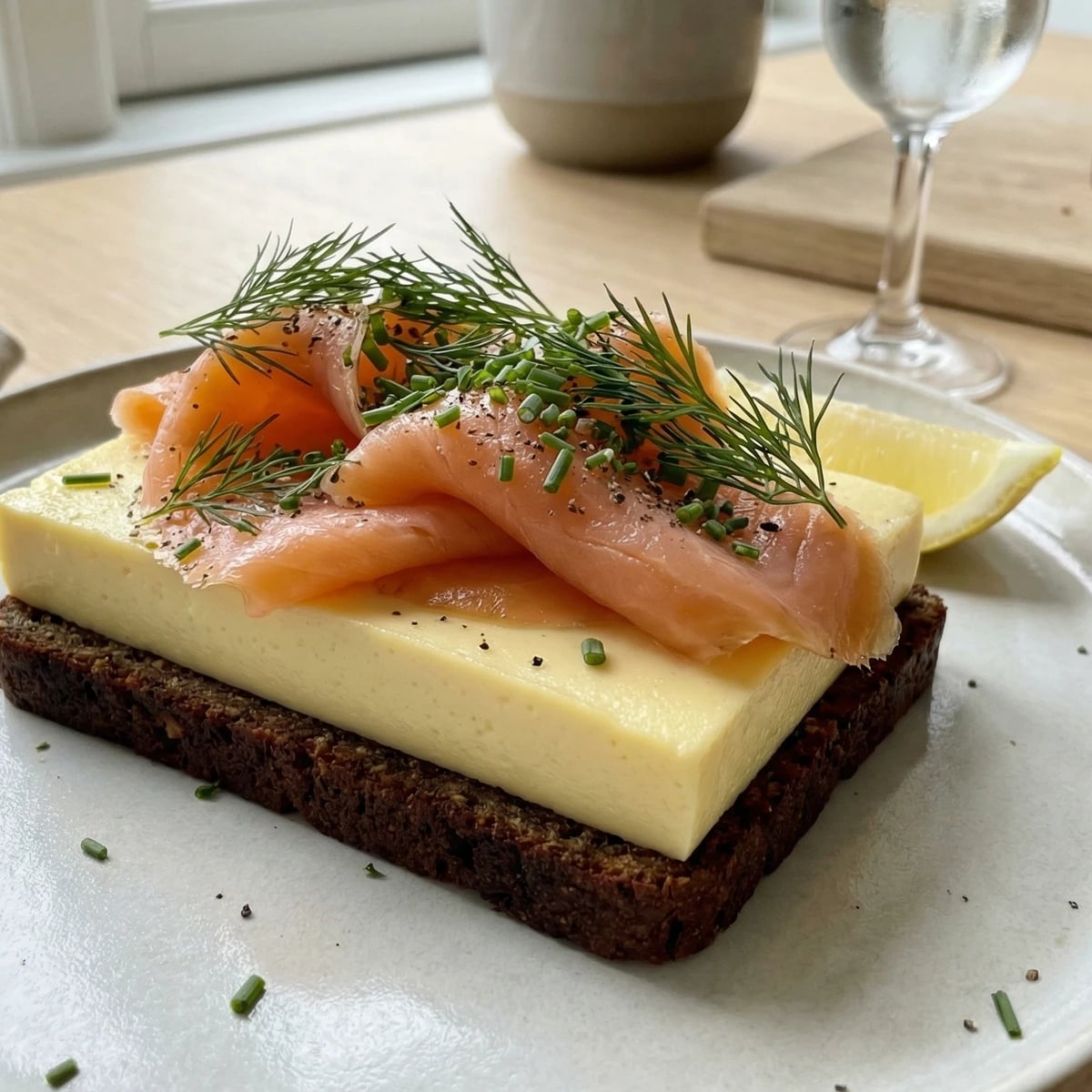
Silky cold-smoked salmon draped over a slice of aeggestand, the baked egg custard Copenhagen lunch counters have paired with it for more than a century, on buttered dark rugbrod.

Sandwiches & Wraps
Danish
Dinner Party
Special Occasion
Make Ahead
20 min
Active Time
30 min cook2 hr total
Yield4 pieces

Easter in Denmark means a long lunch table. Paskefrokost stretches across an afternoon in April when the light has finally come back and the first pale green is showing on the trees. This is when roget laks med aeggestand comes into its own, though in truth it belongs to every long Danish lunch: Christmas, birthdays, the first warm Saturday of the year. Any moment that asks to last a little longer than it has to.

Aeggestand is the Danish baked egg custard that Copenhagen lunch counters have paired with smoked salmon for more than a century. It is not a quiche. There is no crust, no cheese, no vegetables hidden inside. Just eggs, cream, and salt, baked slowly in a water bath until the mixture holds its shape with the tenderness of set cream. Sliced cool, laid on buttered rugbrod, and crowned with cold-smoked salmon and a generous scatter of dill, it becomes one of the quietest and most perfect pieces of smorrebrod in the whole repertoire. The salmon is silky and cool. The custard is tender and faintly savoury. The rye is dense and sour. Together they do something that no single ingredient could do alone.

What I want you to pay attention to is the custard itself. Low and slow. Bake it too hot and the eggs seize, the cream weeps out, and the whole thing turns rubbery in a way that no garnish can rescue. You want the edges set and the center still trembling when you pull it out of the oven. It will firm up as it cools, and you'll know when it's right because the knife slides through clean and the surface stays smooth. The rest is assembly, and assembly is just paying attention. I'll walk you through every step.

Aeggestand emerged in the Copenhagen lunch restaurants of the early 1900s, when the smorrebrodsjomfruer, the formally trained women of the cold kitchen, needed an egg preparation that could be baked in advance and sliced cleanly for service alongside smoked and pickled fish. The pairing with cold-smoked salmon became canonical by the interwar years and has remained on the menu cards of houses like Ida Davidsen and Schonnemann ever since, where it is still ordered by name. The technique of baking eggs and cream in a water bath was borrowed from French cuisine and quietly adapted by Danish cooks into something plainer and more honest, without the crust, the cheese, or the ceremony of its Parisian cousin.

The technique, the tradition, and the story behind every dish.

Discover Culinary Explorer

Ingredients

large eggs

Quantity

4

double cream

Quantity

150ml

fine sea salt

Quantity

1/2 teaspoon

white pepper

Quantity

pinch

ground nutmeg (optional)

Quantity

pinch

butter for greasing the dish

Quantity

small knob

dark rugbrod

Quantity

4 thick slices

salted butter

Quantity

30g

softened

cold-smoked salmon

Quantity

200g

thinly sliced

fresh dill

Quantity

small bunch

fronds picked

chives

Quantity

small bunch

finely snipped

black pepper

Quantity

freshly ground, to taste

lemon wedges (optional)

Quantity

to serve

Equipment Needed

  • Small shallow baking dish, about 20cm by 15cm
  • Larger roasting tin for the water bath
  • Whisk
  • Sharp thin knife for slicing the custard
  • Serrated knife for the rugbrod

Instructions

  1. 1

    Heat the oven gently

    Heat the oven to 150C. This is a low temperature on purpose. Aeggestand is baked slowly, in the gentlest heat the oven can hold. Bake it hot and the proteins seize, the cream weeps out, and you get something rubbery that no amount of dill can save. Low and slow is the whole secret.

    If your oven runs hot, drop the temperature another ten degrees. The custard should bake, never bubble.
  2. 2

    Make the custard base

    Butter a small shallow baking dish, about 20cm by 15cm. Crack the eggs into a bowl and add the cream, salt, white pepper, and nutmeg. Whisk just enough to combine, never so much that the mixture froths. You want a smooth pale liquid, not an aerated one. Air bubbles bake into holes, and holes are the enemy of a clean slice.

  3. 3

    Bake in a water bath

    Pour the egg mixture into the buttered dish. Place the dish inside a larger roasting tin and pour boiling water into the tin until it comes halfway up the sides of the baking dish. This is a bain-marie, and it matters. The surrounding water keeps the temperature steady and even, so the custard sets from the outside in without ever passing the point where it turns tough. Slide the whole thing into the oven and bake for twenty-five to thirty minutes.

    You'll know it's right when the edges are set and the center still has a soft wobble when you nudge the dish. It will firm up as it cools. Trust this.
  4. 4

    Cool and chill

    Lift the dish out of the water bath and let it cool on the counter for twenty minutes. Then transfer it to the fridge for at least an hour, or until it's completely cold. Warm aeggestand is impossible to slice. Cold aeggestand cuts like butter and holds its shape on the bread. The season decides many things in the Danish kitchen, but patience decides this one.

  5. 5

    Slice the aeggestand

    Run a thin knife around the edges of the chilled custard and turn it out onto a board, or leave it in the dish and cut it there. Slice it into rectangles roughly the size of your rugbrod slices, about 1cm thick. The surface should be pale yellow and perfectly smooth, with no bubbles or cracks. If the knife drags, wipe it clean and warm the blade under hot water between cuts.

  6. 6

    Butter the rugbrod

    Spread each slice of rugbrod with softened salted butter, going right to the edges. Don't skip the butter and don't go thin. This isn't optional garnish. The butter is a seal between the dense rye and the damp custard, and without it the bread soaks up moisture and turns sad within minutes. A proper Danish smorrebrod always starts with butter.

  7. 7

    Layer the aeggestand

    Lay a slice of aeggestand on top of each buttered piece of rugbrod. Settle it gently so it sits flat. The pale yellow of the custard against the dark mahogany of the rye is part of the point. This is a dish that eats with the eyes first.

  8. 8

    Drape the smoked salmon

    Drape the cold-smoked salmon over the aeggestand in soft folds. Don't flatten it. The folds catch the light and give the piece its lift. Use enough that the salmon covers most of the custard but leave a little of the pale yellow showing at the edges. The contrast is what tells the eye there are two distinct things to taste.

    The best smoked salmon for this is traditional cold-smoked, silky and mildly smoky. Avoid anything heavily cured or too salty. It will fight the custard instead of meeting it.
  9. 9

    Finish and serve

    Scatter the dill fronds generously over the salmon. Be more generous than you think. Dill and smoked salmon belong to each other in the Danish kitchen, and holding back is a small betrayal. Add a fine shower of snipped chives, a twist of black pepper, and a lemon wedge on the side of the plate. Serve at once, with a knife and fork and a cold beer or a glass of aquavit if the hour allows. Tak for mad.

Chef Tips

  • The quality of the smoked salmon decides the piece. Look for traditional cold-smoked, silky in texture and gently salted. Hot-smoked salmon is a different fish with a different purpose, and it doesn't belong here.
  • Aeggestand keeps beautifully in the fridge for two days, wrapped well so it doesn't take on other smells. This makes it an ideal centrepiece for a make-ahead lunch table.
  • If you want to push it slightly closer to tradition, stir a tablespoon of finely snipped chives into the custard base before baking. The green flecks show through the pale yellow and the flavor lifts everything.
  • Serve with a cold beer and a small glass of aquavit. This is the drink pairing that Danish lunch culture has arrived at after a hundred years of thinking about it, and it is not an accident.

Advance Preparation

  • The aeggestand can be baked up to two days ahead. Cover it well in the fridge and slice just before assembling.
  • Butter the rugbrod and assemble the pieces no more than thirty minutes before serving. Any longer and the bread begins to soften under the custard.
  • For a large lunch table, double or triple the custard recipe and bake in a larger dish. Add five to ten minutes to the baking time and watch for the same soft wobble in the center.

Frequently Asked Questions

Nutrition Information

1 serving (about 205g)

Calories
490 calories
Total Fat
33 g
Saturated Fat
18 g
Trans Fat
0 g
Unsaturated Fat
13 g
Cholesterol
255 mg
Sodium
1295 mg
Total Carbohydrates
29 g
Dietary Fiber
5 g
Sugars
2 g
Protein
22 g

Note: Chef personas and recipes are created with AI assistance. Cook with care: follow safe food-handling practices, check doneness with a thermometer when needed, and adapt for allergies and your kitchen.

Where cooking meets culture.

Culinary guides, cultural storytelling, and the editorial depth that makes cooking meaningful.

Discover Culinary Explorer

More from Smorrebrod med Fisk (Fish Smorrebrod)

Browse the full collection