
Chef Dean
Broccoli Cheddar Soup
A bowlful of pure American comfort: velvety soup loaded with tender broccoli and an almost indecent amount of sharp cheddar, the kind of honest cooking that warms you from the inside out.
A cooking platform built around craft, culture, and the stories behind what we eat.
Created by
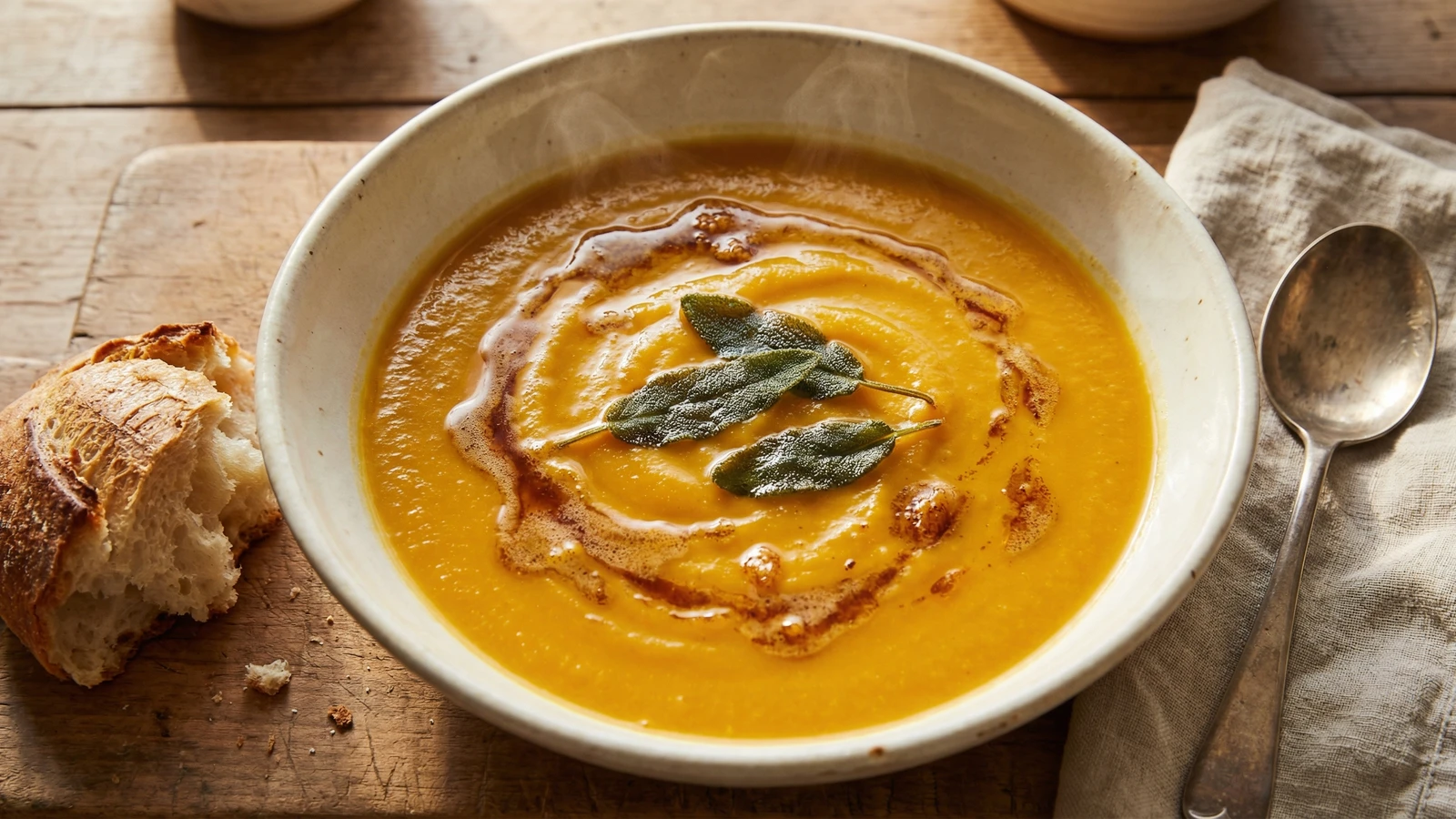
Caramelized butternut squash roasted until deeply sweet, pureed silky smooth, and finished with nutty brown butter and crispy sage leaves. The kind of soup that makes October feel like a gift.
Start with the squash. It should feel heavy for its size, with a matte skin and a long, thick neck. That neck is where the sweetest flesh lives, dense and seedless. A good butternut at the farmers market in October will smell faintly of honey when you cut it open.
Roasting is everything here. The high heat caramelizes the natural sugars, turning the flesh from pale orange to deep amber at the edges. This is not a shortcut you can skip. Boiled squash makes watery soup. Roasted squash makes something that tastes like autumn concentrated.
The brown butter and sage are not decoration. When butter cooks past golden into brown, the milk solids toast and develop a nutty depth that transforms the soup from good to memorable. Sage leaves fried in that butter turn crisp and fragrant. They shatter when you bite them.
Every meal is a meaningful choice. This soup asks almost nothing of you except patience and good ingredients. A squash from a farmer you trust. Butter worth browning. Sage that still smells alive. If you have those three things, the soup practically makes itself.
Quantity
1 large (about 3 pounds)
Quantity
3 tablespoons
Quantity
1 1/2 teaspoons, divided, plus more to taste
Quantity
1/2 teaspoon
freshly ground
Quantity
1 medium
roughly chopped
Quantity
3
smashed
Quantity
4 cups
Quantity
6 tablespoons
Quantity
12-16
Quantity
1/4 teaspoon
freshly grated
Quantity
1 tablespoon
| Ingredient | Quantity |
|---|---|
| butternut squash | 1 large (about 3 pounds) |
| extra-virgin olive oil | 3 tablespoons |
| kosher salt | 1 1/2 teaspoons, divided, plus more to taste |
| black pepperfreshly ground | 1/2 teaspoon |
| yellow onionroughly chopped | 1 medium |
| garlic clovessmashed | 3 |
| homemade chicken or vegetable stock | 4 cups |
| unsalted butter | 6 tablespoons |
| fresh sage leaves | 12-16 |
| nutmegfreshly grated | 1/4 teaspoon |
| apple cider vinegar or fresh lemon juice | 1 tablespoon |
Heat your oven to 400°F. Cut the butternut squash in half lengthwise. This takes a sharp knife and some commitment. Scoop out the seeds and stringy fibers with a spoon. Save the seeds for roasting if you like, or compost them. Rub the cut surfaces with two tablespoons of olive oil, then season with one teaspoon of salt and the black pepper.
Place the squash halves cut-side down on a parchment-lined baking sheet. Roast for 45 to 55 minutes, until a knife slides through the thickest part without resistance and the edges are deeply caramelized, almost burnished. The kitchen should smell sweet and earthy. Let cool for ten minutes, then scoop the flesh from the skin. You should have about four cups.
While the squash roasts, warm the remaining tablespoon of olive oil in a large Dutch oven or heavy pot over medium heat. Add the onion with a pinch of salt and cook, stirring occasionally, until soft and translucent, about eight minutes. Add the garlic and cook one minute more, until fragrant but not browned.
Add the roasted squash and stock to the pot. Bring to a gentle simmer and cook for fifteen minutes, letting the flavors marry. The squash will begin to break down at the edges. Taste the liquid. It should already hint at what the soup will become.
Remove the pot from heat. Using an immersion blender, puree the soup directly in the pot until completely smooth, working in circles to catch every bit. If using a stand blender, work in batches and fill only halfway, venting the lid to release steam. The texture should be velvety, coating a spoon in an even layer.
Return the soup to low heat if needed to keep warm. Stir in the nutmeg and remaining half teaspoon of salt. Add the vinegar or lemon juice. This brightness lifts the soup from flat to alive. Taste again and adjust. The soup should taste deeply of squash, sweet but not cloying.
Melt the butter in a small light-colored skillet over medium heat. The light pan lets you watch the color change. Swirl occasionally as the butter foams and sputters. After three to four minutes, the foam will subside and golden-brown flecks will appear at the bottom. The aroma will shift from milky to nutty, like toasting hazelnuts. Immediately add the sage leaves in a single layer. They will sputter and crisp in thirty seconds. Remove from heat the moment the sizzling quiets.
Ladle the soup into warmed bowls. Spoon the brown butter generously over each serving, letting it pool and swirl on the surface. Top with two or three crispy sage leaves per bowl. Serve at once while the butter glistens and the sage still crackles. This soup waits for no one.
1 serving (about 380g)
Culinary guides, cultural storytelling, and the editorial depth that makes cooking meaningful.
Discover Culinary ExplorerChef Dean
A bowlful of pure American comfort: velvety soup loaded with tender broccoli and an almost indecent amount of sharp cheddar, the kind of honest cooking that warms you from the inside out.

Chef Ally
Golden broth simmered from a whole chicken, ladled over tender handmade egg noodles with honest vegetables and fresh herbs. The soup that teaches why stock matters more than technique ever could.

Chef Dean
A velvet-smooth celebration of peak-season corn, chilled until refreshing and crowned with sweet lump crab and emerald chive oil. This is the soup that makes August worth the wait.

Chef Dean
A robust, deeply seasoned pot of ground beef, beans, and tomatoes simmered until the spices bloom, the meat surrenders, and the whole becomes something far greater than its humble parts.