Chef Juliana
Abará
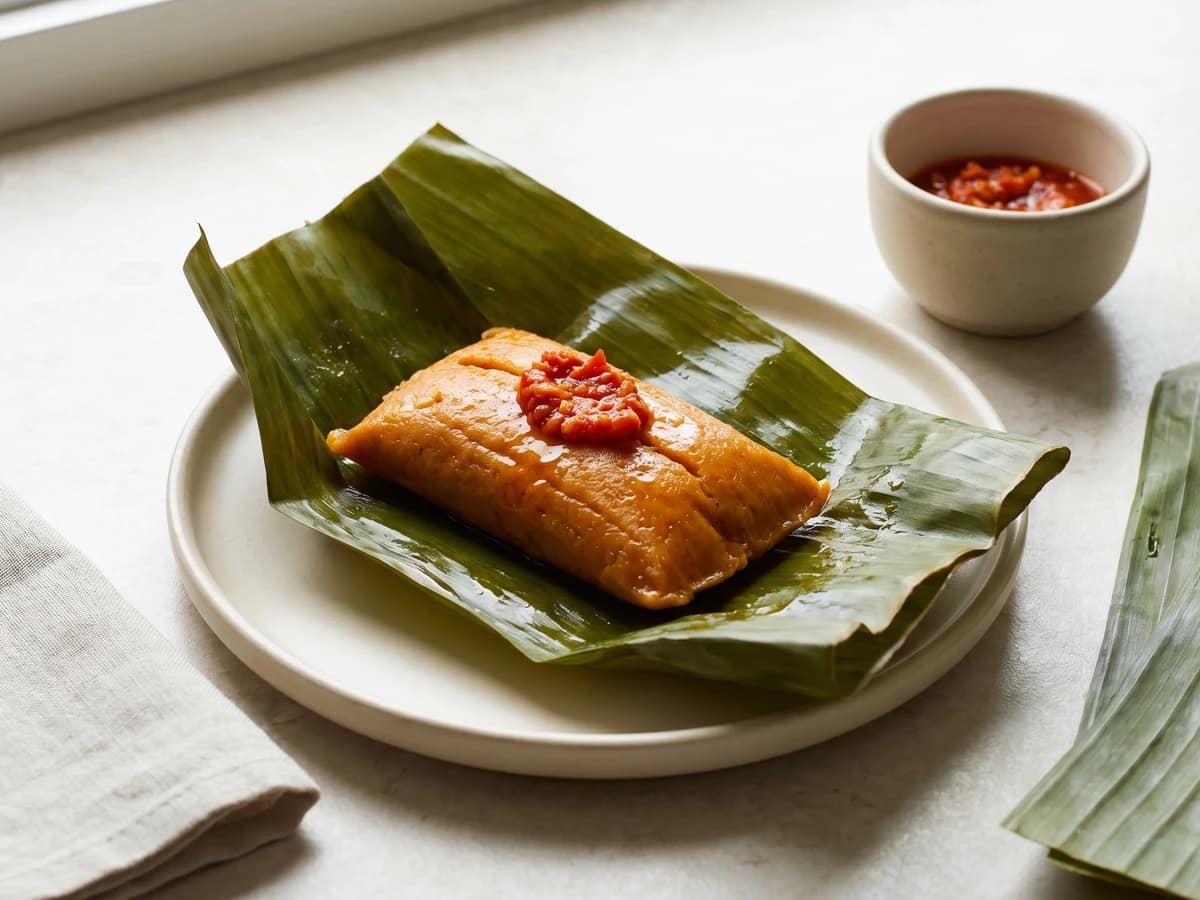
You think banana leaves and hand-whipped bean massa mean “isso não é pra mim.” Wrong. Soak, peel, beat, wrap, steam. Abará is learned by touch, not inherited by magic.
A cooking platform built around craft, culture, and the stories behind what we eat.

Created by
You think frying a half-moon is shop work. It's not. Make the dough thick, the shrimp filling honest, and the fold tidy, and a gente has game day solved.
You've already heard that little voice, haven't you? Isso não é pra mim. Half-moons, filling, breading, frying, it sounds like something born behind the counter of a lanchonete. Good. A gente is going to take that excuse apart piece by piece, because cozinhar não é dom, é um aprendizado.
A risole is not mystery. It's a thick milk dough that tells you when it's ready by pulling from the pot. It's a shrimp filling that gets its flavor from a real refogado, onion, garlic, tomato, and patience, not a packet with a drawing of the sea on it. Then you fold, seal, bread, and fry. Anota aí: every step has a checkpoint, and checkpoints are how beginner cooks become calm cooks.
This is snack food, yes, but it belongs to the same kitchen as the pê-efe. The same hand that learns fluffy arroz soltinho, creamy feijão, something green in the pan, can make a tray of risoles for game day or a potluck without pretending dinner has to come from a shop. Comida de verdade can be everyday rice and beans, and it can also be the fried thing everyone reaches for first.
Make the full batch. Eat some now, freeze some for later, and notice what just happened: you didn't buy the party tray. You made it.
The word risole reached Brazil through Portuguese cooking, with roots in the French verb rissoler, meaning to brown. In Brazil, the snack became a breaded, fried half-moon common in padarias, lanchonetes, and festa trays through the twentieth century. Shrimp versions are especially tied to coastal cities, while inland tables often fill the same dough with cheese, chicken, ham, or ground beef.
Quantity
450 g
peeled and deveined
Quantity
1 tablespoon
Quantity
1 1/2 teaspoons
divided
Quantity
2 tablespoons
Quantity
1 small
finely chopped
Quantity
2 cloves
minced
Quantity
1 medium
seeded and finely chopped
Quantity
1 tablespoon
Quantity
2 tablespoons
for thickening the filling
Quantity
1/2 cup
for the filling
Quantity
2 tablespoons
chopped
Quantity
1/4 teaspoon
Quantity
2 cups
for the dough
Quantity
1 cup
Quantity
3 tablespoons
Quantity
3 cups
for the dough
Quantity
2 large
beaten
Quantity
1/4 cup
for breading
Quantity
2 cups
Quantity
4 to 6 cups
enough for 2 inches in the pot
Quantity
1
cut into wedges
| Ingredient | Quantity |
|---|---|
| raw shrimppeeled and deveined | 450 g |
| lime juice | 1 tablespoon |
| saltdivided | 1 1/2 teaspoons |
| oil | 2 tablespoons |
| onionfinely chopped | 1 small |
| garlicminced | 2 cloves |
| ripe tomatoseeded and finely chopped | 1 medium |
| tomato paste | 1 tablespoon |
| all-purpose flourfor thickening the filling | 2 tablespoons |
| whole milkfor the filling | 1/2 cup |
| parsley or cilantrochopped | 2 tablespoons |
| black pepper | 1/4 teaspoon |
| whole milkfor the dough | 2 cups |
| water | 1 cup |
| butter | 3 tablespoons |
| all-purpose flourfor the dough | 3 cups |
| eggsbeaten | 2 large |
| milkfor breading | 1/4 cup |
| fine dry breadcrumbs | 2 cups |
| neutral oilenough for 2 inches in the pot | 4 to 6 cups |
| lime (optional)cut into wedges | 1 |
Pat the shrimp dry, chop any large ones into small pieces, and toss them with the lime juice and 1/2 teaspoon of the salt. Let them sit for 10 minutes, no longer. The salt seasons the shrimp all the way through, and the short rest keeps the lime from making them tight and rubbery before they even touch the pan.
Warm the oil in a wide pan over medium heat. Add the onion and cook until it murcha, soft and see-through, about 5 minutes. Add the garlic for one minute, just until you smell it, then stir in the tomato and tomato paste. Cook until the tomato loses its raw edge and turns thick and glossy. That's your base. No packet, no shrimp powder pretending to be flavor.
Add the shrimp to the refogado and stir just until they turn pink and opaque, 2 to 3 minutes. Sprinkle in the 2 tablespoons flour and stir for 1 minute so the flour loses its raw taste. Pour in the 1/2 cup milk and cook, stirring, until the filling becomes creamy and thick enough to mound on a spoon. Take it off the heat, stir in the herbs and black pepper, then taste for salt. The filling must be thick, because a runny filling opens the half-moon in the oil and makes a mess you did not deserve.
Spread the filling on a plate and let it cool completely. Cold filling behaves. Hot filling softens the dough, weakens the seal, and then you stand there blaming yourself when the risole opens. No. Blame the hot filling.
Put the 2 cups milk, 1 cup water, butter, and remaining 1 teaspoon salt in a heavy pot. Bring it to a full boil, then lower the heat and dump in the 3 cups flour all at once. Stir hard with a wooden spoon until the dough pulls away from the sides in one thick ball and a thin film forms on the bottom of the pot, 3 to 4 minutes. This cooks the flour and gives the dough strength, so it folds instead of tearing.
Tip the warm dough onto a lightly oiled counter. Fold and press it with a spatula until it is cool enough to handle, then knead with your hands for 2 minutes, just until smooth. Cover it with a clean towel and rest 10 minutes. The rest keeps the surface from drying and makes the dough roll without fighting you.
Roll half the dough at a time to about 1/8 inch thick, keeping the rest covered. Cut 3 1/2 inch rounds with a cutter or the rim of a glass. Same-size circles cook evenly and look tidy without anyone needing pastry-school drama. Gather scraps, rest them 5 minutes, and roll again.
Put 1 level tablespoon of cold shrimp filling in the center of each round. Fold the dough over into a half-moon and press the edges closed with your fingertips, then pinch once more along the rim. Don't overfill. A generous spoonful is lovely on the plate and terrible in the fryer if it breaks the seal.
Beat the eggs with the 1/4 cup milk in a shallow bowl. Put the breadcrumbs in another. Dip each risole in the egg mixture, let the excess drip off, then coat in breadcrumbs, pressing gently so the crumb sticks. Set them on a tray and chill 15 minutes. That little rest sets the coating so it fries crisp instead of sliding off into the oil.
Heat 2 inches of oil in a heavy pot to 175°C (350°F). If you don't have a thermometer, drop in a pinch of breadcrumbs: it should sizzle right away and turn golden slowly, not burn dark in seconds. Fry 4 or 5 risoles at a time until deep golden, about 2 to 3 minutes, turning once. Crowd the pot and the oil cools down, the coating drinks oil, and a good snack turns heavy. Drain on a wire rack and serve with lime wedges if you like.
1 serving (about 80g)
Culinary guides, cultural storytelling, and the editorial depth that makes cooking meaningful.
Discover Culinary ExplorerChef Juliana
You think banana leaves and hand-whipped bean massa mean “isso não é pra mim.” Wrong. Soak, peel, beat, wrap, steam. Abará is learned by touch, not inherited by magic.

Chef Juliana
You think food of Iansã from the baianas' tabuleiro is not for your stove. Anota aí: soaked feijão-fradinho, real dendê, and hand-whipping make a home version learnable.

Chef Juliana
You think fried salgados belong to the birthday table you buy, not the one you make. Wrong. Learn the dough, seal the cheese, and the freezer starts working for you.

Chef Juliana
You think stuffed fried bolinhos are for the boteco cook, not your kitchen. Wrong. Mash the aipim warm, keep the filling dry, fry in small batches, and the tray disappears.