
Chef Freja
Æblegelé
Tart autumn apples, slow-boiled and strained clear overnight, then cooked with sugar to a trembling pale amber jelly that belongs on the cheese board, on morning toast, and in the kitchen of anyone who respects the season.
A cooking platform built around craft, culture, and the stories behind what we eat.
Created by Chef Freja
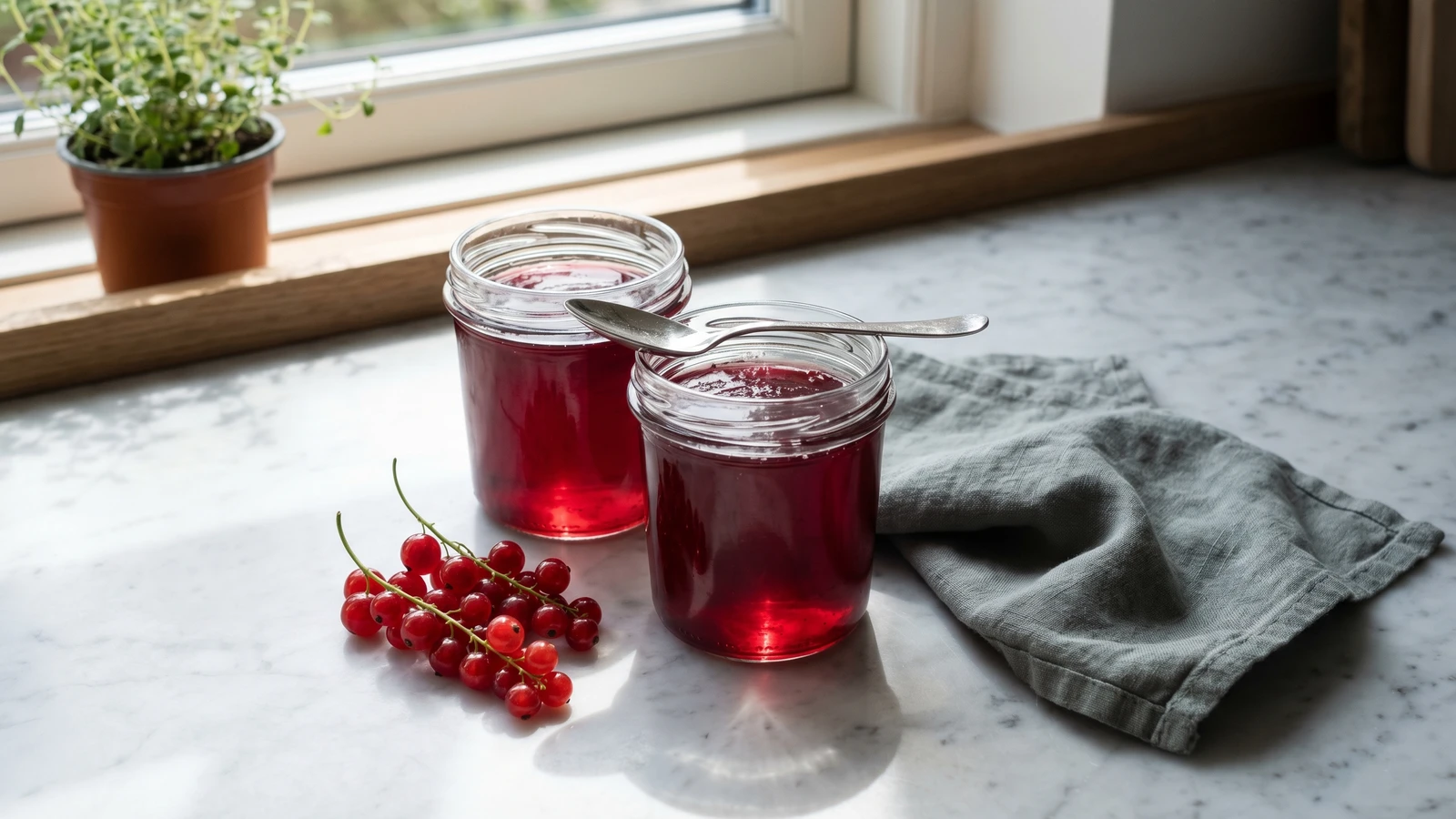
Redcurrants boiled, strained overnight through a saftpose, and set with sugar to a clear ruby jelly. The jar you open in December that still holds the light of July.
July in Denmark belongs to the currants. They come all at once, heavy clusters of translucent red beads hanging from every bush in every garden and allotment from Sjaelland to Skagen. You have about three weeks, and then they're gone. The season decides.
Ribsgele is what you make with the surplus, and in a good year there is always a surplus. The process is slow and simple: cook the berries, strain the juice through a saftpose overnight, boil it with sugar, and pot it while it's hot. There is no complexity here, only patience. The overnight straining is the heart of it. The juice drips through the cloth at its own pace, and you leave it alone. That patience is what gives the jelly its clarity, a red so clean and bright that you can hold the jar up to a window and see light pass through it.
Pay attention to two things. First, do not squeeze the saftpose. I know it's tempting. The bag hangs there, heavy and slow, and you want to help it along. Don't. Squeezing pushes pulp through the cloth and clouds the jelly, and the whole point of ribsgele is that it's clear. Second, learn the wrinkle test. A spoonful on a cold saucer, a push with your fingertip, and if the surface wrinkles, you're done. That is the moment you take it off the heat. Once you've seen it, you won't forget it. You'll know when it's right.
Redcurrant jelly has been part of the Danish preserving tradition since at least the 18th century, when sugar became affordable enough for household use and the short Nordic summer demanded that every fruit be captured for winter. Ribsgele holds a particular place in the Danish Christmas kitchen: it is the traditional accompaniment to flaeske-steg (roast pork), andebryst (roast duck), and the game dishes of the holiday table, where its sharp, bright acidity cuts through the richness of dark meat and brun sovs. The saftpose, the cloth jelly bag that Danish households once kept alongside their jam kettles, has become harder to find in kitchen shops, but the technique it represents, straining by gravity rather than pressure, remains the only way to achieve the jewel-like clarity that defines a properly made ribsgele.
Quantity
1.5kg
on or off the stalk
Quantity
300ml
Quantity
approximately 800g (measured after straining)
| Ingredient | Quantity |
|---|---|
| fresh redcurrantson or off the stalk | 1.5kg |
| water | 300ml |
| granulated sugar | approximately 800g (measured after straining) |
Rinse the redcurrants briefly under cold water. You don't need to strip them from the stalks. The stalks contain pectin, which helps the jelly set, and they'll be caught by the saftpose later. Put the currants into a large heavy-bottomed pot and add the water. The water stops them from catching on the bottom before they release their own juice.
Bring the pot to a gentle boil over medium heat, stirring occasionally. The berries will burst and collapse within ten minutes, releasing a vivid red juice. Let them simmer for another five minutes after they've all broken down. The kitchen will smell sharp and sweet, like a July garden brought indoors. Take the pot off the heat.
Set up your saftpose or jelly bag over a large bowl or pot. If you don't have a stand, tie the bag to the legs of an upturned stool. Pour the cooked fruit into the bag and let it drip. This is where patience matters. Leave it overnight, at least eight hours, and do not squeeze the bag. Squeezing forces pulp through the cloth and makes the jelly cloudy. You want it clear, a ruby you can see light through.
In the morning, measure the strained juice. You should have roughly 800ml from 1.5kg of fruit, though this varies with how ripe and juicy the berries were. For every 100ml of juice, weigh 100g of granulated sugar. Equal parts by volume and weight. This ratio gives a firm set without being tooth-achingly sweet. The tartness of the currants needs the sugar, and the sugar needs the tartness. Neither should win.
Wash your jars and lids in hot soapy water and place them in the oven at 110C for fifteen minutes. Leave them in the oven until you're ready to fill them. Hot jelly into hot glass. Cold glass cracks. This is the step that keeps your jelly safe for months.
Pour the strained juice into a clean, wide pot. A wide pot is better than a tall one because the larger surface area lets moisture evaporate faster, which gives a cleaner set. Bring the juice to a rolling boil. Add the sugar all at once and stir until it dissolves completely. Then stop stirring. Let the jelly boil hard for eight to twelve minutes. Watch it. It will foam and rise in the pot, then settle back as it concentrates.
Start testing after eight minutes. Put a small spoonful on one of the cold saucers from the freezer. Push it with your finger after thirty seconds. If the surface wrinkles, the jelly is set. If it runs like syrup, boil for two more minutes and test again. You'll know when it's right. The moment the surface wrinkles under your fingertip is unmistakable, and that is the moment you take the pot off the heat. Don't overcook it past that point or the jelly goes dark and tastes of caramel instead of fruit.
Skim any foam from the surface with a spoon. The foam is harmless but it clouds the jelly. Pour immediately into the hot sterilized jars, filling them to within half a centimeter of the rim. Seal the lids tightly. Turn the jars upside down for five minutes, then flip them back. As the jelly cools, the lids will pull inward with a small click. That click is the seal, and the seal is what lets this July afternoon carry through to December.
1 serving (about 20g)
Culinary guides, cultural storytelling, and the editorial depth that makes cooking meaningful.
Discover Culinary ExplorerChef Freja
Tart autumn apples, slow-boiled and strained clear overnight, then cooked with sugar to a trembling pale amber jelly that belongs on the cheese board, on morning toast, and in the kitchen of anyone who respects the season.

Chef Freja
Autumn apples simmered slowly with vanilla until they collapse into a rough, golden sauce. The condiment that waits on the shelf for flaeskesteg, for roast duck, for the meals that carry you through the Danish winter.

Chef Freja
The pan sauce that holds the Danish Christmas plate together. Duck drippings, good stock, cream, and a spoonful of red currant jelly for the tart brightness that makes juleaften taste like itself.

Chef Freja
September plums slow-cooked with onion, ginger, vinegar, and warm spice into a dark, glossy chutney that belongs beside aged cheese on a cold evening. The joy of waiting, sealed in a jar.