
Chef Klaus
Aachener Printen
Aachen's Advent biscuit is dark, hard, and spiced, with beet syrup doing the deep work and a closed tin finishing what the oven only starts.
A cooking platform built around craft, culture, and the stories behind what we eat.
Created by
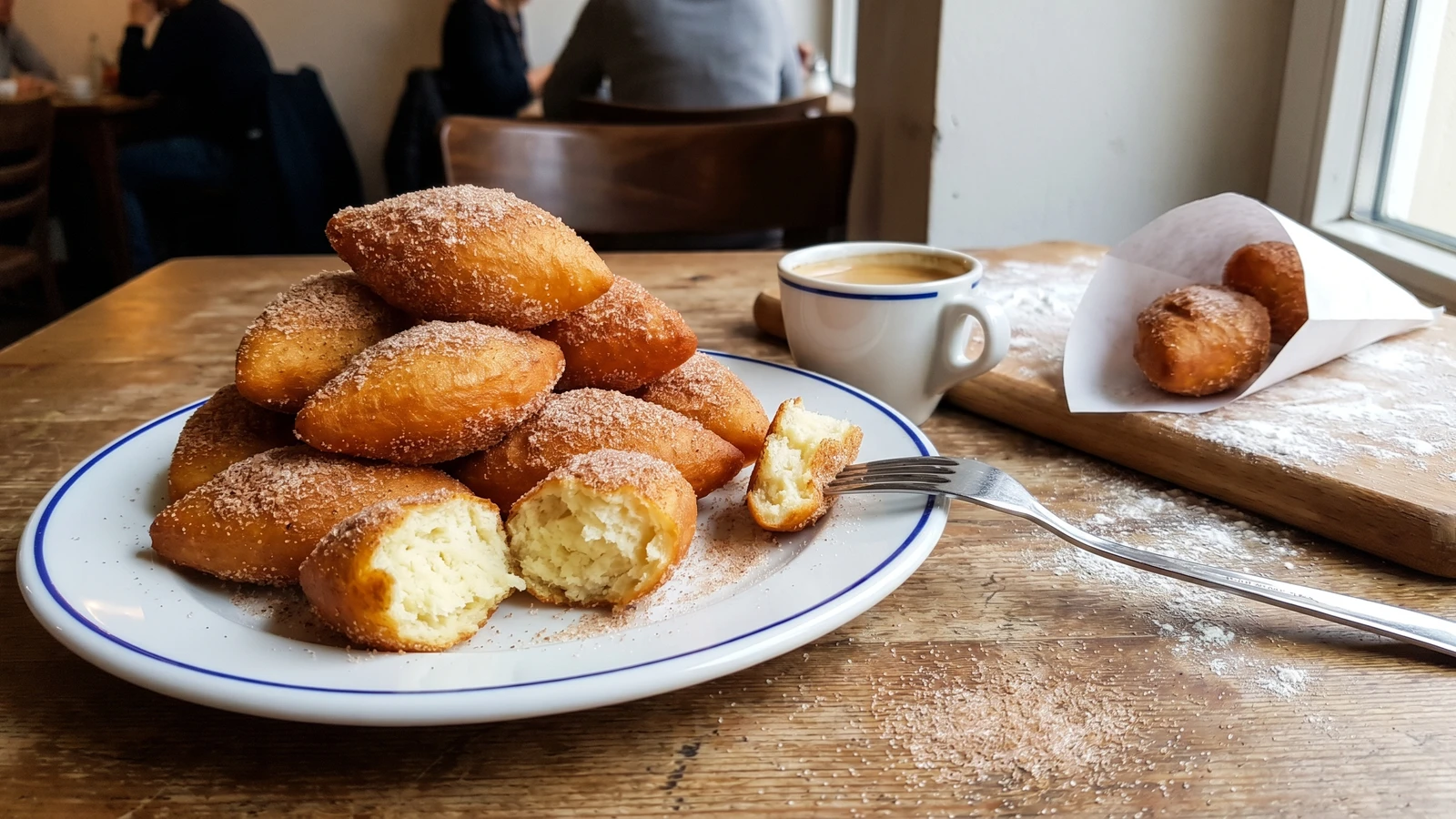
The Rhineland Carnival pastry that lives or dies in the frying pot: small almond-shaped Mutzen, tender with quark, crisp at the edge, and rolled in cinnamon sugar while still hot.
Rheinische Mutzen belong to Karneval, especially around Köln and the Bergisches Land, when the kitchen smells of hot fat and sugar before anyone has put on a paper hat. They are small, almond-shaped fritters, not the big Berliners filled with jam and not the yeast squares you see further south. Im Norden anders, im Süden anders: Swabia has Fasnetsküchle, Bavaria has Auszogne, the Rhineland has these little pieces you eat by the handful.
I make them with quark because it gives the dough a clean dairy tenderness and keeps the inside moist without needing yeast. Some Rhenish kitchens use a richer almond short dough and call them Mutzenmandeln; some Bergisch cooks go lighter, closer to a spoon batter. I won't pretend there is one national answer. This is the Rhenish quark way, shaped small enough to cook through before the outside goes too dark.
The whole dish is decided by the fat temperature. Keep it around 170C. Too cold and the dough drinks grease; too hot and the sugar browns before the middle has set. Drop in one test piece first, because the pot tells the truth faster than the recipe card. Das braucht seine Zeit, but not much of it.
Roll them in cinnamon sugar while they're still hot, because the surface oil catches the sugar before it dries. Wait too long and the sugar falls off, and then you stand there dusting sad little stones. Schön ist, was schmeckt.
Mutzen and Mutzenmandeln are tied to the Rhineland Carnival season, especially in Köln, Düsseldorf, and the Bergisches Land, where rich fried pastries used up eggs, butter, and fat before the Lenten fasting period began on Ash Wednesday. The almond shape is old enough to have become the name in many bakeries, Mutzenmandeln, little almond Mutzen, though recipes split between quark dough, short dough with ground almonds, and looser spoon batters. The regional argument is part of the dish: the Rhineland fries small sugared pieces for Karneval, while Swabia and Bavaria keep their own Shrovetide fried pastries under different names and with different doughs.
Quantity
250g
well drained
Quantity
2
Quantity
80g
Quantity
1 packet or 1 teaspoon
Quantity
1 tablespoon
finely grated
Quantity
2 tablespoons
melted and cooled
Quantity
300g
plus more for dusting
Quantity
75g
Quantity
2 teaspoons
Quantity
1/2 teaspoon
Quantity
1 to 2 tablespoons
Quantity
1.5 liters
Quantity
120g
Quantity
1 1/2 teaspoons
| Ingredient | Quantity |
|---|---|
| quarkwell drained | 250g |
| large eggs | 2 |
| sugar | 80g |
| vanilla sugar or vanilla extract | 1 packet or 1 teaspoon |
| lemon zestfinely grated | 1 tablespoon |
| buttermelted and cooled | 2 tablespoons |
| plain flourplus more for dusting | 300g |
| ground almonds | 75g |
| baking powder | 2 teaspoons |
| fine salt | 1/2 teaspoon |
| milk (optional) | 1 to 2 tablespoons |
| neutral frying oil or clarified butter | 1.5 liters |
| sugar, for rolling | 120g |
| ground cinnamon | 1 1/2 teaspoons |
Set the quark in a fine sieve for 15 minutes while you weigh the rest. Quark carries water, and that water has to leave now; if it goes into the dough, you'll add more flour to chase it, and the Mutzen turn tough instead of tender.
Beat the drained quark with the eggs, sugar, vanilla, lemon zest, and cooled butter until smooth. Stir the flour, ground almonds, baking powder, and salt together, then fold them into the quark mixture just until a soft dough forms. Stop when the flour disappears, because overworking wakes up the gluten and gives you chewy fritters. If the dough is dry and crumbly, add milk one spoon at a time; if it's only a little sticky, leave it alone.
Cover the dough and let it rest 15 minutes. The flour and almonds need that time to drink the moisture, so you can shape the pieces without burying the dough in extra flour. Roll it on a lightly floured board to about 1.5cm thick, then cut small almond shapes with a Mutzenmandel cutter or cut short diamonds with a knife. Keep them small; a fat piece browns outside before the middle cooks.
Heat the oil or clarified butter in a heavy pot to 170C. Use enough fat that the Mutzen float freely, because pieces sitting on the bottom scorch before they puff. Drop in one test piece first. It should rise, bubble steadily, and turn golden in about 3 minutes. If it races dark in one minute, runter mit der Temperatur, down with the temperature. If it sits pale and greasy, bring the heat back up.
Fry the Mutzen in small batches for 2 to 3 minutes, turning once, until deep golden and cooked through. Crowding drops the fat temperature, and cold fat is how a good dough becomes oily. Lift them with a slotted spoon and drain briefly on paper, just long enough for the surface to stop dripping.
Mix the sugar and cinnamon in a shallow bowl, then roll the Mutzen while they're still hot. The thin film of fat catches the sugar now; once they cool, it slides off. Serve the same day, with coffee, after the parade, before the sensible people start counting how many are gone.
1 serving (about 25g)
Culinary guides, cultural storytelling, and the editorial depth that makes cooking meaningful.
Discover Culinary ExplorerChef Klaus
Aachen's Advent biscuit is dark, hard, and spiced, with beet syrup doing the deep work and a closed tin finishing what the oven only starts.

Chef Klaus
The Baden-Wuerttemberg apple fritter that lives between weeknight dessert and Sunday coffee, built on tart rings, a light batter, and oil kept steady.

Chef Klaus
The Carnival doughnut lives by proofing and fat temperature: a light yeast round floats high, cooks through with one pale belt, then takes its jam without turning greasy.

Chef Klaus
A cold Mürbeteig ball, one clean hollow, and a spoon of tart jelly: Engelsaugen are Advent cookies that fail only when the dough gets warm.