
Chef Thomas
A Ploughman's Salad
The old pub ploughman's, shaken loose from its board and laid across butter lettuce with a sharp mustard dressing, for the kind of lunch that feels like you've given yourself the afternoon off.
A cooking platform built around craft, culture, and the stories behind what we eat.
Created by Chef Thomas
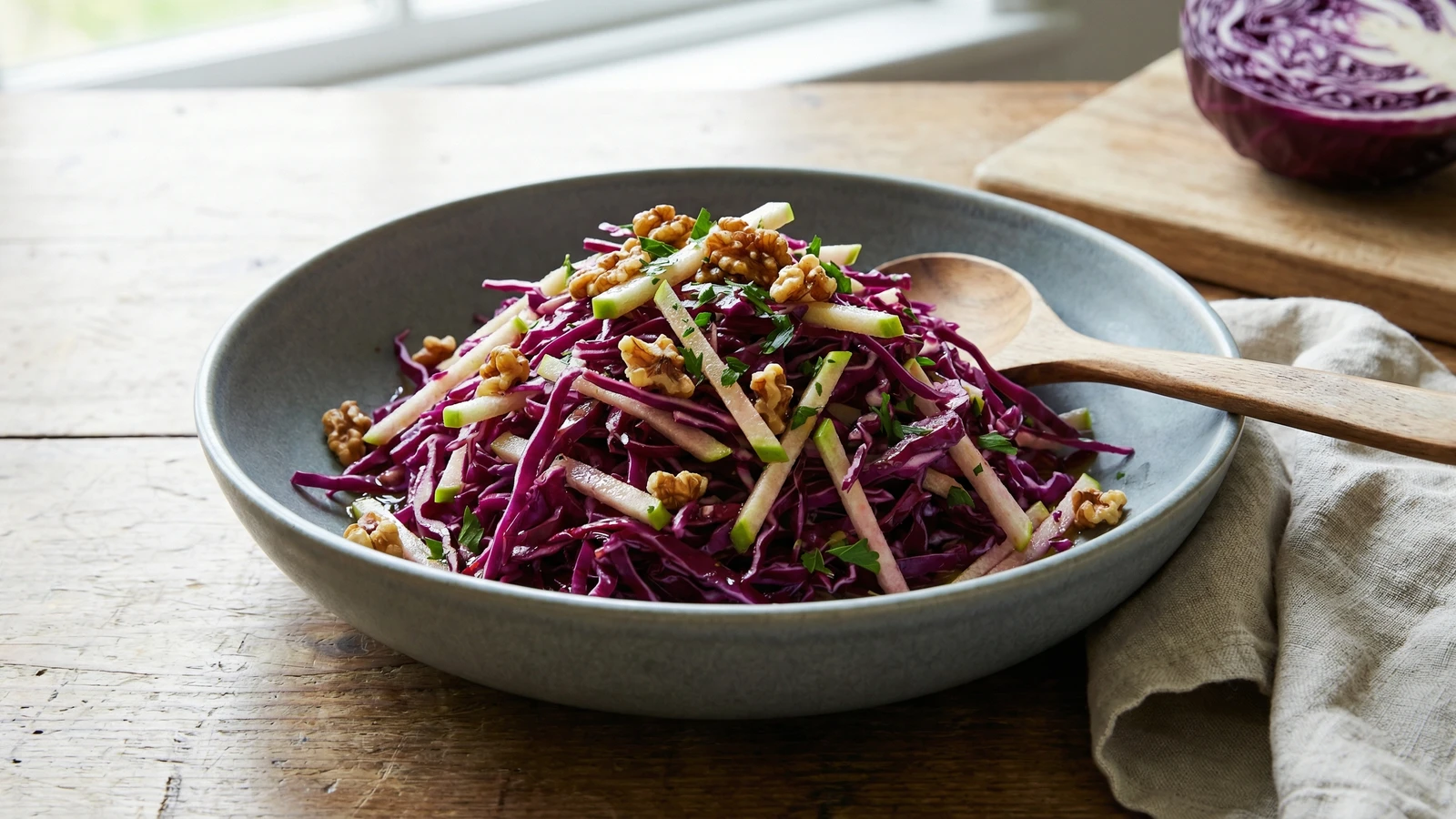
Shredded red cabbage, sharp with cider vinegar and mustard, tossed with crisp autumn apple and toasted walnuts. The kind of bowl that makes itself useful all week.
October, and the market stall had red cabbages stacked in a crate, tight and heavy and that extraordinary colour, somewhere between plum and ink. I picked one up and it weighed like a small planet. You forget, sometimes, what a proper vegetable feels like in the hand.
This slaw is the sort of thing I make when I need something in the fridge that earns its place across several days. It goes with everything: cold roast pork on Monday, a baked potato on Tuesday, alongside cheese and bread on Wednesday when you can't be bothered to think. The cabbage holds its nerve. Most salads wilt and turn sad within hours. This one improves. The vinegar and mustard soften the shreds, the apple stays crisp enough to matter, and the walnuts keep their bite.
A recipe is a conversation, not a contract. The proportions here are a starting point. More mustard if you like heat. A little more honey if the apples are tart. A handful of dried cranberries if they're in the cupboard and you want a touch of sweetness. Your kitchen, your rules.
I wrote it down in the notebook last autumn: red cabbage, Cox's apples, walnuts, the vinegar smell sharp and clean in the kitchen. Right food, right evening. Sometimes that's all a recipe needs to say.
Quantity
½ medium
cored and finely shredded
Quantity
2 (Cox's or Braeburn)
cored and cut into thin matchsticks
Quantity
½ lemon
Quantity
100g
Quantity
small bunch
roughly chopped
Quantity
2 tablespoons
Quantity
1 tablespoon
Quantity
1 teaspoon
Quantity
4 tablespoons
Quantity
to taste
Quantity
to taste
| Ingredient | Quantity |
|---|---|
| red cabbagecored and finely shredded | ½ medium |
| crisp eating applescored and cut into thin matchsticks | 2 (Cox's or Braeburn) |
| lemon juice | ½ lemon |
| walnut halves | 100g |
| flat-leaf parsleyroughly chopped | small bunch |
| cider vinegar | 2 tablespoons |
| wholegrain mustard | 1 tablespoon |
| runny honey | 1 teaspoon |
| extra virgin olive oil | 4 tablespoons |
| fine sea salt | to taste |
| black pepper | to taste |
Scatter the walnuts into a dry frying pan over a medium heat. Stay close. Shake the pan every thirty seconds or so and watch them. You want them golden and fragrant, smelling warm and slightly sweet, like the start of something good. It takes three to five minutes. The moment they darken, tip them out onto a board. A hot pan keeps cooking them after the flame is off, and there's a narrow window between toasted and bitter. Roughly chop them once they've cooled. Not too fine. You want pieces, not dust.
Halve the cabbage, cut out the core, and shred it as finely as you can manage. A sharp knife is essential. The thinner the shreds, the better they take on the dressing and the more tender they become as they sit. Pile the shreds into a large bowl. It will look like far too much. It isn't.
Cut the apples into thin matchsticks, working around the core. Toss them immediately in the lemon juice to stop them browning. The lemon does double duty here: it keeps the apple bright and sharp and adds a quiet acidity that lifts everything else. Add the apple to the bowl with the cabbage.
Whisk the cider vinegar, mustard, and honey together in a small bowl or jar. Add the olive oil in a slow stream, whisking as you go, until it comes together into something thick enough to coat the back of a spoon. Season with salt and pepper. Taste it. The dressing should be sharp and lively, a little more punchy than you think it needs, because the cabbage will absorb and soften the edges.
Pour the dressing over the cabbage and apple. Get your hands in and toss everything thoroughly. The cabbage will start to relax almost immediately, the purple darkening where the vinegar hits. Add the chopped walnuts and the parsley. Toss again. Taste for seasoning. It might want more salt. It almost always does. Let it sit for ten minutes before serving if you can. The flavours settle and the cabbage softens just enough to lose its rawness without losing its crunch.
1 serving (about 160g)
Culinary guides, cultural storytelling, and the editorial depth that makes cooking meaningful.
Discover Culinary ExplorerChef Thomas
The old pub ploughman's, shaken loose from its board and laid across butter lettuce with a sharp mustard dressing, for the kind of lunch that feels like you've given yourself the afternoon off.

Chef Thomas
Double-podded broad beans and sweet peas, dressed simply with torn mint, lemon, and good olive oil. The kind of bowl that tastes the way a June garden smells.

Chef Thomas
Celeriac cut into pale matchsticks and dressed in sharp mustard and crème fraîche, the sort of thing you make on a Sunday and find yourself eating from the bowl with a fork on Tuesday.

Chef Thomas
Bitter chicory leaves carrying sharp apple, crumbled Stilton, and toasted walnuts, dressed with cider vinegar and honey. A winter salad that earns its place at the table when the garden has shut up shop.