
Chef Graziella
Agrodolce alla Siciliana
The sweet-sour sauce that proves Sicily is where East meets West, where Arab traders left their mark on Italian cooking. A syrup of vinegar and honey, studded with pine nuts and raisins.
A cooking platform built around craft, culture, and the stories behind what we eat.
Created by
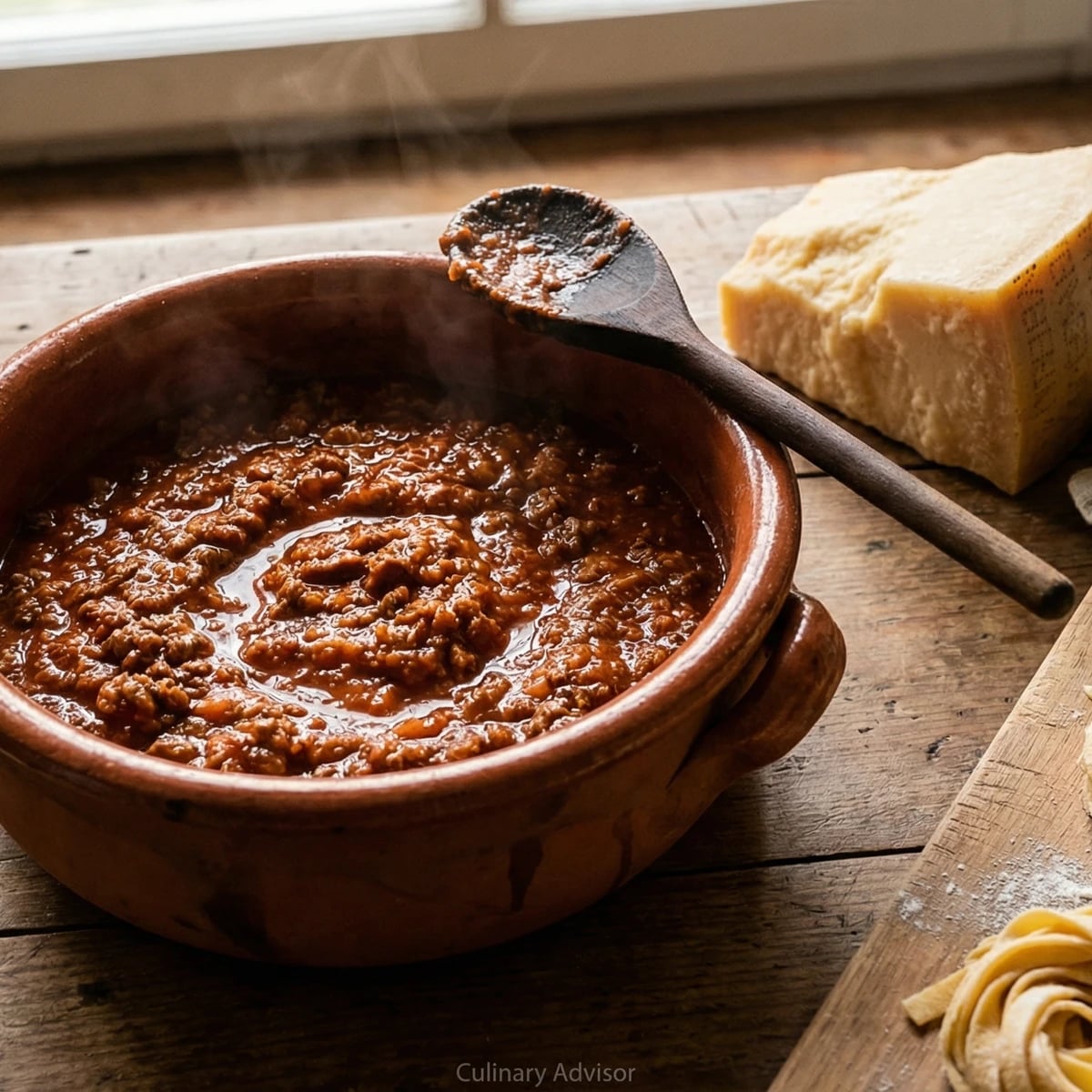
The true meat sauce of Bologna, where beef and pork surrender to soffritto, milk, wine, and the patient application of low heat. This is not red. This is not tomato sauce with hamburger. This is ragù.
FLAVOR, IN ITALIAN DISHES, builds up from the bottom. This is the first truth of ragù alla Bolognese, and Americans who dump canned tomatoes over browned hamburger will never understand it. The soffritto comes first. Then the meat, crumbled and browned until every trace of raw pink has vanished. Then the milk, which must be completely absorbed before you even think about adding wine. Only then, at the very end, do the tomatoes enter. They are guests in this sauce, not hosts.
The Accademia Italiana della Cucina registered an official recipe with the Bologna Chamber of Commerce in 1982. This was not an act of bureaucratic meddling. It was self-defense. By that time, the world had so thoroughly corrupted this sauce that Bolognese grandmothers could no longer recognize their own creation on foreign plates. What Americans call 'Bolognese' bears the same relationship to true ragù that a postcard bears to the Sistine Chapel.
There is no garlic in this sauce. If this shocks you, it proves my point about the unbalanced use of garlic being the single greatest cause of failure in would-be Italian cooking. There is very little tomato. The color should be the warm terracotta of clay pots, not the aggressive red of marinara. The texture should cling and coat, not pool and puddle. Simple does not mean easy. This sauce takes four hours. There are no shortcuts worth taking.
The meat ragù of Bologna evolved in the wealthy kitchens of Emilia-Romagna during the 18th century, where access to multiple meats and domestic help made long-simmered sauces practical. The Accademia Italiana della Cucina deposited an official recipe with the Bologna Chamber of Commerce on October 17, 1982, codifying what Bolognese cooks had known for generations: this is a meat sauce with tomato, never a tomato sauce with meat.
Quantity
3 tablespoons
Quantity
3 tablespoons
Quantity
1 medium (about 1 cup)
diced fine
Quantity
1 medium (about 1/2 cup)
peeled and diced fine
Quantity
1 (about 1/2 cup)
diced fine
Quantity
1 pound
Quantity
8 ounces
Quantity
4 ounces
diced fine
Quantity
1 cup
Quantity
1/8 teaspoon
freshly grated
Quantity
1 cup
Quantity
1 can (14 ounces)
passed through food mill
Quantity
2 tablespoons
Quantity
1 cup, plus more as needed
Quantity
to taste
Quantity
to taste
freshly ground
| Ingredient | Quantity |
|---|---|
| extra virgin olive oil | 3 tablespoons |
| unsalted butter | 3 tablespoons |
| yellow oniondiced fine | 1 medium (about 1 cup) |
| carrotpeeled and diced fine | 1 medium (about 1/2 cup) |
| celery stalk with leavesdiced fine | 1 (about 1/2 cup) |
| ground beef chuck | 1 pound |
| ground pork | 8 ounces |
| pancettadiced fine | 4 ounces |
| whole milk | 1 cup |
| nutmegfreshly grated | 1/8 teaspoon |
| dry white wine | 1 cup |
| San Marzano tomatoespassed through food mill | 1 can (14 ounces) |
| tomato paste | 2 tablespoons |
| beef or chicken broth | 1 cup, plus more as needed |
| kosher salt | to taste |
| black pepperfreshly ground | to taste |
In a heavy-bottomed Dutch oven or brazier, heat the olive oil and butter over medium heat until the butter foam subsides. Add the onion, carrot, and celery. Cook slowly, stirring occasionally, until the vegetables are completely soft and the onion has turned pale gold at the edges. This takes at least 20 minutes. Do not rush. One can often trace the unsatisfying taste, the lameness of dishes purporting to be Italian in style, to the reluctance of cooks to execute this step thoroughly.
Add the diced pancetta to the soffritto. Cook, stirring frequently, until the fat has rendered and the pancetta begins to crisp at the edges, about 5 minutes. The pancetta contributes depth and a subtle smokiness that beef alone cannot provide.
Add the ground beef and pork. Break the meat into small crumbles with a wooden spoon and cook over medium-high heat, stirring frequently. The meat must lose every trace of raw pink color and begin to brown. This is not quick work. It takes 15 to 20 minutes of attentive stirring. The meat should crumble into pieces no larger than peppercorns. Large chunks of meat have no place in ragù.
Reduce heat to medium. Add the milk and the nutmeg. Let the milk simmer gently, stirring occasionally, until it has been completely absorbed by the meat. The pan should look nearly dry. This step is critical and non-negotiable. The milk tempers the meat and creates the characteristic creaminess of true Bolognese. It takes 15 to 20 minutes for the milk to disappear. Only when the pan is dry do you proceed.
Pour in the white wine and stir thoroughly, scraping any browned bits from the bottom of the pan. Let the wine simmer until it has evaporated completely. You should no longer smell raw alcohol, and the pan should again be nearly dry. This takes another 15 to 20 minutes. The wine contributes acidity and complexity, but only after its alcohol has cooked away entirely.
Add the passed tomatoes and tomato paste. Stir to combine. The sauce will look quite pale compared to what Americans expect. This is correct. Add the broth and stir thoroughly. Season lightly with salt and pepper. You will adjust at the end.
When the sauce begins to bubble, reduce heat to the lowest possible setting. The sauce should cook at the laziest of simmers, with only an occasional bubble breaking the surface. If your burner runs hot, use a heat diffuser. Partially cover the pot, leaving a gap for steam to escape. Cook for at least 3 hours, preferably 4. Stir every 30 minutes. If the sauce becomes too thick, add broth or water, a few tablespoons at a time. The sauce should remain moist but not soupy.
After 3 to 4 hours, taste the ragù. Correct the salt. The flavors should be mellow, rounded, unified. No single ingredient should dominate. The color should be warm terracotta, the color of clay roof tiles in the Emilian sun. If the sauce tastes sharp, cook it longer. If it tastes flat, add a pinch more salt. Remove from heat and let rest 15 minutes before serving or storing.
1 serving (about 200g)
Culinary guides, cultural storytelling, and the editorial depth that makes cooking meaningful.
Discover Culinary Explorer
Chef Graziella
The sweet-sour sauce that proves Sicily is where East meets West, where Arab traders left their mark on Italian cooking. A syrup of vinegar and honey, studded with pine nuts and raisins.

Chef Graziella
The citrus marinade of the Southern Italian coast, where lemons hang heavy on the terraces and the fish comes straight from morning boats. Two forms of citrus, good oil, restraint.

Chef Graziella
The warm bath of Piedmont, where anchovies and garlic surrender to butter and oil over gentle heat. A communal pot, raw vegetables, and the harvest tradition of the Langhe hills.

Chef Graziella
The mother sauce of Italian baked pastas, transformed from simple butter, flour, and milk into silk through patient whisking and the essential warmth of nutmeg.