
Chef Graziella
Brodo di Pollo all'Italiana
The foundation of Italian cooking, made as it has been made for generations: a whole chicken, honest vegetables, cold water, and three hours of patient simmering. This is where flavor begins.
A cooking platform built around craft, culture, and the stories behind what we eat.
Created by
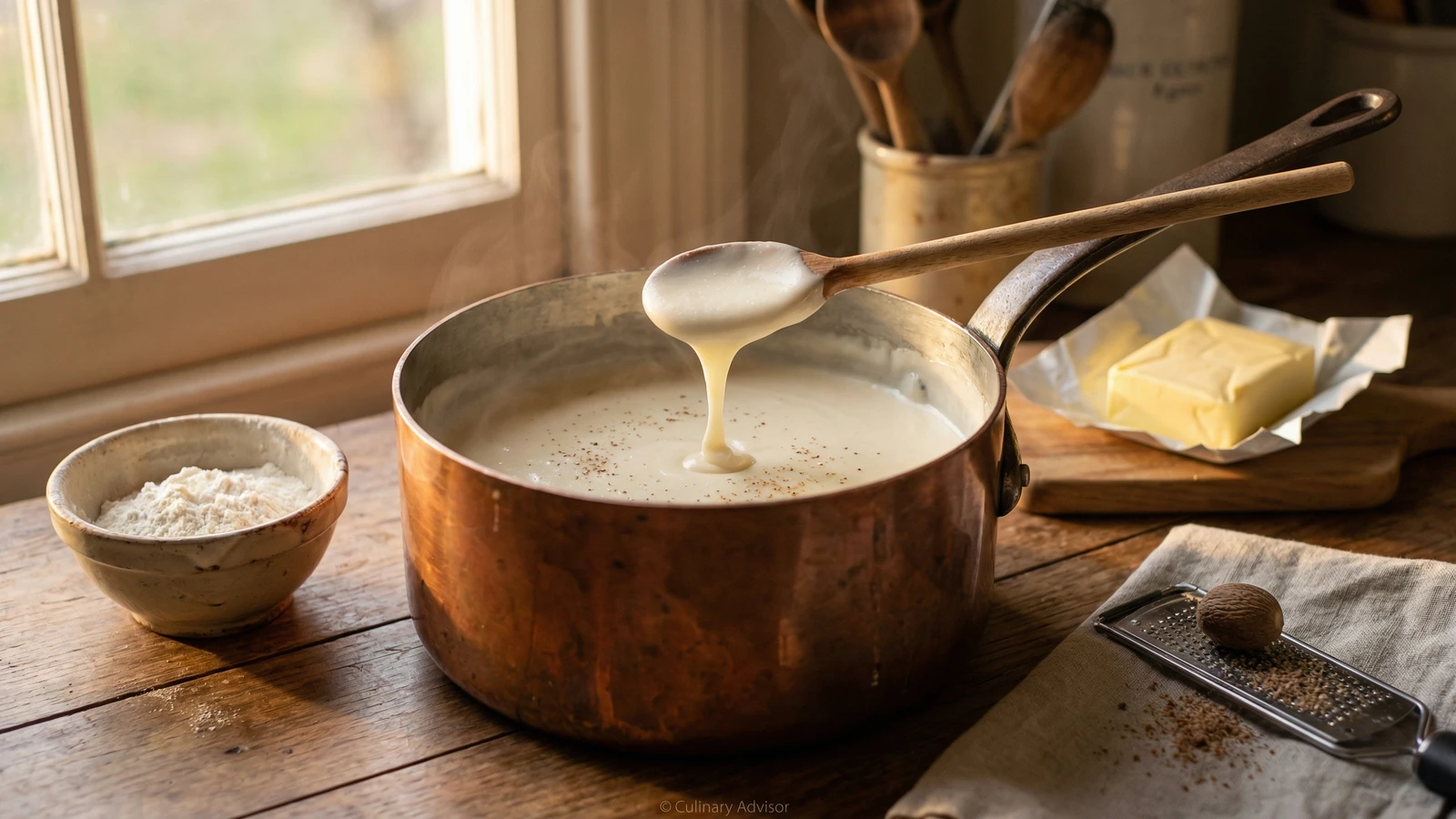
The mother sauce of Italian baked pastas, transformed from simple butter, flour, and milk into silk through patient whisking and the essential warmth of nutmeg.
The French will tell you béchamel is theirs. They are wrong. Italian cooks were binding flour with fat and milk before any courtier in Paris gave it a fancy name. What matters is not who invented it, but who uses it properly. In Italian cooking, besciamella has a purpose: it provides the creamy layers in lasagne alla bolognese, the binding in cannelloni, the foundation for countless baked pastas of the north.
This sauce requires attention for fifteen minutes. Not multitasking. Not checking your phone. Attention. The whisk must keep moving. The heat must stay moderate. The milk must be hot. These are not suggestions. They are requirements. Ignore them and you will have a lumpy paste that no amount of straining can fully correct.
What separates Italian besciamella from its French cousin is restraint and purpose. We do not drown it in cream or enrich it with egg yolks. We add nutmeg, which the French often omit. The nutmeg is not negotiable. Without it, besciamella tastes flat, like library paste made respectable. With it, the sauce has depth, a whisper of warmth that makes you wonder what that flavor is, even when you cannot quite name it.
While the French named the sauce after Louis de Béchameil, a steward in the court of Louis XIV, Italian cooks claim the preparation dates to the Renaissance courts of Tuscany, where it was known as salsa colla. The Bolognese adopted it as the essential layering element in their lasagne, insisting that proper besciamella requires freshly grated nutmeg, a detail that distinguishes their version to this day.
Quantity
4 tablespoons
Quantity
4 tablespoons
Quantity
3 cups
Quantity
1/2 teaspoon
Quantity
1/8 teaspoon
freshly grated
Quantity
pinch
| Ingredient | Quantity |
|---|---|
| unsalted butter | 4 tablespoons |
| all-purpose flour | 4 tablespoons |
| whole milk | 3 cups |
| fine sea salt | 1/2 teaspoon |
| nutmegfreshly grated | 1/8 teaspoon |
| white pepper | pinch |
Pour the milk into a small saucepan and heat over medium until it begins to steam and small bubbles form at the edges. Do not let it boil. The milk must be hot when it meets the roux. Cold milk creates lumps. There is no recovering from lumps.
In a heavy-bottomed saucepan, melt the butter over medium heat. When it foams, add all the flour at once. Stir with a wooden spoon until the flour and butter form a smooth paste. Cook for two minutes, stirring constantly. The roux should bubble gently but never color. If it begins to turn golden, your heat is too high. Remove the pan immediately and lower the flame.
Remove the roux from the heat. Add approximately one cup of the hot milk and whisk vigorously until completely smooth. Return the pan to medium heat. Add the remaining milk in a steady stream, whisking constantly. The motion of the whisk must not stop. Whisking incorporates air and prevents the proteins from clumping. You are building the sauce's texture with every stroke.
Continue whisking over medium heat until the sauce thickens enough to coat the back of a wooden spoon. Dip the spoon in the sauce and draw your finger across it. The line should hold without the sauce running back together. This takes eight to ten minutes. Do not rush. A besciamella that seems thick enough at six minutes will thin disappointingly when it cools.
Remove the pan from heat. Add the salt, nutmeg, and white pepper. Whisk to incorporate. Taste the sauce. It should be creamy, subtly sweet from the milk, with the warmth of nutmeg present but not dominant. The nutmeg is essential. It lifts the sauce from bland richness to something with character. This is what separates besciamella from mere white sauce.
If you are not using the sauce immediately, press a piece of plastic wrap directly onto the surface of the sauce. The wrap must touch the sauce entirely, leaving no air between them. Air creates skin. Skin ruins texture. Keep the sauce warm over very low heat or in a water bath until needed.
1 serving (about 125g)
Culinary guides, cultural storytelling, and the editorial depth that makes cooking meaningful.
Discover Culinary ExplorerChef Graziella
The foundation of Italian cooking, made as it has been made for generations: a whole chicken, honest vegetables, cold water, and three hours of patient simmering. This is where flavor begins.

Chef Graziella
Three ingredients. No garlic. No dried oregano. No sugar. This is what Italians actually put on their salads, and it requires nothing more than quality and balance.
Chef Graziella
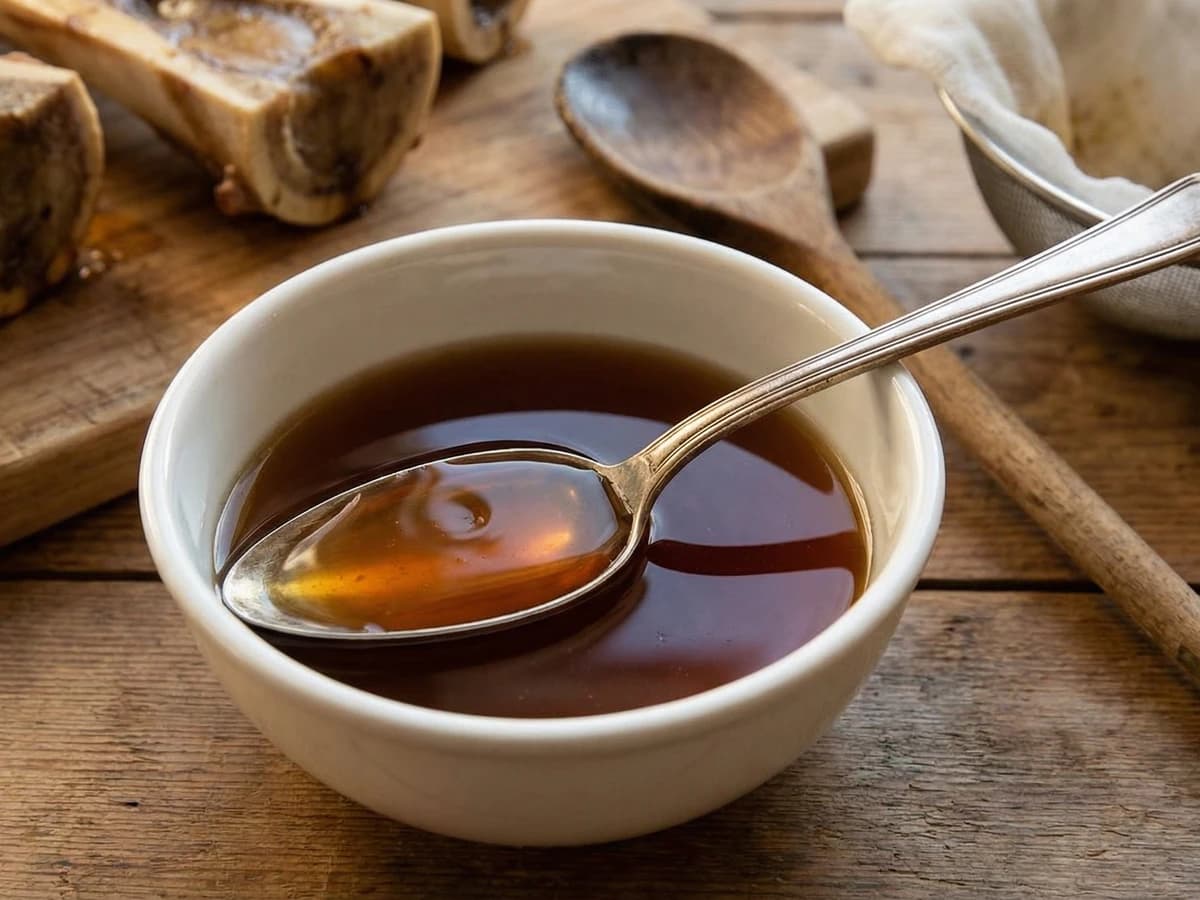
The brown stock that forms the backbone of Italian meat cookery. Hours of roasting and simmering extract every trace of flavor from bone and sinew, creating liquid gold that transforms ordinary sauces into extraordinary ones.

Chef Graziella
The honest Italian way to preserve garden vegetables: crisp cauliflower, carrots, celery, and peppers in a clean wine vinegar brine. Not the oil-drenched Chicago version.