Culinary Explorer

A cooking platform built around craft, culture, and the stories behind what we eat.
Discover Culinary Explorer
Rabbit Stew with Pearl Barley

Rabbit Stew with Pearl Barley

Created by Chef Thomas

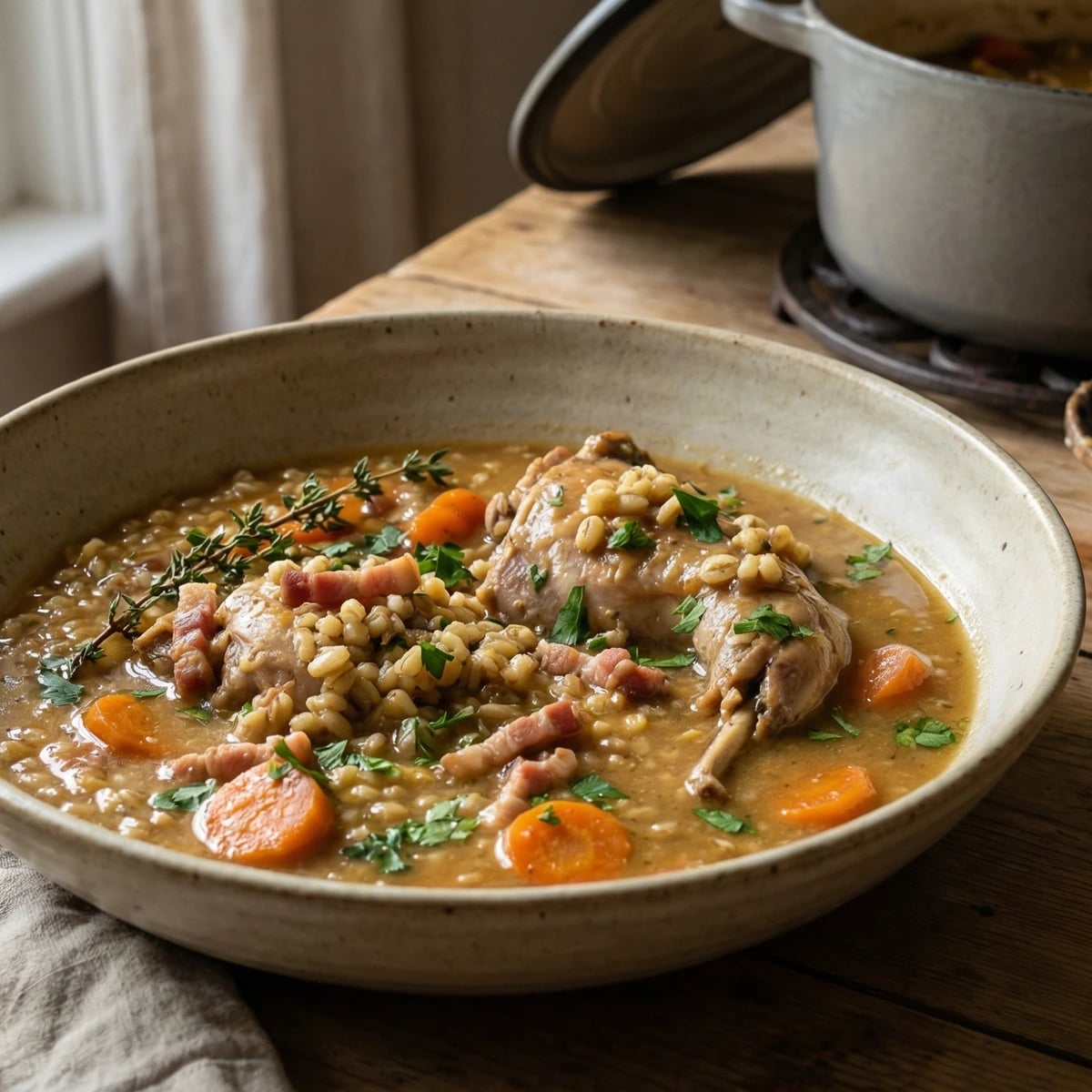
A slow pot of rabbit and pearl barley, braised with bacon and thyme until the meat gives and the broth thickens into the kind of supper that makes a cold evening feel like exactly where you want to be.

Soups & Stews
British
Comfort Food
Make Ahead
30 min
Active Time
2 hr 30 min cook3 hr total
Yield4 servings

The wind changed direction last week and the garden knew before I did. The last of the runner beans gave up. The thyme, though, is still going, low and woody and fragrant when you brush past it. This is the weather for a braise. For something that sits on the hob or in a low oven for a couple of hours and fills the house with a smell that says, without any fuss, that someone is paying attention.

Rabbit was ordinary once. Not a restaurant curiosity or a farmers' market novelty, just supper. My grandmother's generation cooked it the way we cook chicken: without ceremony, because it was there and it was good. A rabbit, some bacon, a handful of barley, whatever the garden offered, and a pot with a lid. This is that kind of cooking. No technique to speak of. No performance. Just patience, a few honest ingredients, and the quiet pleasure of a pot that sorts itself out while you get on with your evening.

The pearl barley is the thing I love most here. It swells slowly in the stock, turning the braising liquid from a thin broth into something thick and porridge-like and deeply savoury. By the time the rabbit is tender enough to fall from the bone, the barley has done its work, and what you have is closer to a meal in a bowl than a stew with sides. A recipe is a conversation, not a contract, so use what you've got: a splash of cider if you have it, wine if you don't, and whatever root vegetables look right at the market.

I wrote it down in the notebook last November. Just three words: rabbit, barley, rain. It didn't need more.

The technique, the tradition, and the story behind every dish.

Discover Culinary Explorer

Ingredients

whole rabbit

Quantity

1 (about 1.2-1.5kg)

jointed into 6-8 pieces

smoked streaky bacon

Quantity

150g

cut into thick lardons

pearl barley

Quantity

150g

rinsed

onions

Quantity

2 medium

halved and sliced

carrots

Quantity

2

peeled and cut into thick rounds

celery

Quantity

2 sticks

sliced

garlic

Quantity

3 cloves

crushed with the flat of a knife

fresh thyme

Quantity

a few sprigs

bay leaves

Quantity

2

plain flour

Quantity

1 tablespoon

butter

Quantity

a knob

olive oil

Quantity

a splash

dry cider or white wine

Quantity

200ml

chicken stock

Quantity

800ml

Dijon mustard

Quantity

1 tablespoon

flat-leaf parsley

Quantity

a small handful

roughly chopped

fine sea salt

Quantity

to taste

black pepper

Quantity

to taste

Equipment Needed

  • Heavy cast iron casserole with a lid (about 4-litre capacity)
  • Wooden spoon
  • Tongs for turning the rabbit

Instructions

  1. 1

    Brown the rabbit

    Season the rabbit pieces with salt and pepper, then dust them lightly with flour. Heat the butter and oil together in a heavy casserole over a decent heat. When the butter foams and starts to calm, lay the rabbit pieces in, skin side down. Don't crowd them. You may need to do this in two batches. Leave them alone for three or four minutes until they've taken on a proper golden colour underneath. Turn them and do the same on the other side. You're not cooking them through, just building a crust and a fond on the bottom of the pan. Lift them out onto a plate.

    Ask your butcher to joint the rabbit for you. A good butcher won't mind, and the joints will be cleaner than anything you'll manage at home with a kitchen knife.
  2. 2

    Render the bacon

    Drop the bacon lardons into the same pan. Let them sizzle gently until the fat renders and the edges go golden and a little crisp. This takes five minutes or so. Don't rush it. The bacon fat is flavour, and it's going to carry the whole base of the stew.

  3. 3

    Soften the vegetables

    Add the onions, carrots, celery, and garlic to the pan with the bacon. Stir everything through the fat. Turn the heat down to something gentle and let the vegetables soften for eight to ten minutes, stirring now and then. The onions should go translucent and sweet. The kitchen will start to smell like the beginning of something good. Trust that.

  4. 4

    Deglaze and build the braise

    Pour in the cider or wine. Let it bubble and reduce by half, scraping the bottom of the pan with a wooden spoon to lift all the sticky, caramelised bits. This is where the flavour lives. Add the stock, the pearl barley, the thyme sprigs, and the bay leaves. Stir in the mustard. Nestle the rabbit pieces back into the pot, pushing them down into the liquid. The stock should come most of the way up the rabbit but needn't cover it entirely.

    Dry cider works beautifully here if you can get a proper farmhouse one, the kind that smells of orchards and has some bite. Failing that, a dry white wine does the job.
  5. 5

    Braise low and slow

    Bring the pot to a gentle simmer, then put the lid on and slide it into a low oven, around 160C/140C fan. Leave it for two hours. Check it once, halfway through, to make sure it's ticking over at a lazy bubble and the barley isn't sticking to the bottom. Give it a gentle stir if it needs one, then put the lid back on and close the door. The barley will swell and thicken the liquid into something halfway between a broth and a sauce, and the rabbit will go tender enough that the meat starts to pull from the bone when you press it with a spoon.

    If you'd rather do this on the hob, keep the heat as low as it will go and check it more often. The oven gives you more even, forgiving heat, which matters over two hours.
  6. 6

    Finish and serve

    Take the pot out of the oven. Fish out the thyme stalks and bay leaves. Taste the broth and season it properly. It will almost certainly need more salt than you expect. The pearl barley absorbs seasoning greedily, so be generous. Stir through the chopped parsley. Ladle it into warm bowls, making sure everyone gets a good share of rabbit, barley, and the thick, savoury broth. There are few better feelings than putting this in front of someone on a cold night.

Chef Tips

  • Wild rabbit is leaner and more flavourful than farmed. If you can find one from a good butcher or a game dealer, it's worth seeking out. The meat has a subtle, sweet gaminess that farmed rabbit doesn't quite match. Ask when it came in. Freshness matters.
  • Pearl barley swells to nearly three times its dry volume, so don't be tempted to add more than the recipe suggests or you'll end up with something closer to porridge than stew. The amount here gives you a broth that's thick and substantial but still pourable.
  • This stew improves overnight. The flavours deepen, the barley absorbs more of the broth, and the whole thing settles into itself. Make it on a Sunday, eat it on a Monday. The second bowl is always the better one.
  • Serve it with bread. Not crusty artisan bread from a fancy bakery, just good bread with a bit of chew to it, torn at the table, for mopping up what's left in the bowl. That's the meal.

Advance Preparation

  • The stew can be made a day ahead and refrigerated overnight. Reheat gently on the hob, adding a splash of stock if the barley has thickened it too much. The flavour is better for the wait.
  • Freezes well for up to three months. Defrost overnight in the fridge and reheat slowly. The barley's texture holds up well.

Frequently Asked Questions

Nutrition Information

1 serving (about 500g)

Calories
695 calories
Total Fat
33 g
Saturated Fat
11 g
Trans Fat
0 g
Unsaturated Fat
22 g
Cholesterol
145 mg
Sodium
1175 mg
Total Carbohydrates
44 g
Dietary Fiber
9 g
Sugars
7 g
Protein
51 g

Note: Chef personas and recipes are created with AI assistance. Cook with care: follow safe food-handling practices, check doneness with a thermometer when needed, and adapt for allergies and your kitchen.

Where cooking meets culture.

Culinary guides, cultural storytelling, and the editorial depth that makes cooking meaningful.

Discover Culinary Explorer

More from British Stews & Braises

Browse the full collection