
Chef Freja
Æblegelé
Tart autumn apples, slow-boiled and strained clear overnight, then cooked with sugar to a trembling pale amber jelly that belongs on the cheese board, on morning toast, and in the kitchen of anyone who respects the season.
A cooking platform built around craft, culture, and the stories behind what we eat.
Created by Chef Freja
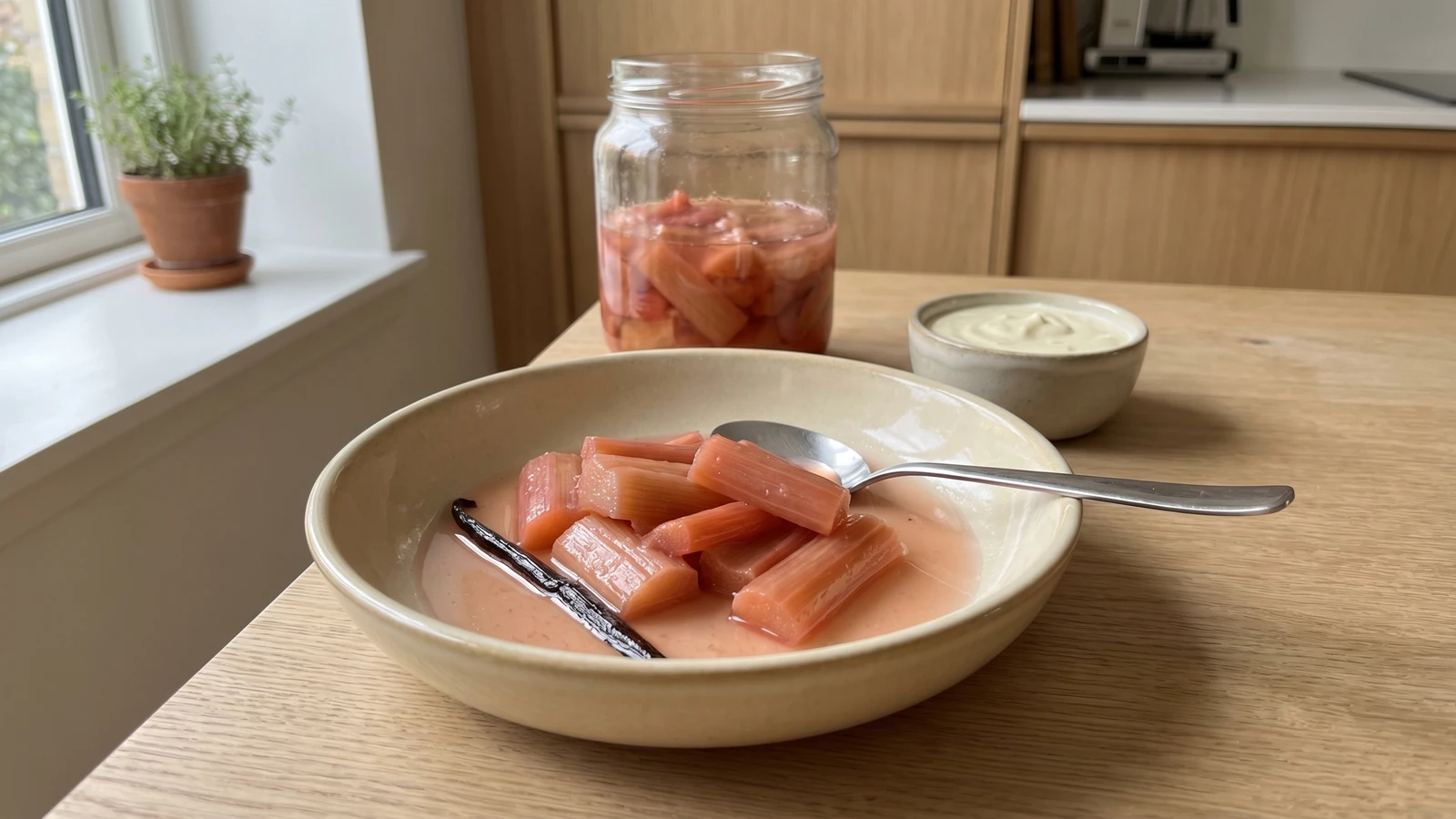
Danish rhubarb compote, poached whole in vanilla syrup until the stalks go translucent but keep their shape. The jar that sits in every Danish fridge from May until the season turns.
Rhubarb arrives in Denmark in May, and when it does the whole kitchen shifts. You see it at the market stalls before you see it anywhere else: thick stalks in shades from pale green to deep crimson, their leaves already cut away. For a few weeks, rhubarb is everywhere. Then it's gone. The season decides.
Rabarberkompot is the first thing most Danes make when the stalks appear. Not a pie, not a cake. A compote. Sugar, vanilla, a little water, and patience. You cook it low and slow, and the trick is knowing when to stop. The pieces should slump but not dissolve. They should hold their shape when you tilt the jar, sitting in a syrup that's gone pink and fragrant with vanilla. This is a preparation that rewards restraint. If you stir it, the stalks fall apart. If you boil it hard, you get sauce. Neither of those is what you want.
What you want is a jar in the fridge that works with everything. Spoon it over yogurt at breakfast. Lay it alongside a piece of smoked mackerel on rugbrod. Serve it with cold cream and a biscuit after dinner. It belongs wherever something tart and sweet and cool is needed, and once you have a jar of it ready, you'll find those moments more often than you expected. The joy of waiting for rhubarb season is matched only by the pleasure of having this on hand when it finally arrives.
Rhubarb was first cultivated in Denmark in the late 1700s, introduced as a medicinal plant before anyone thought to cook with it. By the mid-1800s, Danish kitchen gardens across Sjaelland and Jutland had adopted it as one of the earliest spring crops, prized because it appeared weeks before any fruit was ready. Rabarberkompot became the standard way to preserve the short season, a technique the Danes borrowed from their long tradition of fruit preservation, and it remains one of the few preparations that has barely changed in two centuries.
Quantity
500g
trimmed and cut into 3cm pieces
Quantity
150g
Quantity
1
split lengthways, seeds scraped
Quantity
75ml
Quantity
half a lemon, in wide strips
| Ingredient | Quantity |
|---|---|
| fresh rhubarbtrimmed and cut into 3cm pieces | 500g |
| caster sugar | 150g |
| vanilla podsplit lengthways, seeds scraped | 1 |
| water | 75ml |
| lemon zest (optional) | half a lemon, in wide strips |
Put the sugar and water into a wide, heavy-bottomed saucepan over a low heat. Stir gently until every grain has dissolved. Don't rush this. If sugar clings to the sides of the pan, it crystallises later and the syrup turns gritty. You want a clear, thin liquid before anything else goes in. Drop in the vanilla pod and its seeds, and the strips of lemon zest. Let the syrup simmer for two minutes so the vanilla blooms into it.
Lay the rhubarb pieces into the syrup in a single layer. Don't stir. This is the most important instruction in the whole recipe. Stirring breaks the stalks apart and you end up with rhubarb jam instead of compote. Raise the heat just enough to bring the liquid to the gentlest simmer you can manage, small bubbles at the edges, nothing more.
Let the rhubarb poach in the syrup for eight to twelve minutes. The time depends on the thickness of your stalks and how early in the season they were picked. Young May rhubarb can be done in six minutes. Thicker midsummer stalks take longer. You'll know it's ready when the pieces have slumped and gone translucent at the edges but still hold their shape when you tilt the pan. If you can nudge a piece with a spoon and it gives softly but doesn't collapse, that's the moment. Take it off the heat.
Let the compote cool completely in the pan. As it sits, the syrup thickens and the rhubarb absorbs more of the vanilla. Fish out the lemon zest strips and the spent vanilla pod before you transfer it to a clean jar. The colour should be somewhere between pale rose and deep coral, depending on how red your stalks were. Serve at room temperature or cold. Never warm. Rabarberkompot is a cold preparation, and that's where its brightness lives.
1 serving (about 135g)
Culinary guides, cultural storytelling, and the editorial depth that makes cooking meaningful.
Discover Culinary ExplorerChef Freja
Tart autumn apples, slow-boiled and strained clear overnight, then cooked with sugar to a trembling pale amber jelly that belongs on the cheese board, on morning toast, and in the kitchen of anyone who respects the season.

Chef Freja
Autumn apples simmered slowly with vanilla until they collapse into a rough, golden sauce. The condiment that waits on the shelf for flaeskesteg, for roast duck, for the meals that carry you through the Danish winter.

Chef Freja
The pan sauce that holds the Danish Christmas plate together. Duck drippings, good stock, cream, and a spoonful of red currant jelly for the tart brightness that makes juleaften taste like itself.

Chef Freja
September plums slow-cooked with onion, ginger, vinegar, and warm spice into a dark, glossy chutney that belongs beside aged cheese on a cold evening. The joy of waiting, sealed in a jar.