Culinary Explorer

A cooking platform built around craft, culture, and the stories behind what we eat.
Discover Culinary Explorer
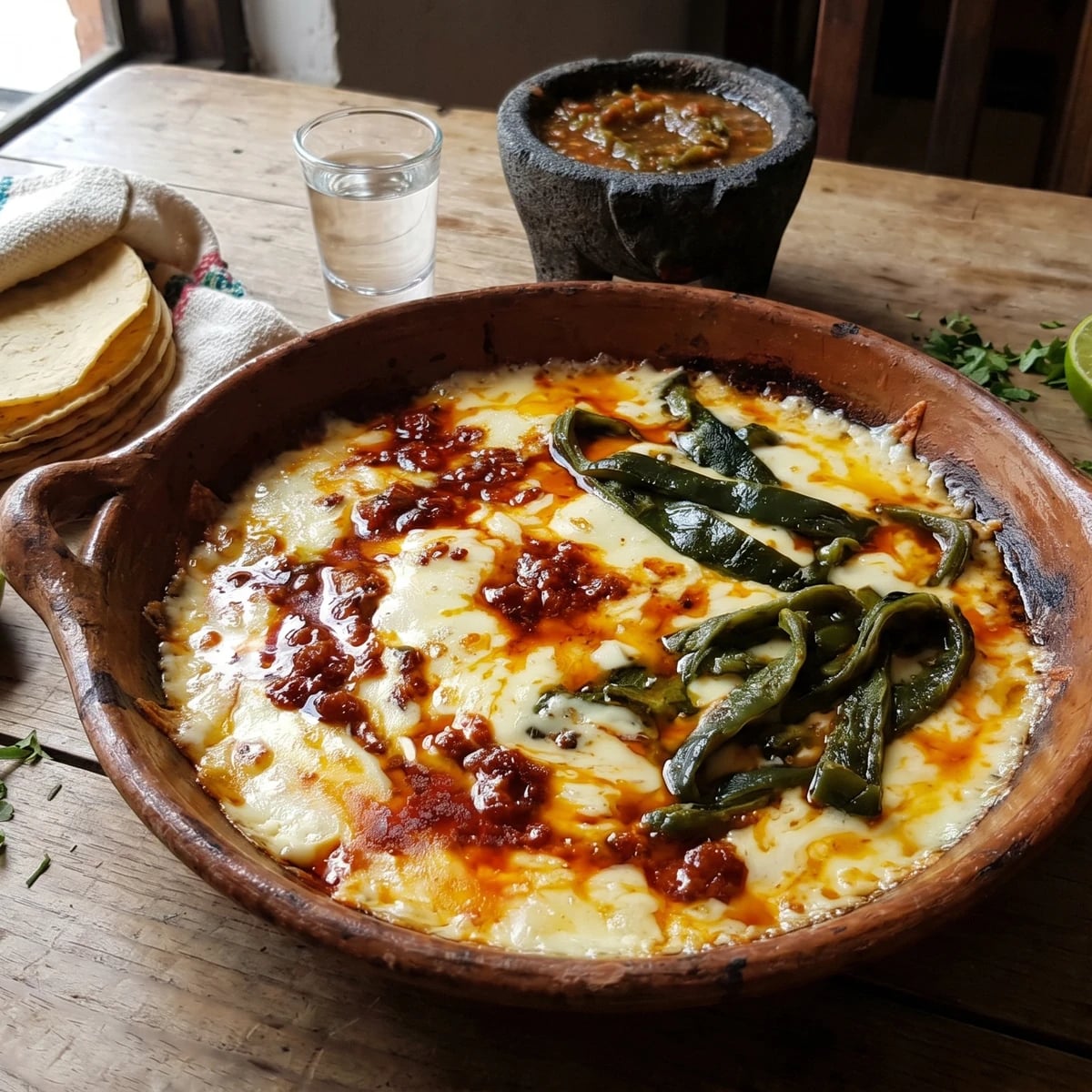
Queso Fundido Flameado al Tequila

Queso Fundido Flameado al Tequila

Created by

Jalisco's cantina botana: asadero and adobera melted in a clay cazuela, crowned with chorizo, rajas poblanas, and a quick tequila flame that belongs to agave country.

Appetizers & Snacks
Mexican
Dinner Party
Game Day
Date Night
20 min
Active Time
18 min cook38 min total
Yield6 servings

Jalisco, Los Altos and Guadalajara cantinas, that is where this queso fundido lives. The tequila is not a trick for tourists when you use it correctly. It is agave country speaking through the cazuela.

The cheese should be asadero with a little queso adobera jalisciense if you can find it. Asadero gives the pull. Adobera gives the buttery body. The chorizo browns in its own fat with chile guajillo and chile ancho already worked into the sausage, then the rajas poblanas go in, soft and green, with white onion. This is a botana, not dinner pretending to be small.

I learned a version of this from a señora near Mercado Libertad in Guadalajara who used a shallow barro cazuela blackened at the edges from years of use. She did not measure the tequila. She measured with judgment. Too much and you taste raw alcohol. Too little and you wasted the match. No me vengas con atajos. Melt the cheese slowly, flame carefully, and put warm corn tortillas on the table before anyone asks.

Cada estado, su propia cocina. This one belongs to Jalisco because the agave, the cantina table, the adobera, and the habit of feeding people generously all meet in the same clay dish.

Queso fundido developed as a cantina and northern ranch-table botana in the 20th century, tied to Mexico's dairy regions and to cheeses that melt cleanly, especially asadero, Chihuahua, Oaxaca, and regional adobera. The flameado version became strongly associated with Jalisco because tequila, legally protected by denomination of origin in 1974, is rooted in the agave fields around Tequila and Los Altos. Chorizo-topped versions reflect the Spanish-introduced pork sausage tradition adapted in Mexico with native chiles such as guajillo and ancho.

The technique, the tradition, and the story behind every dish.

Discover Culinary Explorer

Ingredients

queso asadero

Quantity

10 ounces

grated

queso adobera jalisciense

Quantity

6 ounces

grated

Mexican chorizo

Quantity

8 ounces

casing removed

manteca de cerdo

Quantity

1 tablespoon

white onion

Quantity

1 medium

thinly sliced

poblano chiles

Quantity

2

roasted, peeled, seeded, and sliced into rajas

fresh chile serrano

Quantity

1

thinly sliced

dried Mexican oregano

Quantity

1/2 teaspoon

crushed between the palms

kosher salt

Quantity

1/4 teaspoon, plus more to taste

blanco tequila

Quantity

3 tablespoons

warmed slightly

chopped cilantro (optional)

Quantity

2 tablespoons

warm corn tortillas (optional)

Quantity

for serving

lime halves (optional)

Quantity

for serving

salsa de chile de arbol (optional)

Quantity

for serving

Equipment Needed

  • 10-inch shallow barro cazuela or cast iron skillet
  • Comal or open gas flame for roasting poblanos
  • Long match or long lighter for flaming tequila
  • Wooden spoon
  • Tortilla warmer or woven servilleta

Instructions

  1. 1

    Roast the poblanos

    Set the poblano chiles directly over a gas flame or on a hot comal. Turn until the skins blister and blacken in patches. Cover in a bowl for 10 minutes, then rub off the skins, remove stems and seeds, and slice into rajas. Do not rinse them under water. You worked for that roasted flavor. Keep it.

  2. 2

    Brown the chorizo

    Heat a 10-inch clay cazuela or cast iron skillet over medium. Add the manteca de cerdo and the chorizo. Break it up with a wooden spoon and cook 6 to 8 minutes, until the fat turns red and the sausage edges darken. The chile in the chorizo needs time in the fat. That is where the flavor opens.

  3. 3

    Cook the rajas

    Add the sliced white onion, poblano rajas, serrano, Mexican oregano, and salt to the chorizo. Cook 4 to 5 minutes, stirring often, until the onion softens and takes on the red fat. Taste now. The mixture should be salty enough to season the cheese without bullying it.

  4. 4

    Melt the cheese

    Lower the heat to medium-low. Scatter the grated asadero and adobera over the chorizo mixture. Cover the cazuela and let the cheese melt slowly for 5 to 7 minutes. Do not stir it into a paste. You want a soft blanket of melted cheese with the chorizo running through it in red streaks.

    If your heat is too high, the cheese will tighten and oil out before it melts cleanly. Slow heat gives you the long pull people come to the table for.
  5. 5

    Flame the tequila

    Turn off any overhead fan. Keep children, sleeves, towels, and bottles away from the cazuela. Warm the tequila in a small metal ladle or saucepan just until it feels warm to the touch, then pour it over the melted cheese. Ignite it carefully with a long match. Let the flame burn out on its own, about 20 to 30 seconds. Do not add tequila from the bottle near fire. Así se hace y punto.

  6. 6

    Serve immediately

    Scatter cilantro over the top if using. Bring the cazuela straight to the table on a trivet with warm corn tortillas, lime halves, and salsa de chile de arbol. Scoop while the cheese still stretches. Queso fundido waits for nobody, and cold cheese is nobody's pride.

Chef Tips

  • Use queso asadero for stretch. If you can find queso adobera from Jalisco, add it for body. If not, use all asadero. Oaxaca cheese works, but it pulls the dish away from Jalisco. A substitution is a compromise, not an upgrade.
  • Buy fresh Mexican chorizo from a carniceria if you can. It should smell like chile guajillo, chile ancho, vinegar, garlic, and pork. If it smells sweet or looks like hard Spanish chorizo, wrong sausage.
  • Blanco tequila is correct here. Reposado can work, but anejo brings oak sweetness that fights the chorizo. This is a cantina botana, not a perfume counter.
  • Do not use cheddar. Do not use sour cream. Do not put this under broiler cheese until it becomes rubber. Melt it gently in clay or cast iron and serve it fast.

Advance Preparation

  • The poblanos can be roasted, peeled, and sliced one day ahead. Refrigerate them covered and bring them to room temperature before cooking.
  • The chorizo, onion, and rajas mixture can be cooked up to four hours ahead. Rewarm it in the cazuela before adding the cheese.
  • Do not melt the cheese ahead. Queso fundido is made at the last minute and carried to the table hot.

Frequently Asked Questions

Nutrition Information

1 serving (about 215g)

Calories
650 calories
Total Fat
46 g
Saturated Fat
22 g
Trans Fat
1 g
Unsaturated Fat
20 g
Cholesterol
115 mg
Sodium
1230 mg
Total Carbohydrates
29 g
Dietary Fiber
5 g
Sugars
3 g
Protein
29 g

Note: Chef personas and recipes are created with AI assistance. Cook with care: follow safe food-handling practices, check doneness with a thermometer when needed, and adapt for allergies and your kitchen.

Where cooking meets culture.

Culinary guides, cultural storytelling, and the editorial depth that makes cooking meaningful.

Discover Culinary Explorer

More from Occidente Appetizers & Snacks

Browse the full collection