
Chef Juliana
Coração de Frango no Espeto
You think chicken hearts are restaurant food or brave-person food. Wrong. Salt, garlic, lime, a hot espeto, and the discipline not to overcook them: that's the skewer everyone eats first.
A cooking platform built around craft, culture, and the stories behind what we eat.
Created by
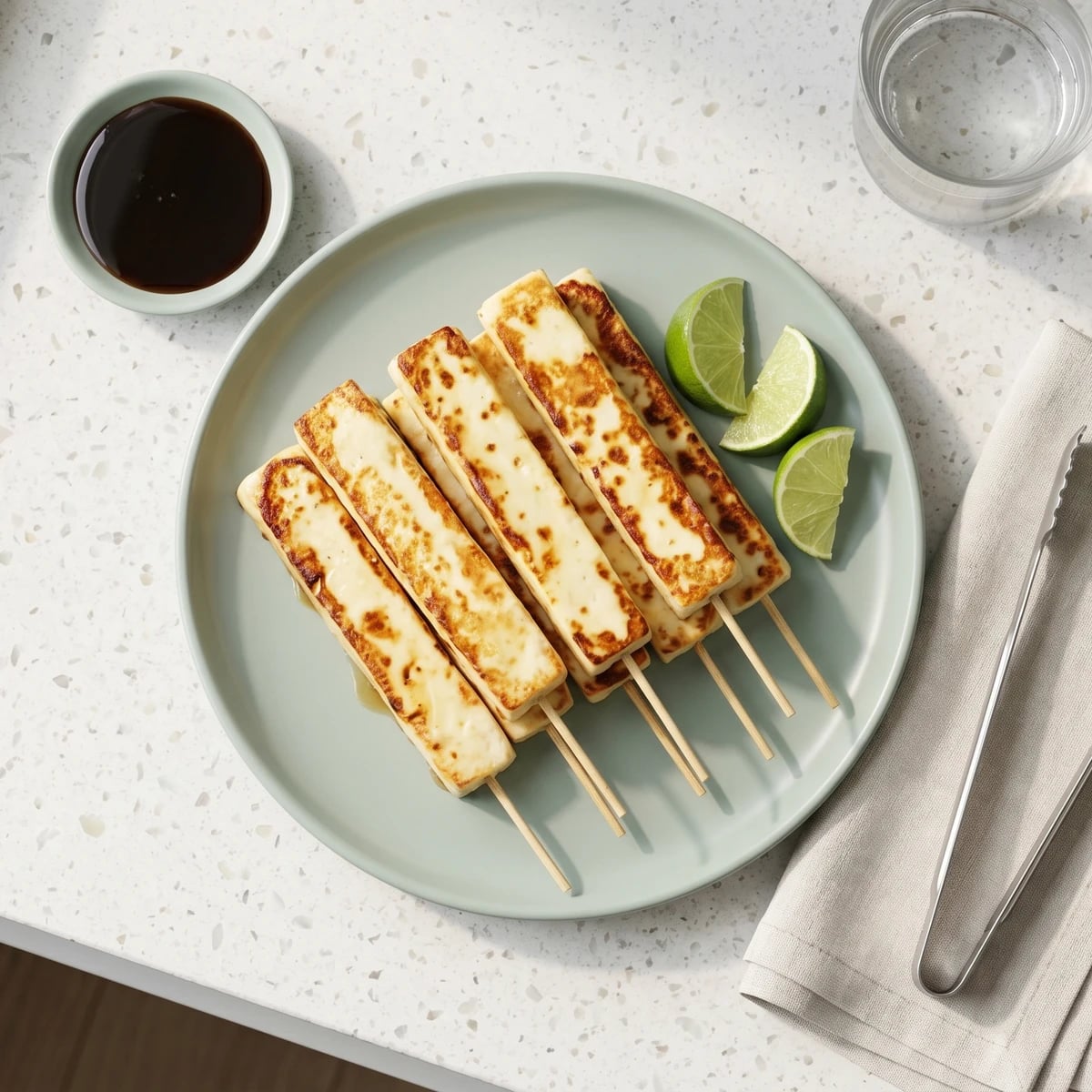
You think skewering cheese and holding it over fire is for the barbecue expert. It's not. Buy the right cheese, turn it with attention, and you've solved the snack before the rice is ready.
You look at the grill and that little voice starts: "isso não é pra mim." Say it out loud and it loses half its power, doesn't it? I know the voice. I had it in my own kitchen, standing over onions I had ruined, convinced everyone else had received a secret manual and I had been absent that day.
Cozinhar não é dom, é um aprendizado. Here the lesson is wonderfully small. Queijo coalho is firm enough to hold its shape over heat, so it doesn't melt into a puddle, it golds, blisters, and softens. Your job is to pat it dry, give it steady heat, turn it when each face is browned, and eat it while it still bends a little.
At a churrasco, this is the snack people steal before lunch is ready. But it also belongs to the same honest kitchen as arroz soltinho, creamy feijão, and something green on the plate. The pê-efe teaches a gente that real food doesn't need a costume. Rice, beans, a piece of something salty and good, a green vegetable, and dinner starts behaving like dinner.
Anota aí: right cheese, clean fire, no fuss. I'll give you the version for coals and the version for a grill pan, because Tuesday does not always produce a backyard. What I won't give you is a powder pretending to be flavor. Milk, salt, heat, and attention are enough.
Queijo coalho is tied to the cattle-raising Northeast of Brazil, especially Ceará, Pernambuco, Paraíba, and Rio Grande do Norte, where firm rennet-set cow's milk cheeses have long been made to travel and keep their shape in heat. The word coalho means rennet or curd, not charcoal; na brasa is the beach-and-churrasco habit of skewering the cheese and browning it over coals. In Recife, Fortaleza, Natal, and other coastal cities, vendors with small charcoal braziers helped turn it into the salty, squeaky snack Brazilians expect by the sea.
Quantity
500 g (about 1 lb)
cut into 8 batons about 1 inch thick, or bought pre-skewered
Quantity
1 teaspoon
for brushing the grate or grill pan
Quantity
1
cut into wedges
Quantity
2 tablespoons
| Ingredient | Quantity |
|---|---|
| queijo coalhocut into 8 batons about 1 inch thick, or bought pre-skewered | 500 g (about 1 lb) |
| neutral oilfor brushing the grate or grill pan | 1 teaspoon |
| lime (optional)cut into wedges | 1 |
| melaço de cana or honey (optional) | 2 tablespoons |
Cut the queijo coalho into 8 thick batons if it didn't come already skewered, then pat every side dry with a clean towel. A dry surface browns. A wet surface spits, sticks, and makes you think the grill is against you, which is nonsense. Thread each baton lengthwise onto a skewer so it sits steady and doesn't roll around over the fire.
Prepare medium-hot coals, with the charcoal covered in gray ash and no tall flames licking the grate. If you're indoors, heat a cast-iron grill pan over medium-high heat until a drop of water flicked nearby sizzles and disappears. Too cold and the cheese sits there getting rubbery before it browns. Too hot and the outside burns before the center softens.
Brush the grate or grill pan lightly with the oil, then wipe away any heavy puddles. Oil belongs on the cooking surface, not dripping off the cheese. A thin film helps the first browned face release cleanly; too much oil flares on the coals and gives you bitter spots instead of good color.
Lay the skewers on the grill with a little space between them and leave them alone for 60 to 90 seconds. Look for deep golden patches and small blisters on the underside. Don't poke them every ten seconds. The browned crust forms when the cheese is allowed to sit still, and that crust is the whole pleasure.
Turn each skewer a quarter turn and brown the next side, then repeat until all four long sides have color, about 6 to 8 minutes total. If a skewer resists when you turn it, wait 15 seconds. It will release when the crust has formed. If the cheese cracks open and starts to sag, move it to a cooler part of the grill. You're warming it through, not trying to defeat it.
Move the skewers to a plate and serve immediately, with lime wedges and a little melaço de cana or honey if you like that salty-sweet bite. Eat while the outside is browned and the inside is soft. Coalho tightens as it cools, and five minutes later you'll have a perfectly edible but less joyful stick of cheese. Dinner has rules. This one is fair.
1 serving (about 130g)
Culinary guides, cultural storytelling, and the editorial depth that makes cooking meaningful.
Discover Culinary Explorer
Chef Juliana
You think chicken hearts are restaurant food or brave-person food. Wrong. Salt, garlic, lime, a hot espeto, and the discipline not to overcook them: that's the skewer everyone eats first.

Chef Juliana
You think slow ribs are a restaurant trick. They aren't. Coarse salt, low coals, and time make beef ribs tender enough to pull apart with a spoon.

Chef Juliana
You don't need churrasco blood in your veins. You need coarse salt, quiet coals, and the patience to let lamb ribs soften before they brown.

Chef Juliana
You don't need meat to earn a place on the churrasqueira. Cut the vegetables evenly, season with real garlic and lime, and let the coals turn them sweet, soft, and smoky.