Culinary Explorer

A cooking platform built around craft, culture, and the stories behind what we eat.
Discover Culinary Explorer
Pulpo Zarandeado Sinaloense

Pulpo Zarandeado Sinaloense

Created by

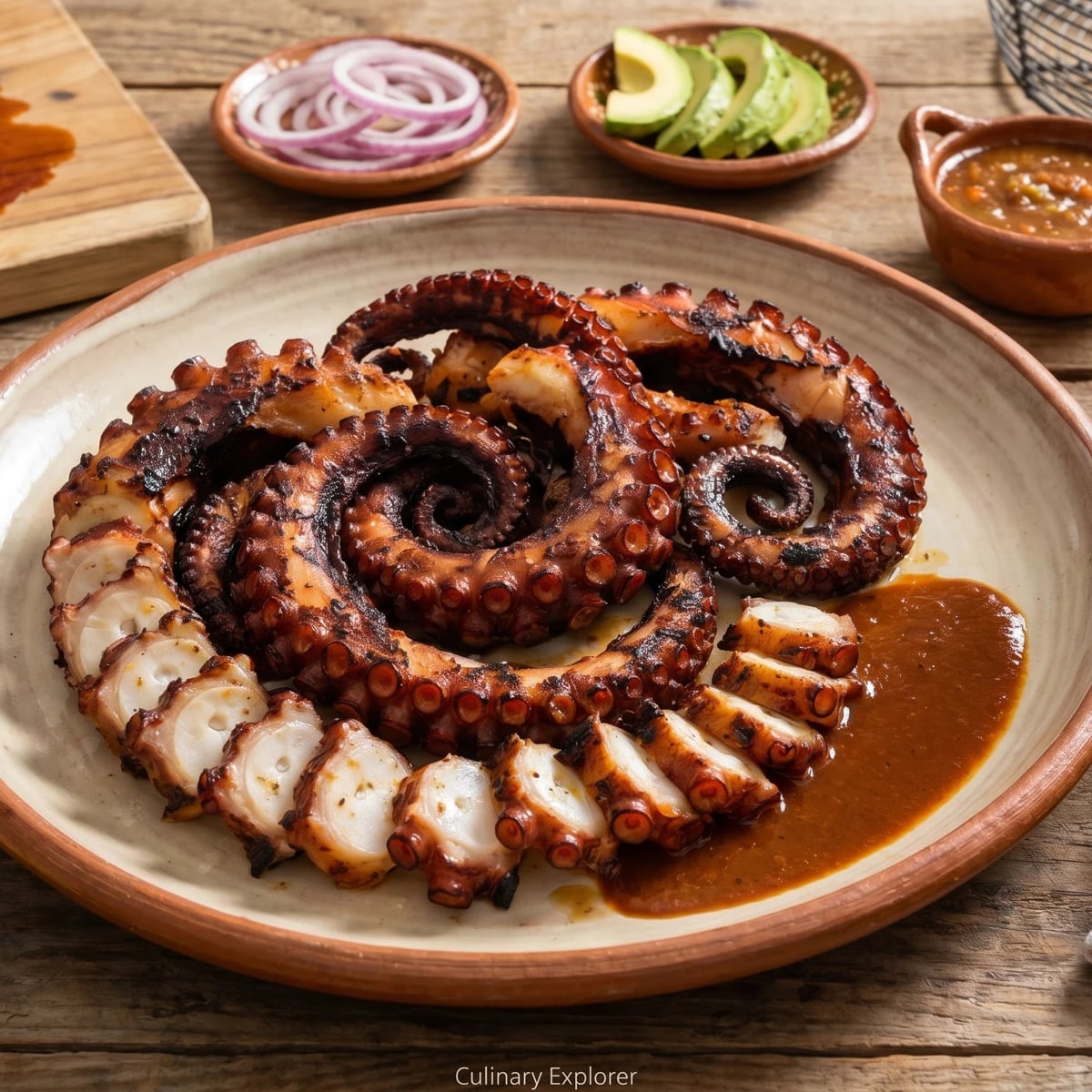
Sinaloa's grilled octopus, butterflied and lacquered with a guajillo-chipotle adobo, charred over hardwood coals the way they do it on the beaches of Mazatlan.

Main Dishes
Mexican
BBQ
Outdoor Dining
Special Occasion
45 min
Active Time
1 hr 30 min cook2 hr 15 min total
Yield4 to 6 servings

This is from Sinaloa. Specifically from the Pacific coast between Mazatlan and Topolobampo, where the fishing pangas come in at dawn and the marisquerias light their coals by midmorning. Pulpo zarandeado is the cousin of pescado zarandeado, the dish that put Sinaloan beach cooking on the map, and it carries the same logic: split the catch open, lacquer it with a chile-citrus adobo, clamp it in a wire basket called a zaranda, and char it over hardwood until the edges turn mahogany.

The adobo is the dish. Guajillo for color and sweetness, ancho for depth, chipotle moras for the smoke that ties everything to the fire. Mexican mayonnaise, mustard, and Maggi sauce are not gringo additions, they are how the senoras of the Mazatlan mercado have been doing it for two generations. The mayonnaise carries fat where the octopus has none, the mustard sharpens the citrus, the Maggi anchors the savory floor. Leave them out and you have a flatter dish. Recetas probadas y garantizadas.

The technique that matters most happens before the grill ever sees the octopus. You scare the pulpo three times in simmering water so the tentacles curl. You simmer it gently with a wine cork in the pot, an old Mazatleca trick I learned from a woman named Dona Chela who has been selling pulpo at the Mercado Pino Suarez since 1978. You butterfly it open. Only then does the fire come into it. La cocina no es decoracion, es trabajo, and an octopus is a dish that proves it. Cada estado, su propia cocina, and on the Pacific coast of Sinaloa, this one is theirs.

The zarandeado technique takes its name from the zaranda, a hinged wire basket of indigenous Mexican origin used along the Pacific coast to hold split fish over open coals, allowing the cook to flip the entire piece without breaking the flesh. The method is most strongly associated with the village of Boca de Camichin in Nayarit and the coastal communities of Sinaloa, where it has been documented since at least the 19th century as a fishermen's preparation eaten beachside immediately after the catch. The application of the zaranda technique to octopus, rather than the original snook or red snapper, is a more recent 20th-century development driven by the growth of Sinaloa's mariscos culture in cities like Mazatlan and Culiacan, where pulpo became a premium item in the marisquerias that now define the state's coastal cuisine.

The technique, the tradition, and the story behind every dish.

Discover Culinary Explorer

Ingredients

whole fresh octopus

Quantity

1, 3 to 4 pounds

cleaned

white onion

Quantity

1 medium

halved

head of garlic

Quantity

1

halved crosswise, plus 6 cloves reserved for the adobo

bay leaves

Quantity

2

black peppercorns

Quantity

1 tablespoon

kosher salt

Quantity

2 tablespoons, plus more to taste

wine cork (optional)

Quantity

1

an old Sinaloa trick

dried chile guajillo

Quantity

4

stemmed and seeded

dried chile ancho

Quantity

2

stemmed and seeded

dried chile chipotle moras

Quantity

2

stemmed

fresh orange juice

Quantity

1/2 cup

fresh lime juice

Quantity

1/4 cup (about 4 limes)

apple cider vinegar

Quantity

2 tablespoons

dried Mexican oregano

Quantity

1 tablespoon

ground cumin

Quantity

1 teaspoon

Mexican-style mayonnaise

Quantity

1/4 cup

McCormick or similar

yellow mustard

Quantity

2 tablespoons

Maggi or Worcestershire sauce

Quantity

2 tablespoons

melted butter

Quantity

1/4 cup

for basting

hand-pressed corn tortillas (optional)

Quantity

for serving

warmed

sliced cucumber (optional)

Quantity

for serving

sliced red onion (optional)

Quantity

for serving

sliced avocado (optional)

Quantity

for serving

lime wedges (optional)

Quantity

for serving

salsa Huichol or salsa de chile de arbol (optional)

Quantity

for serving

Equipment Needed

  • Heavy 8-quart stockpot for the simmer
  • Cast iron comal or heavy skillet for toasting chiles
  • High-powered blender
  • Fine-mesh strainer
  • Hardwood charcoal grill
  • Zaranda wire basket (optional but traditional)
  • Long-handled tongs and a basting brush

Instructions

  1. 1

    Tame the octopus

    Bring a large pot of water to a gentle simmer with the halved onion, halved garlic head, bay leaves, peppercorns, and the salt. Hold the cleaned octopus by the head and dip it into the simmering water three times, lifting it out between each dip. The tentacles will curl tight on themselves. This is the Mazatleca technique called 'asustar al pulpo,' scaring the octopus, and it sets the tentacles into the curled shape that holds up on the grill.

    The wine cork in the simmering water is something the senoras at the Mazatlan mercado swear by. Some say it tenderizes. Some say it is superstition. I throw one in. Costs nothing.
  2. 2

    Simmer until tender

    Lower the whole octopus into the pot. Adjust the heat so the water trembles, never boils. A hard boil seizes the muscle and you will be chewing rubber for the rest of the night. Cook for 45 minutes to one hour for a 3-pound octopus, longer if it is bigger. The tip of a paring knife should slide into the thickest part of a tentacle without resistance. Pull the pot off the heat and let the octopus rest in its own broth for 15 more minutes. The residual heat finishes the work.

  3. 3

    Toast and soak the chiles

    While the octopus rests, heat a dry comal over medium. Toast the guajillo, ancho, and chipotle moras separately, about 20 to 30 seconds per side. The skins will puff and the kitchen will smell sharp and dark. Watch the chipotle, it burns fastest. Place the toasted chiles in a heatproof bowl and cover with hot tap water, not boiling. Soak for 15 minutes until pliable.

  4. 4

    Build the adobo zarandeado

    Drain the soaked chiles. Combine them in a blender with the 6 reserved garlic cloves, orange juice, lime juice, vinegar, oregano, cumin, mayonnaise, mustard, Maggi, and a generous pinch of salt. Blend until completely smooth. Strain through a fine-mesh sieve to catch any chile skin. The adobo should be rust-red, glossy, and thick enough to coat the back of a spoon. Taste it. It should hit sour, smoky, salty, and faintly sweet, all at once. That balance is the dish.

  5. 5

    Butterfly the octopus

    Lift the octopus from the broth and lay it on a cutting board. Save a cup of the cooking liquid. Cut the head from the tentacles and reserve. Slice the crown of tentacles in half through the center so the octopus opens flat like a book. This is the 'zarandeado' cut, the same technique used for pescado zarandeado on Sinaloa's beaches, where fish are split and clamped between metal grills called zarandas.

  6. 6

    Marinate

    Place the butterflied octopus in a wide dish. Slather it with two-thirds of the adobo on both sides, working it into every fold of the tentacles. Reserve the remaining adobo for basting and serving. Marinate for 30 minutes at room temperature, or up to 4 hours refrigerated. No me vengas con atajos. The flavor needs time to settle into the muscle.

  7. 7

    Build the fire

    Light a hardwood charcoal fire and let it burn down until the coals are ash-gray and glowing red underneath. Mangrove or mesquite is what they use along the Pacific coast and the smoke is part of the recipe. If you have a zaranda, the wire basket the dish is named for, oil it well. Otherwise, oil the grill grates heavily. Octopus skin sticks to anything dry.

  8. 8

    Grill the octopus

    Lay the octopus tentacle-side down over the coals. You want medium-high heat, not screaming hot. Grill for 4 to 5 minutes until the underside is charred in places and the suckers are crisp. Flip carefully, baste with melted butter and the reserved adobo, and grill 3 to 4 minutes more on the second side. The edges should darken to mahogany and the suckers should crackle when you press them. The octopus is already cooked through; the grill is for char, smoke, and the lacquered finish.

    Baste twice during grilling, but stop basting in the last minute. You want the adobo to set into a sticky lacquer, not stay wet. Wet adobo will not crisp.
  9. 9

    Slice and serve at the table

    Move the octopus to a wooden board. Let it rest for 3 minutes. Slice the tentacles into thick rounds on the diagonal, leaving the curl visible on each piece. Pile onto a warm clay platter and spoon a little of the reserved adobo over the top. Serve with warm corn tortillas, cucumber, red onion, avocado, lime wedges, and salsa Huichol on the table. Each guest builds their own taco. Asi se hace y punto.

Chef Tips

  • Buy your octopus already cleaned, with the beak and ink sac removed. Most fishmongers will do this without charge if you ask. Frozen octopus is actually preferable to fresh in this dish. The freeze-thaw cycle breaks down the muscle fibers and gives you a more tender result. The pulperos in Mazatlan freeze their catch on the boats.
  • If you cannot find chile chipotle moras, use chipotle meco or canned chipotles in adobo. Both are compromises. The moras gives the cleanest smoke flavor without the vinegar tang of the canned version. Si no conoces el mercado, no conoces la cocina.
  • Hardwood charcoal is non-negotiable. Briquettes leave a chemical taste that ruins the dish. If you can find mangrove or mesquite chunks, even better. The smoke is half the recipe.
  • The mayonnaise in the adobo is not for ceviche-style raw application. It is there because mayonnaise emulsifies the citrus and the chile and helps the adobo cling to the octopus on the grill. It also browns beautifully under high heat. Trust it.

Advance Preparation

  • The octopus can be simmered and butterflied one day ahead. Hold it covered in the refrigerator with a few tablespoons of its cooking broth so it does not dry out.
  • The adobo can be made up to three days ahead and refrigerated. The flavor deepens overnight and the chiles relax into the citrus.
  • Grill the octopus the moment you are ready to serve. The lacquered char does not hold well, and reheated grilled octopus loses the texture that makes the dish.

Frequently Asked Questions

Nutrition Information

1 serving (about 280g)

Calories
605 calories
Total Fat
23 g
Saturated Fat
9 g
Trans Fat
0 g
Unsaturated Fat
12 g
Cholesterol
115 mg
Sodium
1380 mg
Total Carbohydrates
43 g
Dietary Fiber
9 g
Sugars
4 g
Protein
49 g

Note: Chef personas and recipes are created with AI assistance. Cook with care: follow safe food-handling practices, check doneness with a thermometer when needed, and adapt for allergies and your kitchen.

Where cooking meets culture.

Culinary guides, cultural storytelling, and the editorial depth that makes cooking meaningful.

Discover Culinary Explorer

More from Noroeste Main Dishes

Browse the full collection