Chef Lupita
Acúmara Tatemada al Comal
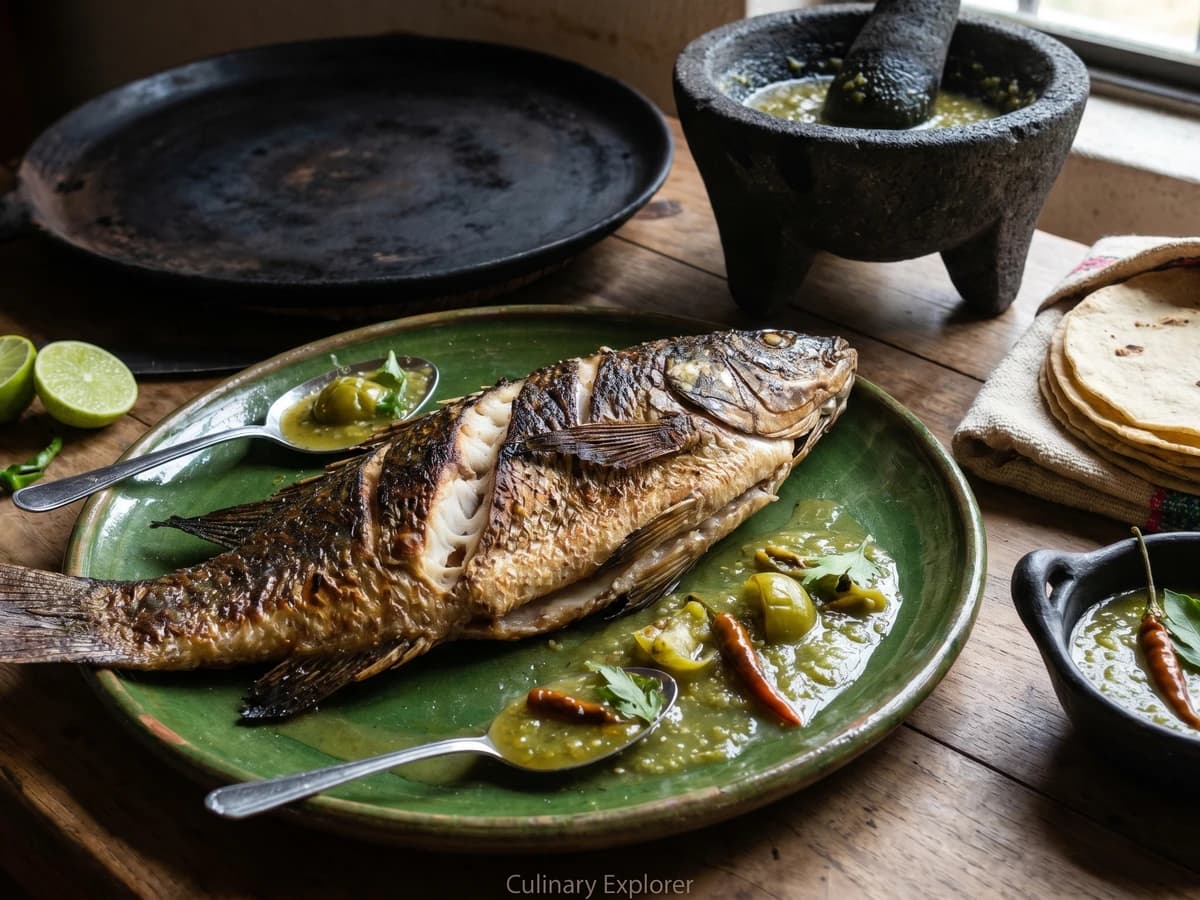
Michoacán's Lake Pátzcuaro acúmara, a whole kurucha from the lago tatemada on a comal de leña and served with chile perón atápakua, corn tortillas, and P'urhépecha discipline.
A cooking platform built around craft, culture, and the stories behind what we eat.
Created by
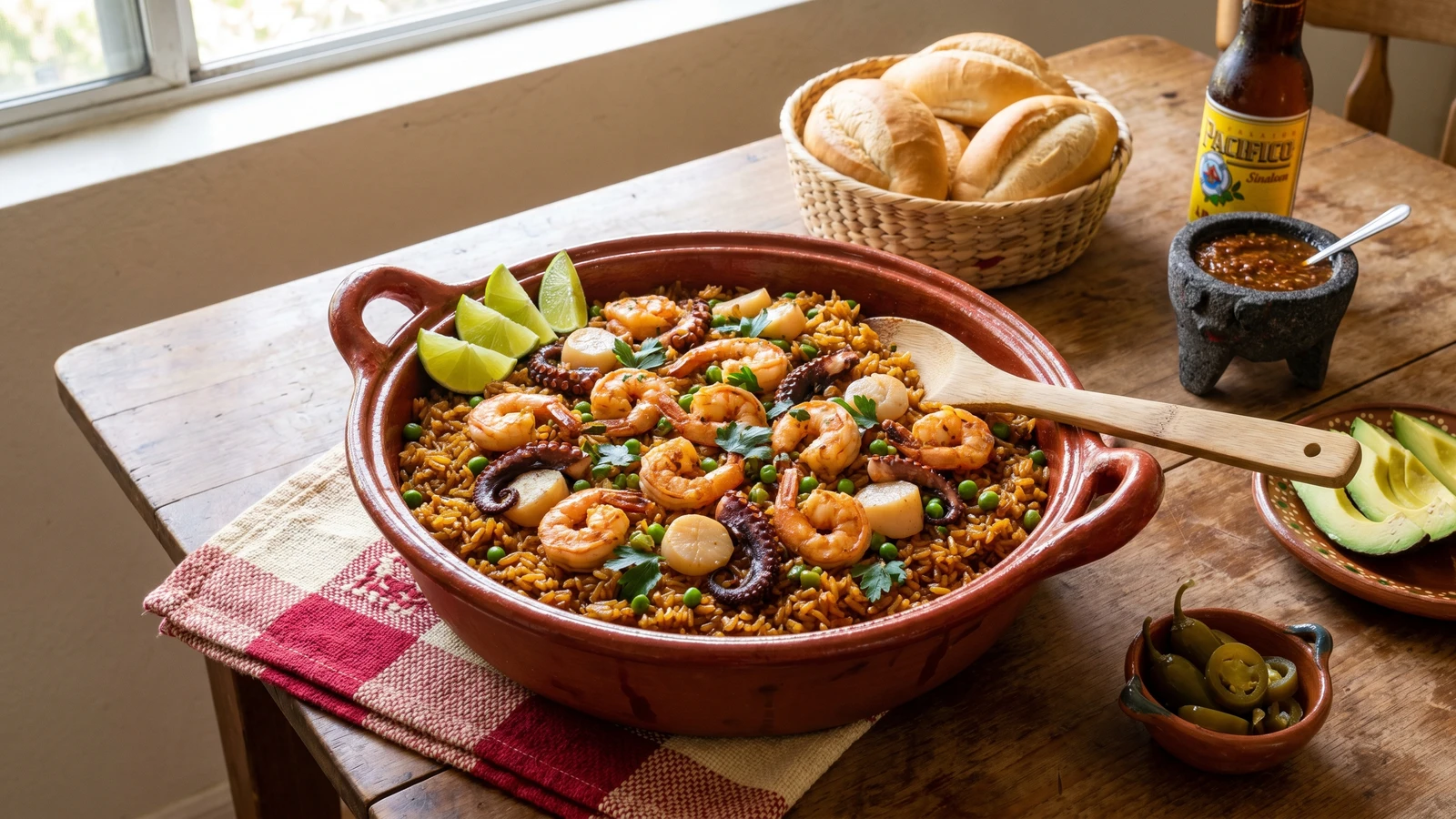
Sinaloa's baked seafood rice from the Mazatlan home kitchens, built on a guajillo-shrimp stock and finished in the cazuela with octopus, shrimp, and callo de hacha. One pot, set down in the middle of the table.
This is from Sinaloa. Specifically from the home kitchens of Mazatlan, where the boats come in by morning and the women who cook for big Sunday tables build their rice around whatever the docks gave up that day. Octopus, shrimp, callo de hacha. Sometimes manta ray, sometimes marlin. The seafood rotates. The technique does not.
Forget what you know about Spanish paella. This is not paella. There is no saffron, no socarrat ambition, no flat steel pan. Sinaloa's arroz al horno is built on a stock pulled from shrimp heads and a puree of toasted guajillo and ancho with charred tomato. It bakes in a clay cazuela, covered, until the rice swells and the seafood steams through in the last ten minutes. The grains separate. The color comes from the chile and the shrimp fat, not from food coloring or a powdered seasoning packet.
The callo de hacha is what marks this as Sinaloa. Pen shell scallops, harvested from the Sea of Cortez, sweeter and firmer than the sea scallops you find on the Atlantic side. If you cannot find them, use the largest, freshest sea scallops you can. It will be a compromise, not an upgrade, and you should know the difference.
My mother was from Jalisco and she did not make this rice. I learned it from a senora named Rosa who ran a marisqueria in the Mercado Pino Suarez in Mazatlan, who let me sit on a stool behind her cazuela for three afternoons in 2009 and watch her work. She told me: the rice is only as good as the stock, and the stock is only as good as the shrimp you started with. Si no conoces el mercado, no conoces la cocina.
Arroz al horno in its Sinaloan form descends from a confluence of Spanish baked rice traditions brought to the Pacific coast in the colonial period and the abundance of seafood from the Sea of Cortez and the Gulf of California, which together produce the majority of Mexico's commercial shrimp catch. The dish took its modern shape in the 20th century in the port cities of Mazatlan, Topolobampo, and Culiacan, where home cooks adapted the Spanish technique of finishing rice in a covered earthenware vessel to the local catch of camaron, pulpo, and the prized callo de hacha (Atrina maura). Unlike the Veracruzano arroz a la tumbada, which is soupier and finished on the stovetop, the Sinaloan version is dry-baked in a cazuela, a method that distinguishes Pacific coast seafood rice from its Gulf Coast cousin and reflects the regional preference for grain separation over saucy consistency.
Quantity
1 pound
peeled and deveined, shells and heads reserved
Quantity
1 pound
pre-cooked until tender, about 45 minutes in salted water with a halved white onion
Quantity
1/2 pound
sliced into thick coins, or substitute large sea scallops
Quantity
4
stemmed and seeded
Quantity
1
stemmed and seeded
Quantity
6 cups
Quantity
1 medium
half left whole, half finely diced
Quantity
5
2 left whole, 3 finely minced
Quantity
2
Quantity
2 large
charred on the comal
Quantity
3 tablespoons
Quantity
2 tablespoons
Quantity
2 cups
Morelos or a Mexican brand if you can find it
Quantity
1
finely diced
Quantity
1/2 cup
thawed
Quantity
1 teaspoon
Quantity
1 teaspoon
Quantity
to taste
Quantity
to taste
Quantity
1/4 cup
Quantity
for serving
Quantity
for serving
Quantity
for serving
| Ingredient | Quantity |
|---|---|
| large head-on shrimppeeled and deveined, shells and heads reserved | 1 pound |
| cleaned octopus tentaclespre-cooked until tender, about 45 minutes in salted water with a halved white onion | 1 pound |
| callo de hacha (pen shell scallops)sliced into thick coins, or substitute large sea scallops | 1/2 pound |
| dried chile guajillostemmed and seeded | 4 |
| dried chile anchostemmed and seeded | 1 |
| water (for the shrimp stock) | 6 cups |
| white onionhalf left whole, half finely diced | 1 medium |
| garlic cloves2 left whole, 3 finely minced | 5 |
| bay leaves | 2 |
| ripe Roma tomatoescharred on the comal | 2 large |
| manteca de cerdo (pork lard) | 3 tablespoons |
| olive oil | 2 tablespoons |
| medium-grain white riceMorelos or a Mexican brand if you can find it | 2 cups |
| small red bell pepperfinely diced | 1 |
| frozen peasthawed | 1/2 cup |
| dried Mexican oregano | 1 teaspoon |
| ground cumin | 1 teaspoon |
| kosher salt | to taste |
| freshly ground black pepper | to taste |
| chopped fresh parsley | 1/4 cup |
| lime wedges (optional) | for serving |
| pickled chile jalapeno en escabeche (optional) | for serving |
| sliced avocado (optional) | for serving |
Heat one tablespoon of the lard in a medium pot over medium-high. Add the reserved shrimp shells and heads. Press the heads with a wooden spoon to release the orange fat trapped inside them. That fat is the flavor of the sea and you do not throw it away. Cook for five minutes, until the shells turn deep coral and the kitchen smells like the Mazatlan docks. Add the water, the whole half onion, the two whole garlic cloves, and the bay leaves. Bring to a simmer and cook for 25 minutes. Strain through a fine-mesh sieve, pressing hard on the solids. You should have about 4 cups of deep amber stock. Discard the shells.
Heat a dry comal over medium. Toast the guajillo and ancho separately, about 20 to 30 seconds per side. They should puff and turn fragrant. Do not let them blacken. Place them in a heatproof bowl and cover with one cup of the hot shrimp stock. Soak for 15 minutes until soft and pliable.
On the same comal, char the Roma tomatoes whole. Turn them every couple of minutes until the skin is blistered and black in patches all around. Transfer the softened chiles, their soaking liquid, the charred tomatoes, the minced garlic, the oregano, and the cumin to a blender. Blend on high until completely smooth. Strain through a fine-mesh sieve into a bowl, pressing on the solids. You want a clean, deep red-orange puree with no skin or seeds. This is the base that gives the rice its color.
Preheat the oven to 375F. In a 12-inch oven-safe cazuela or heavy ovenproof skillet, heat the remaining 2 tablespoons of lard with the olive oil over medium-high. Add the dry rice and toast it, stirring constantly, for 4 to 5 minutes. The grains should turn the color of pale gold and smell like popcorn. This is the step that makes the difference between mushy rice and rice with body. Skip it and the grains never separate properly.
Push the rice to the edges of the pan. In the empty center, add the diced white onion and the red bell pepper. Cook for 3 minutes, stirring, until the onion is translucent. Stir everything together. Pour the strained chile-tomato puree directly into the hot rice. It will sputter and the kitchen will smell of toasted chile. Cook for 2 minutes, stirring, until the puree darkens slightly and coats every grain.
Pour in 3 cups of the warm shrimp stock. Add 1.5 teaspoons of salt and a few grinds of black pepper. Taste the liquid. It should be assertive, more seasoned than you think. The rice will absorb it and dull anything timid. Bring to a brisk simmer. Scatter the cooked octopus tentacles across the surface, pressing them lightly into the rice. Do not stir.
Cover the cazuela tightly with a lid or with foil pressed against the rim. Transfer to the middle rack of the oven. Bake for 18 minutes. Do not open the oven. The rice needs the trapped heat to steam through evenly.
Pull the cazuela out. Quickly lift the lid and arrange the shrimp, the callo de hacha coins, and the peas across the surface. Press the seafood lightly into the rice so it cooks in the residual steam. Cover again and return to the oven for 10 to 12 more minutes. The shrimp should turn coral pink and curl gently. The scallops should turn opaque at the edges and stay just translucent at the center. Overcook them and they go rubber. Asi se hace y punto.
Remove the cazuela from the oven and let it rest, covered, for 8 to 10 minutes. The rice finishes cooking off the heat and the grains separate. Uncover. Scatter the chopped parsley across the top. Serve directly from the cazuela at the table with lime wedges, sliced avocado, and pickled chiles on the side. This is a one-pot dish meant to be set down in the middle of the table. Recetas probadas y garantizadas.
1 serving (about 400g)
Culinary guides, cultural storytelling, and the editorial depth that makes cooking meaningful.
Discover Culinary ExplorerChef Lupita
Michoacán's Lake Pátzcuaro acúmara, a whole kurucha from the lago tatemada on a comal de leña and served with chile perón atápakua, corn tortillas, and P'urhépecha discipline.

Chef Lupita
Puebla's weekday adobo of pork shoulder braised in a thick guajillo and ancho sauce sharpened with vinegar, cumin, and clove. The deep red of a market spice stall, the dish a poblana cooks without thinking.

Chef Lupita
Loreto's pit-roasted clams, planted hinge-up in beach sand and tatemadas under a fast fire of dried romerillo brush, the resinous Baja desert shrub that gives this dish its smoke.

Chef Lupita
Oaxaca's eighth mole, the silky, almond-and-cinnamon almendrado, served over poached chicken. Mild, sweet, restrained, and a quiet rebuttal to anyone who thinks Mexican food has to be hot to be Mexican.