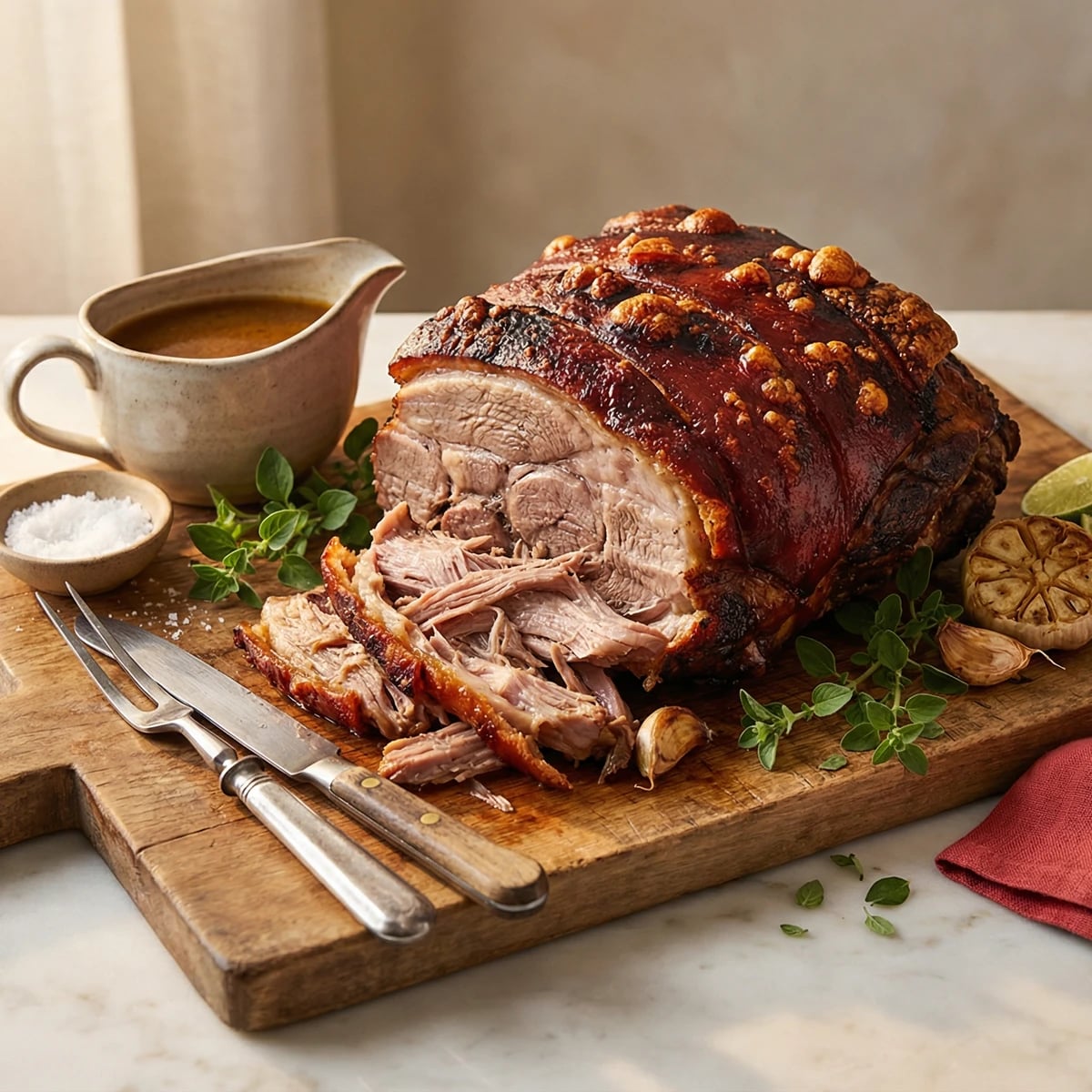
Garlicky, deeply seasoned pork shoulder roasted low and slow until the meat surrenders to your fork while the skin transforms into shattering chicharrón. This is the centerpiece that makes Nochebuena worth waiting for all year.
Main Dishes
Puerto Rican
Christmas
45 min
Active Time
6 hr cook•6 hr 45 min total
Yield12-16 servings
Pernil is more than a recipe. It's an announcement that celebration has arrived. In Puerto Rican homes from San Juan to the Bronx to Orlando, this roast anchors Nochebuena with the authority that only a properly prepared pork shoulder can command. The scent of garlic and oregano drifting through the house tells everyone that something important is happening in that kitchen.
The technique belongs to the great slow-roasting traditions of the world. You're asking a tough cut of meat to transform itself through time and gentle heat. The collagen melts. The fat renders and bastes. The flesh becomes so tender it barely holds together. And on top of all this alchemy, you're creating chicharrón: that shatteringly crisp skin that people will fight over at the table.
I've watched abuelas prepare pernil with the same reverence French grandmothers bring to their cassoulet. The marinating ritual. The careful scoring of the skin. The midnight basting. These aren't fussy steps. They're the difference between a pork roast and a masterpiece. Every family has their own proportions for the adobo, passed down through generations. This recipe gives you the framework. Make it your own.
Plan ahead. Pernil rewards patience more generously than any dish I know. The roast that marinates for three days will outshine the one done overnight. The skin that air-dries in the refrigerator will crisp more reliably than one rushed to the oven. Give this recipe the time it asks for, and it will repay you with the most magnificent pork of your life.
The technique, the tradition, and the story behind every dish.
Combine the garlic, oregano, cumin, peppercorns, salt, olive oil, and vinegar in a blender or food processor. Pulse until you have a coarse paste, scraping down the sides as needed. Add the sazón and sofrito if using. The mixture should be wet enough to spread but thick enough to cling. Taste it. The salt should be assertive, the garlic almost aggressive. This intensity will mellow as it penetrates the meat over days of marinating.
A mortar and pestle produces the most aromatic adobo. The bruising action releases oils that a blade simply cuts through.
2
Score the skin
Place the pork shoulder skin-side up on a large cutting board. Using a very sharp knife, score the skin in a crosshatch pattern, cutting through the skin and about half an inch into the fat beneath. Space your cuts about one inch apart. This accomplishes two things: it creates channels for the adobo to penetrate deeply, and it allows the fat to render efficiently during roasting. The skin will separate into crackling diamonds of chicharrón. Take your time here. Proper scoring is the foundation of crispy skin.
A box cutter or utility knife gives you more control than a chef's knife for this task. Just make sure it's clean and sharp.
3
Create garlic pockets
Flip the roast so the meat side faces up. Using a paring knife, make deep incisions throughout the flesh, about two inches deep and spaced every couple of inches. Work across the entire surface. Into each pocket, push a generous amount of adobo, using your fingers to ensure it reaches the bottom of each cut. The meat should look thoroughly punctured, almost wounded. This is correct. The adobo needs these channels to season the interior, not just the surface.
4
Apply remaining adobo
Rub the remaining adobo over every surface of the roast: the meat side, the skin side (working it into the score marks), and all the crevices around the bone. Your hands will be fragrant with garlic for hours. This is the smell of honest work. The roast should glisten with seasoning. If you have adobo left over, reserve it in the refrigerator for basting.
5
Marinate the pork
Place the seasoned pork in a large roasting pan or disposable aluminum pan, skin-side up. Cover tightly with plastic wrap, then foil. Refrigerate for at least 24 hours, and up to 3 days. The longer marination dramatically improves flavor and tenderness. The salt in the adobo will draw moisture from the meat, dissolve, and then be reabsorbed along with all those aromatics. By day three, the meat will be deeply seasoned to its core.
Flip the roast once daily if marinating for multiple days. This ensures even seasoning throughout.
6
Dry the skin
The night before roasting (or at minimum 8 hours ahead), remove the plastic wrap and foil. Blot the skin thoroughly with paper towels. Return the uncovered roast to the refrigerator. The cold, dry air will desiccate the skin surface, which is essential for achieving proper chicharrón. Moisture is the enemy of crispness. By morning, the skin should feel tacky and dry to the touch, almost like parchment.
7
Bring to room temperature
Remove the pork from the refrigerator 2 hours before roasting. A cold roast in a hot oven produces uneven cooking: charred exterior, undercooked center. Position the quartered onion in the bottom of the roasting pan, creating a natural rack that lifts the meat and adds flavor to the drippings. Let the pork rest on this bed while it tempers.
8
Begin low and slow roasting
Preheat your oven to 350°F. Cover the roasting pan tightly with heavy-duty aluminum foil, creating a sealed environment. Roast for approximately 4 hours, calculating roughly 30 minutes per pound. The covered pan traps steam and braises the meat until it becomes fork-tender. You'll know you're on the right track when your kitchen fills with the perfume of garlic and roasting pork, usually around the two-hour mark.
9
Check for tenderness
After 4 hours, remove the foil and test the meat. Insert a fork into the thickest part and twist. The meat should offer almost no resistance and begin to separate into strands. If it still feels firm or rubbery, re-cover and continue roasting in 30-minute increments until it yields. Internal temperature should read between 195-205°F for proper collagen breakdown. Don't rush this step. Tender pernil is non-negotiable.
10
Crisp the skin
Increase oven temperature to 425°F. If there's accumulated liquid in the pan, carefully transfer the roast to a clean pan or remove the liquid to prevent steaming. Roast uncovered for 30-45 minutes, rotating the pan halfway through for even browning. Watch carefully. The skin will blister and puff, transforming from leathery to crackling. When it's mahogany brown and sounds hollow when tapped, you've achieved chicharrón. Some spots may char slightly. This is desirable.
For even crispier skin, place the roast under the broiler for the final 5 minutes. Stay present and watch constantly, as it can burn in seconds.
11
Rest before serving
Transfer the pernil to a cutting board and tent loosely with foil. Let it rest for 20-30 minutes. This isn't optional. Resting allows the juices to redistribute throughout the meat. If you carve immediately, those juices will flood the cutting board instead of staying in each slice. While the roast rests, make your gravy from the pan drippings.
12
Make the pan gravy
Pour the pan drippings through a fat separator, or skim the fat from the surface with a ladle. Place the roasting pan over medium heat (use two burners if needed). Add the wine or stock and scrape up all the browned bits clinging to the bottom. These fond deposits hold concentrated flavor. Simmer until slightly reduced, about 5 minutes. Taste and adjust seasoning. Some cooks add the reserved fat back for richness. This gravy, called salsa de pernil, is liquid gold.
Strain the gravy for a refined presentation, or leave it rustic with bits of caramelized garlic and onion. Both approaches are correct.
13
Carve and serve
Remove the crispy skin in large pieces and set aside. Pull or slice the meat, working around the bone. Arrange on a large platter with the chicharrón pieces tucked alongside or scattered on top. Serve the pan gravy in a warm gravy boat. Tradition calls for arroz con gandules, pasteles, and ensalada de coditos as accompaniments. Let guests help themselves family-style, fighting over the best pieces of crackling as families have done for generations.
Chef Tips
•Seek out a true pernil cut: the front leg (shoulder) of the pig with skin intact. Many butchers sell boneless, skinless pork shoulder, which makes decent pulled pork but not proper pernil. Call ahead and request skin-on, bone-in. Latino markets and butcher shops are your best source.
•The adobo proportions here are a starting point. Every Puerto Rican family adjusts theirs. Some add sour orange juice. Others include recao (culantro) or olives. Taste your paste before applying. It should be salty, pungent, and aromatic enough to make you slightly concerned. This intensity is correct.
•For the crispiest skin, ensure your oven temperature is accurate. Use an oven thermometer. Many ovens run 25-50 degrees cooler than their dials suggest, which explains countless disappointing attempts at chicharrón.
•Pernil reheats beautifully. Slice or pull the meat, moisten with pan gravy, and warm in a 325°F oven covered with foil. The chicharrón will soften, so store it separately and re-crisp under the broiler just before serving.
•This roast feeds a crowd generously, with leftovers for sandwiches the next day. A pernil sandwich on crusty bread with mayo and pickled onions is almost worth making the roast for.
•Pair with Albariño or a Spanish Garnacha. The bright acidity cuts through the richness of the pork while complementing the garlic and oregano.
Advance Preparation
•The adobo paste can be made up to 1 week ahead and refrigerated in an airtight container. The flavors will meld and intensify.
•Season and marinate the pork 1-3 days before serving. Three days produces the most deeply flavored results.
•The roast can be cooked through the braising stage (before crisping) up to 2 days ahead. Refrigerate covered, then bring to room temperature and crisp the skin on serving day. This actually makes the process more manageable for large gatherings.
•Pan gravy can be made a day ahead. Reheat gently, adding a splash of stock if it thickens too much.
•For Nochebuena timing: If serving at 8pm, remove from refrigerator at 10am, begin roasting at noon, and allow 6 hours for cooking plus 30 minutes rest.
Frequently Asked Questions
Nutrition Information
1 serving (about 200g)
Calories
455 calories
Total Fat
23 g
Saturated Fat
8 g
Trans Fat
0 g
Unsaturated Fat
13 g
Cholesterol
95 mg
Sodium
520 mg
Total Carbohydrates
4 g
Dietary Fiber
0 g
Sugars
1 g
Protein
31 g
Where cooking meets culture.
Culinary guides, cultural storytelling, and the editorial depth that makes cooking meaningful.