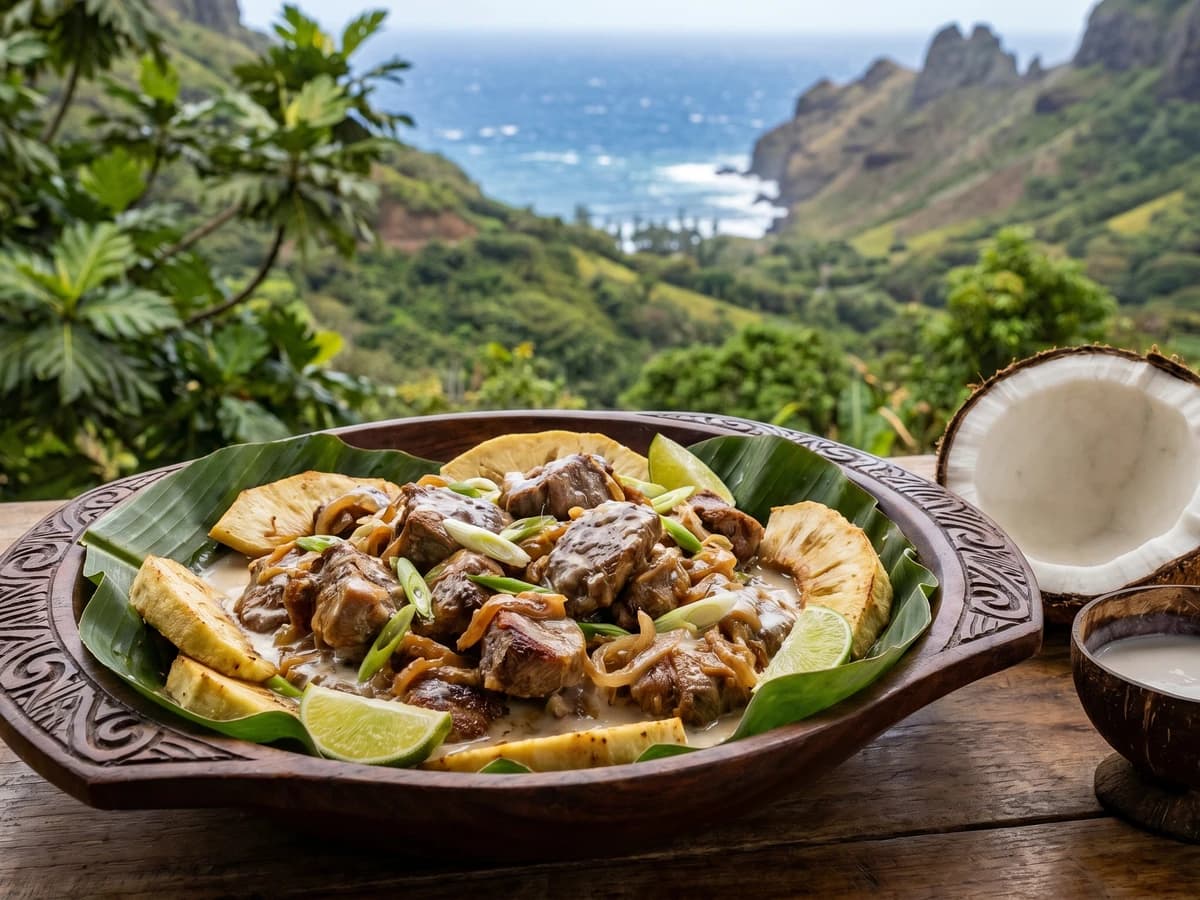
Puaʻa toto is Fatu Hiva's old, strong comfort food: pork simmered low in its own blood with onion, served beside mei, the breadfruit heart of Henua ʻEnana.
Main Dishes
Polynesian
Special Occasion
Comfort Food
Slow Cooker
25 min
Active Time
2 hr 15 min cook•2 hr 40 min total
Yield6 servings
In the Marquesas, Henua ʻEnana, the mountains come down hard into the sea, and Fatu Hiva sits out there in the far southeast, green valleys, dark rock, rough Pacific, no soft lagoon pretending the island is gentle. Food from that place carries the same truth. Nothing wasted. Nothing dressed up to make a stranger comfortable.
Puaʻa toto means pork in blood, puaʻa for pig and toto for blood, and this is Fatu Hiva's hand, not Tahiti's, not Hawaiʻi's, not some plain mixed-up island plate. The pig is cut small and simmered with onion until tender, then the fresh blood thickens the pot into a dark, glossy sauce. You eat it with mei, breadfruit, because Henua ʻEnana is breadfruit country where many of the rest of us lean first on taro. One ocean, one canoe, one root, but each island keeps its own hunger.
I cook this open-handed, because this isn't my home island. For the deep parts of the Marquesan table, the Festival des Marquises, the umu kai, the hunting valleys, you go sit with Marquesan elders and aunties. They should tell their own story. Here in a home kitchen, the rule is simple: get clean fresh blood from a butcher you trust, keep it cold, cook it fully, and serve it without shame. Deep food is not fancy. It's not pretty. It's not wasteful.
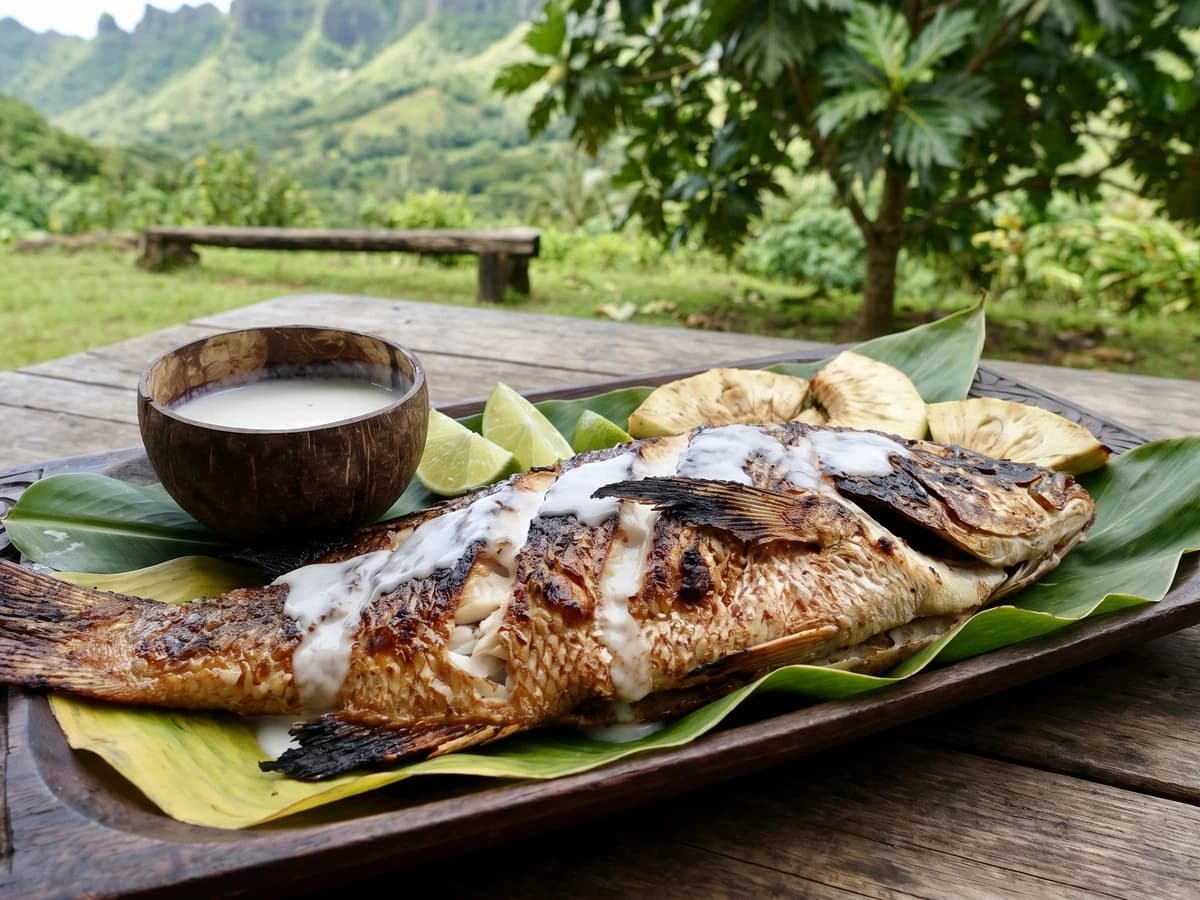
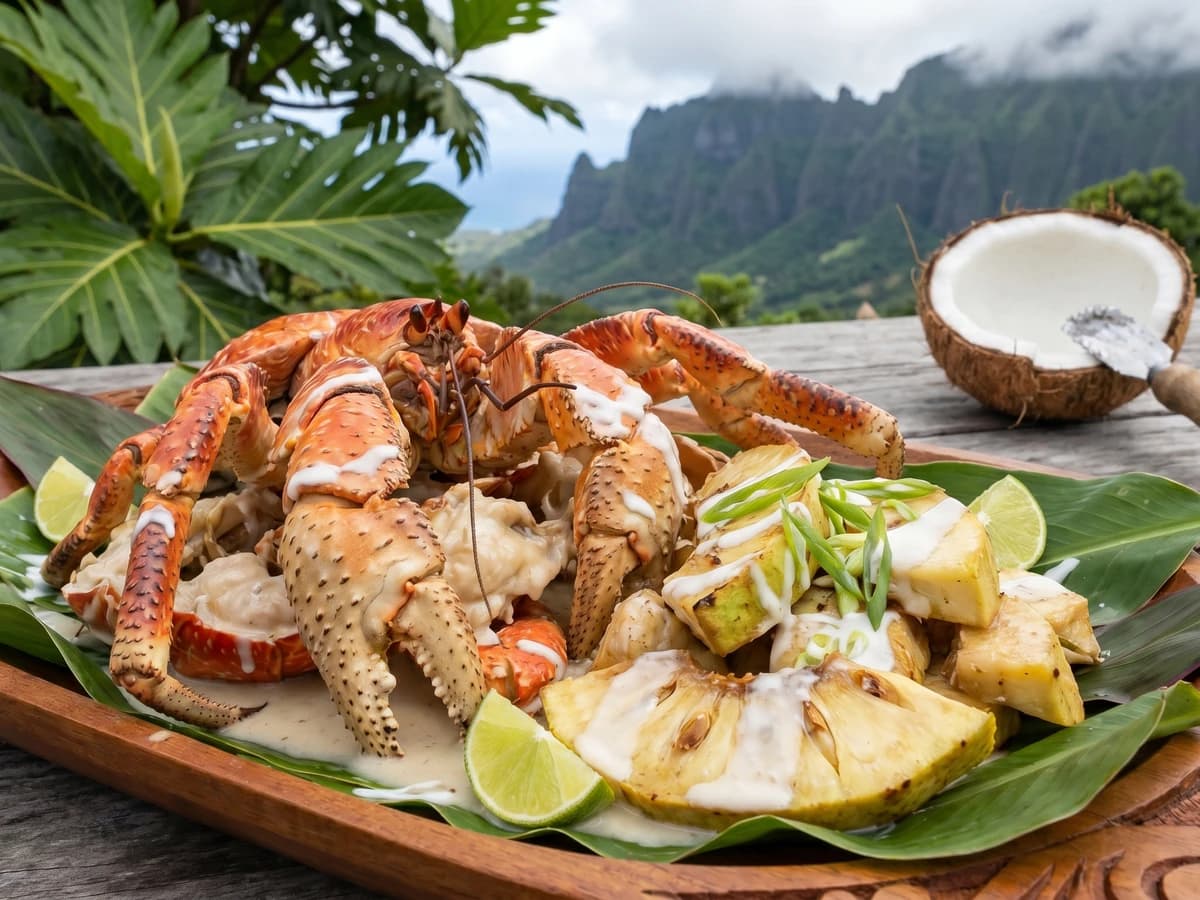
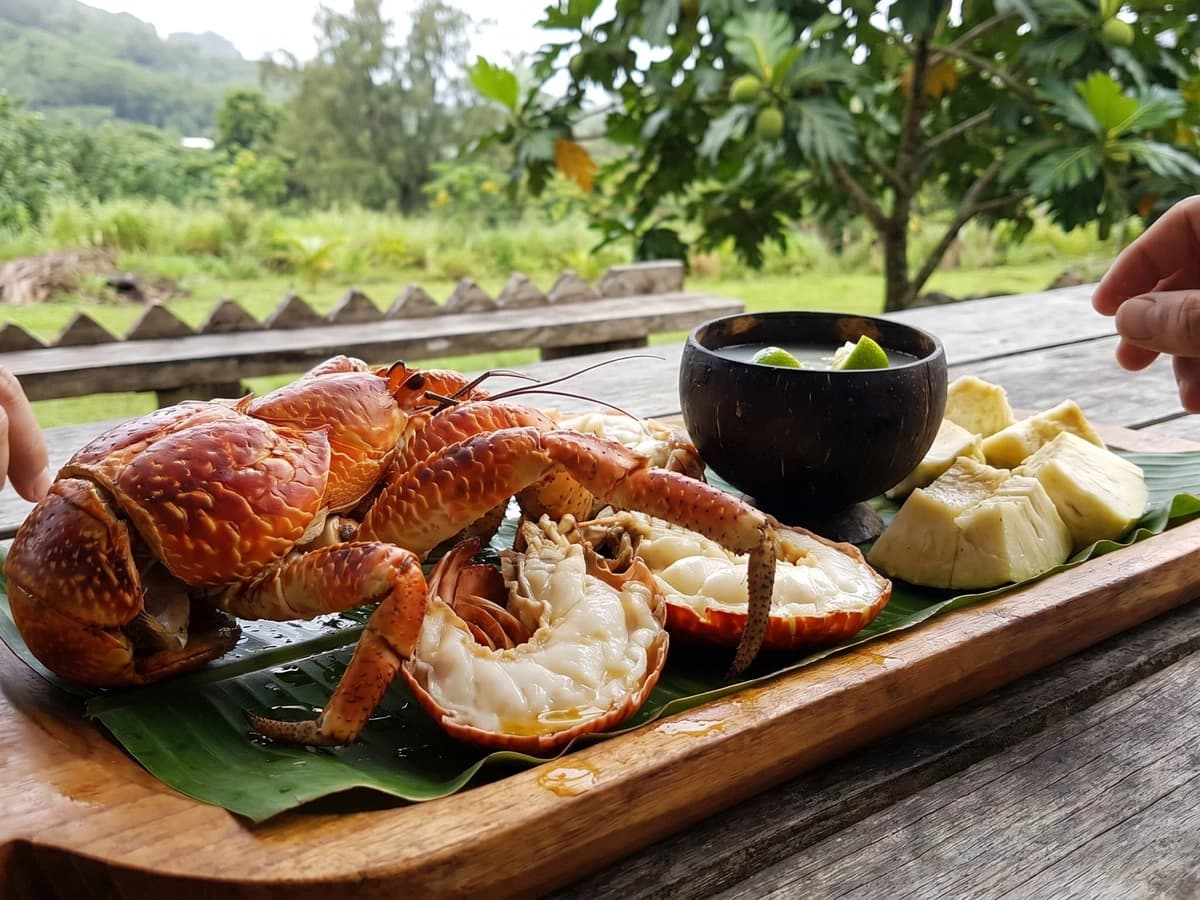
Puaʻa toto belongs to Fatu Hiva in the Marquesas, Henua ʻEnana, where wild and domestic pork, breadfruit, coconut, and valley foods shaped a table distinct from Tahiti and the Society Islands. Blood cookery reflects an old Polynesian food ethic as much as a recipe: the animal was not taken so half of it could be thrown away. In the Marquesas, mei, or breadfruit, held the place taro holds in many other islands, and that breadfruit heart still marks this dish as Marquesan.
The technique, the tradition, and the story behind every dish.
pork shoulder or fresh wild porkcut into 1 1/2-inch pieces
3 pounds
sea saltplus more to taste
1 1/2 teaspoons
neutral oil or rendered pork fat
2 tablespoons
onionsthinly sliced
2 large
garlic clovescrushed
4
water or unsalted pork stock
1 cup
bay leaf (optional)
1
fresh pork bloodkept cold
1 1/2 cups
cider vinegar or fresh lime juicestirred into the blood
2 tablespoons
freshly ground black pepper
1/2 teaspoon
cooked mei (breadfruit), taro, rice, or ʻulu
for serving
Equipment Needed
•Heavy 6-quart Dutch oven or deep pot
•Whisk for tempering the blood
•Instant-read thermometer for checking a safe full cook
Instructions
1
Keep It Clean
Buy fresh pork blood from a butcher who handles it for food, and keep it cold until the moment it goes into the pot. Stir the vinegar or lime juice into the blood so it stays smooth instead of clotting hard. This is the part where you don't play around: clean source, cold storage, full cook.
2
Salt the Pork
Season the pork with the sea salt and let it sit while you slice the onions. The salt wakes the meat up before the long simmer. If the pork is wild and lean from the valley, add a little extra fat to the pot later. Eat what you have, but know what it needs.
3
Brown and Soften
Warm the oil or pork fat in a heavy pot over medium heat. Brown the pork in batches until the edges take color, then set it aside. Add the onions and garlic to the same pot and cook until the onions slump, turn sweet, and pick up the browned bits from the bottom.
4
Simmer Low
Return the pork to the pot with the water or stock and the bay leaf if you're using it. Cover and simmer gently for 1 1/2 to 2 hours, stirring now and then, until the pork gives under a spoon but has not fallen to strings. Low fire. No rush. The tough pieces need time to remember tenderness.
5
Temper the Blood
Lower the heat until the pot is barely moving. Whisk a ladle of hot cooking liquid into the cold blood, then another, so the blood warms without seizing. Pour that mixture back into the pot in a thin stream, stirring the whole time.
6
Cook to Gloss
Keep the pot at a quiet simmer for 10 to 15 minutes, stirring often, until the sauce turns dark brown, thick, and glossy and coats the pork. Do not boil it hard or the sauce can turn grainy. Taste for salt and pepper. It should be deep, savory, a little iron-rich, and rounded by onion.
7
Serve With Mei
Spoon the puaʻa toto into a wooden bowl and serve it with cooked mei, the Marquesan breadfruit, or with taro, rice, or ʻulu if that's what your kitchen has. The breadfruit drinks the sauce and makes sense of the whole pot. Nothing wasted, everybody fed.
Chef Tips
•Fresh blood is a butcher conversation, not an afterthought. Ask when it was collected, how it was chilled, and whether it was prepared for cooking. If you cannot get clean fresh pork blood, don't fake it with something unsafe.
•Keep the heat low after the blood goes in. A hard boil can make the sauce sandy and broken; a quiet simmer gives you that dark, glossy coating.
•Fatu Hiva and the Marquesas are breadfruit country. Serve this with mei if you can find it, roasted, boiled, or baked ripe. Rice works for the real weeknight table too, no shame.
•For a slow cooker, brown the pork and onions first, then cook with the water on low for 6 to 7 hours. Stir in the tempered blood during the last 20 minutes on high, and make sure it cooks through until thick and glossy.
Advance Preparation
•Cut and salt the pork up to 1 day ahead, then keep it covered and cold.
•Slice the onions the morning of cooking and hold them chilled.
•Do not mix the blood into the dish ahead. Keep it cold, acidulate it, temper it, and cook it into the pot right before finishing.
Frequently Asked Questions
Nutrition Information
1 serving (about 455g)
Calories
870 calories
Total Fat
47 g
Saturated Fat
15 g
Trans Fat
0 g
Unsaturated Fat
29 g
Cholesterol
160 mg
Sodium
800 mg
Total Carbohydrates
55 g
Dietary Fiber
7 g
Sugars
10 g
Protein
55 g
Where cooking meets culture.
Culinary guides, cultural storytelling, and the editorial depth that makes cooking meaningful.