Chef Makoa
Iʻa Tunu (Marquesan Grilled Reef Fish with Miti Haari)
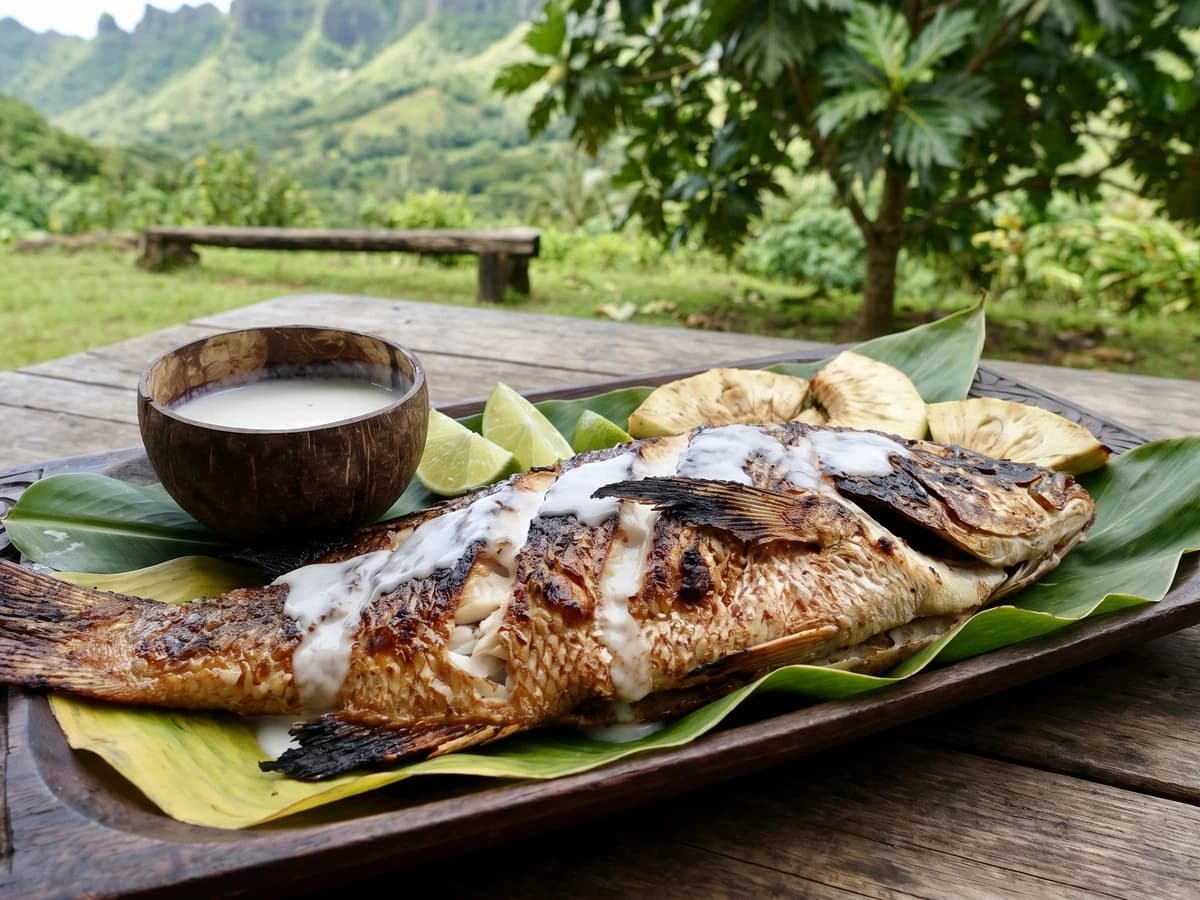
Reef fish off the morning line, salted clean and grilled ʻEnana style, then served with fresh-squeezed miti haari, the coconut sauce that keeps the plate rich without hiding the fish.
A cooking platform built around craft, culture, and the stories behind what we eat.
Created by
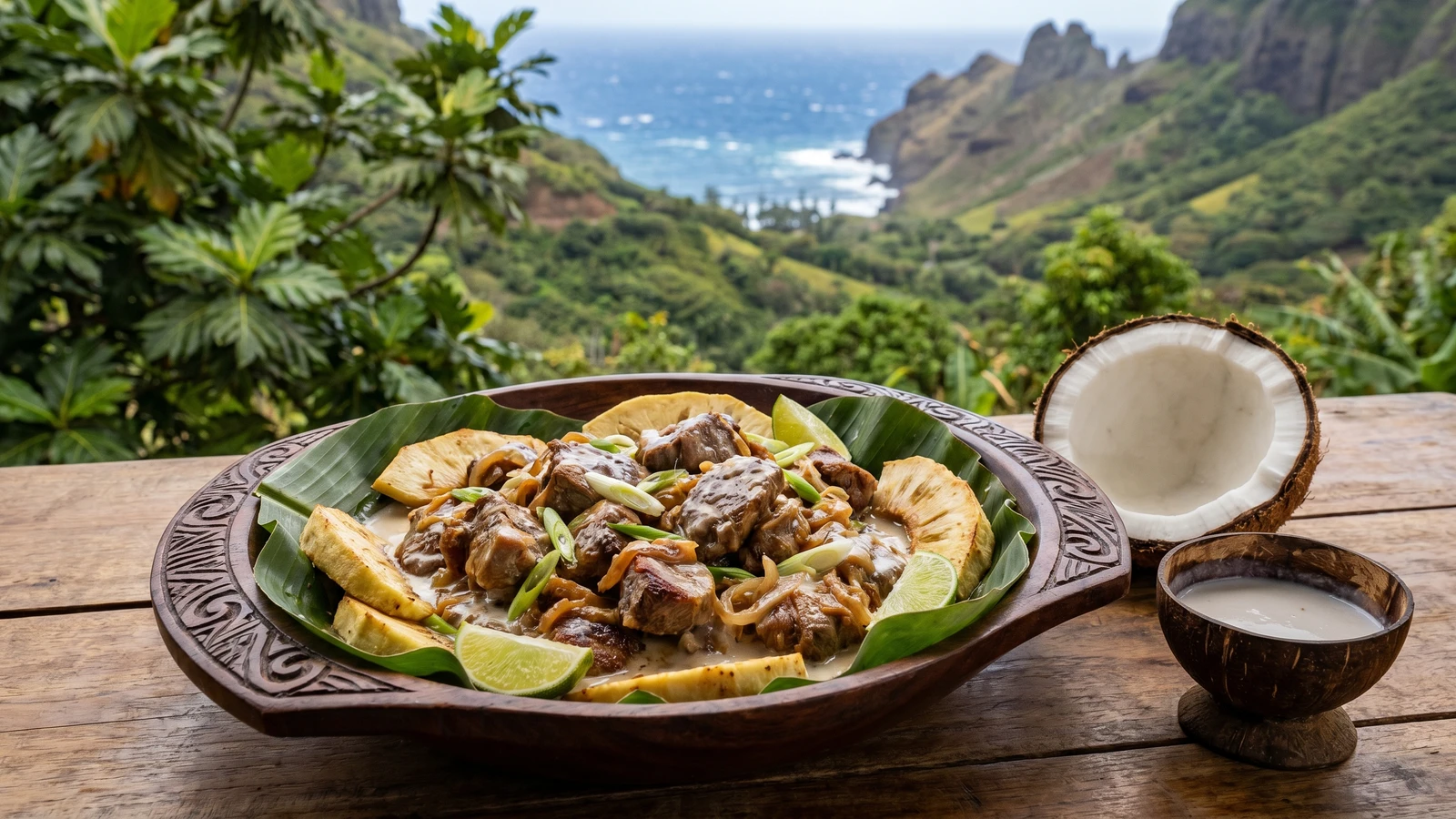
Wild goat from the high valleys of Henua ʻEnana, browned and braised slow in fresh coconut cream with onion, garlic, and bay, then served with mei, the breadfruit heart of the Marquesas.
The first time I ate goat cooked this way in Henua ʻEnana, the Marquesas, the valley did most of the talking. High green walls, dark rock, breadfruit leaves knocking above the roof, and somebody's uncle setting down wild cabri, goat, from the hills like he was setting down a story more than meat. This is Marquesan food, not Tahitian, and not mine to claim. I cook it open-handed, the way you do when a relative lets you sit at their table.
Henua ʻEnana leans on mei, breadfruit, where my home seat leans on kalo, taro. One ocean, one canoe, one root, but not one dish. Each island teaches the food with its own hand. The goat came later, after contact, and in those jagged islands it went wild in the valleys; the coconut, the fire, the breadfruit tree, those were already holding people. So this pot is old and new sitting together, no need make that fight.
The method is patient because the animal is honest. Brown the cabri until the edges go dark, then let onion, garlic, bay, and coconut milk do the slow work until the meat stops arguing and falls from the bone. Across the Triangle, coconut cream has this same soft hand in different dishes: Tongan lū sipi, Sāmoan palusami, Cook Islands rukau, Hawaiian laulau. Same lesson, different island. Serve this with roasted mei or rice if that's what you have. Eat what you have.
For the deep parts of the Festival des Marquises and the umu kai, the Marquesan earth-oven feast, go sit with Marquesan elders. They should tell their own story. Here, we're bringing one valley dish into a home kitchen with respect, warm sauce, and enough for one more.
Henua ʻEnana, the Marquesas, was settled by East Polynesian voyagers by roughly the first millennium CE, and its food base became famous for mei, breadfruit, with old practices of baking, pounding, and fermenting it for seasons when the valleys or weather went hard. Goats are later, brought after European contact and now hunted as wild animals in the steep volcanic valleys, so cabri au lait de coco carries a post-contact meat into an older Marquesan coconut-and-breadfruit table. The French name shows the colonial layer on the food, but the hand here is Marquesan, not Tahitian.
Quantity
3 to 3 1/2 pounds
bone-in pieces or 2-inch chunks
Quantity
2 teaspoons
plus more to taste
Quantity
1/2 teaspoon
Quantity
1 tablespoon
plus more to finish
Quantity
2 tablespoons
Quantity
2 large
thinly sliced
Quantity
6
smashed and chopped
Quantity
2
Quantity
1 sprig
or 1/2 teaspoon dried thyme
Quantity
2 cups
preferably second squeeze from grated mature coconut
Quantity
1 cup
as needed
Quantity
1 1/2 cups
preferably first squeeze miti haari-style coconut sauce, or canned coconut cream
Quantity
2
thinly sliced
Quantity
for serving
roasted or boiled
| Ingredient | Quantity |
|---|---|
| wild goat shoulder or leg (cabri)bone-in pieces or 2-inch chunks | 3 to 3 1/2 pounds |
| sea saltplus more to taste | 2 teaspoons |
| freshly ground black pepper | 1/2 teaspoon |
| lime juiceplus more to finish | 1 tablespoon |
| coconut oil or neutral oil | 2 tablespoons |
| onionsthinly sliced | 2 large |
| garlic clovessmashed and chopped | 6 |
| bay leaves (laurier) | 2 |
| fresh thyme (optional)or 1/2 teaspoon dried thyme | 1 sprig |
| thin coconut milkpreferably second squeeze from grated mature coconut | 2 cups |
| water or unsalted stockas needed | 1 cup |
| thick fresh coconut creampreferably first squeeze miti haari-style coconut sauce, or canned coconut cream | 1 1/2 cups |
| green onions (optional)thinly sliced | 2 |
| mei or ʻuru (breadfruit), taro, or riceroasted or boiled | for serving |
Pat the goat dry and season it with the salt, pepper, and lime juice. Let it sit at least 30 minutes, or overnight in the fridge if the animal is older and lean. Wild goat has its own strength, and that's good. You don't hide it. You give it salt, time, and a pot that knows how to wait.
If you're working from fresh coconut, squeeze the thick first cream and set it aside for the finish, then squeeze again for the thinner coconut milk that starts the braise. That first squeeze is the rich one, the miti haari, fresh coconut sauce, and it goes in late so it stays full and sweet. If you're using cans, spoon off the thick top cream for the finish and use the looser milk underneath for the pot.
Warm the oil in a heavy Dutch oven over medium-high heat. Brown the goat in batches, giving each piece space, until the edges are dark and the bottom of the pot smells roasted. Don't hurry this into gray meat. The browned bits are what keep the coconut sauce from tasting flat.
Lower the heat to medium and add the onions to the same pot. Cook until they soften and pick up the brown from the bottom, then stir in the garlic, bay leaves, and thyme if you're using it. Return the goat to the pot, pour in the thin coconut milk, and add enough water or stock to come halfway up the meat. Scrape the bottom clean with a wooden spoon, because all that color belongs in the sauce.
Cover and cook at a very low simmer for 3 to 3 1/2 hours, turning the meat once or twice, until a fork twists in with no fight and the meat loosens from the bone. Keep it gentle. A hard boil breaks the coconut and tightens the goat. For a slow cooker, move everything in after the pot is built and cook on low for 7 to 8 hours.
Uncover the pot and skim off excess fat if you need to. Stir in the thick coconut cream and simmer gently, uncovered, 15 to 20 minutes, until the sauce turns glossy and coats the back of a spoon. Taste for salt and add a small squeeze of lime if the richness wants a little lift. Pull out the bay leaves before serving.
Spoon the goat and coconut sauce into a carved wooden bowl or over a banana leaf, with roasted mei or ʻuru, breadfruit, alongside. Rice is fine too. The Marquesas are a breadfruit heartland, but a living kitchen eats what it has. Scatter green onion if you're using it, set the pot in the middle, and feed the table.
1 serving (about 440g)
Culinary guides, cultural storytelling, and the editorial depth that makes cooking meaningful.
Discover Culinary ExplorerChef Makoa
Reef fish off the morning line, salted clean and grilled ʻEnana style, then served with fresh-squeezed miti haari, the coconut sauce that keeps the plate rich without hiding the fish.
Chef Makoa
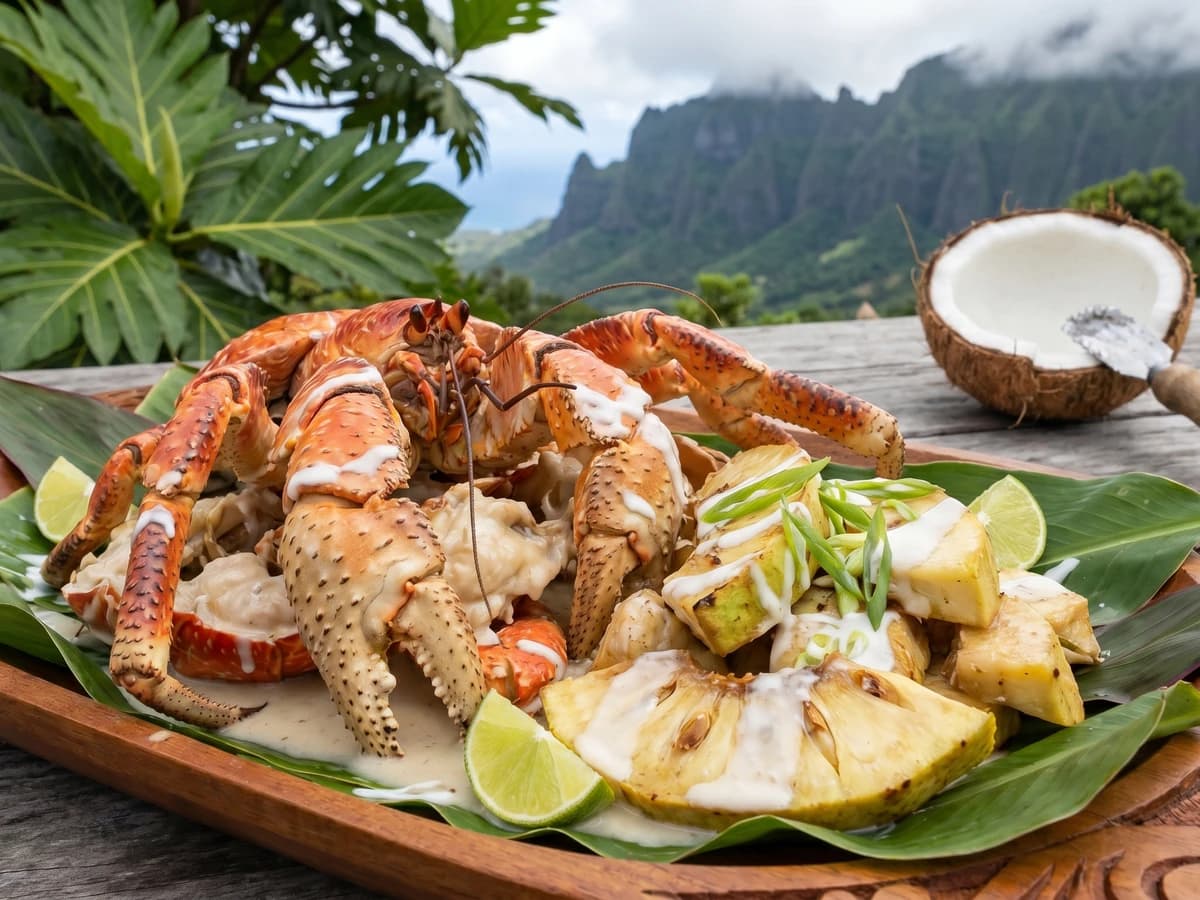
The Marquesan kaveu of Henua ʻEnana, coconut crab simmered gently in fresh miti haari until the shell shines and the sweet meat tastes like the crab walked through the coconut grove.
Chef Makoa
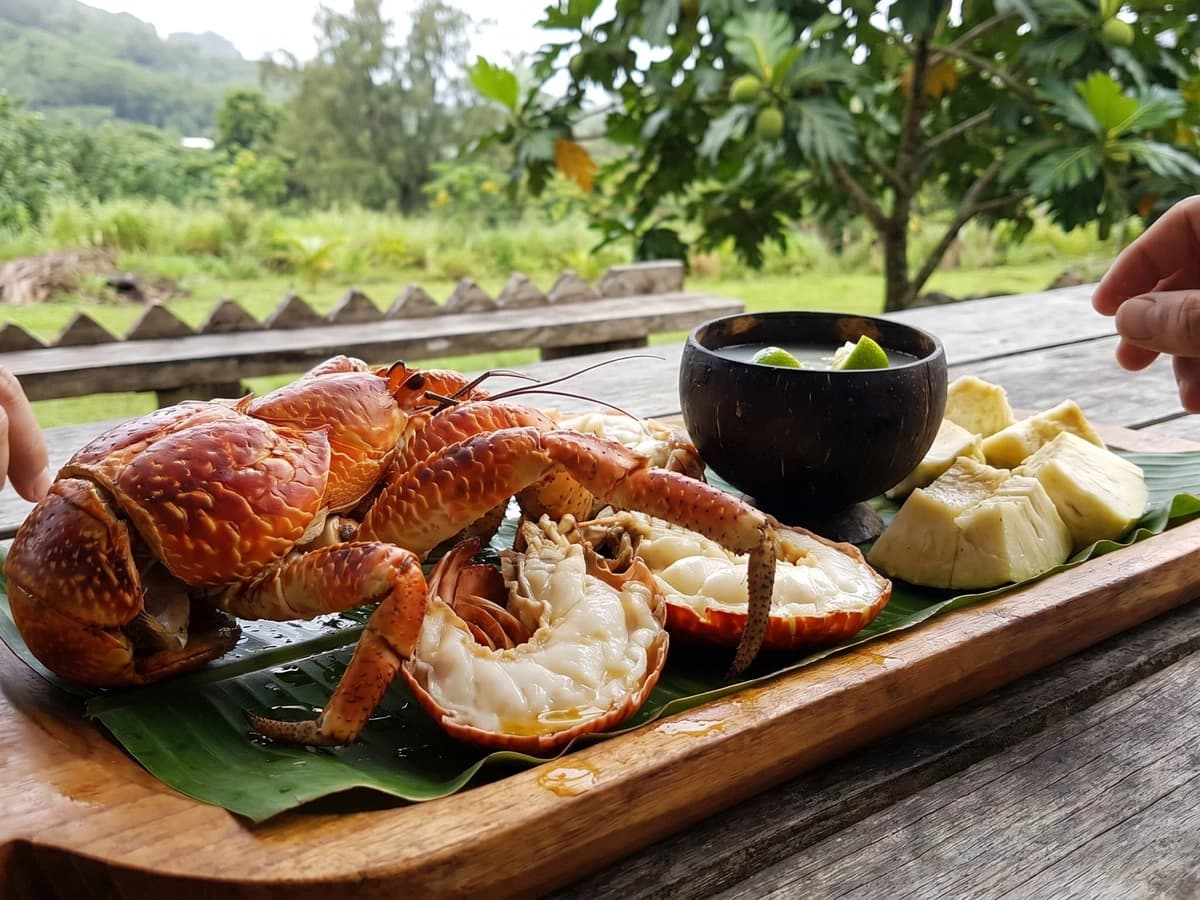
The Marquesas, Henua ʻEnana, gives kaveu with a careful hand: coconut crab boiled simply in sea-salt water, shell glowing orange, sweet meat served with fresh miti haari.
Chef Makoa
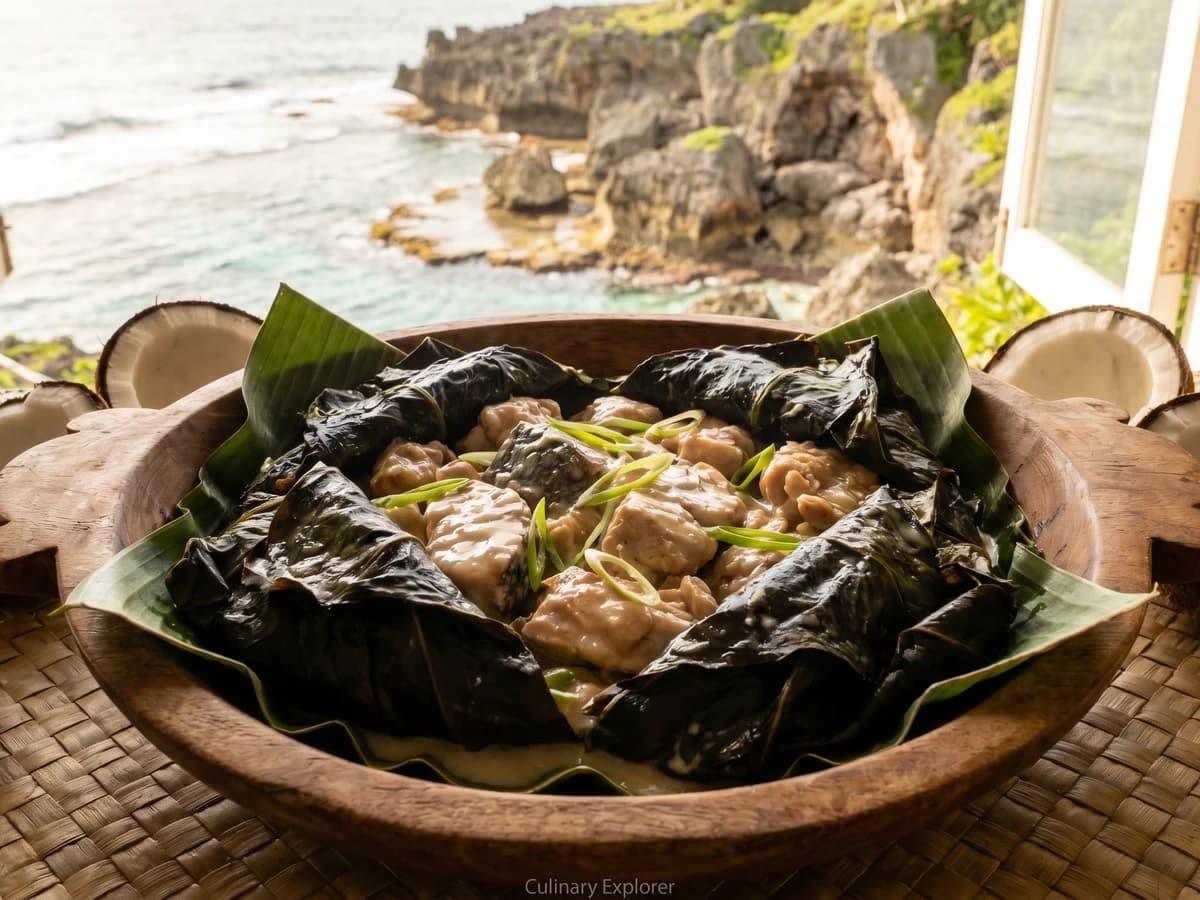
Niue's lū folds young taro leaves around fish or chicken, coconut cream, and onion, then bakes the parcel slow until the leaf turns dark, silky, and rich.