
Chef Thomas
Anchovy Sauce
A proper white sauce sharpened with pounded anchovy, the old Georgian trick for waking up a piece of poached fish or a slice of roast lamb on a Sunday in spring.
A cooking platform built around craft, culture, and the stories behind what we eat.
Created by Chef Thomas
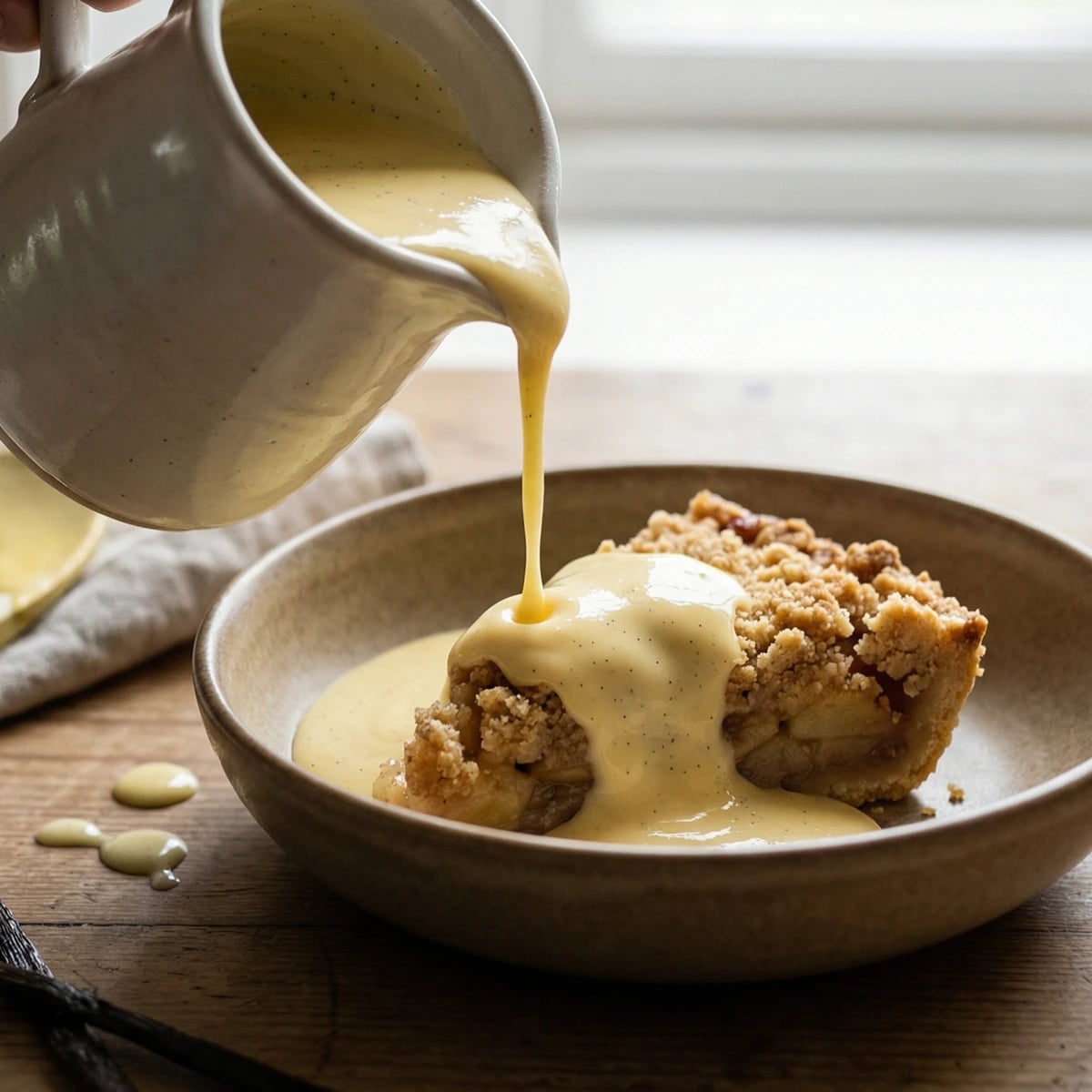
A proper pouring custard, made the slow way with real vanilla and patience, the kind that turns a humble crumble into the reason everyone stayed for pudding.
There's a particular kind of evening this belongs to. Cold outside, the windows fogged, a crumble or a sponge already in the oven and the kitchen smelling of brown sugar and apples. That's when you make custard. Not the powdered sort, which has its place and its loyalists, but the proper kind: yolks and sugar and warm milk, stirred slowly until it thickens into something silky and golden that pours in a slow, generous stream from a warm jug.
The French call it crème anglaise, which is a small joke at our expense. We invented it. They named it. It belongs to both of us now, and it belongs especially beside every fruit pudding worth the trouble of making one.
It asks for ten minutes of your attention and nothing else. No clever technique, no special equipment, no ingredient you can't get at the corner shop. Just yolks, sugar, milk, cream, vanilla, and the willingness to stand at the stove and stir. A recipe is a conversation, not a contract, and this one is mostly about learning what thickened custard feels like under a wooden spoon. Once you know, you'll never need to look it up again.
I wrote it down in the notebook years ago and have changed it precisely once: I added a splash of cream to the milk because it makes the texture a little richer and the pour a little slower. Other than that, it's the same custard I made the first time, and the same custard I'll make on Sunday. Some things don't need improving.
Quantity
300ml
Quantity
200ml
Quantity
1
split lengthways, seeds scraped
Quantity
4
Quantity
50g
Quantity
pinch
| Ingredient | Quantity |
|---|---|
| whole milk | 300ml |
| double cream | 200ml |
| vanilla podsplit lengthways, seeds scraped | 1 |
| large egg yolks | 4 |
| golden caster sugar | 50g |
| fine sea salt | pinch |
Pour the milk and cream into a heavy-bottomed pan. Add the vanilla seeds and the scraped pod. Set it over a low heat and let it warm slowly until you see the first wisps of movement at the edges and the kitchen begins to smell faintly of vanilla. Don't let it boil. Take it off the heat and let it sit for five minutes so the vanilla has time to do its work.
While the milk is warming, whisk the egg yolks, sugar, and salt together in a bowl. Whisk for a minute or so, until the mixture has gone from deep yellow to pale and slightly thickened. It should fall from the whisk in a soft ribbon. This isn't optional. The sugar protects the yolks from the heat that's coming.
Fish out the vanilla pod. Pour the warm milk into the yolks in a slow, steady stream, whisking the whole time. Don't tip it all in at once. You're warming the eggs gently, not cooking them. If you rush this part, you'll have scrambled eggs in cream and there's no coming back from that.
Pour the lot back into the pan and set it over a low heat. Stir constantly with a wooden spoon, getting into the corners of the pan. This is the part that asks for your attention and gives nothing back if you wander off. After eight or ten minutes the custard will start to thicken. You'll feel it on the spoon before you see it. When it coats the back of the spoon and a finger drawn through the coating leaves a clear path that doesn't run, it's ready. Take it off the heat at once.
Pour the custard through a fine sieve into a warm jug. This catches any stray bits that might have started to set on the bottom of the pan and gives you the silky pour you're after. Serve it straight away, in generous, unhurried streams, over whatever pudding has earned it.
1 serving (about 125g)
Culinary guides, cultural storytelling, and the editorial depth that makes cooking meaningful.
Discover Culinary Explorer
Chef Thomas
A proper white sauce sharpened with pounded anchovy, the old Georgian trick for waking up a piece of poached fish or a slice of roast lamb on a Sunday in spring.

Chef Thomas
A bowl of sharp, fluffy Bramley apple sauce, made in the time it takes to carve the pork, the kind of small condiment that quietly makes the whole meal make sense.

Chef Thomas
Beef bones roasted until dark, then coaxed for a long afternoon into a deep amber stock, the foundation of every good gravy, every braise, every bowl of winter soup worth the trouble.

Chef Thomas
A proper white sauce shot through with capers and a squeeze of lemon, the old companion to boiled mutton and salt beef, quietly waiting for someone to remember what it can do.