Culinary Explorer

A cooking platform built around craft, culture, and the stories behind what we eat.
Discover Culinary Explorer
Apple Sauce

Apple Sauce

Created by Chef Thomas

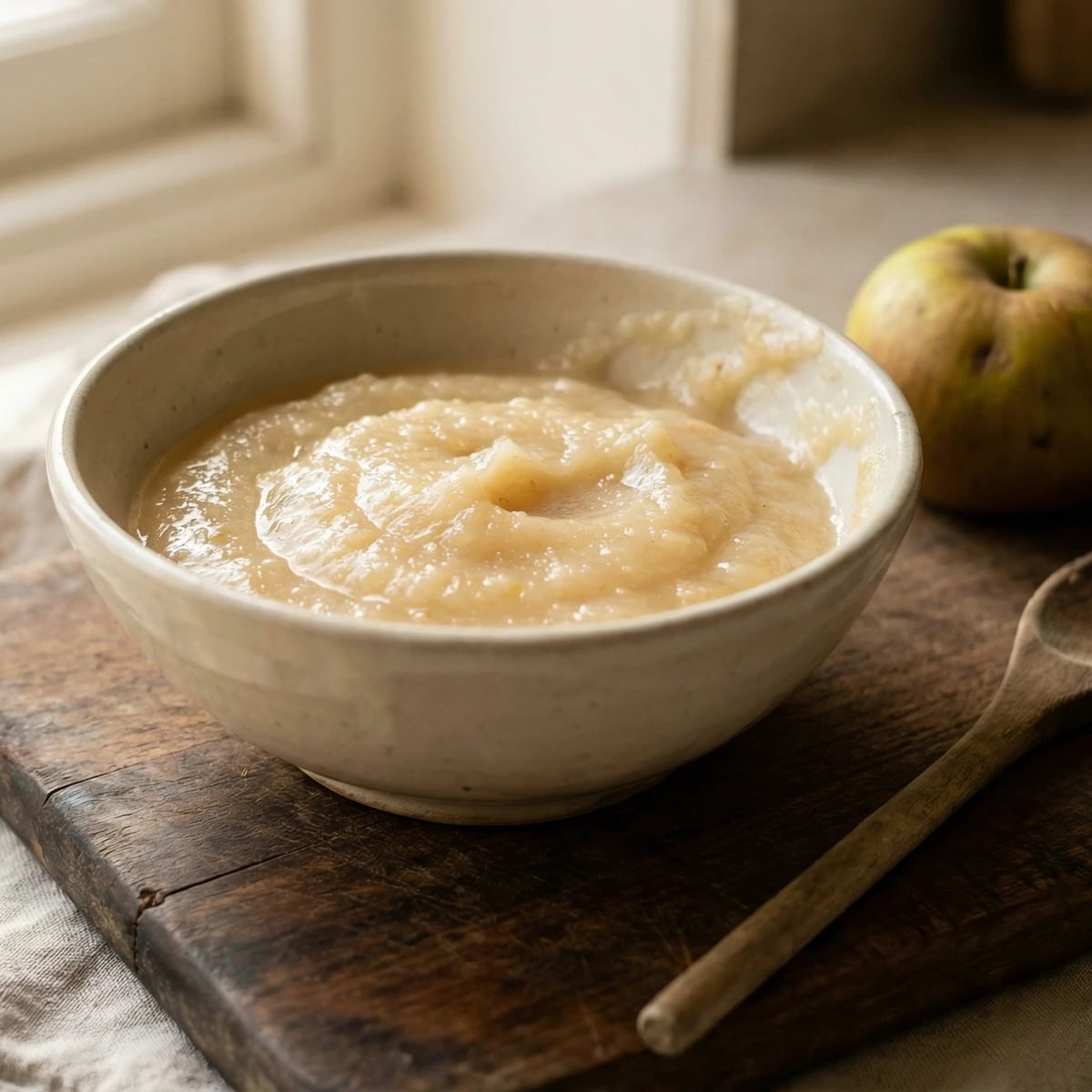
A bowl of sharp, fluffy Bramley apple sauce, made in the time it takes to carve the pork, the kind of small condiment that quietly makes the whole meal make sense.

Sauces & Condiments
British
Comfort Food
10 min
Active Time
15 min cook25 min total
YieldServes 4 to 6, alongside a roast

There's a smell that comes off a pan of Bramleys collapsing in butter that belongs to autumn and to nothing else. Cold, slightly tart, faintly perfumed with orchard. It arrives in the kitchen about eight minutes in and tells you, without any fuss, that the rest of the meal is on the right track.

Apple sauce is one of those things people forget how easy it is. You can buy it in a jar, of course, and there are perfectly decent ones, but a jar of apple sauce will never taste like apples that softened on your own hob fifteen minutes ago. The difference is the sharpness. A good homemade Bramley sauce has a clean, fluffy bite to it that wakes up everything else on the plate. It's not pretending to be a dessert. It's there to do a job.

The job is pork. Specifically, the rich, fatty business of a roast belly or a shoulder with proper crackling, where the meat needs something cold and sharp to cut against. The sauce does for pork what mint sauce does for lamb. It steps in, makes its point, and steps back.

This is barely a recipe. Apples, a knob of butter, a spoonful of sugar, a pinch of salt. Twenty minutes of mostly leaving things alone. I wrote it down in the notebook once and the entry just said: "Bramleys. Sunday. Pork. Right." That was enough.

The technique, the tradition, and the story behind every dish.

Discover Culinary Explorer

Ingredients

Bramley apples

Quantity

500g (about 2 large)

peeled, cored, and roughly chopped

water

Quantity

1 tablespoon

unsalted butter

Quantity

25g

caster sugar

Quantity

1 to 2 tablespoons, to taste

lemon peel (optional)

Quantity

small strip

fine sea salt

Quantity

pinch

Equipment Needed

  • Small heavy-bottomed saucepan with a lid
  • Wooden spoon
  • Vegetable peeler

Instructions

  1. 1

    Prepare the apples

    Peel and core the Bramleys and chop them roughly. Don't bother being neat about it. They're going to collapse anyway, and the more uneven the pieces, the more interesting the texture at the end. Some bits will dissolve to a froth, others will hold their shape. That's what you want.

    Bramleys are the apple for this. They cook to a fluff in minutes and have the sharpness that makes the sauce do its job. An eating apple will give you something sweeter and more stubborn, which is not the same thing at all.
  2. 2

    Start them in the pan

    Tip the apples into a small heavy-bottomed saucepan with the tablespoon of water and the strip of lemon peel if you're using it. Put a lid on and set it over a low heat. The water is just there to stop them catching in the first minute. After that, the apples will give up enough of their own juice to get on with things.

  3. 3

    Let them collapse

    Cook gently for ten minutes or so, lifting the lid once or twice to give them a stir. You'll hear them softening before you see it, a quiet hiss as the juices start to move. When the apples have given up their shape and the kitchen smells faintly of orchard, they're ready. If any pieces are stubbornly holding on, crush them against the side of the pan with a wooden spoon.

  4. 4

    Finish with butter and sugar

    Take the pan off the heat. Fish out the lemon peel. Stir in the butter and watch it melt into the apples, turning the sauce glossy and richer in colour. Add the sugar a little at a time, tasting as you go. A pinch of salt. Taste again. You want it sharp enough to cut through pork fat, sweet enough not to make you wince. The line between the two is personal. Trust your tongue.

    Bramleys vary wildly in tartness depending on when they were picked and how long they've been sitting in the bowl. Start with one tablespoon of sugar and only add more if it really needs it. A proper apple sauce should make you sit up a little.
  5. 5

    Serve

    Spoon into a small bowl and put it on the table next to the roast. It can be warm or at room temperature. I prefer it just-warm, the way it sits in the bowl while the meat is being carved. A small jug of cream isn't needed here. The sauce is doing the cream's job.

Chef Tips

  • Bramleys are non-negotiable for proper apple sauce. They're a cooking apple bred for exactly this: high acidity, low sugar, and the magical ability to collapse into fluff the moment they meet heat. If you can't find Bramleys, look for any tart cooking apple. An eating apple will give you something sweeter and stiffer, more like a compote. Fine on porridge, wrong on pork.
  • Don't peel them too far ahead. Cut Bramleys go brown quickly. If you must prep early, drop them into a bowl of cold water with a squeeze of lemon. Better still, peel them while the pork is resting and the kitchen is calm.
  • The butter at the end is the part most recipes leave out, and it's the part that matters most. It rounds the sharpness and gives the sauce a glossy, slightly rich finish that lifts it from stewed apples into something that earns its place on the table. Don't skip it.
  • Beyond pork, this sauce is brilliant cold the next morning, stirred into porridge or spooned over a bowl of thick yoghurt with a scatter of toasted oats. A small pot of it lasts three days in the fridge and makes breakfast feel deliberate.

Advance Preparation

  • The sauce can be made up to three days ahead and kept in a covered container in the fridge. Bring it back to room temperature, or warm it gently in a small pan with a splash of water, before serving.
  • It freezes well for up to three months. Defrost overnight in the fridge and stir to bring it back together; the texture loosens slightly, which is no bad thing.

Frequently Asked Questions

Nutrition Information

1 serving (about 95g)

Calories
100 calories
Total Fat
4 g
Saturated Fat
3 g
Trans Fat
0 g
Unsaturated Fat
1 g
Cholesterol
11 mg
Sodium
10 mg
Total Carbohydrates
18 g
Dietary Fiber
2 g
Sugars
12 g
Protein
0 g

Note: Chef personas and recipes are created with AI assistance. Cook with care: follow safe food-handling practices, check doneness with a thermometer when needed, and adapt for allergies and your kitchen.

Where cooking meets culture.

Culinary guides, cultural storytelling, and the editorial depth that makes cooking meaningful.

Discover Culinary Explorer

More from British Sauces & Gravies

Browse the full collection