
Chef Dimitra
Aegean Island Chtapodi me Kritharaki (Χταπόδι με Κριθαράκι)
Aegean island octopus, tomato, red wine, and toasted kritharaki share one pot, so the pasta drinks the briny sauce and stays glossy instead of turning heavy.
A cooking platform built around craft, culture, and the stories behind what we eat.
Created by
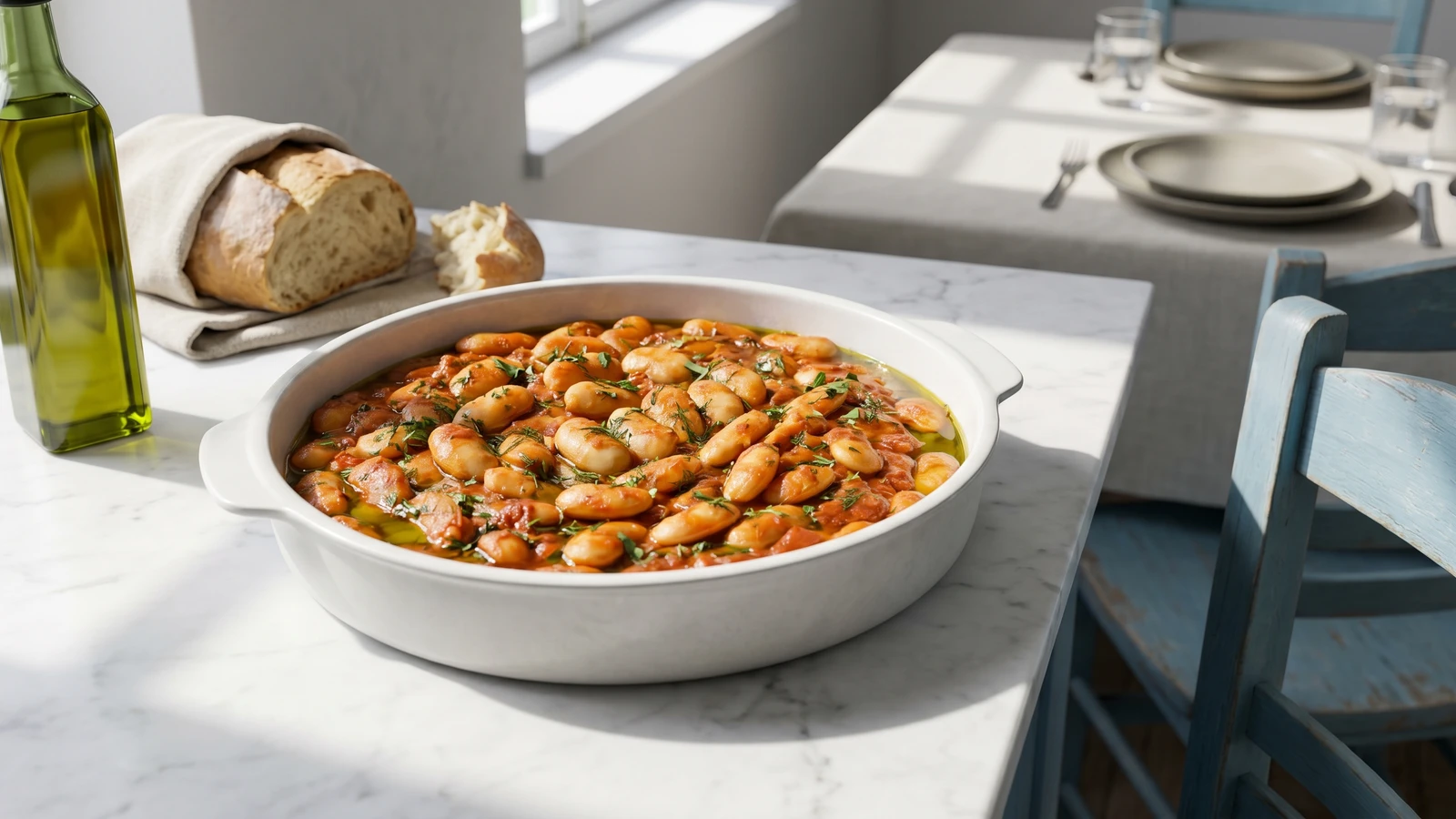
Western Macedonia's giant beans bake plaki-style with tomato, onion, herbs, and enough olive oil to turn the sauce glossy, a Lenten table's comfort and tomorrow's better lunch.
Prespes gigantes plaki are Western Macedonia's baked giant beans, broad white beans cooked until creamy, then set in a tapsi with tomato, onion, herbs, and enough olive oil to make the sauce shine. The region is the dish's surname here. Around the Prespa lakes, the bean has weight, sweetness, and a skin that holds when smaller beans would split.
One thing decides the dish: the beans must be soaked overnight and simmered tender before the tomato touches them. Tomato makes the sauce bright, but it slows the softening of a hard bean. If a bean is chalky in the pot, the oven will not rescue it. It will only make it red.
This is nistisimo food, fit for the fasting table without feeling like a compromise. I serve it warm or at room temperature with bread for the oil at the bottom of the dish. My notebook from Prespes has one plain line underlined twice: tender before tomato. That is the whole mercy of the recipe.
Gigantes plaki belongs especially to the bean country of Western Macedonia, around the Prespa lakes of Florina, where cool nights and wet soil favor the large white runner beans. The names Fasolia Gigantes Elefantes Prespon Florinas and Fasolia Gigantes Elefantes Kastorias are protected in the EU as PGI products, a legal recognition of what Greek cooks already knew by the pot. Plaki names the shallow baked method, tomato, onion, herbs, and olive oil cooked until the sauce clings rather than pours, which made the dish a sturdy nistisimo main course for Orthodox fasting days.
Quantity
500g
soaked overnight
Quantity
2
Quantity
140ml
divided
Quantity
2 large, about 300g
finely chopped
Quantity
2 medium, about 160g
finely diced
Quantity
2, about 100g
finely chopped
Quantity
1, about 150g
finely chopped
Quantity
4
minced
Quantity
35g
Quantity
600g ripe or 500g canned
grated if fresh
Quantity
1 teaspoon
Quantity
1 teaspoon
Quantity
10g
chopped, plus more for serving
Quantity
10g
chopped
Quantity
10g
divided, plus more to taste
Quantity
1/2 teaspoon
Quantity
300-500ml
kept after simmering
Quantity
as needed
for serving
| Ingredient | Quantity |
|---|---|
| dried gigantes beans (Greek giant white beans)soaked overnight | 500g |
| bay leaves | 2 |
| extra virgin olive oildivided | 140ml |
| yellow onionsfinely chopped | 2 large, about 300g |
| carrotsfinely diced | 2 medium, about 160g |
| celery stalks with leavesfinely chopped | 2, about 100g |
| Florina red pepper or red bell pepperfinely chopped | 1, about 150g |
| garlic clovesminced | 4 |
| tomato paste | 35g |
| ripe tomatoes or canned crushed tomatoesgrated if fresh | 600g ripe or 500g canned |
| sweet paprika | 1 teaspoon |
| dried oregano | 1 teaspoon |
| flat-leaf parsleychopped, plus more for serving | 10g |
| dillchopped | 10g |
| fine sea saltdivided, plus more to taste | 10g |
| freshly ground black pepper | 1/2 teaspoon |
| reserved bean cooking liquidkept after simmering | 300-500ml |
| lemon wedges (optional)for serving | as needed |
Put the gigantes in a large bowl and cover them with cold water by at least 8cm. Leave them 12 to 16 hours, then drain and rinse. They should swell and wrinkle a little at the skin. Discard any stones, broken beans, or stubborn floaters.
Put the drained beans in a large heavy pot and cover with fresh cold water by 5cm. Bring to a full boil for 10 minutes, skimming the gray foam, then add the bay leaves and lower to a gentle simmer. Cook 60 to 90 minutes, until a bean squashes easily between your fingers but still holds its shape. Stir in half the salt during the last 15 minutes. Reserve 500ml of the cooking liquid, then drain the beans.
Heat the oven to 180 C. Warm 90ml of the olive oil in a wide pan over medium heat. Add the onions, carrots, celery, red pepper, and the remaining salt. Cook 10 to 12 minutes, stirring often, until the vegetables soften and smell sweet, with no browning at the edges.
Stir in the garlic for 1 minute, then add the tomato paste and paprika and cook until the paste darkens slightly. Add the grated tomatoes or canned tomatoes, oregano, and black pepper. Simmer 10 to 12 minutes, until the sauce thickens enough that a spoon leaves a short trail through it. Taste now. It should be savory and bright, because the beans will calm it down.
Spread the drained beans in a 32cm tapsi or deep baking dish. Pour the tomato sauce over them, add the parsley, dill, 300ml reserved bean liquid, and the remaining 50ml olive oil. Fold gently so the beans stay whole. The liquid should come halfway to two-thirds up the beans, not drown them. Bake uncovered for 60 to 75 minutes, shaking the pan once or twice, until the sauce clings to the beans, the top beans are lightly bronzed, and green-gold oil gathers at the edges. If the pan dries before the beans look creamy, add a splash more reserved liquid.
Let the gigantes rest 20 to 30 minutes before serving. Scatter with a little more parsley and bring lemon wedges to the table if you like that sharp finish. Serve warm or at room temperature with country bread. Tomorrow they are often better, which is why Greek kitchens make a full pan.
1 serving (about 400g)
Culinary guides, cultural storytelling, and the editorial depth that makes cooking meaningful.
Discover Culinary ExplorerChef Dimitra
Aegean island octopus, tomato, red wine, and toasted kritharaki share one pot, so the pasta drinks the briny sauce and stays glossy instead of turning heavy.

Chef Dimitra
Aegean coast psari plaki is the quiet whole-fish bake: onions and tomato softened first, fish laid on top, and olive oil doing its slow work until the bones release cleanly.

Chef Dimitra
Astakomakaronada is the Aegean islands' celebration pasta: spiny lobster, tomato, olive oil, and long noodles cooked in the shell broth, never drowned in cream or cheese.

Chef Dimitra
Aegean Easter goat on the spit, lean and full-flavored, turned slowly over charcoal and basted with lemon, oregano, garlic, and good olive oil.