
Chef Lupita
Aguascalientes Beef Tongue Pozole (Pozole de Lengua)
Aguascalientes' Bajio pozole de lengua, built with cacahuazintle hominy, tender beef tongue, chile ancho and guajillo, with xoconostle brightness and table garnishes.
A cooking platform built around craft, culture, and the stories behind what we eat.
Created by
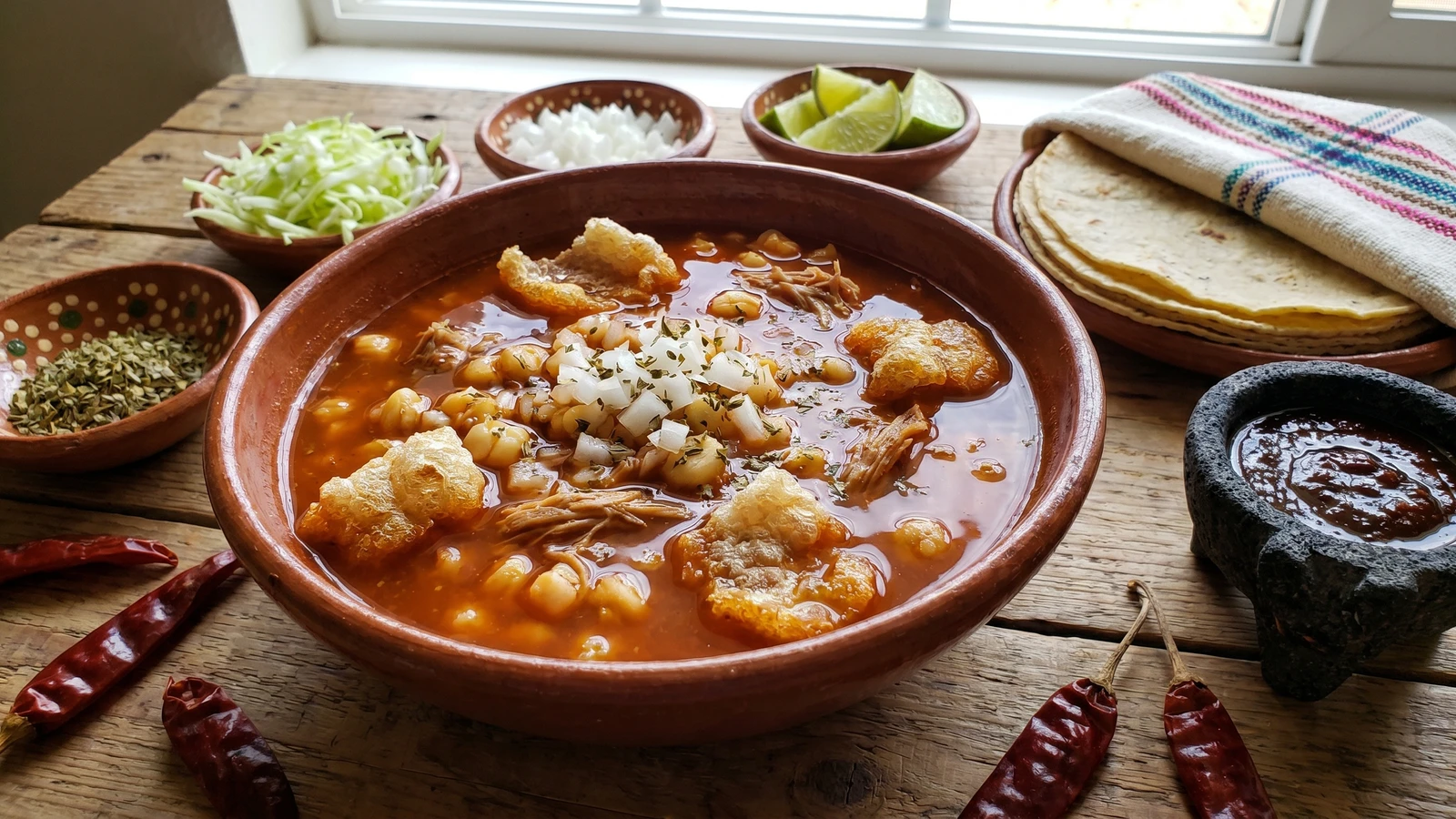
Oaxaca's Mixteca pozole, built on chile costeño rojo and a clean pork broth ladled thin as consommé, served with chicharrón crumbles, shredded cabbage, and oregano. A celebration pot from a region most people outside Mexico have never heard of.
This pozole is from the Mixteca region of Oaxaca. Not from Jalisco, not from Guerrero, not from any state capital's weekend market. From the Mixteca: the dry highland towns of Huajuapan de León, Juxtlahuaca, Tlaxiaco, where the pozole comes to the table in a thin chile broth the color of burnt clay and the chicharrón goes on top, not on the side.
The chile that defines this version is chile costeño rojo, a small dried chile grown along Oaxaca's Pacific coast from Pinotepa Nacional down through the Mixteca de la Costa. It gives the broth a sharp, direct heat and a faintly fruity undertone that you cannot replicate with guajillo or ancho. Those are Jalisco's chiles. This is Oaxaca's. If your chile vendor doesn't carry costeño, find a better vendor or order from Oaxaca directly. There is no pozole mixteco without it.
The broth here is intentionally thin. This is not the thick, soupy pozole rojo you know from Guadalajara. In the Mixteca, the caldo is closer to a consommé: clean pork flavor, chile costeño, garlic, a whisper of avocado leaf for fragrance. You ladle it generous and clear over the hominy and the meat, and then the table does the rest. Shredded cabbage, never lettuce. Dried oregano crumbled between your palms. Lime. Raw white onion. And chicharrón, broken into rough pieces and scattered across the top so it softens in the hot broth and gives each spoonful a different texture. That's the architecture of this dish.
I collected this recipe from a señora in the mercado at Huajuapan de León who had been making it for the town's fiestas for over thirty years. She weighed her chiles by the handful, not the gram, and she told me the secret was the avocado leaf: one leaf in the broth while it simmers, removed before serving. "Si le pones de más, ya no sabe a pozole," she said. Too much and it doesn't taste like pozole anymore. She was right. Recetas probadas y garantizadas.
Pozole derives from the Nahuatl 'pozolli,' a reference to the way nixtamalized maize kernels burst and foam during prolonged cooking, and the dish's roots in Mesoamerica predate European contact by centuries. The Mixteca region, which spans highland Oaxaca, southern Puebla, and eastern Guerrero, developed its own pozole tradition around the chile costeño, a small dried chile cultivated along the Oaxacan coast since at least the colonial period and traded inland along merchant routes to the Mixteca Alta. While Jalisco claimed pozole rojo and Guerrero codified its green and white versions in the national imagination, the Mixteca's thin-broth pozole topped with chicharrón remained a fiesta and market-day dish known almost exclusively within the region, rarely appearing in national cookbooks or Mexico City restaurants.
Quantity
2 pounds
cut into 2-inch pieces
Quantity
1 pound
cut into individual ribs
Quantity
1
halved crosswise (for broth)
Quantity
1
halved (for broth)
Quantity
2
Quantity
1 tablespoon, plus more to taste
Quantity
10 to 12
stemmed and seeded
Quantity
3
stemmed and seeded
Quantity
4
peeled (for chile paste)
Quantity
1/4
roughly chopped (for chile paste)
Quantity
2 whole
dried or fresh
Quantity
1 tablespoon
Quantity
2 cans (29 ounces each)
drained and rinsed
Quantity
6 ounces
broken into rough 1-inch pieces
Quantity
for serving
Quantity
for serving
Quantity
for serving
Quantity
for serving
Quantity
for serving
Quantity
for serving
| Ingredient | Quantity |
|---|---|
| bone-in pork shouldercut into 2-inch pieces | 2 pounds |
| pork spare ribscut into individual ribs | 1 pound |
| head of garlichalved crosswise (for broth) | 1 |
| large white onionhalved (for broth) | 1 |
| bay leaves | 2 |
| kosher salt | 1 tablespoon, plus more to taste |
| dried chile costeño rojostemmed and seeded | 10 to 12 |
| dried chile guajillostemmed and seeded | 3 |
| garlic clovespeeled (for chile paste) | 4 |
| white onionroughly chopped (for chile paste) | 1/4 |
| avocado leaves (hojas de aguacate)dried or fresh | 2 whole |
| pork lard (manteca de cerdo) | 1 tablespoon |
| Mexican-style white hominy (maíz pozolero)drained and rinsed | 2 cans (29 ounces each) |
| pork chicharrónbroken into rough 1-inch pieces | 6 ounces |
| shredded green cabbage (optional) | for serving |
| lime wedges (optional) | for serving |
| dried Mexican oregano (optional) | for serving |
| diced raw white onion (optional) | for serving |
| salsa de chile costeño or salsa de pasilla oaxaqueño (optional) | for serving |
| hand-pressed corn tortillas or tostadas (optional) | for serving |
Place the pork shoulder pieces and spare ribs in a heavy 8-quart stockpot. Cover with cold water by three inches. Add the halved garlic head, the halved white onion, bay leaves, and salt. Bring to a simmer over medium heat. In the first fifteen minutes, a gray foam will rise. Skim it off patiently. Cold water pulls flavor out of the bones. A rolling boil clouds the broth and toughens the pork. You want a clean, clear caldo. That is the foundation of pozole mixteco.
Reduce the heat to low. You want lazy bubbles rising every few seconds, nothing more. Cover the pot partially and let the meat simmer for two to two and a half hours, until the pork shoulder pulls apart easily with a fork and the ribs are tender to the bone. Do not rush this. The collagen needs time. When the meat is ready, pull it from the broth with a slotted spoon and set it aside. Strain the broth through a fine-mesh strainer into a clean pot, discarding the spent onion, garlic, and bay leaves. You should have about ten cups of clean pork broth. If you have less, add water to reach that amount.
While the pork simmers, heat a dry comal or heavy skillet over medium heat. Toast the chile costeño rojo and the guajillo separately, pressing them flat against the comal with a spatula for about 20 seconds per side. The costeño is small and thin. It toasts fast. Watch it. The moment the skin puffs and darkens one shade, flip it. You will smell the oils releasing, a sharp, almost fruity heat that fills the kitchen. That is the Mixteca in your nose. The guajillo is thicker and takes slightly longer. Neither chile should blacken.
Place all the toasted chiles in a heatproof bowl and cover with hot tap water. Not boiling. Hot. Let them soften for 20 minutes until they are pliable and the water has turned rust-colored. Drain the chiles and transfer them to a blender with the four peeled garlic cloves, the quarter onion, and one cup of the strained pork broth. Blend on high until you have a smooth, brick-red puree. Strain it through a fine-mesh sieve into a bowl, pressing on the solids with the back of a spoon. Discard the skins. The strained paste should be smooth and clean. No grit.
In a small heavy skillet, melt the tablespoon of manteca de cerdo over medium heat. When the lard shimmers, add the strained chile paste all at once. It will sputter. Stir constantly for five to six minutes. The paste will darken, thicken slightly, and the fat will begin to separate at the edges. La manteca es el sabor. This step deepens the chile costeño's flavor from raw and sharp to toasted and round. You will see the color shift from bright brick to a darker, earthier red. That is when it is ready.
Stir the fried chile paste into the strained pork broth. Add the drained hominy and one avocado leaf. Bring the pot to a gentle simmer over medium-low heat and cook, partially covered, for 30 minutes. The hominy will absorb the chile broth and the avocado leaf will release a faint anise-like fragrance into the caldo. After 30 minutes, remove and discard the avocado leaf. One leaf, and only for the simmering time. More than that and it takes over. The señora in Huajuapan was right about this.
While the pozole simmers, shred the pork shoulder into rough pieces with two forks. Pull the rib meat off the bones. Discard the bones and any large pieces of connective tissue. Return all the shredded meat to the pot and stir it through the broth. Taste the caldo now. It should be assertive: clean pork, direct chile heat from the costeño, a whisper of anise from the avocado leaf. Adjust the salt. The broth needs to be well-seasoned because the cold garnishes will mute it at the table. If the broth seems too thick, add a cup of water. Pozole mixteco is a thin-broth pozole. The caldo should be ladled generously.
Ladle the pozole into deep bowls, making sure each serving gets broth, hominy, and shredded pork. The broth should pool around the meat, not cover it like a soup. Set the shredded cabbage, diced raw white onion, lime wedges, dried oregano, chicharrón pieces, and salsa in small dishes across the table. Each person builds their own bowl. The chicharrón goes on top last: broken into rough pieces and scattered across the surface so it softens in the hot broth, giving each spoonful a different texture between the crunch and the give. Crumble the oregano between your palms directly over the bowl. Squeeze the lime. Cada estado, su propia cocina. This is the Mixteca's.
1 serving (about 420g)
Culinary guides, cultural storytelling, and the editorial depth that makes cooking meaningful.
Discover Culinary ExplorerChef Lupita
Aguascalientes' Bajio pozole de lengua, built with cacahuazintle hominy, tender beef tongue, chile ancho and guajillo, with xoconostle brightness and table garnishes.

Chef Lupita
Veracruz's Gulf coast rice from Alvarado, built with seafood stock, tomato, chile chipotle, epazote, shrimp, fish, jaiba, and pulpo, served loose and brothy in a clay cazuela.

Chef Lupita
Costa Chica's wet salt-beef stew, built from chile costeño, guajillo, tomato, manteca, yuca, plantain, and masa dumplings, the ranching pot of Cuajinicuilapa and Pinotepa.

Chef Lupita
Michoacán's P'urhépecha atápakua is a masa-thickened sauce and stew at once, built with pork, chile guajillo, and hierbabuena added only at the end.