
Chef Thomas
A Proper Ploughman's Board
A board of good cheddar, thick ham, proper pickle, hard-boiled eggs, and crusty bread. Not cooking so much as assembling with conviction, and one of the finest lunches the English kitchen has ever produced.
A cooking platform built around craft, culture, and the stories behind what we eat.
Created by Chef Thomas
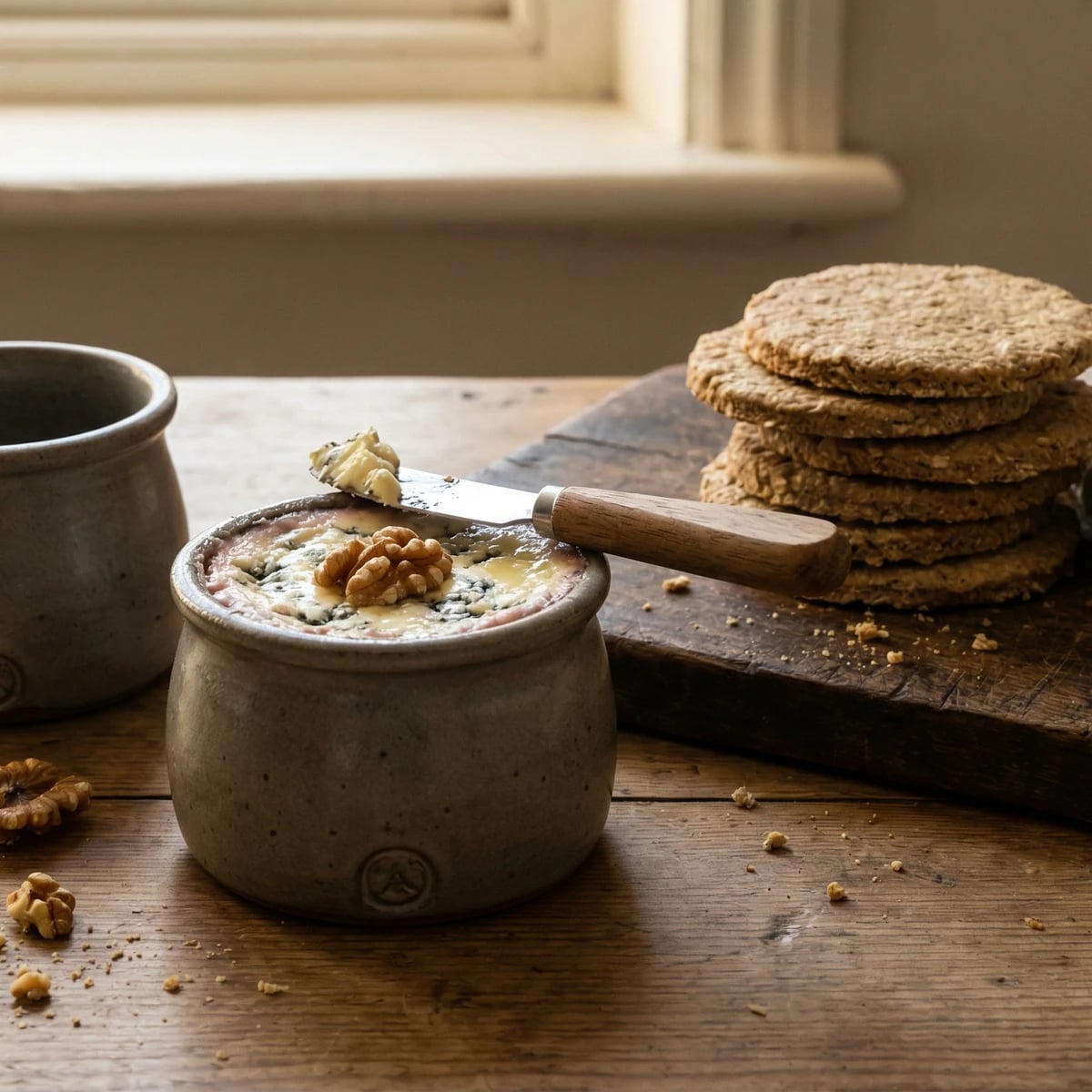
Stilton beaten with butter, port, and a breath of mace, packed into pots and pressed with walnuts. The kind of thing that appears on the table in December and never lasts the evening.
December. The kitchen smells of cloves and the windowsill is cold to the touch. There's a piece of Stilton on the counter that came home from the market last Saturday, still in its waxed paper, and it's been sitting there long enough that the room has taken on that particular earthy, blue-cheese warmth that tells you Christmas is close.
Potting cheese is an old habit, a farmhouse one, and it exists because somebody once had half a Stilton left after the board was cleared and the good sense to do something about it. You crumble it, beat it with butter and a splash of port, add a pinch of mace, press it into pots, and let it sit. That's it. The port rounds the sharpness. The butter makes it spreadable and rich. The mace, just a whisper, gives it a warmth you can't quite place but would miss if it weren't there.
I make this every year in the week before Christmas. Sometimes I use the end of a whole Stilton, sometimes just a good wedge bought for the purpose. It sits in the fridge until someone arrives, and then it comes out with oatcakes and a glass of something, and the evening starts the way the best evenings do: standing in the kitchen, spreading cheese onto something, talking about nothing important. I wrote it down in the notebook years ago. The entry just says: Stilton, port, walnuts. Tuesday. Enough.
A recipe is a conversation, not a contract. The port quantity is a suggestion. Taste it as you go. Some Stiltons are saltier, some milder, some so ripe they barely need the butter. Your kitchen, your rules.
Quantity
300g
at room temperature, crumbled
Quantity
100g
softened
Quantity
3 tablespoons
Quantity
pinch
Quantity
freshly ground, to taste
Quantity
50g
Quantity
to serve
| Ingredient | Quantity |
|---|---|
| Stiltonat room temperature, crumbled | 300g |
| unsalted buttersoftened | 100g |
| ruby port | 3 tablespoons |
| ground mace | pinch |
| black pepper | freshly ground, to taste |
| walnut halves | 50g |
| oatcakes or good bread (optional) | to serve |
Break the Stilton into rough pieces in a mixing bowl. It needs to be properly at room temperature, soft enough that it yields when you press a fork into it. Cold cheese won't blend. If it's been in the fridge, give it a good hour on the counter before you start. The blue veins should smell sharp and earthy, almost mushroomy. That's what you want.
Add the softened butter to the Stilton and mash them together with a fork. Work it until the two are mostly combined but not perfectly smooth. You want some texture, some streaks of blue still visible through the pale butter. Pour in the port and add the mace. Beat it through. The mixture will turn a soft, blushed colour and smell like Christmas in a way that nothing else quite does. Season with black pepper. No salt. The cheese has enough.
Spoon the mixture into small ramekins, pots, or a single dish, pressing it down firmly with the back of the spoon to push out any air pockets. Leave the surface slightly rough rather than smoothing it flat. This isn't something that benefits from neatness. Press the walnut halves gently into the top, spaced however you like.
Cover with cling film and refrigerate for at least two hours, or overnight if you're making it ahead. The flavours need time to settle into each other. Take the pots out of the fridge a good thirty minutes before you serve them. Cold Stilton tastes muted. At room temperature it opens up, the port comes forward, and the butter gives it that soft, spreadable quality that makes people reach for another oatcake without thinking about it.
1 serving (about 85g)
Culinary guides, cultural storytelling, and the editorial depth that makes cooking meaningful.
Discover Culinary Explorer
Chef Thomas
A board of good cheddar, thick ham, proper pickle, hard-boiled eggs, and crusty bread. Not cooking so much as assembling with conviction, and one of the finest lunches the English kitchen has ever produced.

Chef Thomas
Puff pastry twisted with anchovy and Parmesan, baked until golden and shattering and salty, the kind of thing you put out with drinks that disappears before anyone sits down.

Chef Thomas
Fresh oysters wrapped in crisp streaky bacon and grilled until the salt of the sea meets the smoke of the cure, served on hot buttered toast the way the Victorians intended, only simpler and at home.

Chef Thomas
Boiled eggs wrapped in a dark, spiced coat of sausage meat and crumbled black pudding, fried to a deep gold. The kind of thing you eat standing up in the kitchen, still warm, with mustard on your thumb.