
Chef Isabel
Ajo Carretero de Soria
Ajo carretero is Soriano, from the pine country of Soria: lamb cooked in a plain garlicky broth, then served the old way, meat first and bread-soaked soup after.
A cooking platform built around craft, culture, and the stories behind what we eat.
Created by
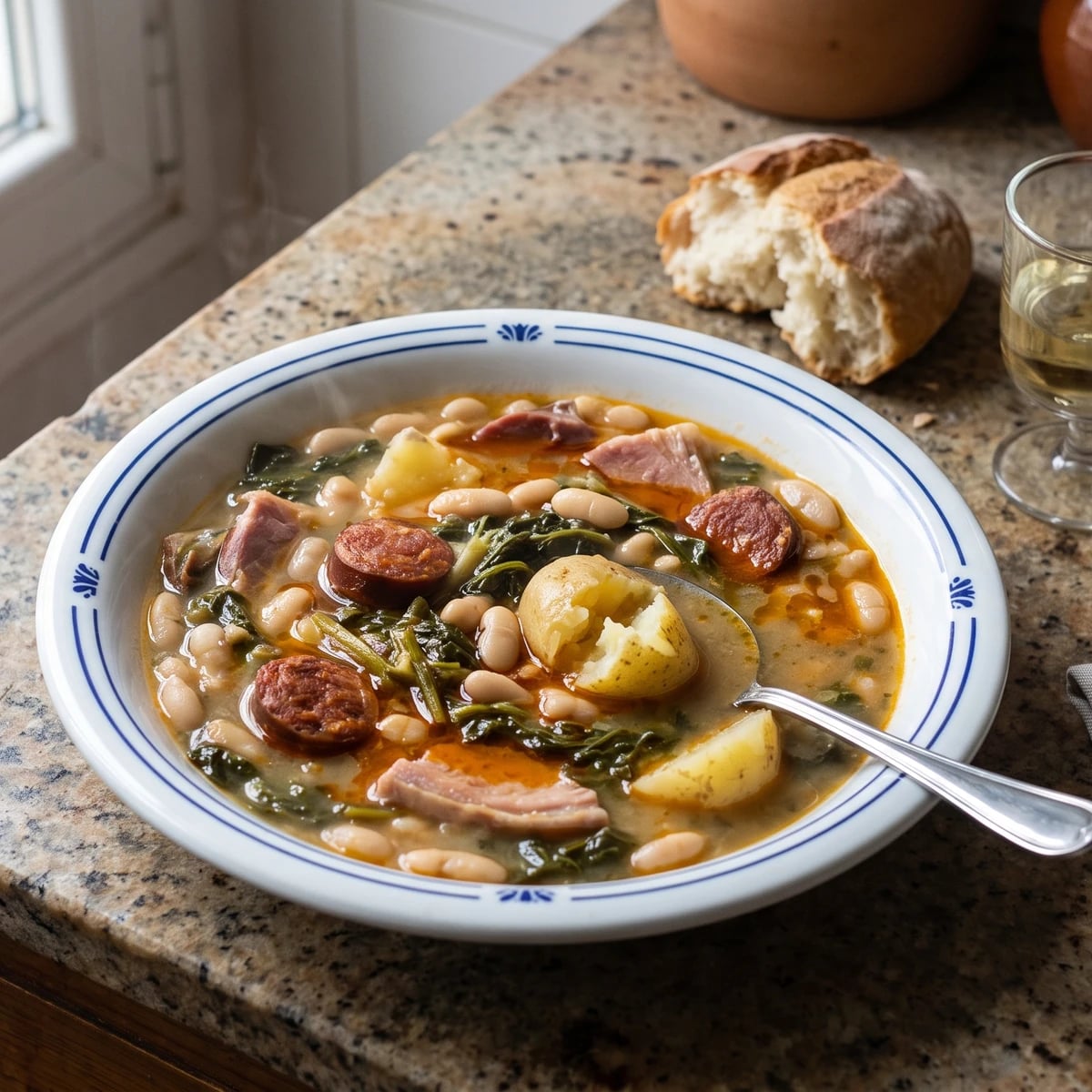
Pote Gallego is Galicia's winter spoon food: white beans, grelos, potato, and pork cooked low until the greens sweeten, the potatoes roughen the broth, and the pot becomes a full meal.
Pote Gallego belongs to Galicia, the wet green corner that knows what a winter pot is for. It is not just a light caldo gallego, though they are cousins. This one is fuller: white beans, grelos, potato, lacón, chorizo, and a little pork fat doing slow work in the pot until the broth is thick enough to feed you properly.
The method that decides it is the potato. Break it into chunks instead of cutting neat cubes, chascando la patata, so the torn edges release starch and give the broth body. Add it only when the beans are nearly tender. Too early and it falls apart before the beans are ready; too late and the pot tastes like broth with potatoes floating in it. There is no cleverness here. Just the right order.
If you are far from Galicia, use turnip greens first for the grelos, collards or kale next, and know they are a little less peppery. For lacón, use salt pork shoulder if you can find it, or a smoked ham hock if that is what the market gives you; the hock brings more smoke, so use a lighter hand with the chorizo. And use cured Spanish chorizo, not fresh Mexican chorizo. That is another thing entirely, good in its own place, wrong here.
Soak the beans. Desalt the pork if it needs it. Hold the pot at a quiet simmer and salt only at the end, because the pork may have already done half the seasoning for you. Siempre sale, si lo sigues. In the Margin beside this one I keep only a small warning: do not rush the greens. They must soften into the broth, not just visit it.
Pote Gallego comes from Galicia's cocina de cuchara, spoon food shaped by the kitchen garden, the pig larder, and the cold months when grelos, the tender tops of turnip plants, are at their best. The pot takes its strength from matanza meats such as lacón, chorizo, salted rib, tocino, and unto, the cured pork fat that gives old Galician broths their deep background flavor. Caldo gallego is the lighter daily broth; pote gallego is the more substantial meal, with beans and pork making the bowl heavy enough for field work and winter weather.
Quantity
350g
soaked overnight
Quantity
300g
soaked if very salty
Quantity
200g
left in one piece
Quantity
40g
Quantity
2, about 200g total
pricked with a knife tip
Quantity
500g
peeled and broken into rough chunks
Quantity
500g
washed well, tough stems removed, chopped
Quantity
2.25L, plus more as needed
Quantity
to taste
| Ingredient | Quantity |
|---|---|
| dried white beans, such as fabas, alubias blancas, cannellini, or navy beanssoaked overnight | 350g |
| lacón salado or salt-cured pork shouldersoaked if very salty | 300g |
| salted pork ribs or unsmoked pork bellyleft in one piece | 200g |
| unto gallego, salt pork fatback, or tocino | 40g |
| cured Spanish chorizospricked with a knife tip | 2, about 200g total |
| potatoespeeled and broken into rough chunks | 500g |
| grelos, turnip greens, collards, or kalewashed well, tough stems removed, chopped | 500g |
| cold water | 2.25L, plus more as needed |
| salt (optional) | to taste |
The night before, cover the beans with plenty of cold water and leave them to swell. If your lacón or salted pork is very salty, soak it separately in cold water for 12 to 24 hours, changing the water once. Pésalo, no lo adivines: the soak is not a decoration, it is what lets the beans cook evenly and the pork season the pot without making it harsh.
Drain the beans and the soaked pork. Put the beans, lacón, pork ribs or belly, unto or fatback, and 2.25L cold water into a large heavy pot. Bring it up slowly over medium heat, skim the grey foam that rises, then lower the heat until the surface barely trembles. Do not hard-boil it. A rough boil splits the beans and clouds the broth before it has had time to become silky.
Cook at that quiet simmer for about 1 hour 30 minutes, adding a small splash of water if the beans rise above the liquid. Add the pricked chorizos and keep simmering until the beans are almost tender, usually another 30 minutes. Test one bean between your fingers; it should give but still hold its shape. Salt nothing yet.
Break the potatoes into rough chunks by cutting halfway in and snapping the piece away with the knife. This is chascar, and those ragged edges thicken the broth better than clean cubes. Add the potatoes to the pot and simmer for 18 to 22 minutes, until they are tender at the edges but not collapsing completely.
Add the chopped grelos and press them down into the broth. If you are using mature collards or kale, blanch them for 2 minutes first, then drain, so they lose a little toughness before they meet the beans. Simmer 15 to 20 minutes more, until the greens are soft and dark green, the potatoes have roughened the broth, and the pot smells of pork, greens, and chorizo rather than of separate ingredients.
Lift out the lacón, pork, and chorizos. Slice the chorizo into thick coins and cut the pork into serving pieces, then return them to the pot. Taste the broth now, and only now, for salt. Rest off the heat for 15 minutes so the beans settle and the broth thickens. Serve deep bowls with greens, beans, potato, and a piece of each meat. Tal como se hace allí, plain and enough.
1 serving (about 610g)
Culinary guides, cultural storytelling, and the editorial depth that makes cooking meaningful.
Discover Culinary Explorer
Chef Isabel
Ajo carretero is Soriano, from the pine country of Soria: lamb cooked in a plain garlicky broth, then served the old way, meat first and bread-soaked soup after.

Chef Isabel
Caldo Gallego is Galicia in a bowl: bitter grelos, creamy white beans, potato, and a small knob of unto giving depth without turning the broth heavy.

Chef Isabel
Escaldón de gofio is Canary Island spoon food: toasted grain flour drinking hot caldo until it turns thick, savory, and steady enough to hold the spoon.

Chef Isabel
Gazpachos Manchegos are La Mancha's hot spoon dish: rabbit, partridge, and torn torta cenceña cooked in a hunter's broth until the bread swells, tender but never mushy.