
Chef Dean
Amish White Bread
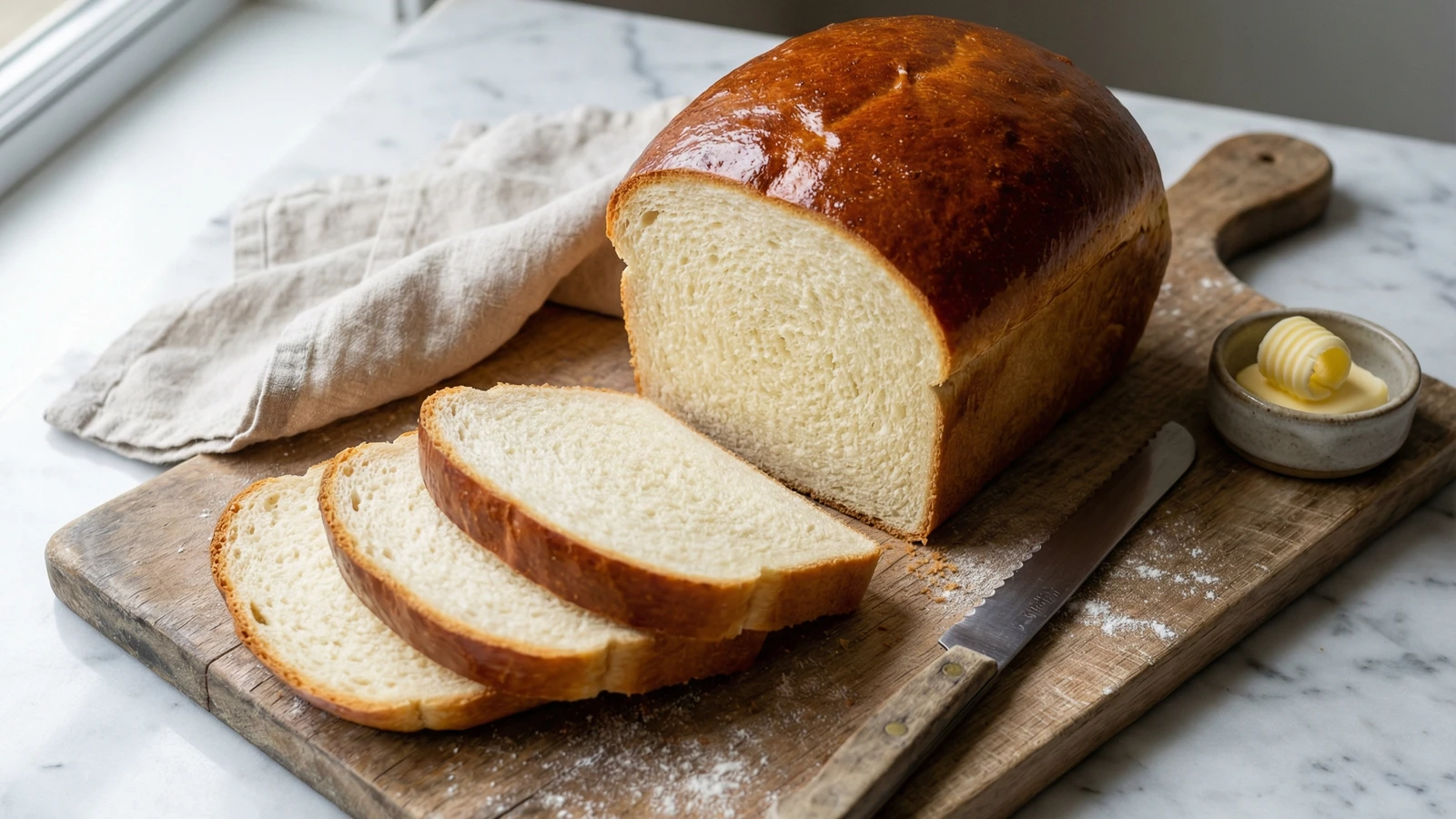
Pillowy soft sandwich bread from Pennsylvania Dutch kitchens, where generations of home bakers perfected the art of tender, slightly sweet loaves that slice clean and toast golden.
A cooking platform built around craft, culture, and the stories behind what we eat.
Created by
Pillowy soft sandwich bread enriched with mashed russet potatoes, delivering a tender golden crumb that stays fresh for days and transforms ordinary sandwiches into something worth remembering.
American farmwives figured this out generations ago: add leftover mashed potatoes to bread dough and you get a loaf so tender, so forgiving, it practically begs to be sliced thick for sandwiches. The starch in potatoes does something remarkable to bread. It holds moisture hostage, releasing it slowly over days instead of hours. Where a standard white loaf goes stale by Tuesday, potato bread stays soft through the week.
This isn't a bread that demands precision or punishes mistakes. The potatoes make the dough more tolerant, more yielding. Over-knead it slightly and the crumb still comes out fine. Under-proof by ten minutes and no one will notice. It's the bread I recommend to nervous first-time bakers, and the bread I still make when I want something honest for the kitchen table.
The technique matters, but it isn't complicated. Russet potatoes, riced or mashed until no lumps remain. Warm milk to wake the yeast. A generous hand with butter. What you'll pull from your oven is a loaf with a golden dome, a crumb so fine it tears in soft sheets, and a subtle richness that makes you wonder why anyone bothers with store-bought bread at all.
Quantity
1 medium (8 oz / 225g)
peeled and cubed
Quantity
3½ cups (440g)
Quantity
2¼ teaspoons (7g)
Quantity
2 tablespoons (25g)
Quantity
1½ teaspoons (9g)
Quantity
¾ cup (180ml)
warmed to 110°F
Quantity
4 tablespoons (56g)
softened
Quantity
1
at room temperature
Quantity
1
mixed with 1 tablespoon milk for egg wash
| Ingredient | Quantity |
|---|---|
| russet potatopeeled and cubed | 1 medium (8 oz / 225g) |
| bread flour | 3½ cups (440g) |
| instant yeast | 2¼ teaspoons (7g) |
| granulated sugar | 2 tablespoons (25g) |
| fine sea salt | 1½ teaspoons (9g) |
| whole milkwarmed to 110°F | ¾ cup (180ml) |
| unsalted buttersoftened | 4 tablespoons (56g) |
| large eggat room temperature | 1 |
| egg yolkmixed with 1 tablespoon milk for egg wash | 1 |
Place the cubed potato in a small saucepan and cover with cold water by two inches. Bring to a boil over high heat, then reduce to a simmer and cook until completely tender, about 15 minutes. A fork should slide through with zero resistance. Drain thoroughly and let the potato steam dry in the colander for a full minute. Pass through a ricer or mash until absolutely smooth. You need ¾ cup (180g) of mashed potato. Let it cool to lukewarm before proceeding.
In a large mixing bowl, whisk together the warm milk, mashed potato, softened butter, egg, and sugar until the mixture is smooth and the butter is mostly incorporated. Small flecks of butter are fine. The mixture should feel pleasantly warm against your wrist, around 100-110°F. If it's too hot, the yeast will die. Too cold and the yeast will sleep.
Add the flour, yeast, and salt to the bowl. Stir with a wooden spoon or dough whisk until a shaggy mass forms and no dry flour remains. The dough will look rough and sticky. This is correct. Let it rest for 5 minutes. This brief rest, called autolyse, allows the flour to hydrate fully and makes kneading far easier.
Turn the dough onto a lightly floured surface. Knead with the heel of your hand, pushing forward, folding back, rotating a quarter turn. Repeat for 8-10 minutes. The dough will transform from sticky and ragged to smooth and supple. It should spring back when poked and feel tacky but not stick aggressively to your palm. If using a stand mixer, knead with the dough hook on medium-low for 6-7 minutes.
Shape the dough into a ball and place in a lightly greased bowl, turning once to coat. Cover tightly with plastic wrap or a damp kitchen towel. Set in a warm spot (75-80°F is ideal) until doubled in size, about 1 to 1½ hours. The dough is ready when you press two fingers into the surface and the indentation holds rather than springs back.
Grease a 9x5-inch loaf pan. Turn the risen dough onto a lightly floured surface and press gently to deflate. Pat into a rough rectangle about 8 inches wide and 12 inches long. Starting from the short end, roll the dough into a tight cylinder, pinching the seam closed as you go. Place seam-side down in the prepared pan. The dough should fill about two-thirds of the pan.
Cover the pan loosely with greased plastic wrap. Let rise in a warm spot until the dough crowns about one inch above the rim of the pan, 45 minutes to 1 hour. The loaf should look puffy and hold an impression when gently touched. Preheat your oven to 375°F during the last 20 minutes of rising.
Gently brush the top of the risen loaf with the egg wash, covering the entire surface in one thin, even layer. This creates the golden shine. Place the pan on the center rack of your preheated oven. Bake for 30-35 minutes, rotating the pan halfway through. The loaf is done when it's deeply golden brown on top and registers 190°F on an instant-read thermometer inserted into the center.
Remove from oven and let rest in the pan for 10 minutes. Run a butter knife around the edges to release, then turn the loaf out onto a wire rack. Let it cool completely, at least one hour, before slicing. I know this requires patience. But cutting into warm bread compresses the crumb and releases moisture that should stay locked inside. Wait. It's worth it.
1 slice (about 55g)
Culinary guides, cultural storytelling, and the editorial depth that makes cooking meaningful.
Discover Culinary ExplorerChef Dean
Pillowy soft sandwich bread from Pennsylvania Dutch kitchens, where generations of home bakers perfected the art of tender, slightly sweet loaves that slice clean and toast golden.

Chef Dean
Sky-high muffins bursting with juicy blueberries beneath a shatteringly crisp butter streusel, baked golden brown with that coveted bakery dome your family will wake up early for.

Chef Dean
Pillowy enriched dough wrapped around jammy wild blueberries and fragrant lemon zest, then crowned with a tangy cream cheese glaze that pools into every golden crevice. Summer morning baking at its finest.

Chef Dean
Golden, buttery buns with a tender crumb that cradles your burger without surrendering to the juices. This is the bun that makes a backyard cookout feel like an occasion worth remembering.