
Chef Thomas
A Proper Chicken Broth
Sunday's roast chicken, simmered slowly on Monday with carrots, celery, leeks, and thyme into a bowl of clear, golden broth that smells like the kitchen is paying attention.
A cooking platform built around craft, culture, and the stories behind what we eat.
Created by Chef Thomas
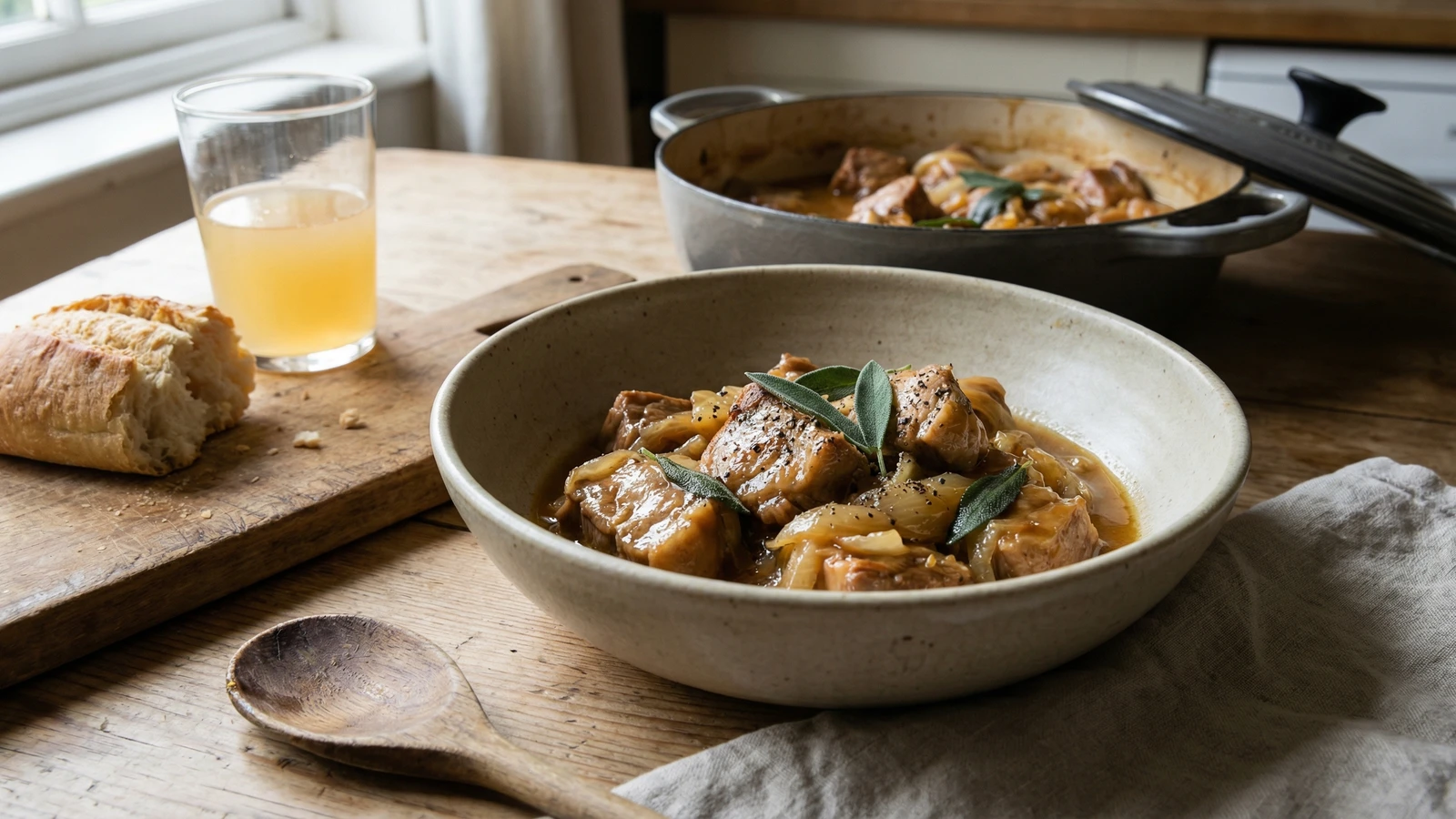
Pork shoulder braised low and slow in dry farmhouse cider with sage and onions, the kind of patient, golden casserole that fills the house and makes an autumn evening feel like exactly where you should be.
The kitchen smells different in October. Richer. Deeper. Whatever is on the hob takes longer and fills the house more completely, and you stop opening windows and start closing them. This is a casserole for that shift. Pork shoulder, dry cider, sage, onions, cooked slowly until the meat gives way and the sauce turns golden and thick and smells like something you want to sit down to with a glass of whatever cider is left in the bottle.
This is West Country orchard cooking. The pork and the apples come from the same landscape, the same autumn, and they belong together in the pot the way certain things just do. A good dry cider, the proper farmhouse sort that smells of barns and windfall fruit, does something to pork shoulder that wine never quite manages. It softens it, sweetens it, leaves behind a sauce that tastes like the season itself. You don't need to explain why it works. It just does.
I make this when the new cider arrives at the market, usually mid-October, and I wrote it in the notebook years ago: "Pork. Cider. Sage. The evening got dark early and nobody minded." It's better the next day. Most good things are. A recipe is a conversation, not a contract, and this one is forgiving enough to let you wander. More onions, less mustard, a handful of thyme alongside the sage. Your kitchen, your rules.
Quantity
1kg, bone out
cut into large chunks
Quantity
2 tablespoons
Quantity
30g
Quantity
1 tablespoon
Quantity
2 large
halved and thickly sliced
Quantity
3 cloves
sliced
Quantity
8-10
Quantity
2
Quantity
1 tablespoon
Quantity
500ml
Quantity
250ml
Quantity
1 (Cox or Braeburn)
Quantity
to taste
| Ingredient | Quantity |
|---|---|
| pork shouldercut into large chunks | 1kg, bone out |
| plain flour | 2 tablespoons |
| unsalted butter | 30g |
| olive oil | 1 tablespoon |
| onionshalved and thickly sliced | 2 large |
| garlicsliced | 3 cloves |
| sage leaves | 8-10 |
| bay leaves | 2 |
| English mustard | 1 tablespoon |
| dry cider | 500ml |
| chicken stock | 250ml |
| eating apple (optional) | 1 (Cox or Braeburn) |
| fine sea salt and black pepper | to taste |
Set the oven to 160C/140C fan. Season the pork generously with salt and pepper, then dust the pieces lightly in the flour, shaking off the excess. Heat the butter and oil in a heavy casserole dish over a high heat until the butter foams and starts to quiet down. Brown the pork in batches, giving each piece a few minutes on each side until it has taken on a proper, deep colour. Not pale gold. Chestnut. This is where the flavour of the whole dish begins. Set the meat aside on a plate as you go.
Turn the heat down to medium. Add the sliced onions to the same pan with all its sticky, caramelised residue. Stir them through the butter and the bits of flour and pork that cling to the base. Cook for eight to ten minutes, stirring now and then, until the onions have gone soft and translucent and started to pick up some golden colour from the pan. Add the garlic and the sage leaves and stir for another minute or so, until the kitchen smells green and savoury and warm. Trust your nose. It knows before you do.
Pour in the cider. It will hiss and bubble and lift all those dark, caramelised bits from the bottom of the pan. This is the foundation of the sauce, so scrape the base well with a wooden spoon. Let it bubble for a couple of minutes. Add the stock, the mustard, and the bay leaves. Stir the mustard through until it dissolves into the liquid. Return the pork and any juices that have collected on the plate. The liquid should come about two-thirds of the way up the meat. If it doesn't, add a splash more stock or cider.
Bring everything to a gentle simmer on the hob. Put the lid on, leaving it very slightly ajar so a thin ribbon of steam can escape, and transfer the casserole to the oven. Let it cook for two hours, checking once at the halfway mark. The liquid should be barely trembling, not bubbling fiercely. If it's too lively, turn the oven down. You'll know it's ready when the pork yields to a wooden spoon with no resistance at all, and the sauce has thickened to something golden and glossy that coats the back of that spoon.
If you're using the apple, core it and cut it into thick wedges. Tuck them gently into the casserole for the last thirty minutes of cooking. They should soften but hold their shape, sweet and savoury at once. When the casserole is done, taste the sauce. Season again. It will almost certainly need it. Remove the bay leaves. Serve straight from the pot, spooned generously over mashed potato or alongside crusty bread that can soak up what's left on the plate. There are few better feelings than putting this on the table on a cold evening and watching someone reach for a second helping without being asked.
1 serving (about 310g)
Culinary guides, cultural storytelling, and the editorial depth that makes cooking meaningful.
Discover Culinary ExplorerChef Thomas
Sunday's roast chicken, simmered slowly on Monday with carrots, celery, leeks, and thyme into a bowl of clear, golden broth that smells like the kitchen is paying attention.
Chef Thomas
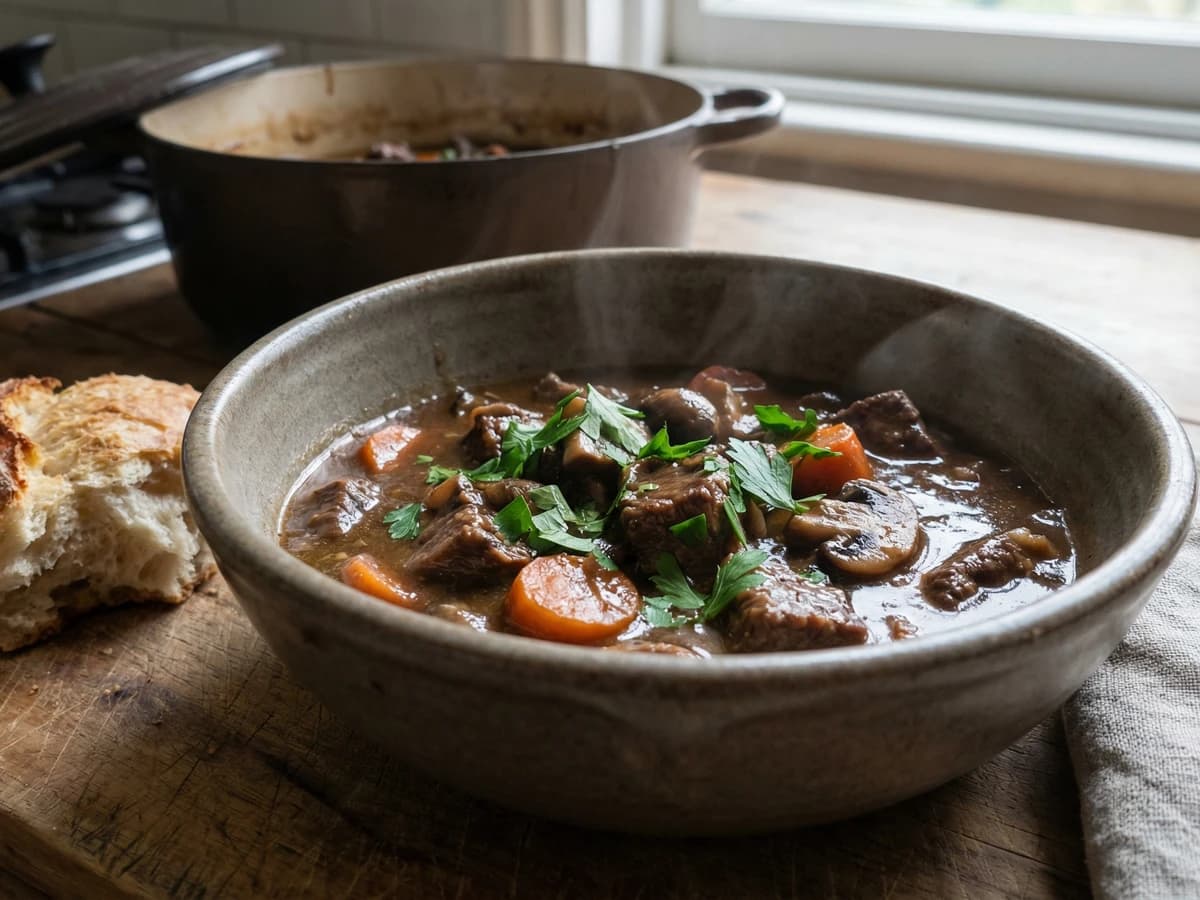
Braising steak surrendered to dark ale and slow time, with onions and mushrooms, until the gravy turns thick and malty and the kitchen smells like the kind of evening you want to stay in for.

Chef Thomas
Beef shin and pearl barley simmered low and slow with root vegetables until the meat gives way and the broth thickens into something between a soup and a stew, the kind of bowl that steadies you on a cold night.
Chef Thomas
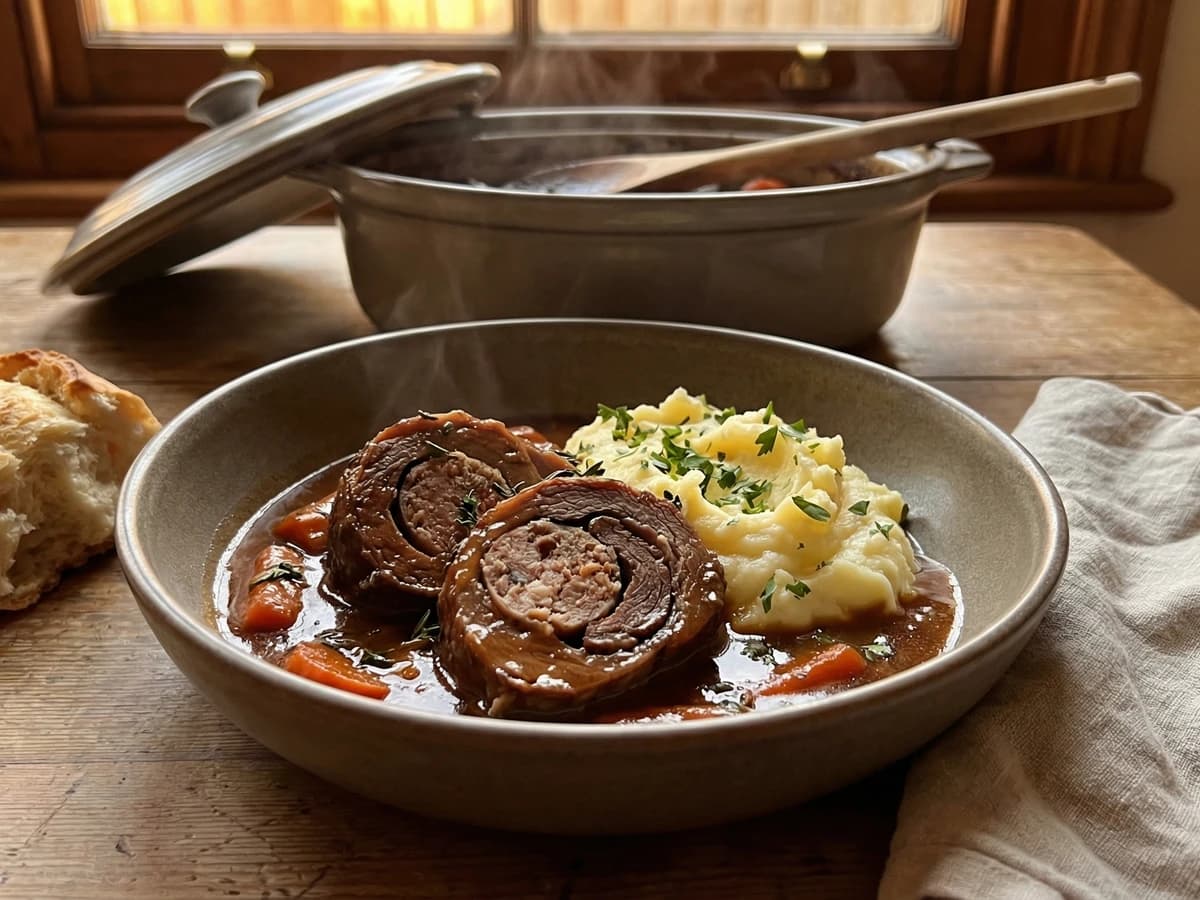
Thin slices of beef rolled around a stuffing of sausage meat and herbs, browned in butter, and braised for two patient hours until the meat yields and the gravy turns dark and rich and worth mopping up with bread.