
Chef Fai
Dry Egg Noodles (Ba Mee Haeng)
The four pillars live at the bottom of the bowl before the noodles ever touch it: nam pla for salt, sugar for sweet, vinegar for sour, chili for heat. Every noodle cart in Bangkok runs on this principle.
A cooking platform built around craft, culture, and the stories behind what we eat.
Created by
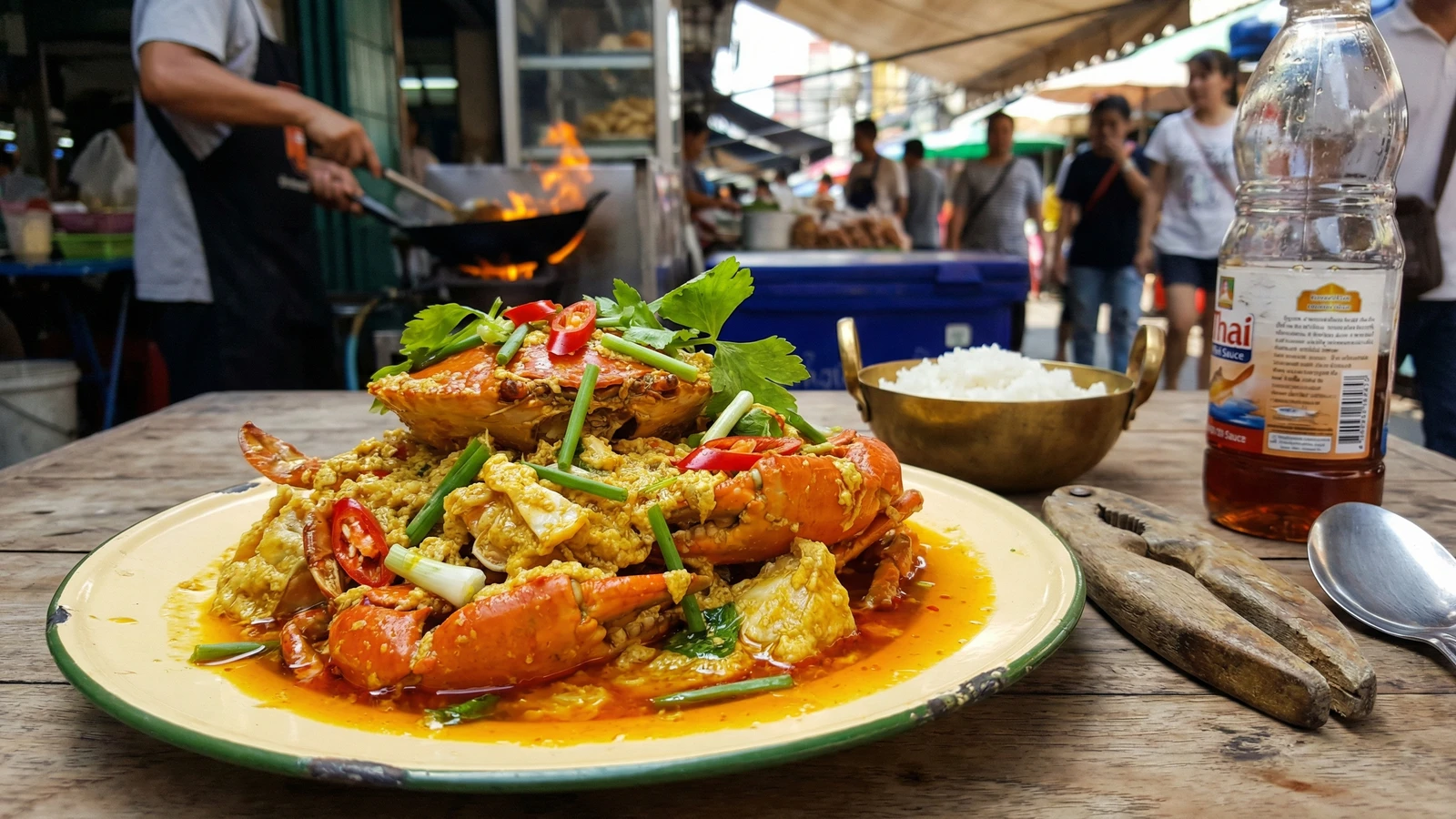
Thai-Chinese wok technique, Southern crab, and curry powder that isn't Thai at all, yet the four pillars make this dish speak Thai from the first bite. The system absorbs everything.
Curry powder is not Thai. Let's get that out of the way. Pong kari is an imported spice blend, Chinese and Indian in origin, that arrived in Thailand through trade centuries ago. And yet poo pad pong kari is one of the most beloved dishes in the country. How? Because the system absorbed it.
Ajarn always said: Thai cuisine isn't defined by its ingredients. It's defined by its principles. Fish sauce for salt. Palm sugar for sweet. Chili for heat. And the way a Thai cook handles a wok. You can throw curry powder into that system and the dish comes out Thai because the governing rules are Thai. The nam pla seasons it. The prik chi fa gives it heat. The egg binds it. The wok gives it life.
Down south, this dish hits different. The crab is hours old, pulled from traps in the Gulf or the Andaman that morning. In Krabi, in Nakhon Si Thammarat, in the fishing villages along the coast, the vendors don't use frozen crab or crab sticks. They use poo ma (blue swimmer crab) or poo thale (sea crab) with shells still wet from the ocean. The meat is sweet, briny, and so fresh it barely needs cooking. That's the Southern advantage. When your protein is this good, the sauce just needs to support it, not mask it.
The egg is the technique people mess up. You're not making scrambled eggs with crab. You're creating a sauce. The beaten egg goes into the wok liquid and you stir it fast so it forms soft, silky curds that coat the crab pieces and thicken the sauce into something rich and clinging. Too much heat and you get rubber. Too slow and you get a flat omelet. The window is narrow. That's wok cooking. Everything happens in the window.
Poo pad pong kari traces its lineage to Thai-Chinese cooking, specifically the Teochew and Cantonese communities of Bangkok's Yaowarat district, where curry powder arrived via Indian and Malay spice trade routes. The dish rose to national prominence in the 1980s through seafood restaurants on the Chao Phraya River, most famously Somboon Seafood. In Southern Thailand's coastal provinces, the dish predates the Bangkok restaurant trend because curry powder was already a pantry staple in the Muslim south, where turmeric, cumin, and coriander formed the backbone of local cooking long before pong kari was packaged and sold in Central Thai markets.
Quantity
1 whole, about 500g (or 2 smaller)
cleaned, top shell removed, chopped into pieces with claws cracked
Quantity
3 tablespoons
Quantity
5 cloves
roughly chopped
Quantity
1 tablespoon
Quantity
3 large
beaten
Quantity
100ml
Quantity
2 tablespoons
Quantity
1 tablespoon
Quantity
1 teaspoon
Quantity
1 teaspoon
Quantity
3 stalks
cut into 2-inch pieces with leaves
Quantity
1
cut into wedges
Quantity
3
bruised
Quantity
5
sliced diagonally
Quantity
2
cut into 2-inch pieces
Quantity
1 tablespoon
| Ingredient | Quantity |
|---|---|
| blue swimmer crab (poo ma)cleaned, top shell removed, chopped into pieces with claws cracked | 1 whole, about 500g (or 2 smaller) |
| vegetable oil | 3 tablespoons |
| garlicroughly chopped | 5 cloves |
| curry powder (pong kari) | 1 tablespoon |
| eggsbeaten | 3 large |
| evaporated milk | 100ml |
| oyster sauce | 2 tablespoons |
| fish sauce (nam pla) | 1 tablespoon |
| palm sugar (nam tan pip) | 1 teaspoon |
| white pepper | 1 teaspoon |
| celery (kheun chai)cut into 2-inch pieces with leaves | 3 stalks |
| yellow onioncut into wedges | 1 |
| bird's eye chilies (prik khi nu)bruised | 3 |
| long red chilies (prik chi fa)sliced diagonally | 5 |
| spring onions (ton hom)cut into 2-inch pieces | 2 |
| chili oil (nam man prik) | 1 tablespoon |
Pull the top shell off the crab and remove the gills (the grey, feathery bits on either side). Rinse under cold water. Chop the body into quarters with a heavy cleaver. Crack the claws with the back of the cleaver so the sauce can penetrate. If there's tomalley (the orange-yellow roe and fat in the shell), save it. That's concentrated crab flavor and it goes into the wok later. Southern crab, poo ma from the Gulf or the Andaman, should smell like the ocean. Clean and briny. If it smells like ammonia, it's not fresh enough. Walk away.
In a bowl, whisk the beaten eggs with the evaporated milk, oyster sauce, fish sauce, palm sugar, white pepper, and curry powder until smooth. This is your sauce. The egg and milk create the silky, golden coating that defines poo pad pong kari. The curry powder should turn the mixture a deep yellow, almost turmeric gold. Set it next to the stove. Once the wok is hot, everything moves fast.
Heat the wok over the highest flame you have. Add the oil. When it shimmers, add the garlic and bruised bird's eye chilies. Two seconds. The garlic should sizzle on contact. Immediately add the crab pieces. Stir-fry hard for 2 to 3 minutes, pressing the crab against the wok surface. The shells will turn orange-red and the meat will start to firm. If you saved the tomalley, add it now and let it melt into the oil. That golden fat is flavor. Add the onion wedges and toss for another 30 seconds until they just start to soften at the edges.
Here's where the dish is made or ruined. Reduce the heat to medium. Pour the egg-milk-curry mixture into the wok all at once. Stir immediately. Not gently. With purpose. You're folding the egg around the crab, creating soft, silky curds that coat every piece. The egg should set in ribbons, not chunks. If you see large scrambled egg pieces forming, you're stirring too slowly or the heat is too high. The texture you want is like a loose, golden custard clinging to the crab. This takes 60 to 90 seconds. No more.
Add the celery pieces, spring onion, and sliced prik chi fa. Toss twice. The celery should stay crisp. It's there for crunch against the soft egg and sweet crab. The spring onion wilts in the residual heat. Drizzle the chili oil (nam man prik) over the top and give one final toss. Plate immediately onto a wide dish so the sauce spreads and the crab pieces are visible. Serve with steamed jasmine rice. Eat with your hands. Crack the claws, suck the sauce from the shells, use the rice to soak up the golden egg. That's how the Southern coastal towns eat this. No fancy plating. Just fire, crab, and the sea.
1 serving (about 280g)
Culinary guides, cultural storytelling, and the editorial depth that makes cooking meaningful.
Discover Culinary ExplorerChef Fai
The four pillars live at the bottom of the bowl before the noodles ever touch it: nam pla for salt, sugar for sweet, vinegar for sour, chili for heat. Every noodle cart in Bangkok runs on this principle.

Chef Fai
The kreung tam fried in cracked coconut cream until the oil bleeds red. That's the technique. Concentrated, semi-dry, spooned thick over crispy fish. This is what happens when the four pillars meet restraint.

Chef Fai
Isan foraging in a bowl: wild taro stems stripped of their sting, simmered in padaek broth with a pounded chili paste and yanang leaf extract. The land feeds you if you know the rules.

Chef Fai
Lanna's kreung tam breaks from Central Thai rules: ginger over galangal, cumin and coriander from Burmese spice routes, tamarind for sour instead of lime. The North has its own system, and this curry is its crown.