
Chef Fai
Dry Egg Noodles (Ba Mee Haeng)
The four pillars live at the bottom of the bowl before the noodles ever touch it: nam pla for salt, sugar for sweet, vinegar for sour, chili for heat. Every noodle cart in Bangkok runs on this principle.
A cooking platform built around craft, culture, and the stories behind what we eat.
Created by
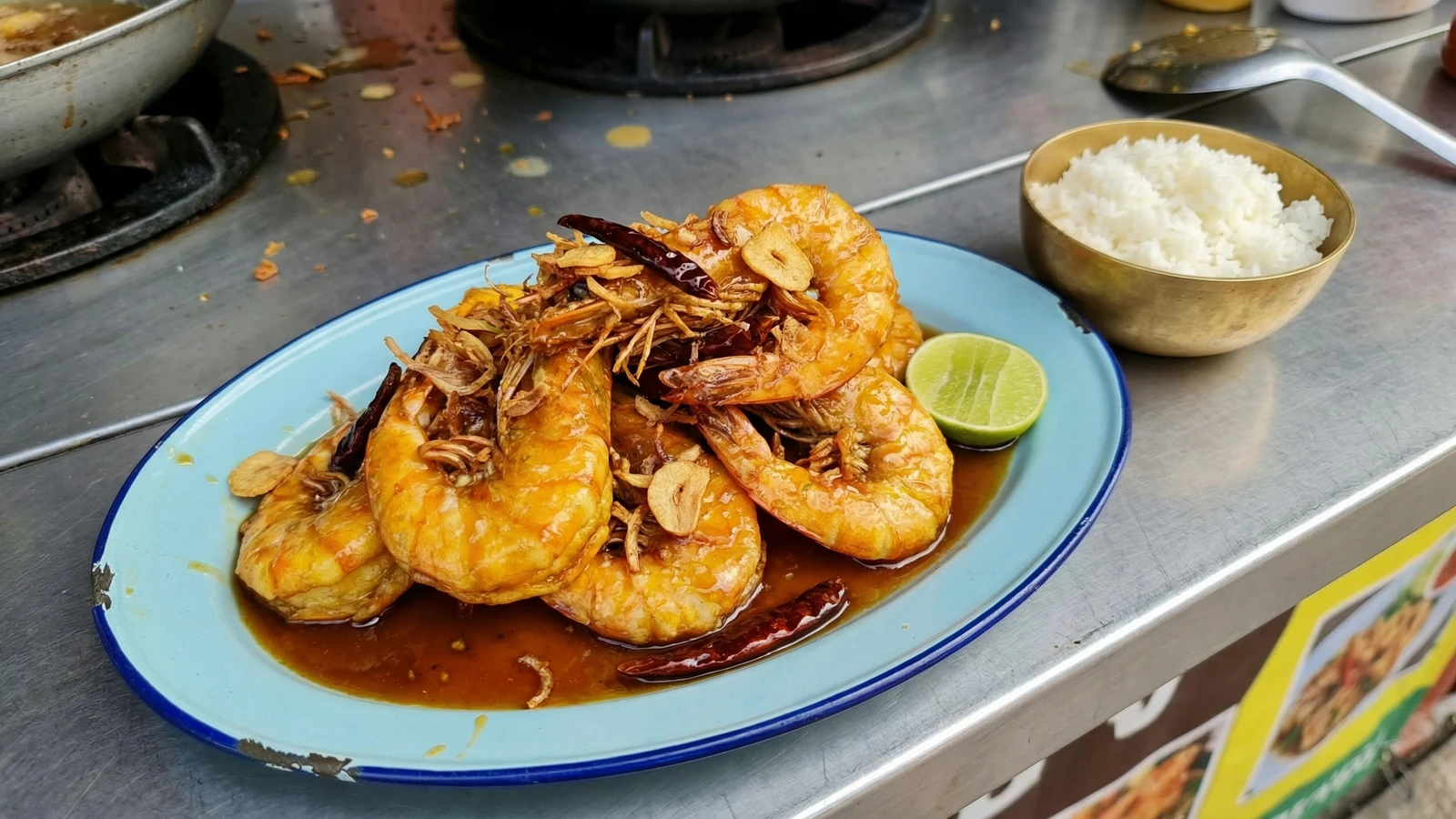
Tamarind is the sour pillar that lime doesn't own. Makham sauce clings to crispy battered prawns, balancing sour, sweet, and salty in a glaze that proves Thai food is a system, not a menu.
Tamarind owns the sour pillar in this dish. Not lime. Not vinegar. Makham.
Ajarn always said the four pillars are not four ingredients. They're four functions. Fish sauce provides salinity. Palm sugar provides sweetness. A tropical acid provides sourness. Chili provides heat. Most people hear "sour" and think lime. But lime is only one expression of that pillar. Tamarind (makham piak) is another, and in Southern Thai cooking, where the peninsula meets the sea, tamarind shows up in glazes, dipping sauces, and braises because it does something lime can't: it clings. Lime juice runs off a fried prawn. Tamarind sauce grips it.
That's the science. Tamarind pulp has natural pectins and sugars that thicken when cooked down with palm sugar and fish sauce. The result is a glaze, not a dressing. It coats every ridge of the battered shell, every crack in the crust. When you bite through, you get crunch first, then that sour-sweet-salty wave, then the prawn underneath. Three textures, four pillars, one bite.
Down on the Andaman coast, in the markets of Krabi and Nakhon Si Thammarat, you'll see vendors pulling prawns from styrofoam boxes packed with ice that morning. The batter gets a heavy dose of kamin (turmeric), which stains everything golden and adds an earthy bitterness that cuts the sweetness of the sauce. That turmeric is a Southern marker. Central Thai batters don't use it. Southern Thai batters can't live without it. The rhizome shows up in marinades, batters, and curry pastes across the peninsula, coloring everything it touches.
This is a dish for sharing. A big plate in the middle of the table, prawns piled high, sauce pooling underneath, fried shallots and dried chilies scattered on top. You grab one with your fingers, rice in the other hand. That's the design. Fai Thai, baby.
Goong tod makham is a Central and Southern Thai restaurant and banquet dish that rose to prominence in the 1980s and 1990s alongside Thailand's seafood tourism boom. Tamarind (Tamarindus indica) has been cultivated in Thailand for centuries, likely arriving via trade routes from East Africa and India, and is a defining souring agent in Thai, Malay, and Indonesian cuisines. In Southern Thailand, the dish draws on the Andaman and Gulf coast's fresh prawn supply, and the turmeric-stained batter reflects the region's deep-rooted use of kamin (turmeric) as the dominant rhizome, a preference shared with Malay and South Indian culinary traditions.
Quantity
500g (about 12-16)
shell on, deveined through the back
Quantity
1 teaspoon
Quantity
1/2 teaspoon
Quantity
1/2 teaspoon
Quantity
100g
Quantity
50g
Quantity
150ml
for batter
Quantity
for deep-frying
Quantity
3 tablespoons
seedless
Quantity
3 tablespoons
chopped
Quantity
2 tablespoons
Quantity
4 cloves
finely sliced
Quantity
3
finely sliced
Quantity
5
Quantity
100ml
for sauce
Quantity
for finishing
Quantity
for finishing
| Ingredient | Quantity |
|---|---|
| large head-on prawnsshell on, deveined through the back | 500g (about 12-16) |
| ground turmeric (kamin) | 1 teaspoon |
| salt | 1/2 teaspoon |
| white pepper | 1/2 teaspoon |
| rice flour (paeng khao jao) | 100g |
| tapioca starch (paeng man) | 50g |
| ice-cold waterfor batter | 150ml |
| vegetable oil | for deep-frying |
| tamarind paste (makham piak)seedless | 3 tablespoons |
| palm sugar (nam tan pip)chopped | 3 tablespoons |
| fish sauce (nam pla) | 2 tablespoons |
| garlicfinely sliced | 4 cloves |
| shallots (hom daeng)finely sliced | 3 |
| dried bird's eye chilies (prik khi nu haeng) | 5 |
| waterfor sauce | 100ml |
| fried shallots (hom jiaw) (optional) | for finishing |
| fried garlic (kratiam jiaw) (optional) | for finishing |
Leave the shells on. This is important. The shell protects the prawn during frying and gives the crust something to grip. Devein through the back with a small knife or skewer, then butterfly them slightly so they lie flat. Toss the prawns with a pinch of salt, white pepper, and half the ground turmeric (kamin). The turmeric stains your hands. Good. That golden color is the Southern marker. Wear it.
In a bowl, whisk the rice flour, tapioca starch, remaining turmeric, and a pinch of salt. Pour in the ice-cold water gradually, stirring until you get a batter the consistency of heavy cream. Not thick. Not thin. It should coat the back of a spoon and drip off slowly. The tapioca starch is the key to crunch. Rice flour alone gives you a coating that goes soft in minutes. Tapioca starch gives you shatter. The combination gives you both structure and crispness that holds up under the sauce.
In a small saucepan over medium heat, add a tablespoon of oil. Fry the sliced garlic and shallots until they start to turn golden, about two minutes. Don't rush this. Burnt garlic tastes bitter and will ruin the sauce. Add the dried chilies and let them puff for ten seconds. Now the tamarind paste, palm sugar, fish sauce, and water. Stir. Bring it to a simmer and let it cook down for five to seven minutes, stirring occasionally, until the sauce thickens enough to coat the back of a spoon. Taste it. The balance should be: sour first, sweet second, salty underneath. If the tamarind is too aggressive, add a pinch more palm sugar. If it's too sweet, a splash more fish sauce pulls it back. This is the four pillars working in a single sauce.
Fill a wok or deep pan with oil to a depth of at least three inches. Heat to 180°C (350°F). If you don't have a thermometer, drop a tiny bit of batter into the oil. It should sink briefly, then rise and sizzle immediately. That's your signal. Dip each prawn into the batter, let the excess drip off for a second, and lower it into the oil. Don't crowd the wok. Four or five prawns at a time, max. Crowding drops the oil temperature and you get soggy, greasy prawns instead of crisp ones. Fry for three to four minutes, turning once, until the crust is golden and the turmeric stains the oil amber. Lift them out with a spider strainer and drain on a wire rack, not paper towels. A rack lets air circulate underneath so the bottom stays crispy.
Reheat the makham sauce if it's cooled down. It should be warm and fluid enough to coat. You have two options. The restaurant way: toss the fried prawns directly into the sauce in the pan, turning them quickly so each one is coated, then plate immediately. The market way: pile the prawns on a serving plate and pour the sauce over the top, letting it pool around the base. Both work. Both are correct. The restaurant toss gives you more even coating. The market pour gives you a sauce pool for dipping rice into. Either way, finish with a handful of fried shallots (hom jiaw) and fried garlic (kratiam jiaw) scattered over the top. These aren't decoration. The fried alliums add a toasty crunch that contrasts with the sticky glaze. Serve immediately with steamed jasmine rice. The sauce will soften the crust over time, so this dish waits for no one.
1 serving (about 220g)
Culinary guides, cultural storytelling, and the editorial depth that makes cooking meaningful.
Discover Culinary ExplorerChef Fai
The four pillars live at the bottom of the bowl before the noodles ever touch it: nam pla for salt, sugar for sweet, vinegar for sour, chili for heat. Every noodle cart in Bangkok runs on this principle.

Chef Fai
The kreung tam fried in cracked coconut cream until the oil bleeds red. That's the technique. Concentrated, semi-dry, spooned thick over crispy fish. This is what happens when the four pillars meet restraint.

Chef Fai
Isan foraging in a bowl: wild taro stems stripped of their sting, simmered in padaek broth with a pounded chili paste and yanang leaf extract. The land feeds you if you know the rules.

Chef Fai
Lanna's kreung tam breaks from Central Thai rules: ginger over galangal, cumin and coriander from Burmese spice routes, tamarind for sour instead of lime. The North has its own system, and this curry is its crown.