
Chef Freja
Aebleflaesk
The Fyn autumn supper where thick pork belly renders slowly into its own fat, then meets apples and onions that cook down into a deep amber tangle. Sweet, salt, and the oldest pairing in the Danish larder.
A cooking platform built around craft, culture, and the stories behind what we eat.
Created by Chef Freja
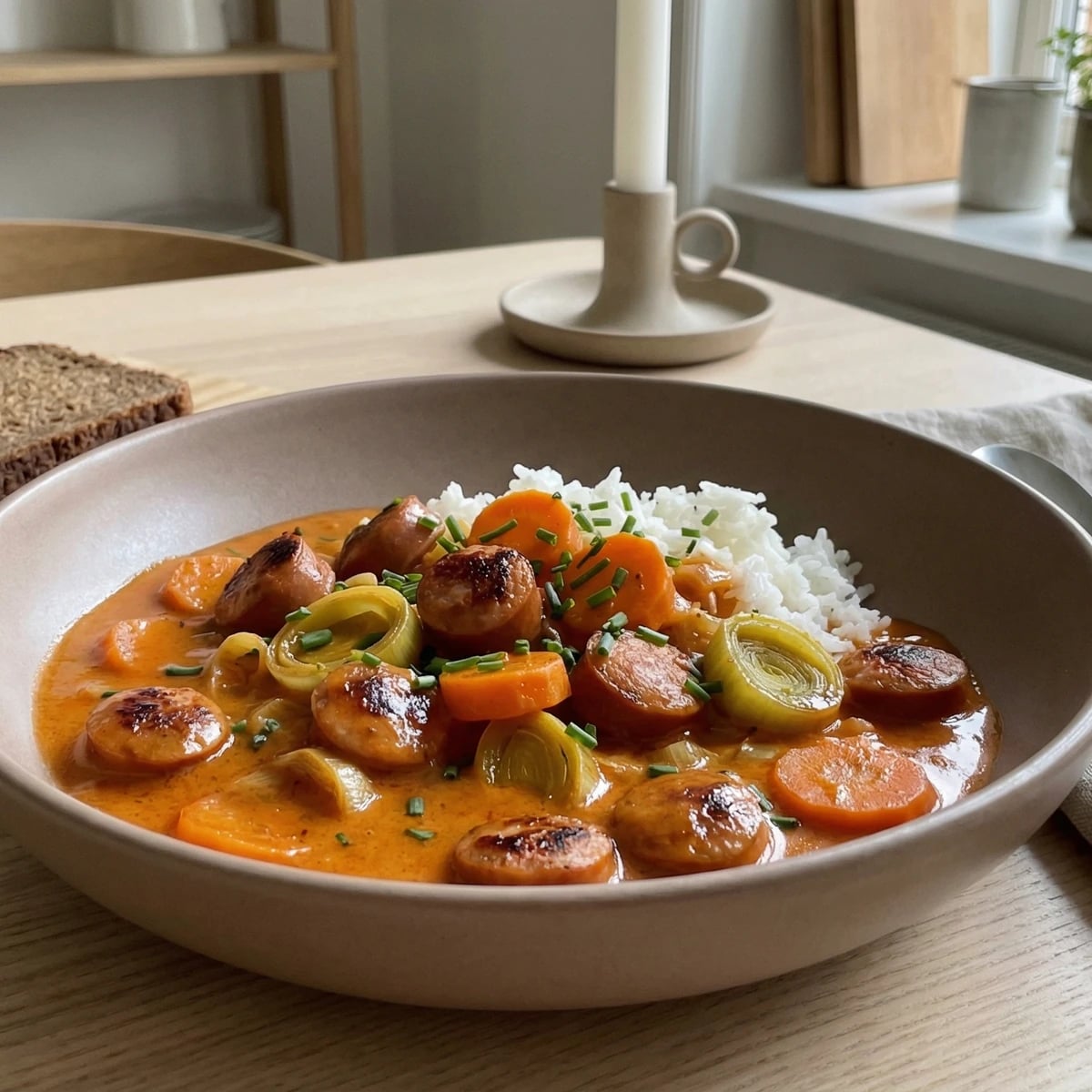
The Danish weeknight stew every child knows by heart. Sliced frankfurters and soft vegetables in a creamy tomato sauce, thirty minutes from pan to table, served with rice or rugbrod and a scatter of chives.
Every Danish child has a version of polsegryde in their memory. A Tuesday in October, rain on the window, the smell of tomato and butter coming from the kitchen, dinner on the table before you've finished your homework. It is not a special-occasion dish. It is the opposite. It is what you cook when the week is ordinary and you want the people you love to eat something warm and familiar.
Polsegryde is built from things most Danish kitchens always have: good pølser, leeks, carrots, a tin of tomatoes, a splash of cream. The sausages are browned first, then the vegetables soften in the same pan, then tomato and stock build the sauce, and cream pulls it all together at the end. Thirty minutes. No tricks.
What matters most is the pølser themselves. This dish lives or dies by them, so buy the best you can find. A proper Danish-style frankfurter with real smoke and a natural casing. Not the pale rubbery kind. Pay attention to two small moments: the browning of the sausages, which gives the stew its depth, and the cooking of the tomato paste before the liquid goes in, which is the difference between a sauce that tastes round and one that tastes like a tin. Do those two things and you'll know when it's right. This is comfort cooked with love, and it belongs to the weeknight table as surely as kartoffelsuppe belongs to October.
The Danish pølse became a national fixture in 1921, when the first pølsevogn, the red sausage cart, appeared on the streets of Copenhagen and gave returning soldiers from the First World War a way to earn a living. Within a decade the pølsevogn had become part of the Danish urban landscape, and the pølse itself had moved from street food into the home kitchen. Polsegryde belongs to the post-war generation of Danish weeknight cooking, when tinned tomatoes and cream became pantry staples and home cooks found new ways to stretch pølser into a full meal. It is one of the few Danish dishes almost every adult learned to cook from a parent rather than from a book.
Quantity
8 (about 500g)
sliced into 2cm rounds
Quantity
2 tablespoons
Quantity
1 tablespoon
Quantity
2 medium
white and pale green parts, sliced into thin rings
Quantity
3 medium
peeled and cut into coins
Quantity
2 cloves
finely chopped
Quantity
1 teaspoon
Quantity
3 tablespoons
Quantity
400g tin
Quantity
300ml
Quantity
150ml
Quantity
1 teaspoon
Quantity
1
Quantity
to taste
Quantity
freshly ground, to taste
Quantity
small bunch
snipped
Quantity
to serve
| Ingredient | Quantity |
|---|---|
| Danish-style frankfurterssliced into 2cm rounds | 8 (about 500g) |
| unsalted butter | 2 tablespoons |
| neutral oil | 1 tablespoon |
| leekswhite and pale green parts, sliced into thin rings | 2 medium |
| carrotspeeled and cut into coins | 3 medium |
| garlicfinely chopped | 2 cloves |
| sweet paprika | 1 teaspoon |
| tomato paste | 3 tablespoons |
| chopped tomatoes | 400g tin |
| chicken stock | 300ml |
| double cream | 150ml |
| Dijon mustard | 1 teaspoon |
| bay leaf | 1 |
| fine sea salt | to taste |
| black pepper | freshly ground, to taste |
| chivessnipped | small bunch |
| long-grain rice or dark rugbrod | to serve |
Heat half the butter and all the oil in a wide heavy pan over medium-high heat. When the butter is foaming, add the sliced frankfurters in a single layer. Let them sit without stirring for two minutes, then turn them and cook for another minute until the cut edges are golden and faintly caramelized. This is the step most recipes skip, and it is the step that separates a good polsegryde from a flat one. The browning gives the sauce its depth. Lift the sausages out with a slotted spoon and set them aside.
Drop the rest of the butter into the same pan and lower the heat to medium. Add the leeks and carrots with a good pinch of salt. Cook gently for six or seven minutes, stirring now and then, until the leeks are soft and translucent and the carrots have lost their raw edge. You want them softened, not browned. The brown bits you want are already on the bottom of the pan from the sausages, and the leeks will release enough moisture to lift them up.
Stir in the chopped garlic and the paprika and cook for thirty seconds, just until you can smell them. Add the tomato paste and stir it through the vegetables, letting it cook for a full minute until it darkens slightly and smells roasted rather than raw. This is the moment that matters. Raw tomato paste tastes sour and tinny. Cooked tomato paste tastes sweet and round, and it is the backbone of the sauce.
Pour in the chopped tomatoes and the stock. Add the bay leaf and bring everything to a gentle simmer. Let it bubble away for ten minutes, uncovered, so the sauce reduces a little and the flavors come together. You'll see it thicken just enough to coat the back of a spoon.
Stir in the cream and the mustard. Return the browned sausages to the pan along with any juices that have collected. Simmer for another five minutes, gently, so the sausages warm through and pick up the sauce without overcooking. Taste and season with salt and pepper. The mustard is quiet but important. It sharpens the cream and stops the sauce from going flat on the tongue.
Fish out the bay leaf. Ladle the polsegryde over warm rice, or serve it in bowls with thick slices of rugbrod alongside for soaking up the sauce. Scatter the chives over the top and bring it straight to the table. This is a dish that doesn't wait well once it's plated, so call everyone in first and serve second. Tak for mad.
1 serving (about 450g)
Culinary guides, cultural storytelling, and the editorial depth that makes cooking meaningful.
Discover Culinary Explorer
Chef Freja
The Fyn autumn supper where thick pork belly renders slowly into its own fat, then meets apples and onions that cook down into a deep amber tangle. Sweet, salt, and the oldest pairing in the Danish larder.

Chef Freja
Thin beef slices rolled around bacon and onion, tied with string, and braised slowly in a dark glossy gravy finished with cream and redcurrant jelly. Danish Sunday dinner at its most comforting.

Chef Freja
Pork meatballs poached in stock and folded into a mild, creamy curry sauce with apple, onion, and leek. Spooned over white rice. The Thursday night dinner every Danish child grew up with, and the one they keep coming back to.

Chef Freja
Denmark's own version of goulash, beef braised slowly with sweet paprika, soft onions, and a bottle of dark beer until the sauce turns thick and brick-red. Root vegetables and rugbrod alongside.