Chef Juliette
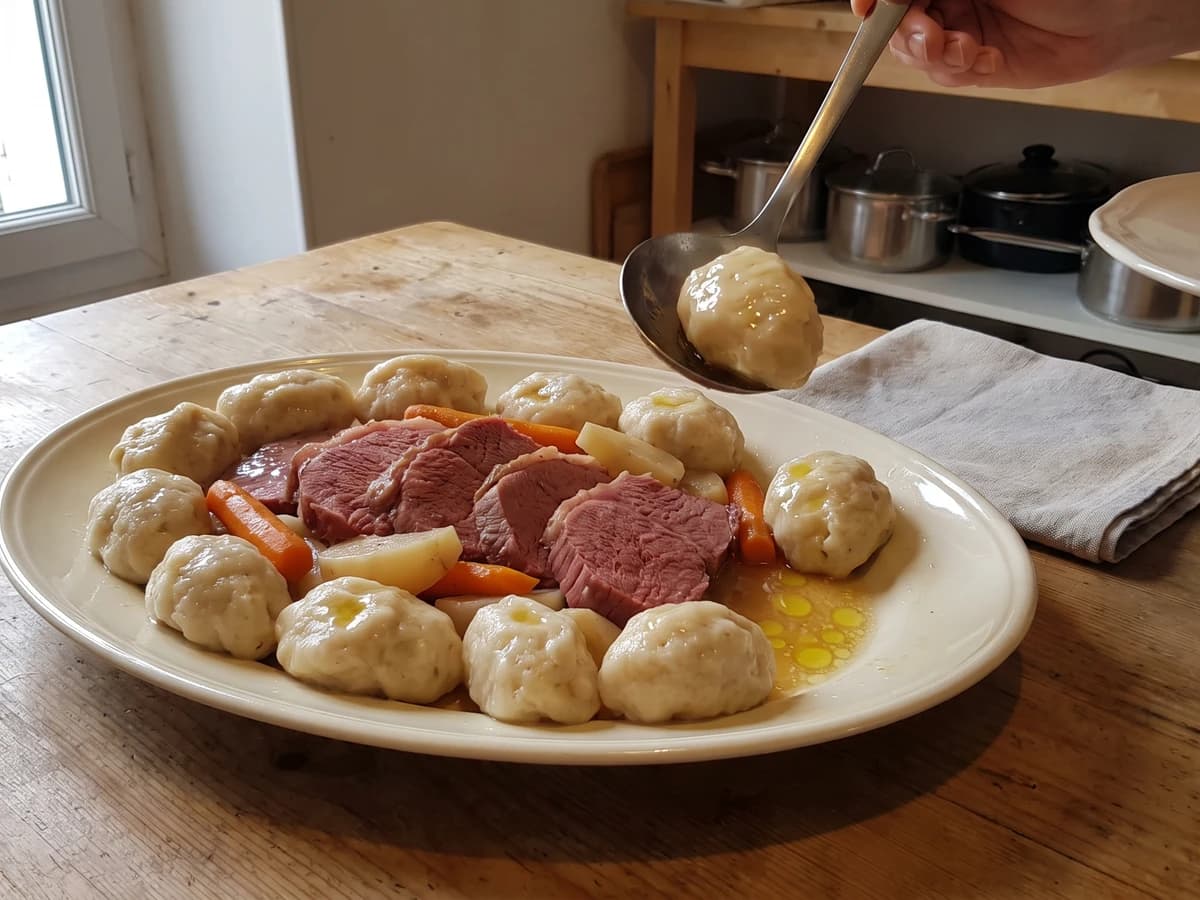
Suet Dumpling
Boulettes au suif, poached beside salt beef, turn equal weights of flour and finely chopped suet into tender, rich dumplings. Keep the beef liquor at a bare tremble and the old garnish works beautifully at home.
A cooking platform built around craft, culture, and the stories behind what we eat.

Created by
The dark, earthy polenta of the Lombard Alps, stirred for nearly an hour and enriched with mountain cheeses until it stretches like mozzarella. This is what sustains you through cold winters.
In the high valleys of Valtellina, where the Alps form the border between Italy and Switzerland, the buckwheat grows where corn cannot survive. The farmers there never had the luxury of yellow polenta. They had what the mountains gave them: dark buckwheat flour, robust cheeses aged in stone cellars, and the patience required to stir a pot for the better part of an hour.
Polenta taragna is not a refinement. It is necessity made delicious. The buckwheat gives it an earthiness that yellow corn polenta lacks, a slight bitterness that tastes of mountains and alpine pastures. The cheese, stirred in at the end, transforms it from a peasant starch into something substantial enough to be a meal.
You cannot rush this. The name comes from the tarai, the long wooden paddle used to stir polenta in copper pots over open hearths. The stirring is meditative, constant, and non-negotiable. If you are not prepared to stand at the stove for 45 minutes, stirring in one direction, do not begin.
Polenta taragna originated in the Valtellina and Bergamo regions of Lombardy, where buckwheat cultivation flourished in the mountain climate that was too cold for corn. The dish likely predates the widespread adoption of corn polenta in the Po Valley. Local cheeses like Bitto, produced in the same alpine pastures since the Celtic era, were the natural enrichment for a grain that was already the staple of mountain life.
Quantity
1 cup
Quantity
1 cup
Quantity
6 cups
Quantity
2 teaspoons
Quantity
8 ounces
cut into small cubes
Quantity
4 ounces
rind removed, cut into pieces
Quantity
4 tablespoons
cold, cut into pieces
| Ingredient | Quantity |
|---|---|
| buckwheat flour | 1 cup |
| coarse-ground yellow cornmeal | 1 cup |
| water | 6 cups |
| kosher salt | 2 teaspoons |
| Bitto cheese or aged mountain cheesecut into small cubes | 8 ounces |
| Taleggio cheeserind removed, cut into pieces | 4 ounces |
| unsalted buttercold, cut into pieces | 4 tablespoons |
Whisk together the buckwheat flour and cornmeal in a bowl. The mixture will be darker than standard polenta flour, gray-brown from the buckwheat. This color is correct. Do not be alarmed.
Bring the water to a rolling boil in a heavy-bottomed pot, at least 4 quarts in capacity. Add the salt and stir until dissolved. The pot must be heavy. Thin aluminum will scorch the polenta before it finishes cooking.
Reduce heat to medium. Add the flour mixture in a slow, steady stream, whisking constantly with your other hand. Pour slowly enough that you can break up any lumps as they form. This takes at least two minutes. Rushing creates lumps that will never dissolve.
Switch from whisk to wooden spoon. Reduce heat to low. Stir the polenta in one direction, scraping the bottom and sides of the pot with each stroke. The polenta will bubble and spit. This is normal. Keep stirring. The cooking takes 45 minutes. There are no shortcuts.
After 45 minutes, the polenta should pull away from the sides of the pot cleanly. It will be thick but still pourable. Taste it. The grains should be tender, not gritty. If any grittiness remains, continue cooking with splashes of hot water as needed.
Remove the pot from heat. Immediately add the cubed Bitto, Taleggio pieces, and cold butter. Stir vigorously until everything melts into the polenta. The cheese should create long strings when you lift the spoon. The polenta will become glossy and rich, darker than it was before.
Pour the polenta onto a wooden board or into a warm serving bowl. Serve at once. Polenta taragna waits for no one. It stiffens as it cools, and the cheese loses its beautiful stretch. Once the polenta is ready, invite your guests to put off talking and start eating.
1 serving (about 235g)
Culinary guides, cultural storytelling, and the editorial depth that makes cooking meaningful.
Discover Culinary ExplorerChef Juliette
Boulettes au suif, poached beside salt beef, turn equal weights of flour and finely chopped suet into tender, rich dumplings. Keep the beef liquor at a bare tremble and the old garnish works beautifully at home.

Chef Juliette
Bread, flour, frangipane, and rice become four cool, supple panades for binding forcemeats, each changing body and flavor while preserving tenderness. The finest Mousselines need none, and knowing that distinction is the lesson.

Chef Juliette
Panade au pain is bread, milk, salt, heat, and attention: stir until the paste releases cleanly, butter it against a skin, and you have the quiet binder behind tender French farces.

Chef Juliette
Panade de farine teaches the drying stroke behind pâte à choux: flour meets boiling buttered water, then stays over the fire until the paste gathers, smooths, and quits the pan cleanly.