
Chef Graziella
Agrodolce alla Siciliana
The sweet-sour sauce that proves Sicily is where East meets West, where Arab traders left their mark on Italian cooking. A syrup of vinegar and honey, studded with pine nuts and raisins.
A cooking platform built around craft, culture, and the stories behind what we eat.
Created by
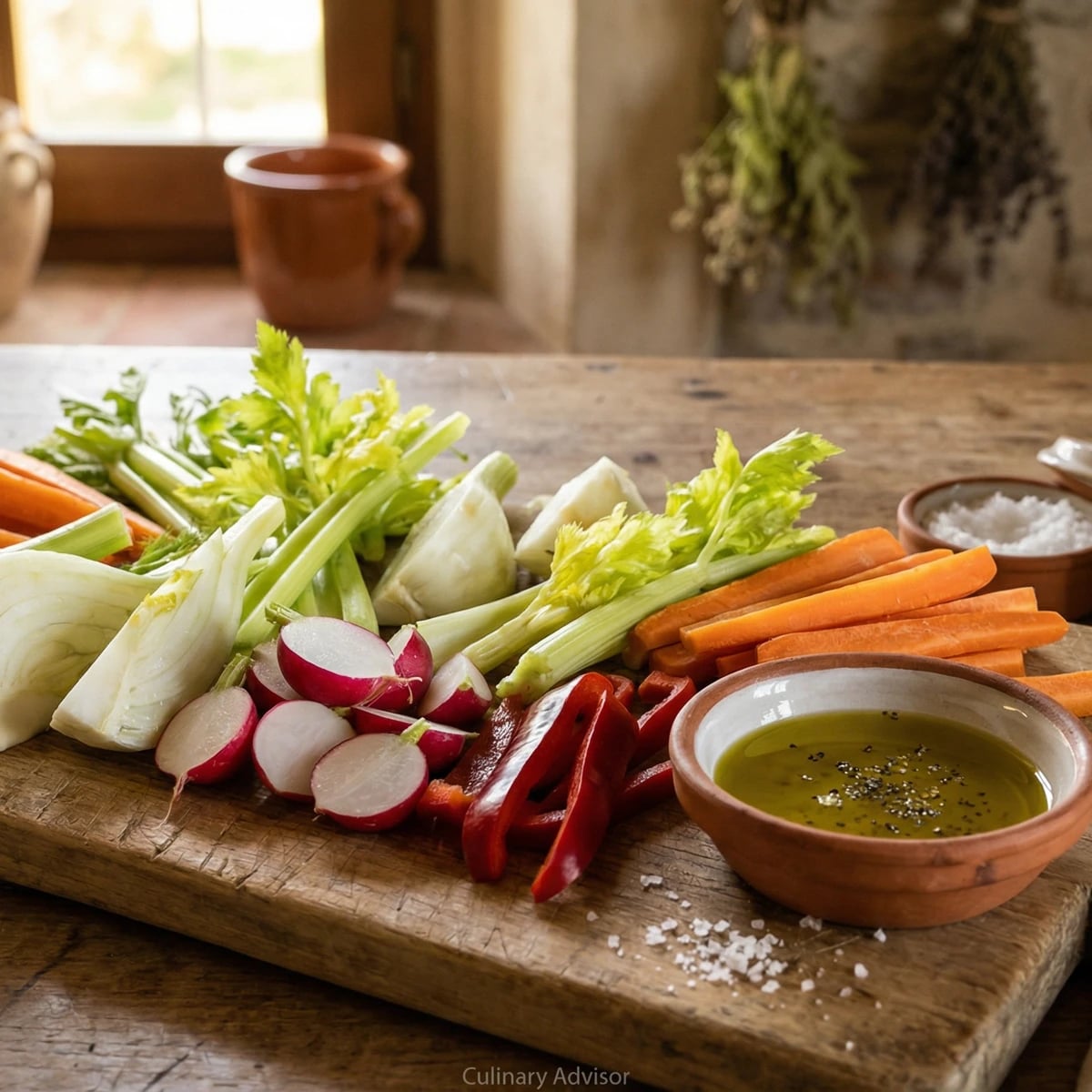
The Tuscan art of dipping raw vegetables in extraordinary olive oil, salt, and pepper. Three ingredients. No cooking. Absolute proof that what you keep out is as significant as what you put in.
Pinzimonio is not a recipe. It is a philosophy. You take the finest olive oil you can find, season it with salt and pepper, and dip raw vegetables into it. That is all. There is nothing to hide behind, no technique to master, no complexity to impress.
This is the dish that proves my central teaching: what you keep out is as significant as what you put in. Americans want to add garlic, lemon juice, herbs, balsamic vinegar. They cannot believe that three ingredients are enough. But in Tuscany, where the olive oil tastes of grass and pepper and the vegetables are pulled from the garden that morning, nothing else is needed or wanted.
I have served pinzimonio at the start of countless meals. It occupies guests while I finish cooking. It wakes up the palate. And it tells me immediately whether someone understands Italian food. Those who ask for more seasonings do not yet understand. Those who close their eyes at the first bite of fennel dipped in green Tuscan oil, they are ready to learn.
Pinzimonio dates to at least the Renaissance, when Tuscan farmers dipped raw vegetables from their gardens into fresh-pressed olive oil during the autumn harvest. The name likely derives from 'pinzare' (to pinch) and 'matrimonio' (marriage), describing the union of vegetable and oil. It remains the traditional way to taste new-harvest oil in Tuscany each November.
Quantity
1/2 cup
finest quality, preferably Tuscan
Quantity
to taste
Quantity
to taste
freshly ground
Quantity
1
trimmed and cut into wedges
Quantity
4 with leaves
cut into sticks
Quantity
2
trimmed to hearts, quartered, rubbed with lemon
Quantity
1 bunch
trimmed, halved if large
Quantity
2
peeled and cut into sticks
Quantity
1
peeled and cut into spears
Quantity
1
seeded and cut into strips
| Ingredient | Quantity |
|---|---|
| extra virgin olive oilfinest quality, preferably Tuscan | 1/2 cup |
| flaky sea salt | to taste |
| black pepperfreshly ground | to taste |
| fennel bulbtrimmed and cut into wedges | 1 |
| celery stalkscut into sticks | 4 with leaves |
| small artichokes (optional)trimmed to hearts, quartered, rubbed with lemon | 2 |
| radishestrimmed, halved if large | 1 bunch |
| carrotspeeled and cut into sticks | 2 |
| cucumberpeeled and cut into spears | 1 |
| red bell pepperseeded and cut into strips | 1 |
This entire dish depends on the quality of one ingredient. Your olive oil must be exceptional. Look for Tuscan oil with grassy, peppery notes and a golden-green color. Taste it before you serve it. If it tastes flat, stale, or like nothing at all, do not proceed. The oil is the dish.
Wash all vegetables thoroughly and dry them completely. Wet vegetables will not hold the oil. Cut everything into pieces that can be grasped easily and dipped without dripping. The celery should include some tender inner leaves. The fennel should be sliced through the core so the wedges hold together. Radishes may be left whole if small.
If using artichokes, work quickly. Pull away the tough outer leaves until you reach the pale yellow-green heart. Trim the stem, cut away the fuzzy choke, and rub immediately with lemon to prevent browning. Quarter each heart. Raw baby artichokes are traditional in Tuscany during spring. If unavailable, omit them entirely rather than substitute.
Pour the olive oil into individual small bowls, one for each person. Add a generous pinch of flaky sea salt and several grinds of black pepper to each bowl. Do not stir. The salt will rest at the bottom, the pepper will float. Each dip will carry a slightly different amount of seasoning. This is correct.
Arrange the vegetables on a large platter or wooden board. Place them loosely, not in rigid lines. Set a bowl of seasoned oil before each guest. There are no rules for eating pinzimonio. Dip, bite, enjoy. The vegetables should be cold or at cool room temperature. The oil should be at room temperature, never refrigerated.
1 serving (about 300g)
Culinary guides, cultural storytelling, and the editorial depth that makes cooking meaningful.
Discover Culinary Explorer
Chef Graziella
The sweet-sour sauce that proves Sicily is where East meets West, where Arab traders left their mark on Italian cooking. A syrup of vinegar and honey, studded with pine nuts and raisins.

Chef Graziella
The citrus marinade of the Southern Italian coast, where lemons hang heavy on the terraces and the fish comes straight from morning boats. Two forms of citrus, good oil, restraint.

Chef Graziella
The warm bath of Piedmont, where anchovies and garlic surrender to butter and oil over gentle heat. A communal pot, raw vegetables, and the harvest tradition of the Langhe hills.

Chef Graziella
The mother sauce of Italian baked pastas, transformed from simple butter, flour, and milk into silk through patient whisking and the essential warmth of nutmeg.