Culinary Explorer

A cooking platform built around craft, culture, and the stories behind what we eat.
Discover Culinary Explorer
Pingado

Pingado

Created by

You don't need a machine or a barista face. Heat real milk, add one small pour of strong coffee, and you've got the paulistano breakfast compromise in a glass.

Beverages
Brazilian
Weeknight
Quick Meal
Comfort Food
2 min
Active Time
3 min cook5 min total
Yield1 tall glass

You know that little voice saying, "isso não é pra mim," even when the thing in front of you is just milk and coffee? I know her. She showed up in my kitchen when I couldn't cook rice, when I burnt onions, when I wrote every tiny step in my caderno because I didn't trust my own hands. So let's be honest: if a glass of pingado feels mysterious, the problem isn't you. Someone made the kitchen sound harder than it is.

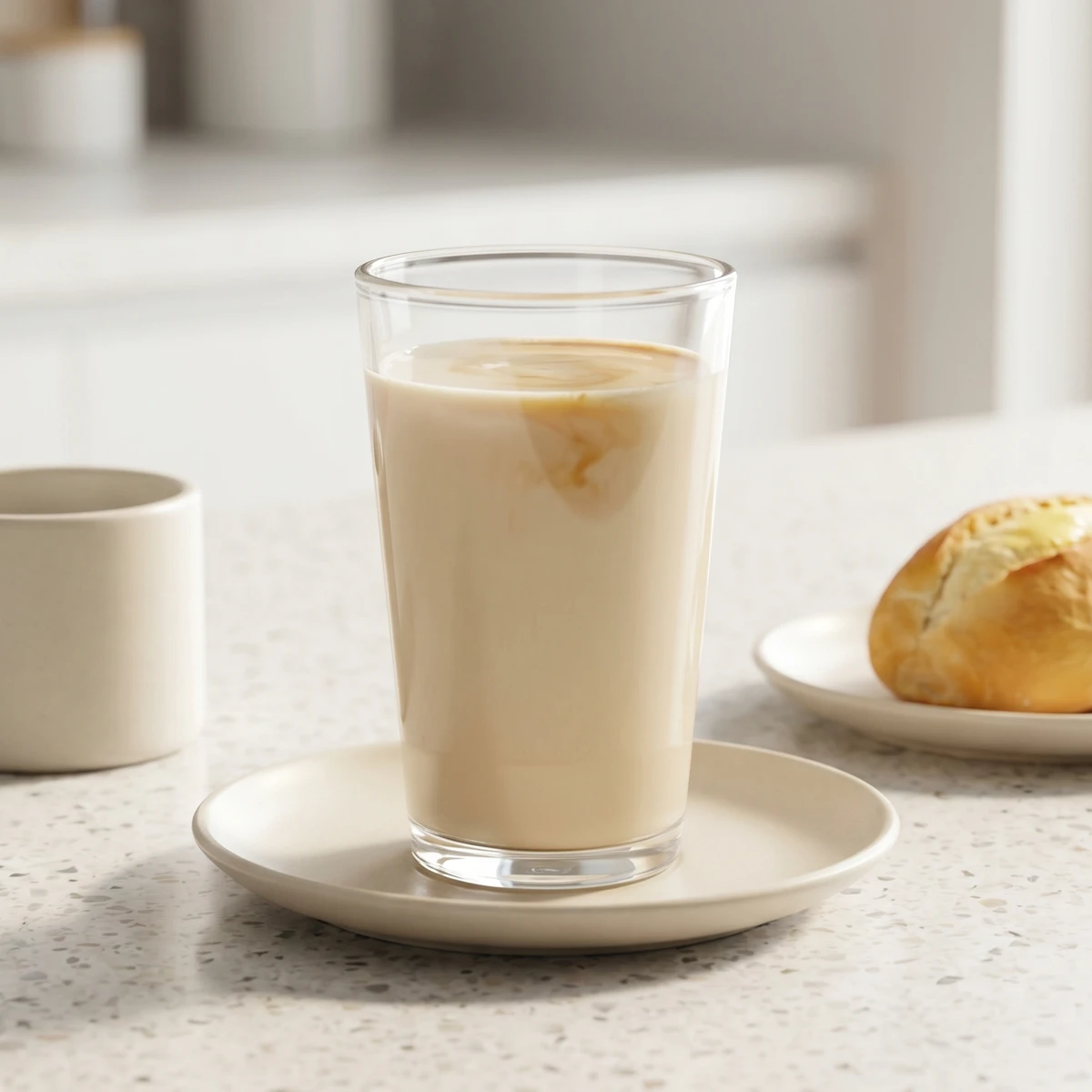
This is the padaria counter brought home, without the performance. Pingado means the milk leads and the coffee only marks it, a pingo, a little drop strong enough to turn the glass beige and wake it up. Not a latte with a passport. Not powdered coffee-flavored milk pretending to be breakfast. Real milk, real coffee, five minutes, done.

And yes, it belongs beside the bigger story of the everyday Brazilian table. If the pê-efe, rice and beans and a meat and something green, solves lunch, the pingado solves the morning in the same spirit: ordinary food, cheap ingredients, repeatable method. Comida de verdade isn't always a pot simmering for two hours. Sometimes it's a tall glass, a buttered pão francês, and the dignity of starting the day without letting a packet do the work for you.

The method is small, so the details matter. Heat the milk until the edge trembles and tiny bubbles gather, because boiled milk tastes cooked and forms that skin nobody asked for. Brew the coffee strong, because it has to flavor a whole glass without taking it over. Pour, taste, adjust. Anota aí: cooking isn't a gift, it's something you learn, and this is a very good place to begin.

Pingado is strongly tied to São Paulo's padarias, where workers commonly order it at the counter with pão francês and butter before starting the day. The name comes from the idea of coffee being "pingado," dropped or dripped, into a larger amount of hot milk, unlike café com leite where the balance is usually closer. Its exact ratio is argued from counter to counter, but the paulistano version is usually milk first, coffee second, and no ceremony.

The technique, the tradition, and the story behind every dish.

Discover Culinary Explorer

Ingredients

whole milk

Quantity

1 cup

strong brewed coffee or espresso

Quantity

2 tablespoons

sugar (optional)

Quantity

1 teaspoon

Equipment Needed

  • Small 1-liter saucepan
  • Tall heatproof glass or mug
  • Coffee maker, moka pot, French press, or espresso machine
  • Measuring cup
  • Tablespoon

Instructions

  1. 1

    Brew it strong

    Brew a small amount of strong coffee, or pull one espresso shot if that's what you have. You want it dark and fragrant, not watery, because a little coffee has to season a whole cup of milk. Weak coffee disappears, and then you're drinking warm milk with a rumor in it.

    The honest shortcut is using coffee you already brewed this morning, as long as it's still fresh. The cost is flavor if it sat around getting bitter. Instant powder is not the same thing, and I'm not going to sell you that lie.
  2. 2

    Heat the milk

    Pour the milk into a small saucepan and warm it over medium-low heat, stirring now and then, until tiny bubbles gather around the edge and the surface looks glossy, about 3 minutes. Don't boil it. Boiled milk tastes flat and cooked, and if you walk away it climbs the pan like it has somewhere better to be.

    If you use the microwave, heat the milk in a tall microwave-safe cup in 30-second bursts, stirring between each one. It works on a Tuesday. The cost is less control, so stop before it boils.
  3. 3

    Pour the milk

    Pour the hot milk into a tall glass or mug, leaving a little room at the top. The glass should look mostly pale and creamy, because pingado is milk with coffee, not coffee with milk. This order matters: milk first lets you see exactly how much coffee is enough.

  4. 4

    Add the pingo

    Add the strong coffee one tablespoon at a time, stirring after each pour, until the milk turns a soft beige and smells clearly of coffee. Stop when it tastes gentle but awake. Add too much and you've made café com leite, which is fine, but it isn't pingado. Names mean something in a kitchen.

  5. 5

    Sweeten and drink

    Taste before adding sugar, then stir in a little if you want it. Drink it right away, when the glass is hot in your hands and the milk still tastes fresh. Serve with buttered pão francês if you're resolving breakfast the padaria way.

Chef Tips

  • Use real milk and real brewed coffee. A packet that tastes vaguely like coffee and milk is not breakfast being clever, it's the industry charging you for forgetting how simple this is.
  • Whole milk gives the roundest glass. You can use the milk you keep at home, but very thin milk makes a thinner pingado, and there's no magic trick after that.
  • The ratio is the whole personality: start with 1 cup milk to 2 tablespoons strong coffee. If you want more coffee, add it by the spoon, not by bravery.
  • For two people, double everything in the pan and warm the milk once. A gente doesn't need to dirty three things to make two glasses.
  • Pingado doesn't store. Make it, drink it, wash the glass. Some recipes are generous because they freeze; this one is generous because it's faster than looking for an excuse.

Advance Preparation

  • Brew the coffee fresh if you can. If using coffee from earlier the same morning, taste it first; if it's bitter and stale, it will make the whole glass taste tired.
  • There is no useful make-ahead for pingado. Keep milk cold, keep coffee beans or grounds ready, and make the drink when you want it.

Frequently Asked Questions

Nutrition Information

1 serving (about 280g)

Calories
165 calories
Total Fat
8 g
Saturated Fat
5 g
Trans Fat
0 g
Unsaturated Fat
3 g
Cholesterol
25 mg
Sodium
105 mg
Total Carbohydrates
16 g
Dietary Fiber
0 g
Sugars
16 g
Protein
8 g

Note: Chef personas and recipes are created with AI assistance. Cook with care: follow safe food-handling practices, check doneness with a thermometer when needed, and adapt for allergies and your kitchen.

Where cooking meets culture.

Culinary guides, cultural storytelling, and the editorial depth that makes cooking meaningful.

Discover Culinary Explorer

More from Padaria & Lanchonete Paulistana

Browse the full collection