
Chef Thomas
A Proper Chicken Broth
Sunday's roast chicken, simmered slowly on Monday with carrots, celery, leeks, and thyme into a bowl of clear, golden broth that smells like the kitchen is paying attention.
A cooking platform built around craft, culture, and the stories behind what we eat.
Created by Chef Thomas
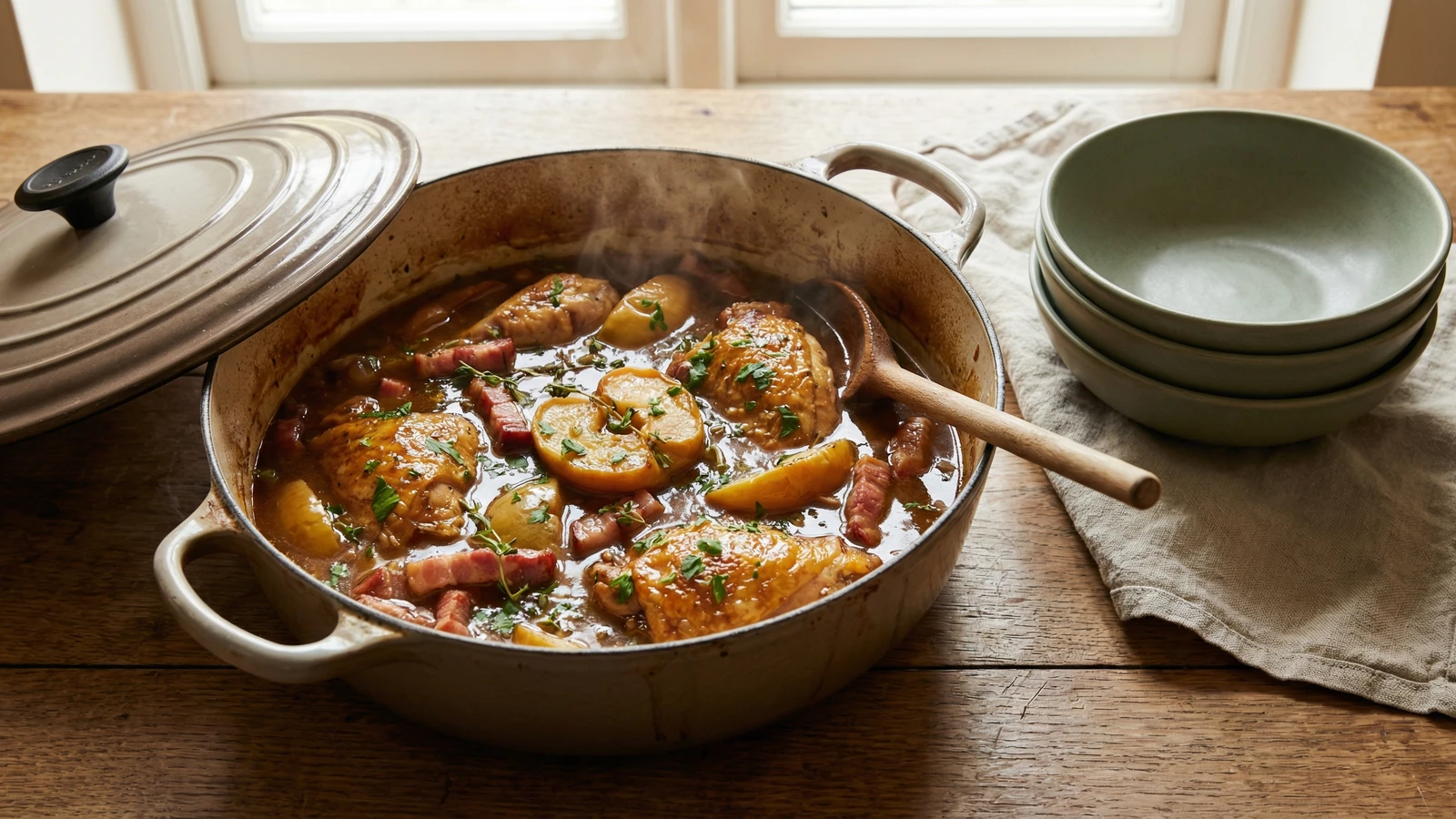
A slow-braised pheasant casserole with smoked bacon, dry cider, and sharp apples, the kind of pot you put in the oven on a January afternoon and forget about until the kitchen tells you it's ready.
January. The light is thin and the garden has nothing left to give. The pheasant season is running down, and the birds the butcher has now are older, tougher, with legs that have walked a few more miles. These aren't birds for roasting. They need time.
This is what a casserole is for. You brown the pheasant pieces until the skin goes golden and sticky, lay them on a bed of bacon and softened onions, pour in enough cider to come halfway up, and let the oven do the patient work of turning something tough into something tender. The cider goes sweet and deep. The bacon gives its smoke to everything it touches. By the time you lift the lid two hours later, the kitchen smells like the kind of evening you'd cancel plans for.
The apples go in towards the end. Cox's, or whatever's firm and sharp in the bowl. They hold their shape just enough to give you something to bite through, a sweet, sharp counterpoint to the rich, dark sauce. A scattering of parsley. Good bread or mash to catch the juices. We're only making dinner.
I wrote it down in the notebook last winter: pheasant, cider, rain on the window, the lid rattling gently in the oven. Some meals belong to their weather.
Quantity
2
jointed into legs and breasts
Quantity
200g
cut into thick lardons
Quantity
30g
Quantity
1 tablespoon
Quantity
2
halved and sliced
Quantity
2 sticks
sliced
Quantity
1 tablespoon
Quantity
300ml
Quantity
300ml
Quantity
2
such as Cox's or Braeburn, quartered and cored
Quantity
a few sprigs
Quantity
2
Quantity
small bunch
roughly chopped
Quantity
to taste
| Ingredient | Quantity |
|---|---|
| pheasantsjointed into legs and breasts | 2 |
| smoked streaky baconcut into thick lardons | 200g |
| unsalted butter | 30g |
| rapeseed oil | 1 tablespoon |
| onionshalved and sliced | 2 |
| celerysliced | 2 sticks |
| plain flour | 1 tablespoon |
| dry cider | 300ml |
| chicken stock | 300ml |
| eating applessuch as Cox's or Braeburn, quartered and cored | 2 |
| fresh thyme | a few sprigs |
| bay leaves | 2 |
| flat-leaf parsleyroughly chopped | small bunch |
| fine sea salt and black pepper | to taste |
Season the pheasant pieces generously with salt and pepper. Heat the butter and oil together in a large casserole dish over a medium-high heat. When the butter foams and the foaming subsides, lay the pheasant pieces in, skin side down. Don't crowd the pan. Work in batches if you need to. You want the skin to go properly golden and crisp, which takes four or five minutes a side. Listen for the sizzle. If it's quiet, the pan isn't hot enough. Set the browned pieces aside on a plate.
In the same pan, with all the sticky brown bits still on the bottom, add the bacon lardons. Let them cook until the fat renders and the edges go golden and slightly crisp. It should smell like a good morning. Add the onions and celery, turn the heat down, and let everything soften together for eight to ten minutes, stirring now and then. The onions should be translucent and sweet, the celery tender. Sprinkle over the flour and stir it through for a minute so it loses its raw, chalky taste.
Pour in the cider. It will hiss and bubble and fill the kitchen with something sharp and appley. Scrape the bottom of the pan with a wooden spoon to lift all those caramelised bits into the liquid. Let it bubble for a minute or two, then add the stock, the thyme sprigs, and the bay leaves. Nestle the pheasant legs into the liquid first. They need the most time, so they go in now. Bring everything to a gentle simmer, just a few lazy bubbles breaking the surface.
Put the lid on and transfer the casserole to an oven set to 160C/140C fan. After an hour, add the pheasant breasts to the pot, tucking them into the liquid alongside the legs. The breasts dry out faster, so they need less time. This isn't fussiness. It's the difference between meat that yields and meat that's chalky and sad. Return the lid and cook for another forty-five minutes to an hour, until the leg meat pulls away from the bone without resistance.
Quarter and core the apples but leave the skin on. It holds them together. Twenty minutes before the casserole is ready, tuck the apple quarters into the sauce around the pheasant. They need just enough time to soften through while keeping their shape. A collapsed apple is no use here. You want something you can press a spoon through, but that still looks like an apple.
Lift the lid. The sauce should have reduced to something rich and glossy, somewhere between a broth and a gravy, with a colour like dark honey. If it's too thin, set the casserole on the hob and let it bubble gently, uncovered, for a few minutes. Season and taste. Then taste again. Scatter the parsley over the top and bring the whole pot to the table. Serve with mashed potato or good bread, something that will soak up every last bit of sauce, because the sauce is the point.
1 serving (about 340g)
Culinary guides, cultural storytelling, and the editorial depth that makes cooking meaningful.
Discover Culinary ExplorerChef Thomas
Sunday's roast chicken, simmered slowly on Monday with carrots, celery, leeks, and thyme into a bowl of clear, golden broth that smells like the kitchen is paying attention.
Chef Thomas
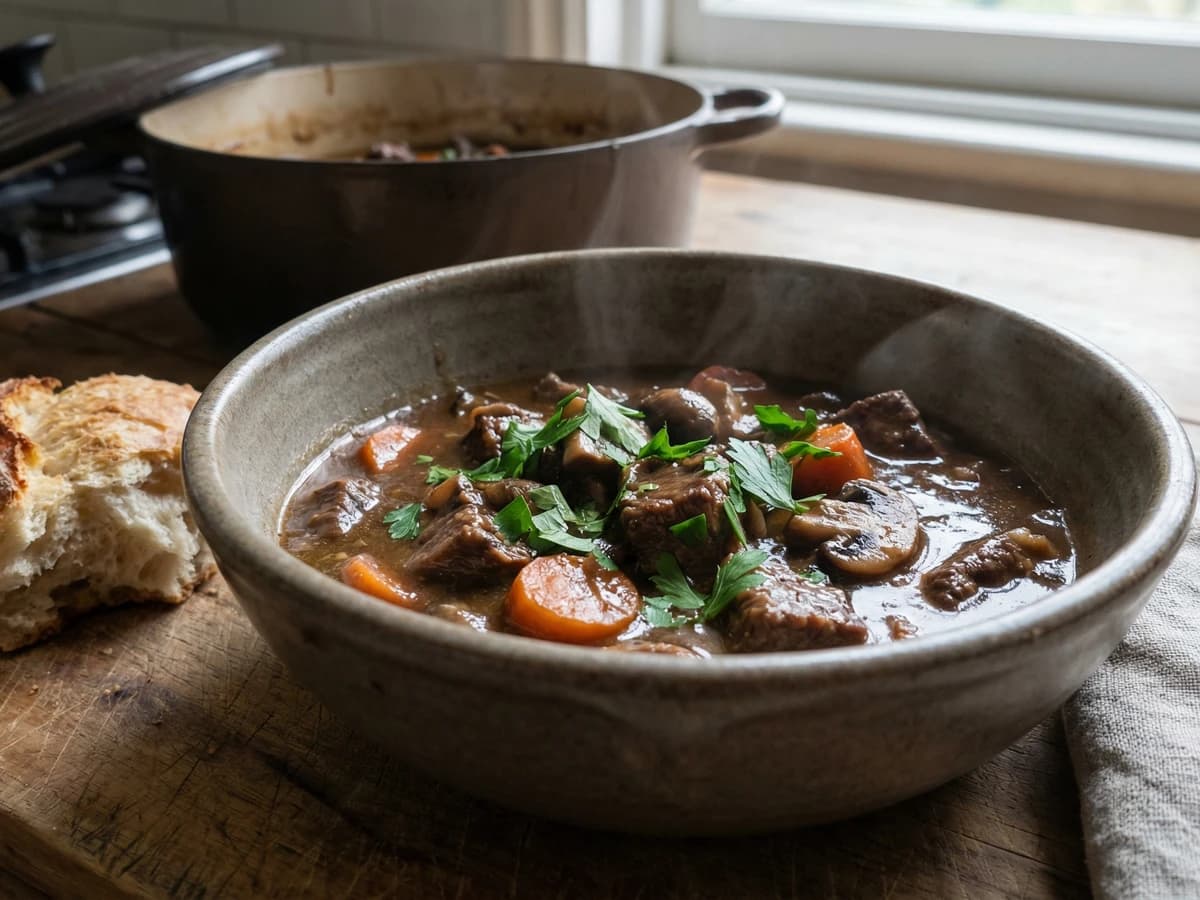
Braising steak surrendered to dark ale and slow time, with onions and mushrooms, until the gravy turns thick and malty and the kitchen smells like the kind of evening you want to stay in for.

Chef Thomas
Beef shin and pearl barley simmered low and slow with root vegetables until the meat gives way and the broth thickens into something between a soup and a stew, the kind of bowl that steadies you on a cold night.
Chef Thomas
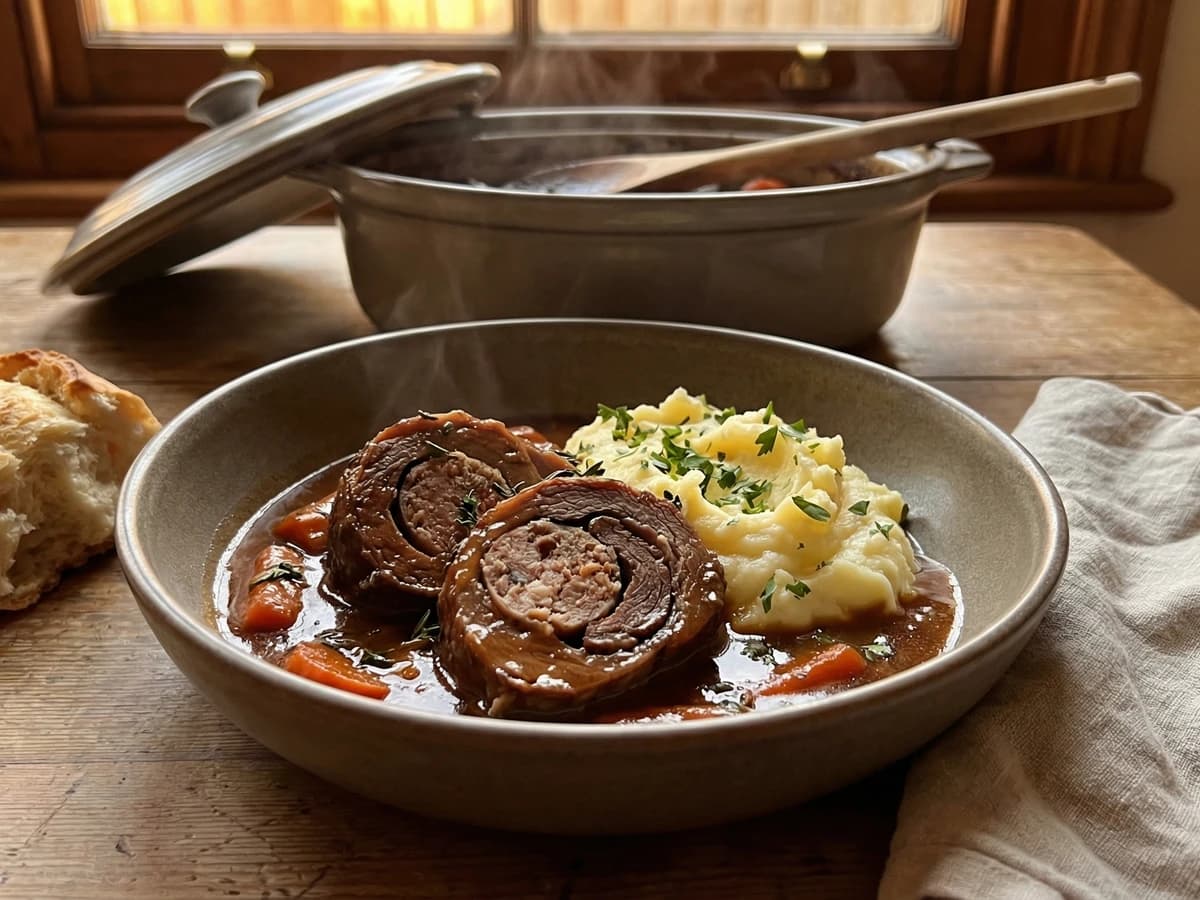
Thin slices of beef rolled around a stuffing of sausage meat and herbs, browned in butter, and braised for two patient hours until the meat yields and the gravy turns dark and rich and worth mopping up with bread.