Chef Lupita
Acúmara Tatemada al Comal
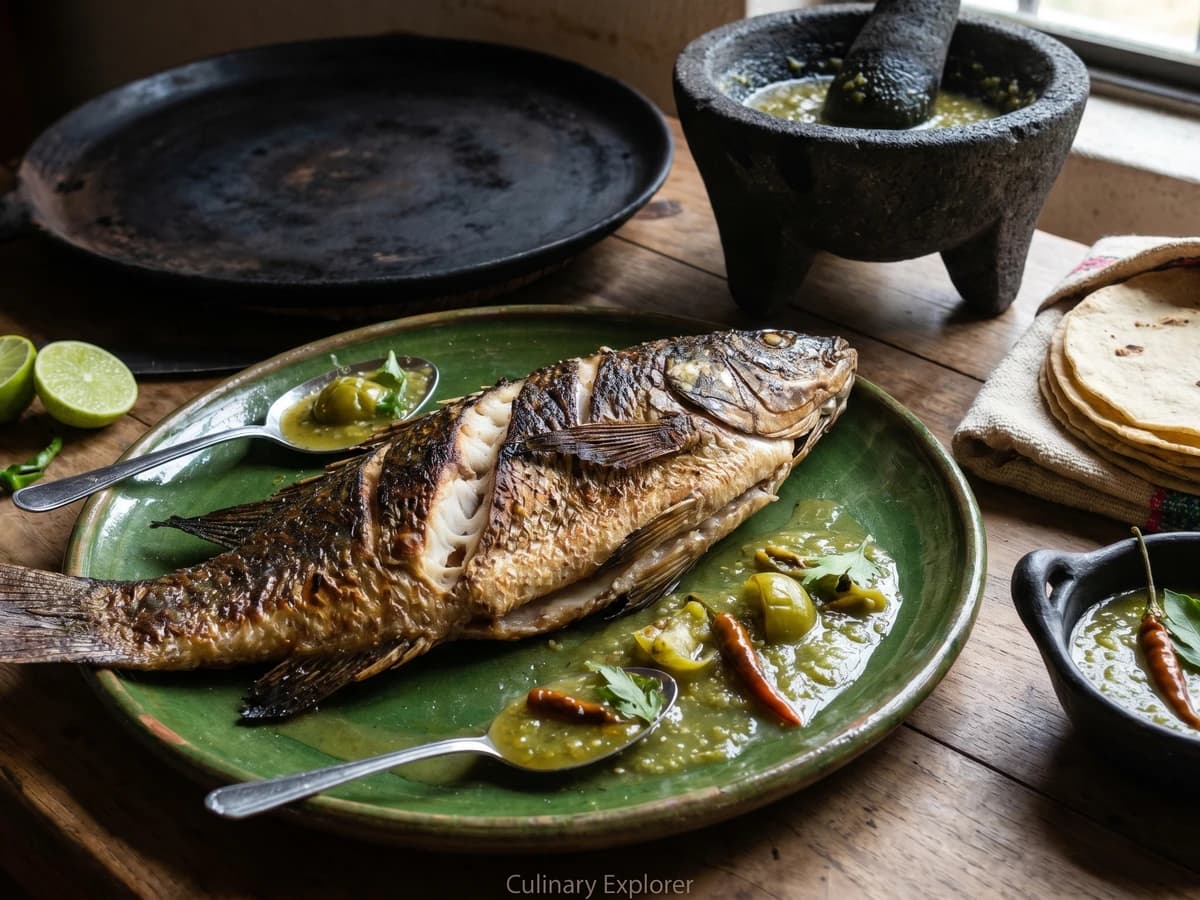
Michoacán's Lake Pátzcuaro acúmara, a whole kurucha from the lago tatemada on a comal de leña and served with chile perón atápakua, corn tortillas, and P'urhépecha discipline.
A cooking platform built around craft, culture, and the stories behind what we eat.
Created by
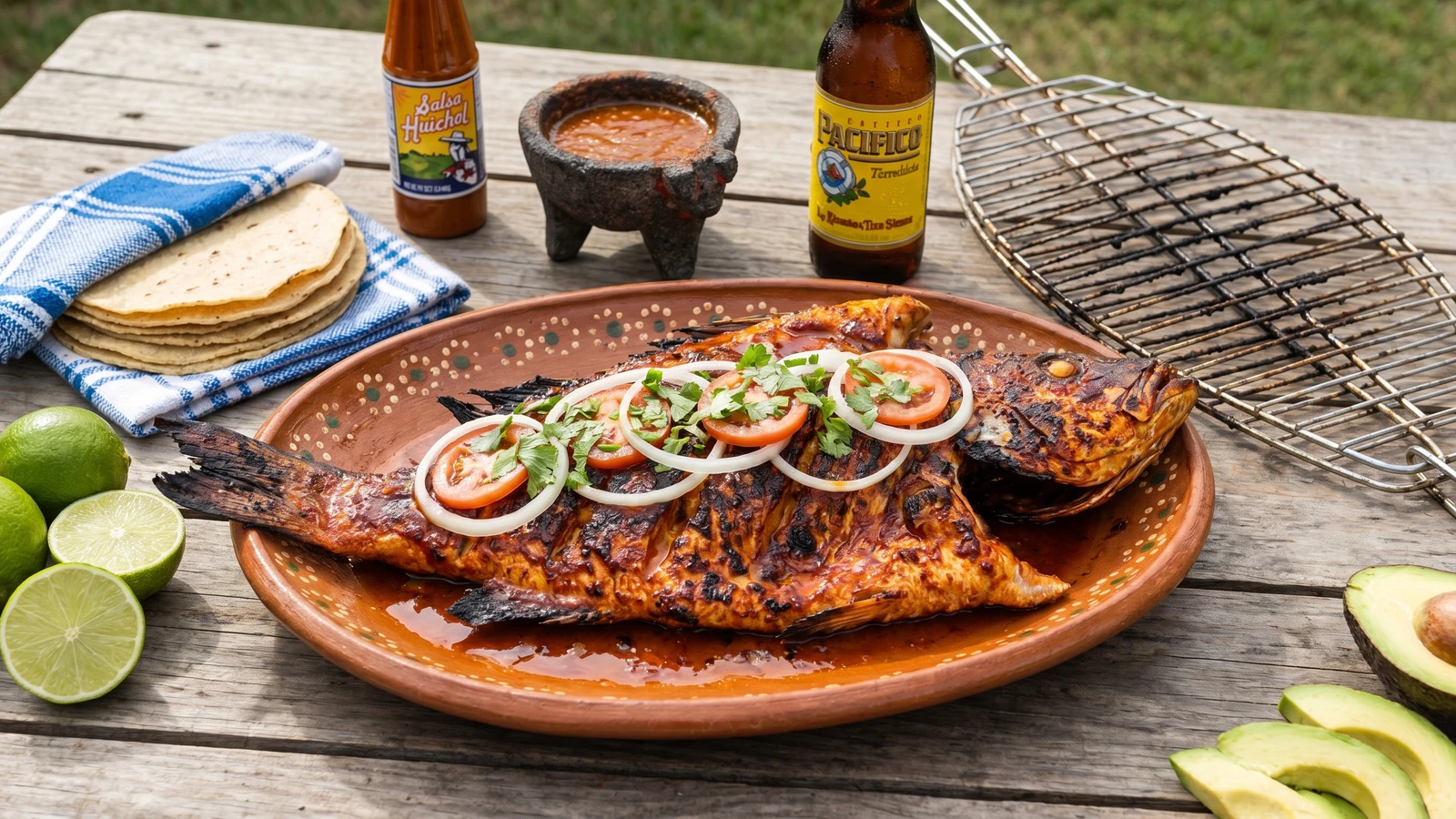
Sinaloa's signature whole snapper, butterflied and grilled over mangrove wood with a chile-citrus-mayo marinade. The original Pacific beach cookout, eaten with tortillas, lime, and salsa at the table.
Pescado zarandeado is from Sinaloa. Specifically from the coastal stretch between Mazatlan and the village of Boca de Camichin in Nayarit, where the Sinaloense fishermen and the Nayarita pescadores still argue about who invented it. The Sinaloans win that argument in my notebook, and the Nayaritas can keep arguing.
The name comes from the zaranda, the hinged metal basket the fish is clamped into so it can be flipped (zarandeado, shaken) over the coals without falling apart. The wood is mangrove. Not mesquite, not oak, mangrove. Mangle rojo from the coastal estuaries gives off a smoke that tastes like the place this dish comes from. If you cannot get mangrove outside Mexico, mesquite is your closest substitute. A substitution is a compromise, not an upgrade. You should know what you are missing.
The marinade is where people from outside Sinaloa lose their nerve. Mayonnaise. Mustard. Soy sauce. Maggi. These are not Tex-Mex contaminations. They are Sinaloense, the same way they are in aguachile and in the marisquerias up and down the malecon in Mazatlan. Sinaloa has a coastal cooking tradition that has always borrowed from the Asian fishing communities and the global trade that came through the Pacific ports. The mayo emulsifies the chile and the citrus into something that clings to the fish on the grill and caramelizes into a crust. Take it out and you have a different dish.
This is a fish you cook for a crowd. You buy the whole pargo at the market in the morning, you butterfly it, you marinate it in the afternoon, and you grill it at sunset with people standing around the fire. The platter goes on the table with tortillas, lime, and salsa. Everyone builds their own taco. Cada estado, su propia cocina, and this one belongs to Sinaloa.
Pescado zarandeado is most reliably traced to the island of Mexcaltitan in Nayarit and the neighboring fishing communities of southern Sinaloa, where indigenous coastal cooks were grilling whole fish over open fires long before the Spanish arrival, using the abundant mangrove wood of the Pacific estuaries. The dish in its modern form, with the chile-mayo-citrus marinade, dates to the 20th century and reflects Sinaloa's role as a Pacific port economy: Asian condiments like soy sauce arrived through Mazatlan's trade routes and were absorbed into the regional pantry alongside indigenous chiles and Spanish citrus. The hinged basket itself, the zaranda, is a relatively recent industrial-era tool, but the technique of flipping a butterflied fish whole over hot coals predates it by centuries.
Quantity
1 fish, 3 to 4 pounds
scaled, gutted, butterflied open through the back with head and tail intact
Quantity
4
stemmed and seeded
Quantity
2
stemmed and seeded
Quantity
1
Quantity
4
peeled
Quantity
1/3 cup
or 3 tablespoons orange juice mixed with 2 tablespoons lime juice
Quantity
3 tablespoons, plus more for serving
Quantity
1/3 cup
Quantity
3 tablespoons
Quantity
2 tablespoons
Quantity
1 tablespoon
Quantity
1 tablespoon
Quantity
1 teaspoon
Quantity
1 teaspoon
Quantity
1 tablespoon
Quantity
2 tablespoons
Quantity
1 medium
sliced into thin rings
Quantity
1 large
sliced into thin rounds
Quantity
1 bunch
roughly chopped
Quantity
for serving
warmed
Quantity
for serving
Quantity
for serving
Quantity
for serving
| Ingredient | Quantity |
|---|---|
| whole red snapper or pargoscaled, gutted, butterflied open through the back with head and tail intact | 1 fish, 3 to 4 pounds |
| dried chile guajillostemmed and seeded | 4 |
| dried chile anchostemmed and seeded | 2 |
| dried chile chipotle morita | 1 |
| garlic clovespeeled | 4 |
| fresh sour orange juice (naranja agria)or 3 tablespoons orange juice mixed with 2 tablespoons lime juice | 1/3 cup |
| fresh lime juice | 3 tablespoons, plus more for serving |
| Mexican mayonnaise (preferably Mayonesa McCormick con Limon) | 1/3 cup |
| yellow mustard | 3 tablespoons |
| Maggi sauce or Salsa Inglesa | 2 tablespoons |
| Worcestershire sauce | 1 tablespoon |
| achiote paste | 1 tablespoon |
| dried Mexican oregano | 1 teaspoon |
| ground black pepper | 1 teaspoon |
| kosher salt | 1 tablespoon |
| soy sauce | 2 tablespoons |
| white onionsliced into thin rings | 1 medium |
| tomatosliced into thin rounds | 1 large |
| fresh cilantroroughly chopped | 1 bunch |
| hand-pressed corn tortillas (optional)warmed | for serving |
| lime halves (optional) | for serving |
| salsa huichol or salsa de chile de arbol (optional) | for serving |
| sliced avocado (optional) | for serving |
Have your fishmonger butterfly the snapper through the back, leaving the belly intact so the fish opens like a book and lies flat, head and tail still attached. The skin stays on. The scales come off. If you do this yourself, work with a sharp boning knife along one side of the spine, then the other, and remove the backbone. Rinse the fish under cold water, pat it dry inside and out, and lay it skin-side down on a sheet pan. A whole butterflied fish is the dish. Filets are not zarandeado.
Heat a dry comal over medium. Toast the guajillo, ancho, and chipotle morita separately, about 20 to 30 seconds per side. Press them flat against the hot surface with a spatula until they puff and release that deep mercado-stall smell. Do not let them blacken. Burned chile is bitter chile and there is no fixing it later. Transfer the toasted chiles to a heatproof bowl and cover with hot tap water, not boiling. Let them soften for 20 minutes.
Drain the chiles and put them in a blender with the garlic, sour orange juice, lime juice, mayonnaise, mustard, Maggi, Worcestershire, achiote paste, oregano, black pepper, salt, and soy sauce. Blend on high until completely smooth and the color turns deep red-orange. The marinade should coat the back of a spoon. Taste it. It should be aggressive: salty, sour, smoky, with a low burn that builds. This is the wash that defines pescado zarandeado. Mayo and mustard are not gringo additions. They are Sinaloense. Asi se hace y punto.
Lay the butterflied fish flesh-side up on the sheet pan. Pour about two-thirds of the marinade over the open flesh and rub it in with your hands, getting into every fold. Flip the fish and coat the skin side with the rest. Cover and refrigerate for 30 minutes. No longer than an hour. The acid in the marinade will start to cure the flesh past that point and the texture turns mealy on the grill.
Build a medium-hot fire with mangrove wood (mangle) if you can get it. This is the wood that gives pescado zarandeado its name and its smoke. If you cannot get mangrove, use mesquite or a hardwood charcoal cut with a few chunks of mesquite or oak. Avoid lighter fluid and self-lighting briquettes. The fire should burn down to glowing coals with a thin layer of white ash before the fish goes on. La cocina no es decoracion, es trabajo, and the fire is half of this dish.
Place the marinated fish in a hinged fish basket (the zaranda the dish is named for) flesh-side down first. If you do not have a basket, lay the fish directly on a well-oiled grate, flesh-side down. Grill for 6 to 8 minutes over the coals. The flesh will pick up dark grill marks and the marinade will caramelize into a crust. Flip carefully, skin-side down now, and grill for another 8 to 10 minutes, until the skin chars and crackles and the thickest part of the flesh flakes when you press a knife into it. Total cook time depends on the size of the fish. A 3-pound fish goes faster than a 4-pound fish. Watch it. Do not walk away.
Slide the whole fish onto a long platter, skin-side down, flesh open and exposed. Scatter the sliced onion, tomato rounds, and chopped cilantro across the top while the fish is still hot from the fire. Bring it to the table with warm corn tortillas, lime halves, sliced avocado, and salsa huichol. Everyone tears off pieces of fish with a fork, builds tacos at the table, dresses them with lime and salsa. This is beach food, family food. Recetas probadas y garantizadas.
1 serving (about 290g)
Culinary guides, cultural storytelling, and the editorial depth that makes cooking meaningful.
Discover Culinary ExplorerChef Lupita
Michoacán's Lake Pátzcuaro acúmara, a whole kurucha from the lago tatemada on a comal de leña and served with chile perón atápakua, corn tortillas, and P'urhépecha discipline.

Chef Lupita
Puebla's weekday adobo of pork shoulder braised in a thick guajillo and ancho sauce sharpened with vinegar, cumin, and clove. The deep red of a market spice stall, the dish a poblana cooks without thinking.

Chef Lupita
Loreto's pit-roasted clams, planted hinge-up in beach sand and tatemadas under a fast fire of dried romerillo brush, the resinous Baja desert shrub that gives this dish its smoke.

Chef Lupita
Oaxaca's eighth mole, the silky, almond-and-cinnamon almendrado, served over poached chicken. Mild, sweet, restrained, and a quiet rebuttal to anyone who thinks Mexican food has to be hot to be Mexican.